
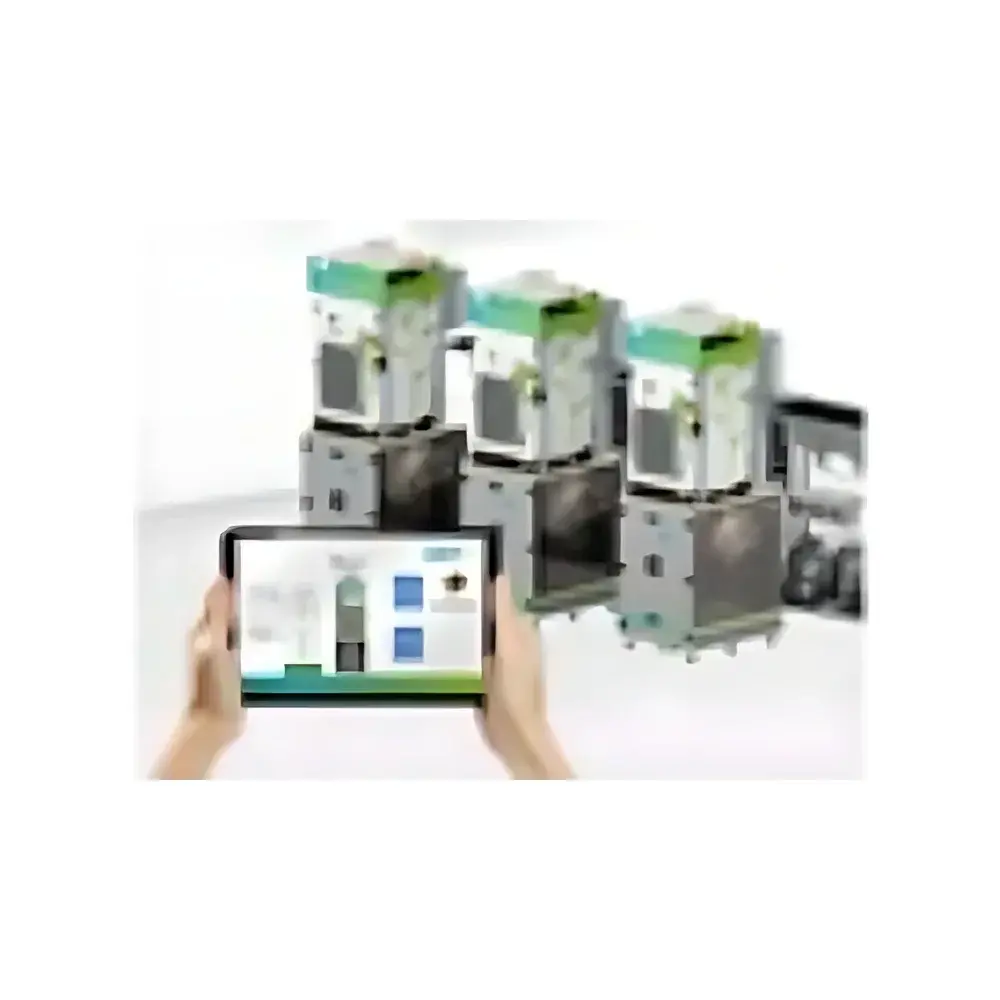
ECOLAB FLEX Soil-Plant-Atmosphere Integrated Microcosm System
| Brand | UGT |
|---|---|
| Origin | Germany |
| Model | ECOLAB FLEX |
| Configuration | Modular Soil Unit + Atmospheric Unit + Central Control & Data Acquisition Unit |
| Compliance | Designed for GLP-compliant environmental research and ISO 14040/14044 life cycle assessment studies |
| Sensor Integration | Supports analog/digital (SDI-12, RS-485, 0–10 V, 4–20 mA) interfaces for third-party and OEM sensors |
Overview
The ECOLAB FLEX Soil-Plant-Atmosphere Integrated Microcosm System is a modular, laboratory-scale controlled-environment platform engineered for mechanistic investigation of biogeochemical fluxes and feedback loops across the soil–plant–atmosphere continuum. Developed by UGT (Umwelt-Geräte-Technik GmbH), a German manufacturer specializing in high-precision environmental instrumentation, the system implements a dual-compartment architecture grounded in physical and physiological realism: a lower soil unit replicates vadose zone dynamics—including root-zone water retention, gas diffusion, microbial respiration, and rhizodeposition—while an upper atmospheric chamber emulates boundary-layer climate conditions (temperature, relative humidity, photosynthetically active radiation, CO₂ concentration, and controlled ventilation). Unlike static lysimeters or open-field mesocosms, ECOLAB FLEX enables simultaneous, time-synchronized measurement of carbon fluxes (e.g., soil CO₂ efflux, plant net ecosystem exchange), water balance components (evapotranspiration, drainage, soil moisture redistribution), and nutrient cycling parameters—under programmable diurnal cycles, drought/rehydration treatments, or elevated CO₂ scenarios. Its design adheres to principles outlined in ISO 17463 (soil respiration measurement) and supports method validation for IPCC Tier 2 soil carbon stock change estimation protocols.
Key Features
- Modular dual-unit architecture: Independent yet synchronized soil and atmospheric compartments enable decoupled process control and cross-compartment coupling experiments.
- Soil unit equipped with integrated high-resolution load cells (±0.1 g repeatability) for continuous mass balance tracking of infiltration, evaporation, and leachate; optional soil cooling module maintains thermal gradients representative of field profiles (e.g., −5 °C to +35 °C at 5 cm depth).
- Atmospheric chamber features PID-controlled ventilation (0.1–10 L min⁻¹), calibrated PAR sensors (400–700 nm, ±5 % accuracy), and programmable LED lighting arrays enabling spectral tuning for species-specific photobiology studies.
- Unified control interface supports real-time sensor polling at user-defined intervals (1 s to 24 h), automated event triggering (e.g., irrigation on soil water potential threshold), and hardware-level data buffering during network interruption.
- Structural materials comply with ASTM D4359 (non-reactivity with organic matter) and are certified non-outgassing under ISO 14644 Class 5 cleanroom conditions—ensuring minimal interference with trace gas analysis.
Sample Compatibility & Compliance
The ECOLAB FLEX accommodates intact soil monoliths (up to 30 cm diameter × 40 cm depth), rhizobox configurations with transparent root observation windows, and potted vegetation ranging from herbaceous annuals (e.g., Arabidopsis thaliana) to woody perennials (e.g., Populus tremula). Soil units accept standard 50 mm root access tubes (with optical-grade acrylic sleeves) and support in situ microdialysis probes for dissolved organic carbon (DOC) and nitrate profiling. All sensor integration pathways meet IEC 61000-6-3 EMC immunity requirements and are compatible with EPA Method TO-17 (volatile organic compound monitoring) when coupled with appropriate GC-MS inlet modules. System firmware and data logging routines are structured to satisfy audit-trail requirements per FDA 21 CFR Part 11 for regulated environmental fate studies.
Software & Data Management
UGT’s proprietary ECOLOGIC™ software (v4.2+) provides configuration, visualization, and export functionality via Windows-based desktop application and web-enabled dashboard (HTTPS/TLS 1.2). Raw sensor data are stored in timestamped, CRC-verified binary files (.ecf) with embedded metadata (sensor ID, calibration date, physical units, uncertainty estimates). Export formats include CSV (ISO 8601 timestamps), NetCDF-4 (CF-1.8 compliant), and direct SQL insertion into PostgreSQL databases. Batch processing tools support gap-filling using constrained cubic Hermite interpolation, flux partitioning via Keeling plot regression, and eddy covariance cross-validation against reference instruments. Audit logs record all user actions, parameter changes, and firmware updates—retained for ≥10 years per GLP archive policy.
Applications
- Quantification of rhizosphere priming effects on native soil organic carbon mineralization under nitrogen fertilization gradients.
- Evaluation of biochar amendment impacts on soil CO₂ and N₂O efflux dynamics across moisture–temperature interaction matrices.
- Parameterization of coupled land surface models (e.g., CLM5, ORCHIDEE) using observed transpiration–stomatal conductance–photosynthesis relationships under variable VPD.
- Regulatory testing of pesticide degradation kinetics in unsaturated soil columns under realistic diel climate forcing.
- Microbial community response assays (via integrated DNA/RNA sampling ports) linked to real-time redox potential and O₂ partial pressure profiles.
FAQ
Can the ECOLAB FLEX be operated in fully autonomous long-term experiments?
Yes—system power management supports unattended operation for >6 months with redundant SD card logging and optional 4G/LTE telemetry for remote status monitoring and emergency alerting.
Is third-party sensor integration supported beyond UGT’s catalog?
Yes—open API documentation and pinout schematics for analog/digital I/O channels are provided under NDA; common integrations include Campbell Scientific CR1000X loggers, Vaisala HMP155 humidity probes, and Los Gatos Research Ultra-Portable GHG analyzers.
Does the system meet requirements for ISO/IEC 17025 accredited laboratories?
While ECOLAB FLEX itself is not a certified reference instrument, its traceable calibration framework (NIST-traceable temperature/humidity/PAR standards), documented uncertainty budgets, and full metrological chain reporting enable use within ISO/IEC 17025 quality systems for method development and validation.







