
Ekspla AC Series Scanning Autocorrelator
| Brand | Ekspla |
|---|---|
| Origin | Imported (Lithuania) |
| Model | AC |
| Wavelength Range | 420–2000 nm (standard: 532 nm / 1064 nm) |
| Pulse Duration Range | 5–400 ps (extendable to ±1200 ps) |
| Measurement Principle | Non-collinear Second Harmonic Generation (SHG) Autocorrelation |
| Crystal Type | Single thin nonlinear crystal (BBO or LBO, wavelength-optimized) |
| Software | LabVIEW™-based control & analysis suite (source code available upon request) |
| Compliance | Compatible with GLP/GMP data integrity workflows |
| Input Energy Monitoring | Integrated photodiode-based pulse energy gating |
| OS Requirement | Windows XP/Vista/7 (64-bit compatible) |
| Computer | Not included |
Overview
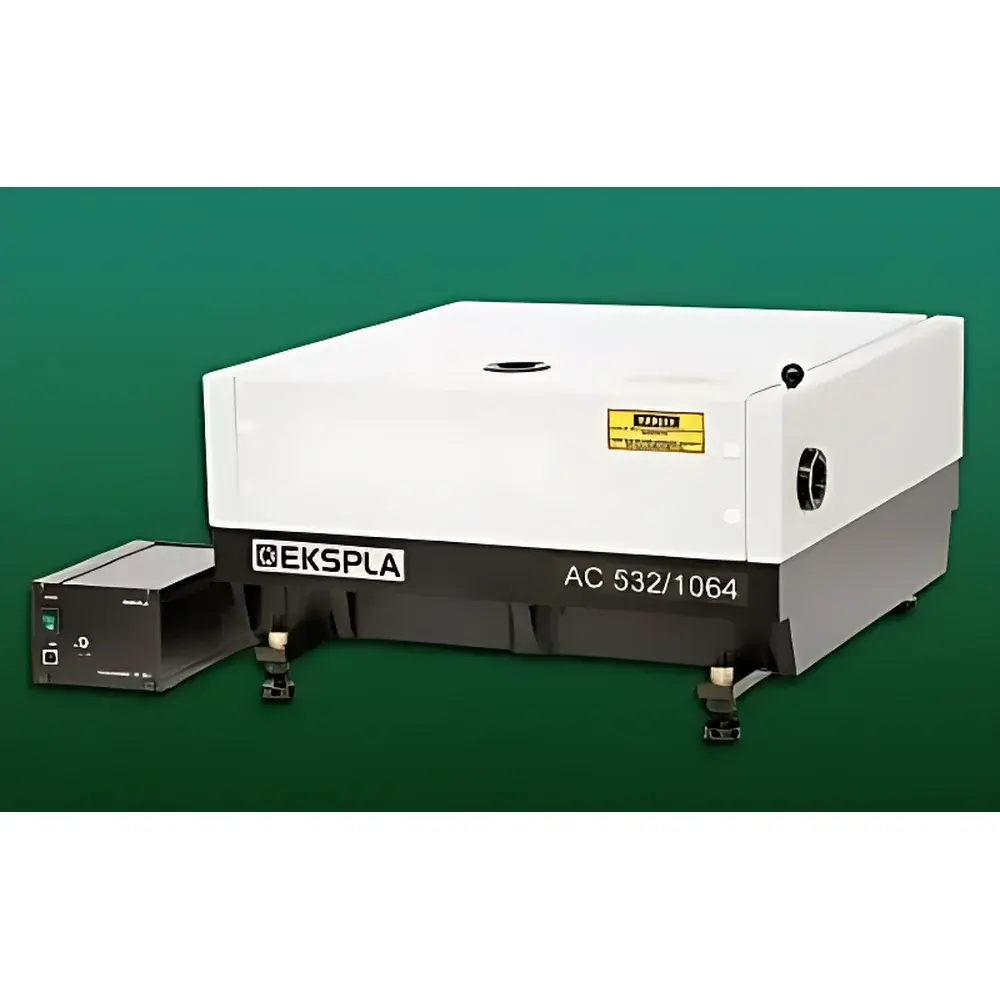
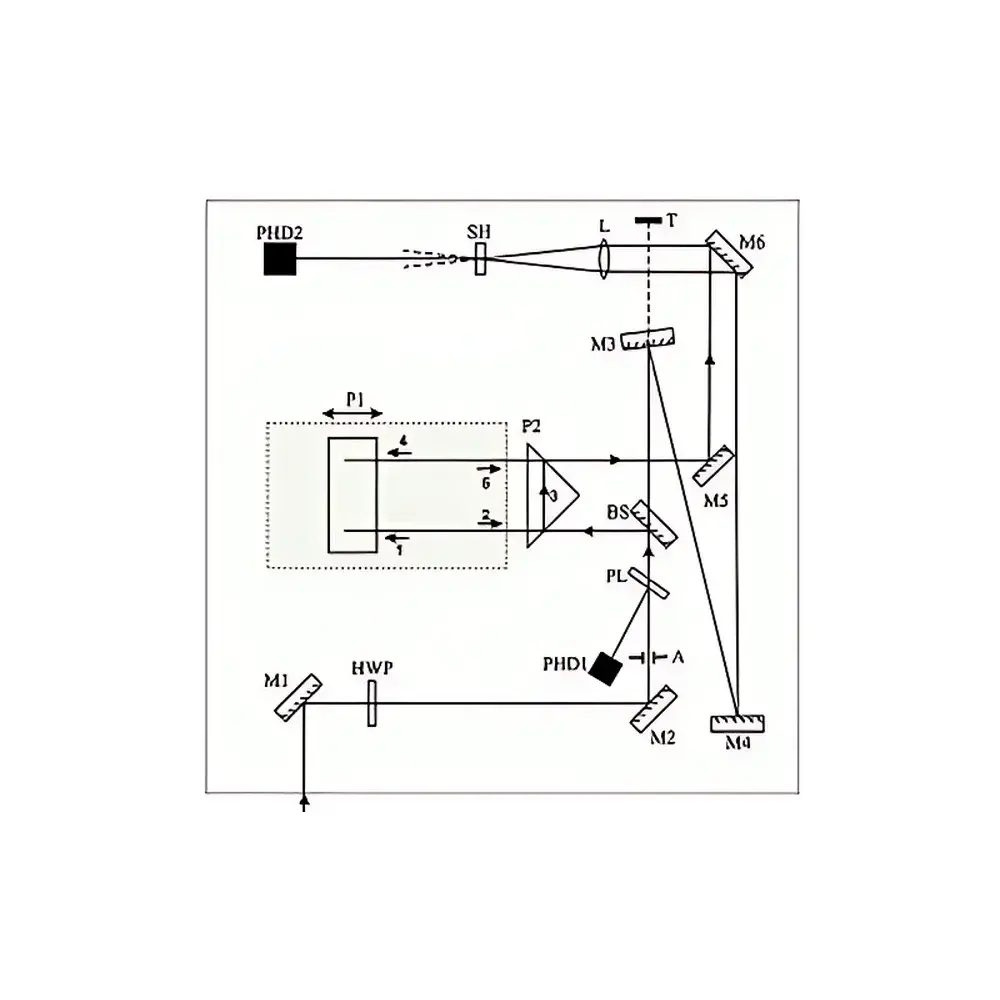
The Ekspla AC Series Scanning Autocorrelator is a precision optical instrument engineered for the direct time-domain characterization of ultrashort laser pulses via intensity autocorrelation using non-collinear second harmonic generation (SHG). Designed for laboratory and industrial R&D environments, it enables reliable pulse duration measurement across a broad spectral range—from 420 nm to 2000 nm—with standard configurations optimized for fundamental (1064 nm) and second harmonic (532 nm) outputs of mode-locked or stimulated Brillouin scattering (SBS)-compressed Nd:YAG and Nd:YLF lasers. The device operates on a well-established interferometric principle: an incoming ultrashort pulse is split into two temporally delayed replicas, recombined at a precise non-collinear angle in a thin, phase-matched nonlinear crystal (typically BBO or LBO), where SHG occurs only during temporal overlap. The resulting SHG signal intensity is recorded as a function of optical delay, yielding the intensity autocorrelation trace. Assuming Gaussian or sech² pulse profiles, full-width-at-half-maximum (FWHM) pulse duration is derived analytically from the measured trace width—providing traceable, repeatable results without requiring complex deconvolution algorithms.
Key Features
- High-fidelity non-collinear SHG geometry ensures background-free, high-contrast autocorrelation traces with minimal spatial walk-off and group velocity mismatch
- Standard pulse duration measurement range: 5–400 ps (±300 ps mechanical delay scan); optional extended scan range up to ±1200 ps for characterizing pulse satellites, pre-/post-pulses, or longer-duration amplified systems
- Single thin nonlinear crystal design minimizes dispersion and temporal broadening—critical for preserving sub-10-ps resolution fidelity
- Integrated real-time input pulse energy monitor enables energy-gated averaging, eliminating artifacts caused by laser amplitude instability or shot-to-shot fluctuations
- Motorized precision translation stage with sub-micron repeatability and calibrated delay calibration traceable to NIST-traceable interferometric references
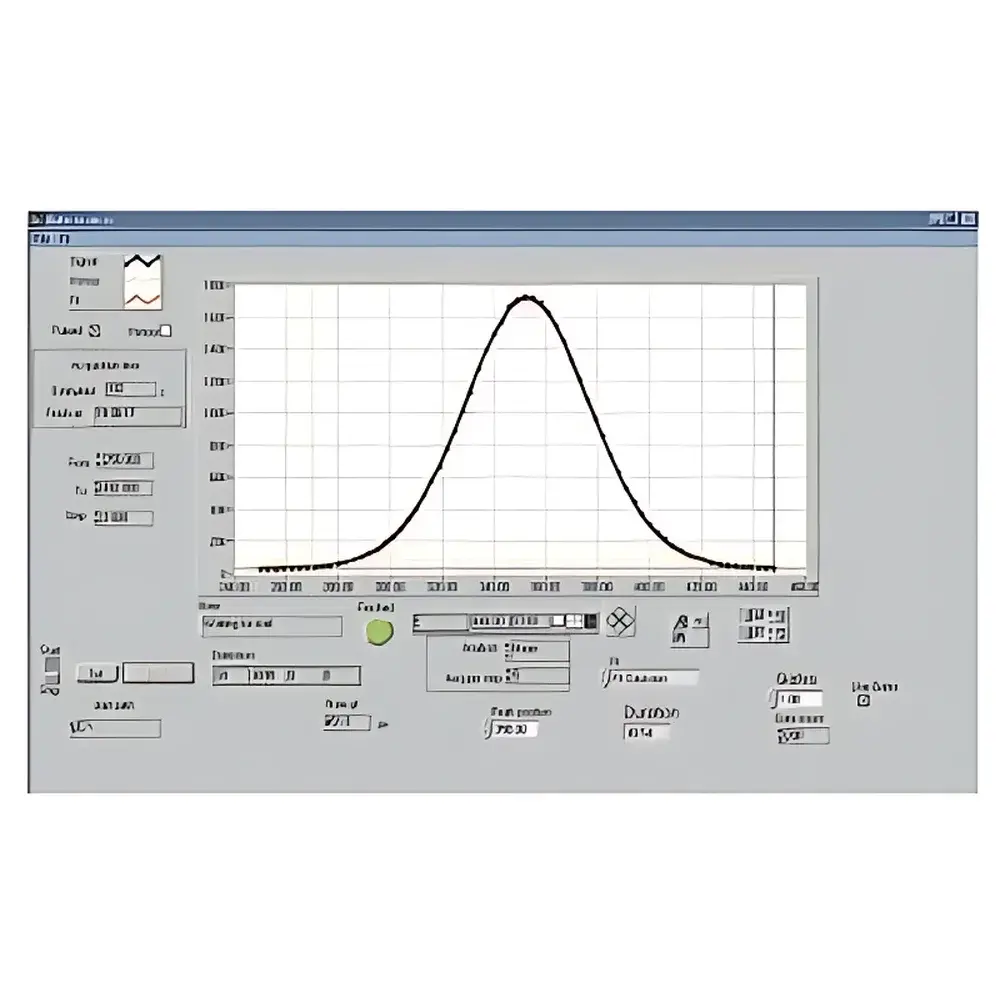
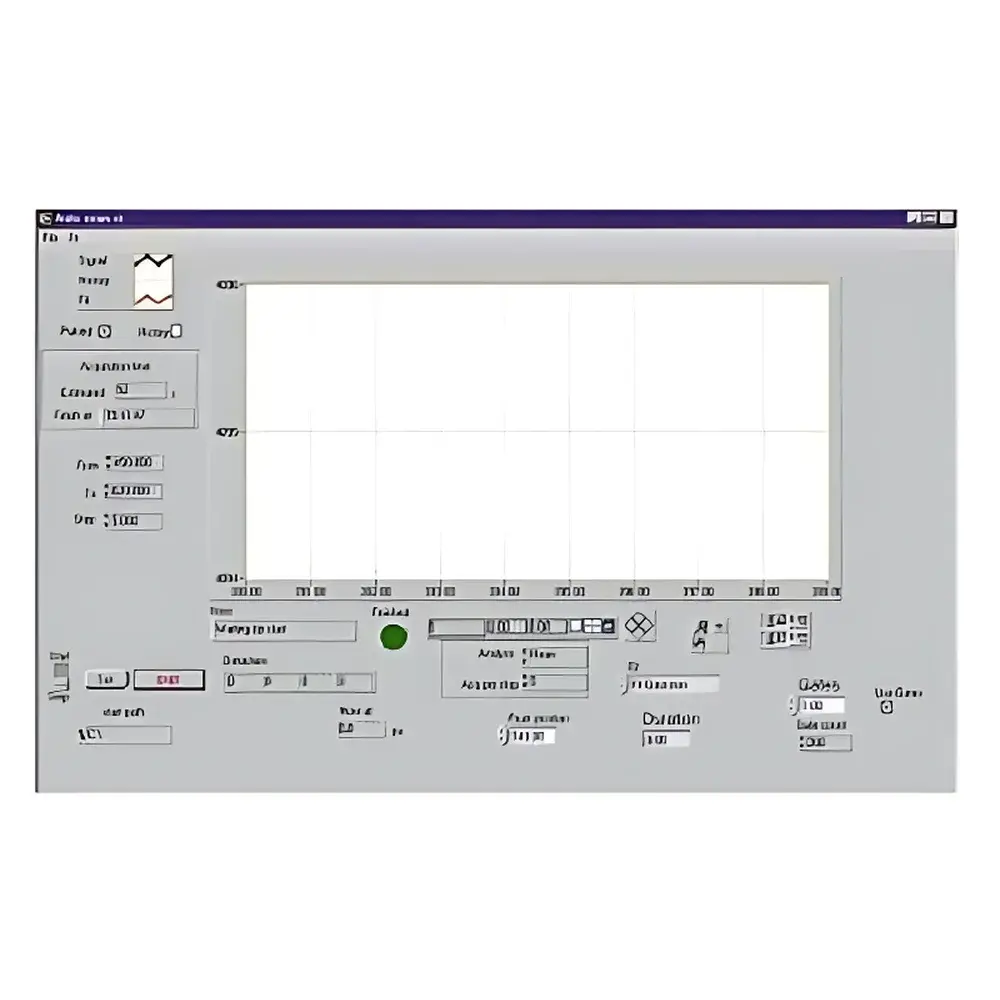
- LabVIEW™-based software platform supporting fully automated acquisition, real-time trace visualization, multi-curve overlay, and export of raw delay–intensity datasets in ASCII and HDF5 formats
Sample Compatibility & Compliance
The AC Series accommodates free-space collimated beam inputs with diameters between 2 mm and 8 mm and divergence < 1 mrad. It is compatible with Ti:sapphire, Yb-doped fiber, Nd-based solid-state, and optical parametric amplifier (OPA) systems. All models comply with IEC 61000-6-3 (EMC emission) and IEC 61000-6-2 (immunity) standards. While the instrument itself does not carry CE or FDA certification as a standalone measurement device, its software architecture supports configuration for regulated environments: audit trails, user access levels, electronic signatures, and raw data immutability can be implemented when deployed within LabVIEW Real-Time or DIAdem-based validation frameworks compliant with 21 CFR Part 11 and ISO/IEC 17025 requirements. Calibration certificates (including delay-stage linearity and wavelength-specific SHG efficiency verification) are provided upon request.
Software & Data Management
The supplied LabVIEW™ application provides intuitive GUI-driven control of scanning parameters—including step size (1–100 fs resolution), total scan range, number of averages per point (1–10,000), and trigger synchronization mode (internal or external TTL). Raw autocorrelation traces are stored with metadata (timestamp, laser repetition rate, crystal type, user ID, system configuration). Batch processing tools enable automatic FWHM calculation under Gaussian/sech² assumptions, peak normalization, baseline subtraction, and noise filtering. Source code delivery (upon formal request and NDA execution) permits integration into custom test automation suites, third-party DAQ platforms, or proprietary analysis pipelines. Data export supports CSV, MATLAB .mat, and HDF5—ensuring interoperability with Python (NumPy/SciPy), Igor Pro, and OriginLab environments.
Applications
- Quantitative pulse duration verification of femtosecond–picosecond oscillators and amplifiers in laser development labs
- Characterization of pulse compression efficiency in chirped-pulse amplification (CPA) and SBS-compression stages
- Diagnostics of pulse distortions induced by dispersive optics, gain narrowing, or nonlinear propagation effects
- Validation of ultrafast laser stability during long-term reliability testing (e.g., 72-hr continuous monitoring with automated periodic scans)
- Supporting ISO 11146-3 compliant beam parameter measurements when combined with spatial profiling instrumentation
- Teaching and training in ultrafast optics laboratories—enabling hands-on demonstration of time-domain pulse metrology fundamentals
FAQ
What laser repetition rates are supported?
The AC Series operates in single-shot or multi-shot averaging modes and is compatible with repetition rates from 1 kHz to 100 MHz. For high-repetition-rate sources (>10 MHz), optional external pulse picking synchronization is recommended to avoid detector saturation.
Can the autocorrelator measure pulses shorter than 5 ps?
While the standard calibration and crystal selection target ≥5 ps pulses, sub-5 ps measurement is feasible using custom thin-crystal configurations and reduced scan step sizes—subject to signal-to-noise constraints and user-provided pulse energy optimization.
Is vacuum or purged operation required for UV wavelengths?
For operation below 420 nm (e.g., 266 nm), nitrogen purging or vacuum-compatible housing upgrades are available to mitigate ozone absorption and UV-induced crystal degradation.
How is delay calibration verified?
Each unit includes a factory-measured delay-stage calibration curve, cross-validated using a stabilized HeNe interferometer. Users may perform in-situ recalibration using a known reference pulse (e.g., from a commercial femtosecond oscillator) and the provided trace analysis toolkit.
Does the system support third-harmonic generation (THG) autocorrelation?
THG-based autocorrelation is not natively supported; however, custom optical heads with tripling crystals and dual-band coatings can be commissioned as OEM variants upon technical feasibility review.




