
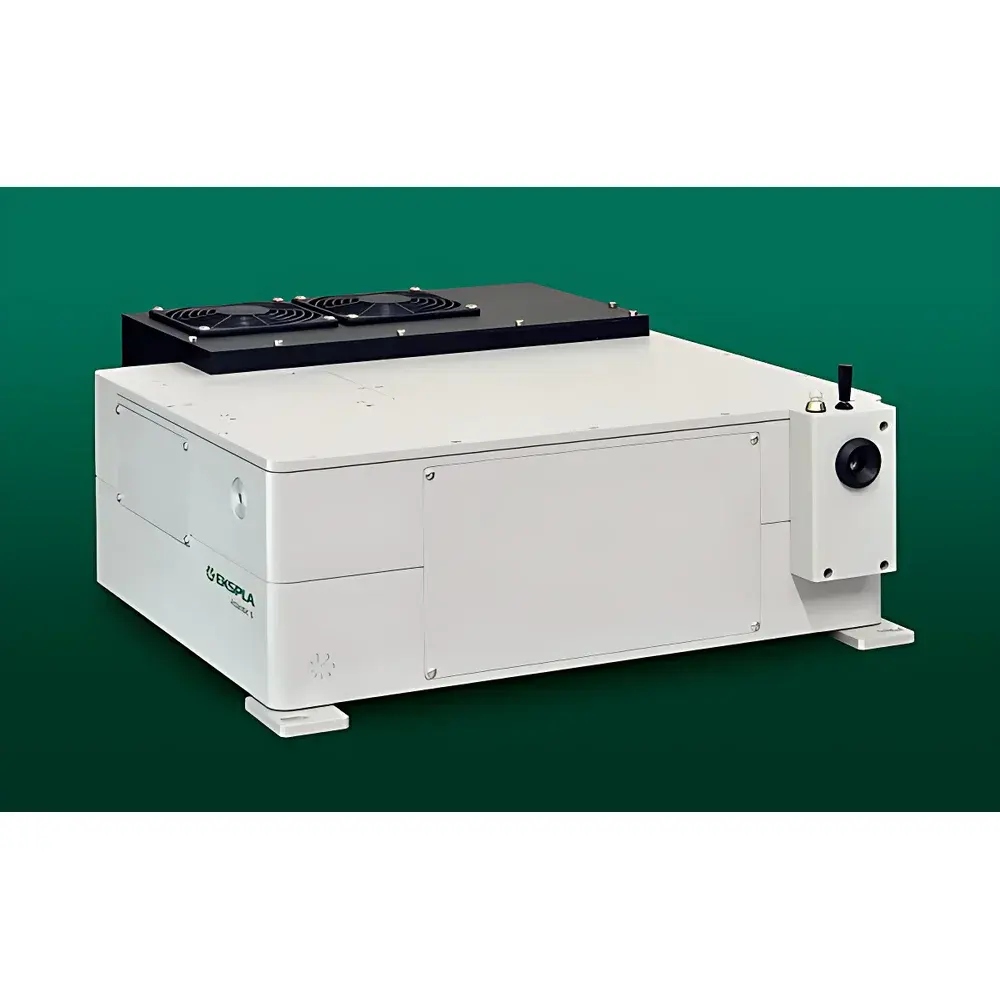
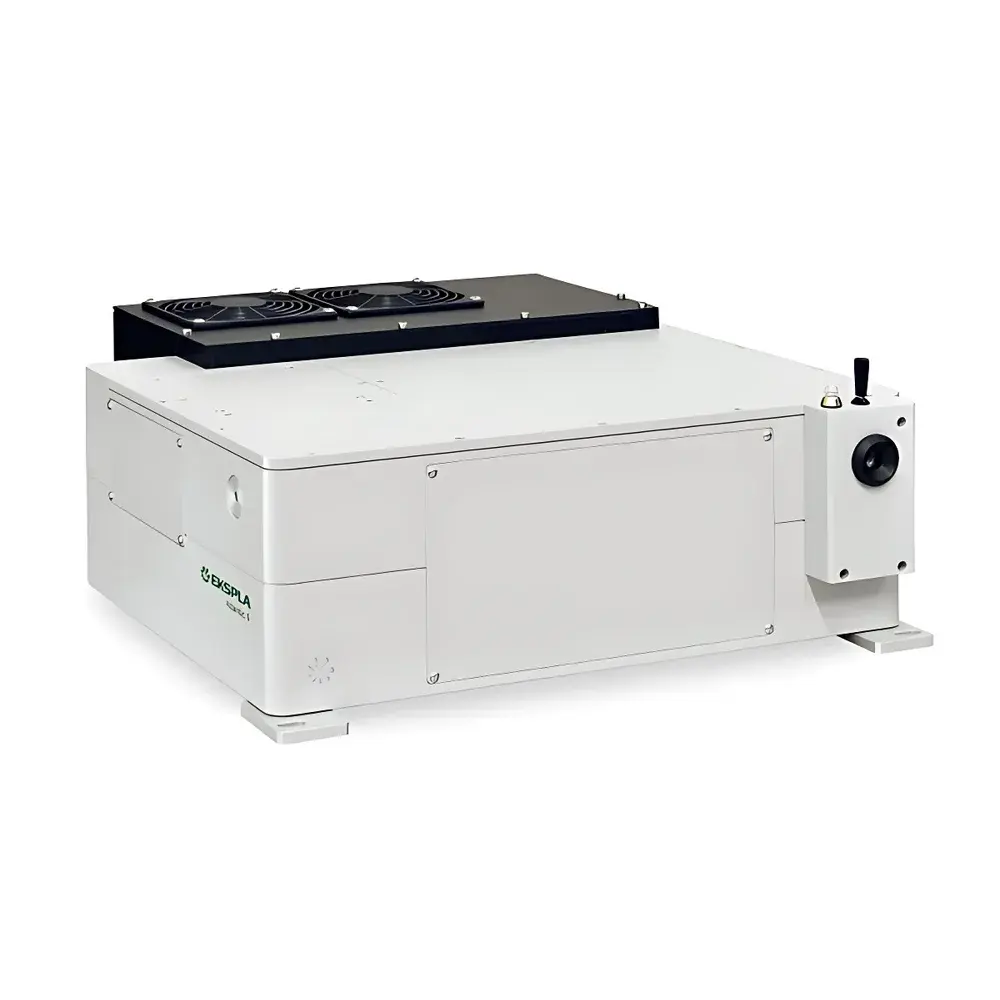
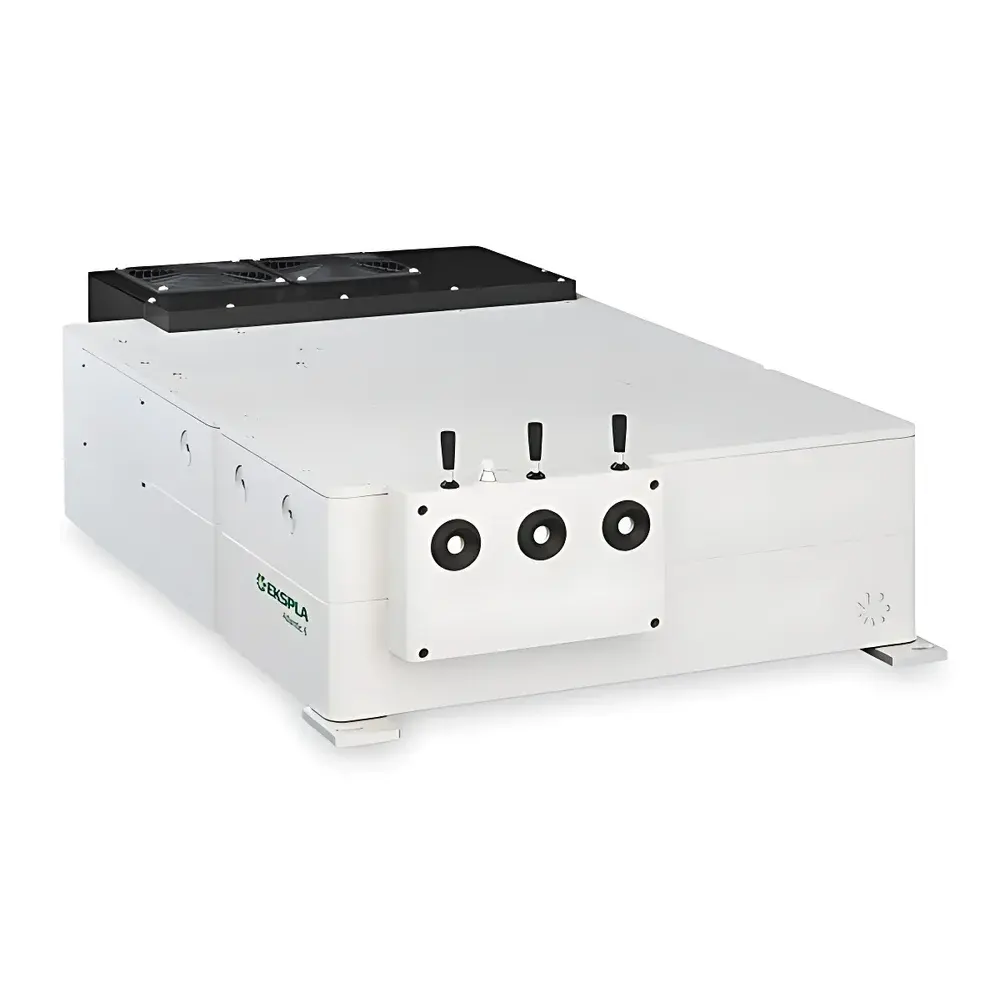
Ekspla Atlantic 6 Compact Air-Cooled Industrial Picosecond Laser
| Brand | Ekspla |
|---|---|
| Origin | Lithuania |
| Manufacturer Type | Original Equipment Manufacturer (OEM) |
| Product Category | Imported Industrial Laser System |
| Model | Atlantic 6 |
| Output Power | 5 W @ 1064 nm |
| Repetition Rate | Up to 1 MHz |
| Pulse Energy | Up to 30 µJ |
| Pulse Duration | < 10 ps |
| Beam Quality | M² < 1.3 |
| Cooling | Forced-air (dry laser head) |
| Triggering | Smart external synchronization (TTL, LVDS) |
| Operating Voltage | Single-phase AC, 100–240 V |
| Enclosure | IP54-rated sealed industrial housing |
| Maintenance Interval | > 20,000 hours MTBF |
Overview
The Ekspla Atlantic 6 is a turnkey, diode-pumped solid-state (DPSS) picosecond laser system engineered for high-reliability industrial micromachining and precision material processing. Based on master oscillator–power amplifier (MOPA) architecture with regenerative amplification, it delivers sub-10 ps pulses at 1064 nm with exceptional temporal stability and spatial coherence. Unlike water-cooled ultrafast lasers requiring chiller infrastructure, the Atlantic 6 employs a fully air-cooled, dry laser head—eliminating coolant loops, reducing footprint, and enabling deployment in space-constrained production lines. Its robust monolithic mechanical design, hermetically sealed optical cavity, and vibration-damped baseplate ensure long-term pointing stability and pulse-to-pulse consistency under factory-floor conditions. Designed for 24/7 operation in ISO Class 7 cleanrooms or ambient manufacturing environments, it meets the thermal, electrical, and electromagnetic compatibility (EMC) requirements of IEC 61000-6-2 and IEC 61000-6-4.
Key Features
- Industrial-grade DPSS architecture with all-solid-state gain medium (Nd:YVO₄) and passive mode-locking seed source
- Programmable seeder burst mode: configurable pulse trains (1–100 pulses/burst) with inter-pulse spacing from 10 ns to 10 µs
- Pulse-on-demand operation via TTL/LVDS trigger input with jitter < 500 ps RMS, enabling precise synchronization with motion stages, polygon scanners, or camera acquisition
- Integrated real-time power monitoring and automatic output stabilization via internal photodiode feedback loop
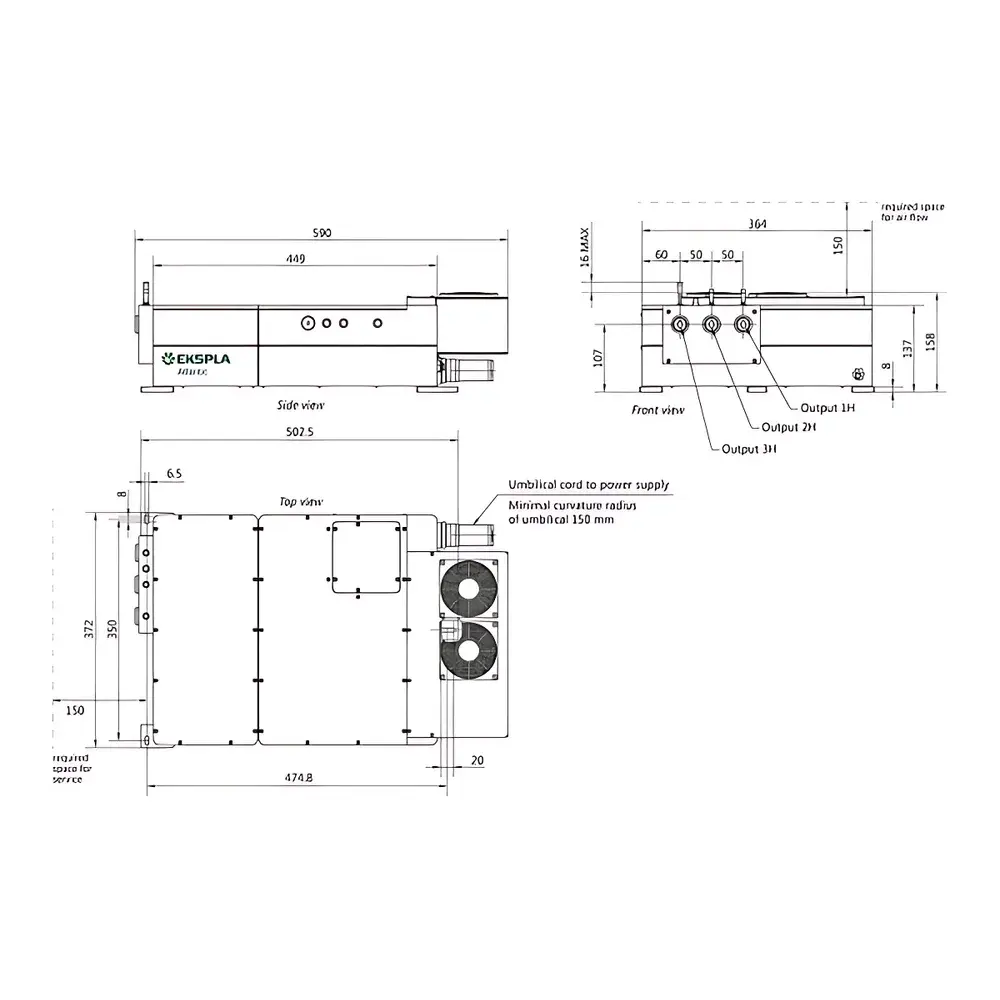
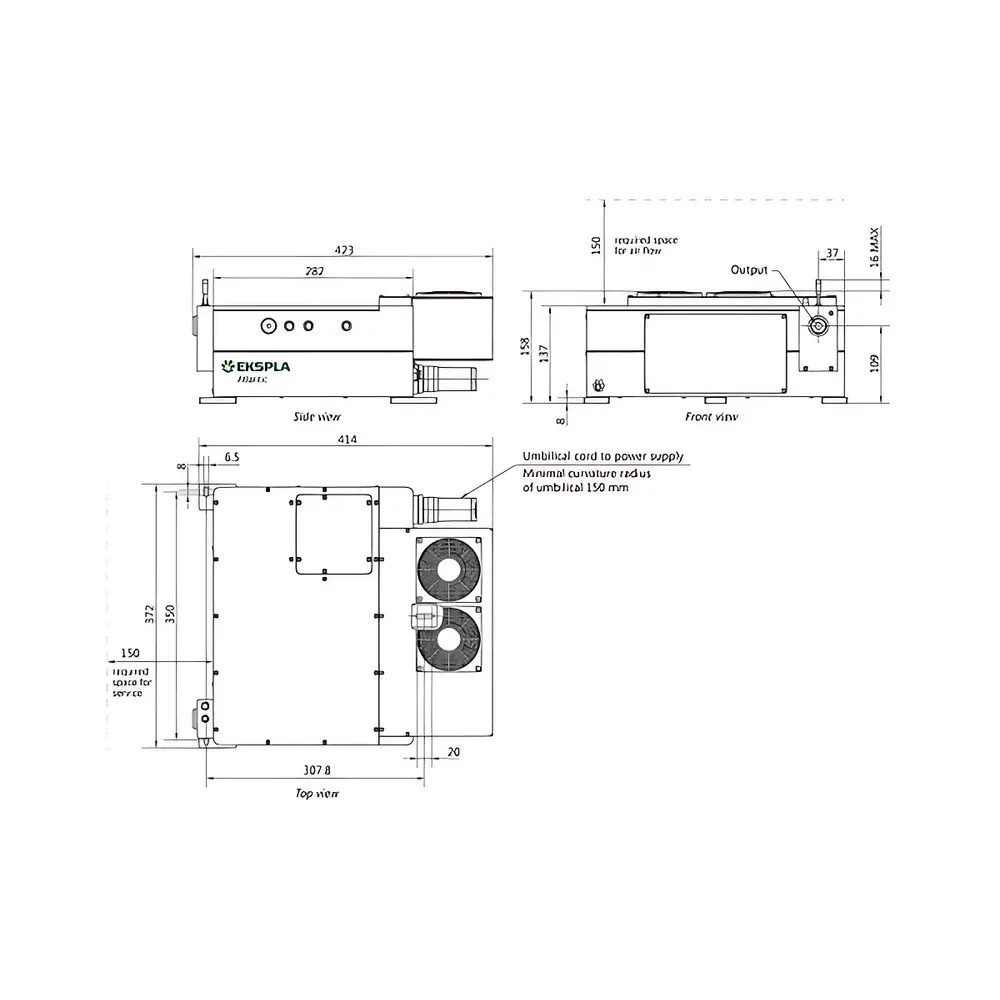
- Compact form factor (490 × 320 × 150 mm) with front-panel status indicators, RS-232 and Ethernet (TCP/IP) communication interfaces
- Compliance with laser safety standards: EN 60825-1:2014 (Class 4), equipped with interlock circuitry, key switch, and emission indicator
Sample Compatibility & Compliance
The Atlantic 6 is optimized for non-thermal ablation of materials with high bandgap energies and low heat-affected zones (HAZ). It processes transparent dielectrics (e.g., sapphire, fused silica, LiNbO₃), brittle semiconductors (SiC, GaN), thin-film photovoltaic layers (CIGS, perovskite), and biocompatible metals (316L stainless steel, nitinol). All processing parameters—including pulse energy, repetition rate, scan velocity, and hatch spacing—are traceable and auditable per FDA 21 CFR Part 11 requirements when integrated with validated industrial control software. The system conforms to CE marking directives (Machinery Directive 2006/42/EC, EMC Directive 2014/30/EU) and supports GLP/GMP documentation workflows through optional audit-trail-enabled firmware.
Software & Data Management
The laser operates under Ekspla’s proprietary LaserControl Suite v3.x, a Windows-based application supporting remote configuration, real-time diagnostics, and parameter logging. Export formats include CSV and HDF5 for post-processing in MATLAB or Python-based analysis pipelines. Integration with third-party platforms (e.g., GalvoScan Pro, ScanLab RTC6 SDK, Beckhoff TwinCAT) is achieved via standardized TCP/IP commands or shared memory buffers. Firmware updates are delivered via signed binary packages with SHA-256 verification; configuration backups retain full calibration metadata including beam profiling history and thermal drift compensation tables.
Applications
- Cold marking: High-contrast, oxide-free surface marking of medical implants and aerospace components without microcracking
- Sapphire dicing: Wafer-level separation of LED and RF filter substrates with kerf widths < 15 µm and edge roughness < 100 nm Ra
- Heat-sensitive material processing: Selective ablation of polymer coatings (PI, PET) on lithium-ion battery electrodes without thermal delamination
- Medical stent fabrication: Cut-and-polish-free strut cutting of nitinol tubes with minimal recast layer (< 200 nm) and no phase transformation
- CIGS scribing: P1, P2, and P3 patterning of thin-film solar modules with < ±0.5 µm positional repeatability across 1.2 m² substrates
- Surface structuring: Direct-write generation of functional microtextures (e.g., hydrophobic arrays, diffraction gratings) on optical lenses and mold inserts
FAQ
What is the maximum average power stability over an 8-hour shift?
Average power drift is ≤ ±0.75% RMS under constant ambient temperature (20–25 °C) and stable line voltage (±5%).
Can the Atlantic 6 be integrated into a Class 1000 cleanroom environment?
Yes—the sealed laser head and fan-filter unit meet ISO 14644-1 Class 7 requirements; optional HEPA-integrated air intake available.
Is pulse energy tunable without changing repetition rate?
Yes—via internal attenuator (motorized half-wave plate + polarizer) with 0.1 µJ resolution and < 2% linearity error.
Does the system support harmonic generation modules?
Third-harmonic (355 nm) and fifth-harmonic (213 nm) modules are available as factory-installed options with collinear beam delivery and automated wavelength switching.
What is the warranty coverage and service response time?
Standard warranty: 24 months parts and labor; extended service plans include on-site calibration, preventive maintenance, and remote diagnostics with 4-hour SLA for critical production downtime.



