
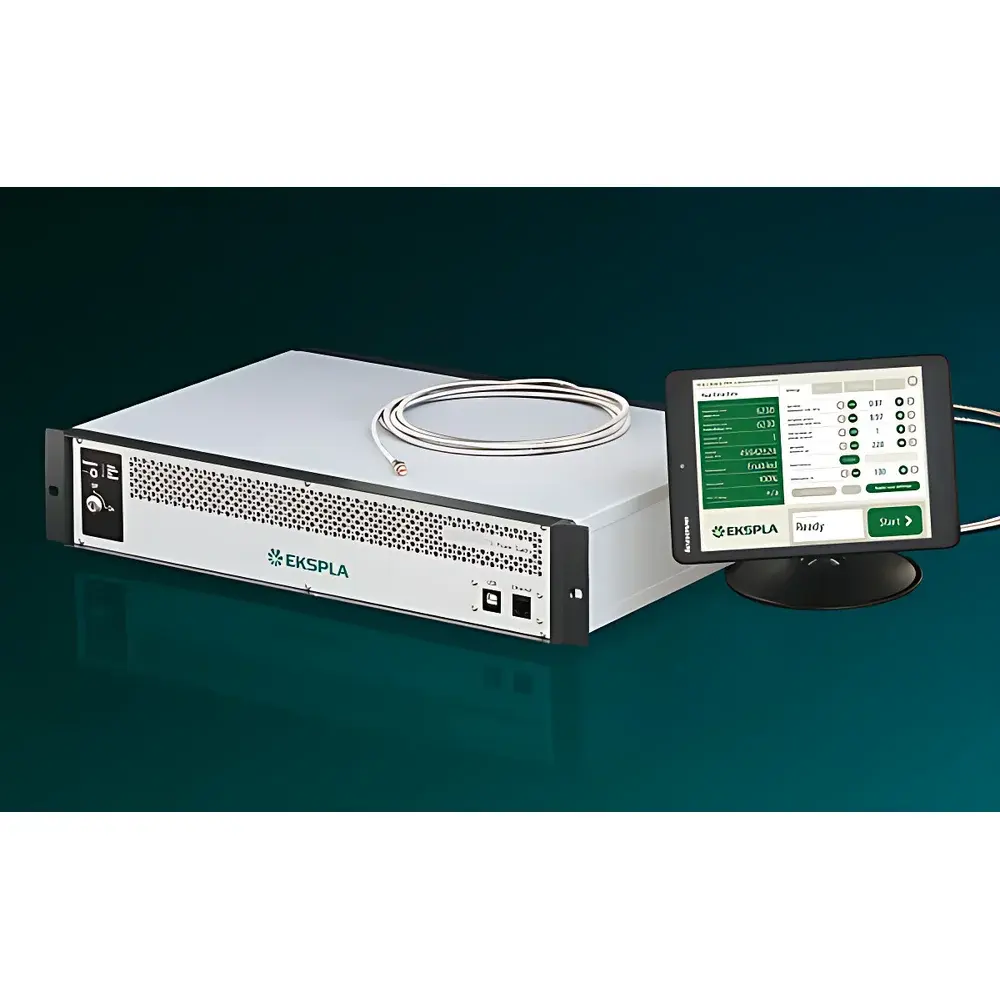
Ekspla FPS Compact Turnkey Picosecond Fiber Seed Laser
| Brand | Ekspla |
|---|---|
| Origin | Lithuania |
| Manufacturer Type | Original Equipment Manufacturer (OEM) |
| Device Type | Fiber-Based Picosecond Seed Source |
| Model | FPS |
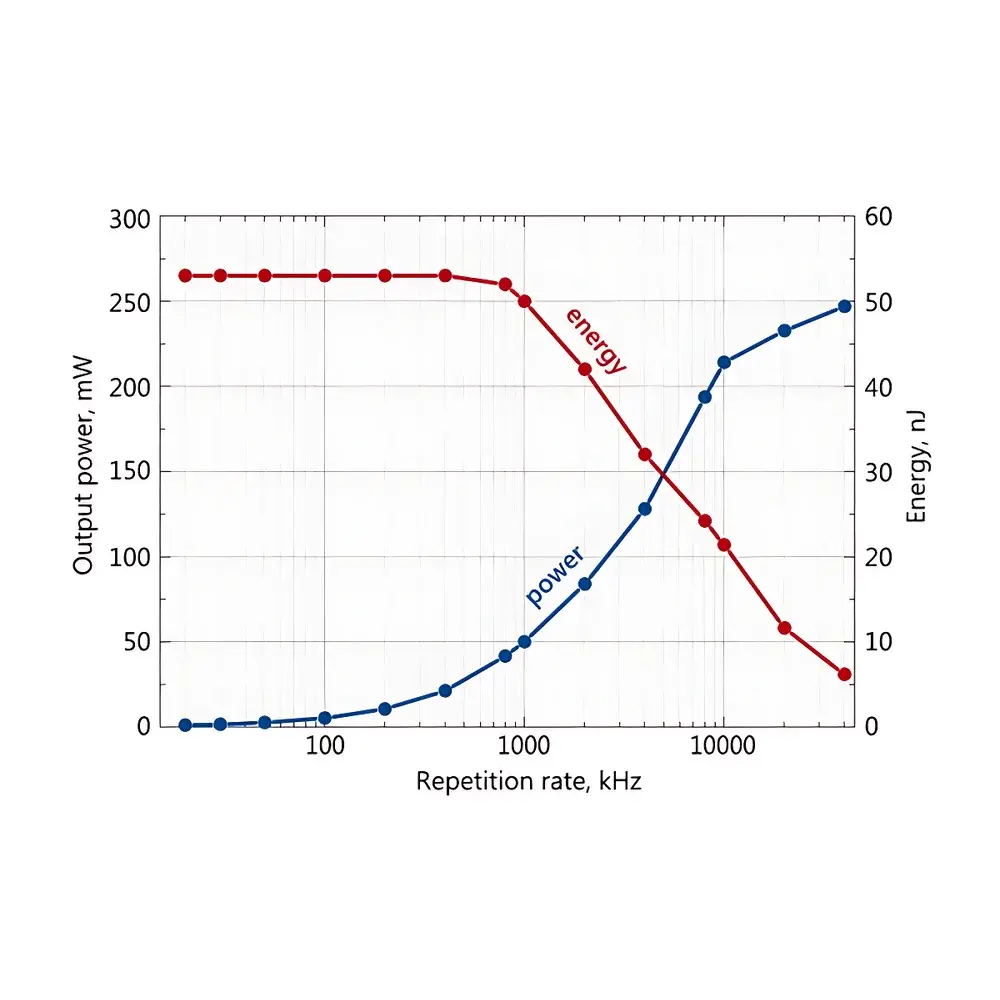
| Pulse Energy | >50 nJ (at rep rate <1 MHz) |
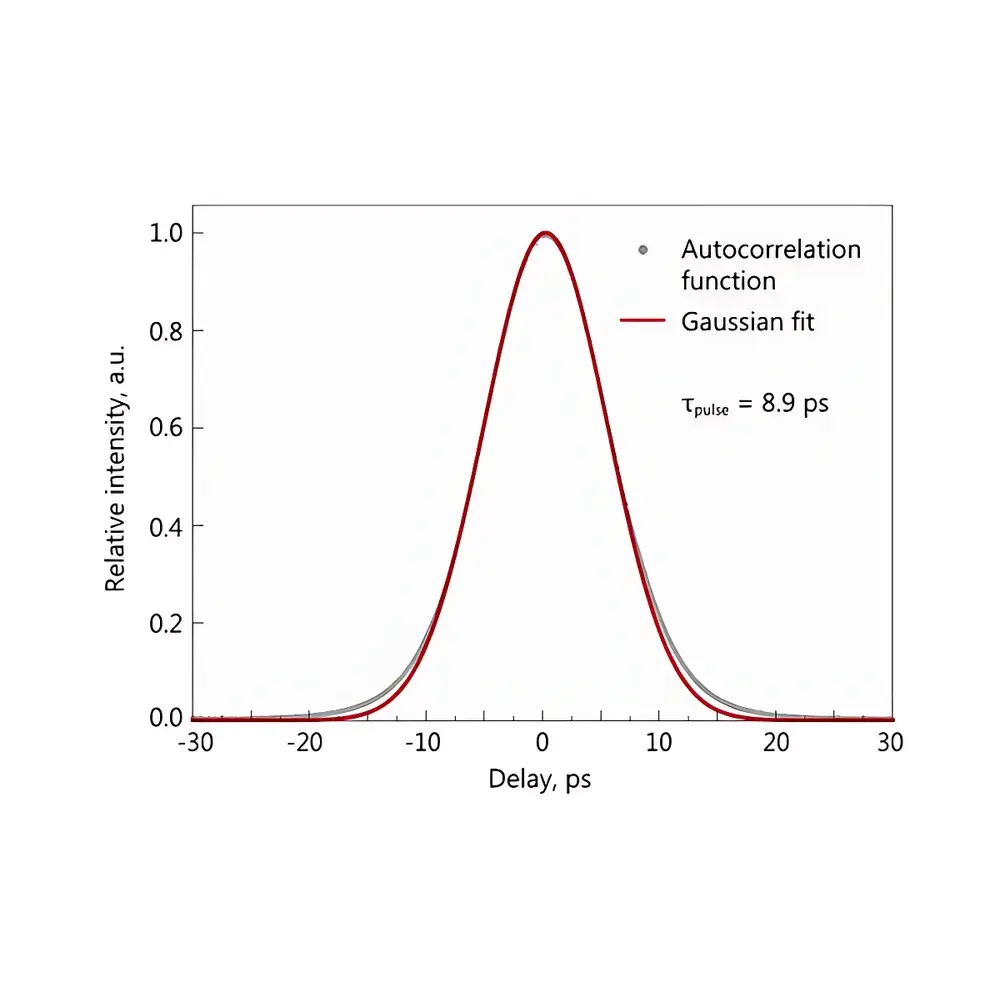
| Pulse Duration | <10 ps |
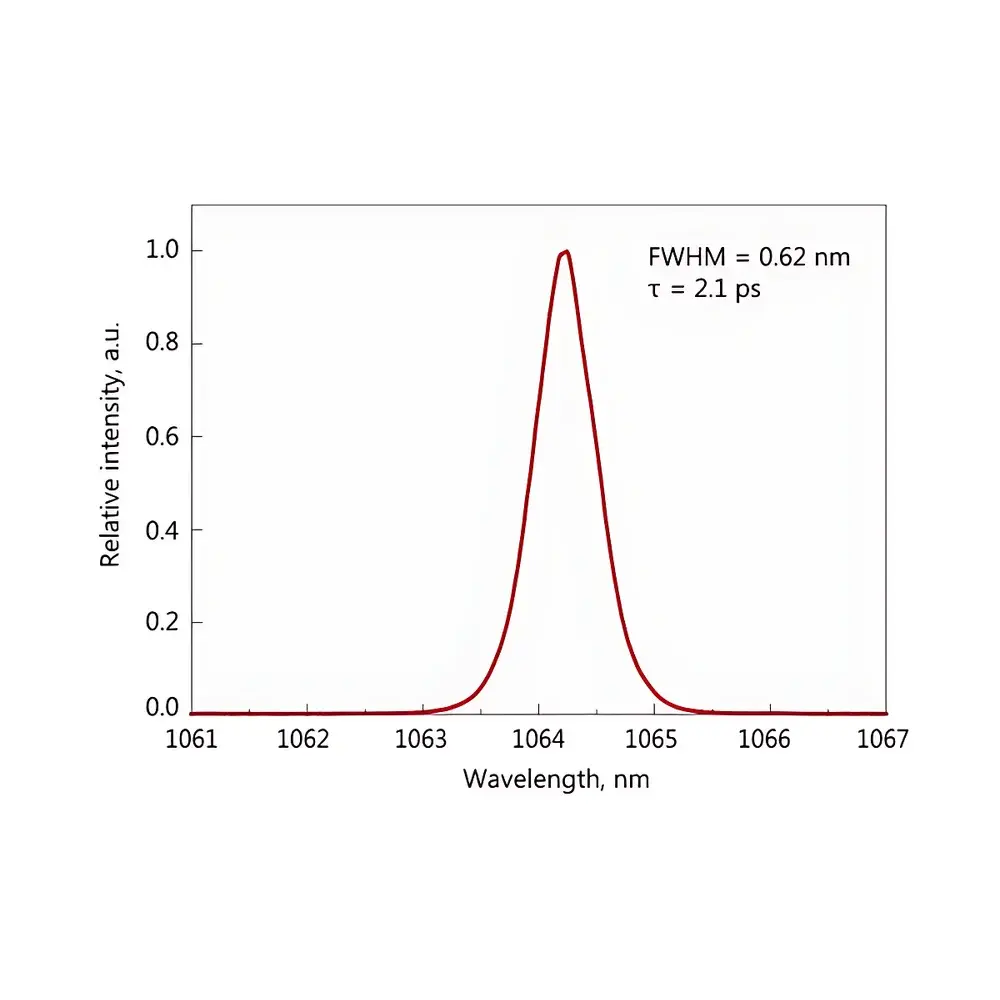
| Spectral Bandwidth | Near Fourier-Transform Limited |
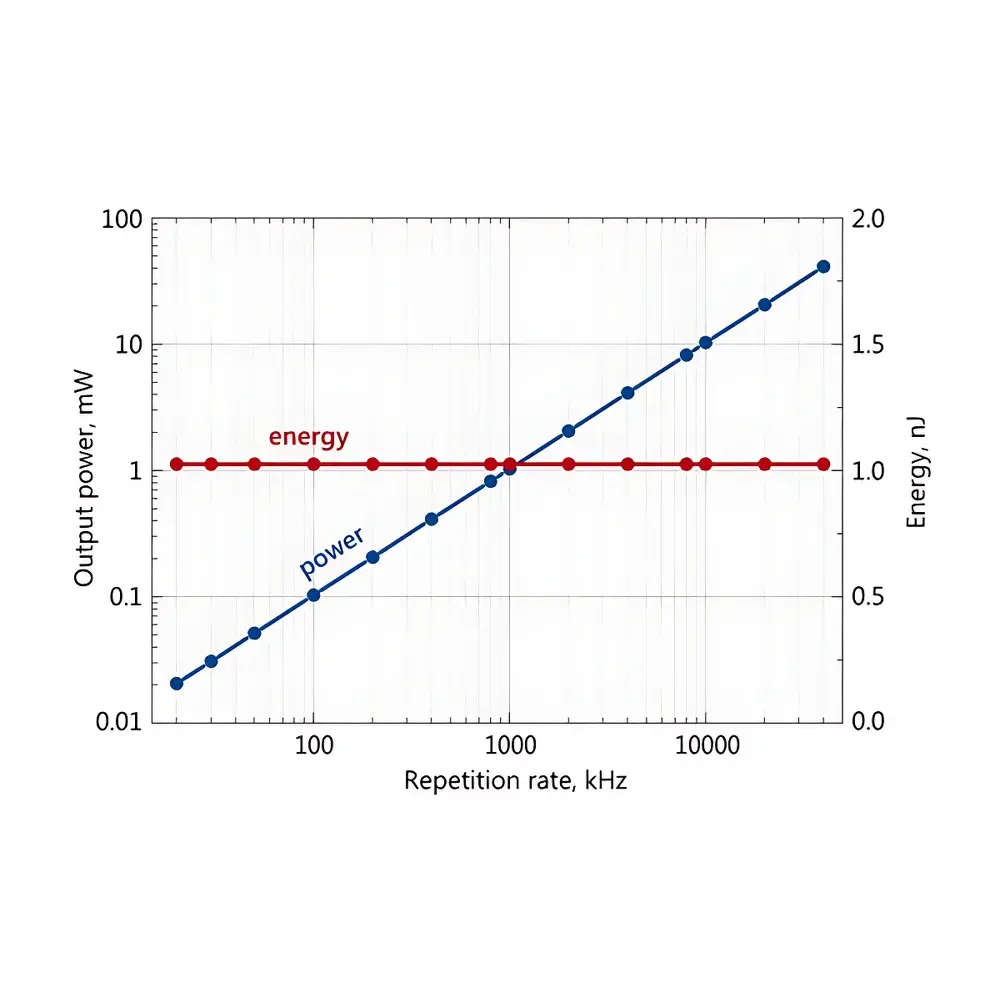
| Repetition Rate Range | 20 kHz – 40 MHz (fiber-integrated AOM pulse picker, burst mode supported) |
| Output Configuration | Free-space collimated output optional (FPS10/FPS100-COL) |
| Synchronization | TTL-compatible interface for external triggering (FPS10/FPS100-AOM option) |
Overview
The Ekspla FPS Compact Turnkey Picosecond Fiber Seed Laser is a fully integrated, alignment-free optical source engineered for high-stability seeding of solid-state amplifier systems. Based on all-fiber master oscillator technology, the FPS delivers sub-10 ps pulses with near Fourier-transform limited spectral bandwidth—ensuring minimal time-bandwidth product and optimal temporal coherence for subsequent amplification stages. Its monolithic fiber architecture eliminates free-space beam paths, reducing sensitivity to environmental perturbations and enabling reliable operation in industrial or multi-user laboratory environments. Designed for direct integration into chirped-pulse amplification (CPA) and optical parametric amplification (OPA) chains, the FPS meets stringent requirements for pulse-to-pulse stability, long-term power consistency, and low-amplitude noise—critical parameters for pump-probe spectroscopy, ultrafast metrology, and nonlinear frequency conversion applications.
Key Features
- Sub-10 ps pulse duration with near transform-limited spectral profile, supporting high-fidelity temporal compression after amplification
- Pulse energy exceeding 50 nJ at repetition rates below 1 MHz—optimized for efficient injection into regenerative or multipass solid-state amplifiers
- Integrated acousto-optic modulator (AOM)-based fiber pulse picker enabling precise, software-controllable repetition rate tuning from 20 kHz to 40 MHz
- Burst-mode operation capability for time-resolved experiments requiring pulse trains with programmable intra-burst spacing and inter-burst delay
- Turnkey design with internal thermal management, automatic power stabilization, and embedded diagnostics—no user alignment or routine maintenance required
- TTL synchronization interface standard on all models; enables seamless integration with delay generators, data acquisition systems, and laser amplifier Q-switches
Sample Compatibility & Compliance
The FPS seed source is compatible with Nd:YVO₄, Nd:YLF, Yb:KGW, and Ti:sapphire amplifier platforms operating in regenerative, multipass, or cryogenic configurations. Its polarization-maintaining (PM) fiber output ensures consistent launch coupling efficiency into amplifier front-ends. The system complies with IEC 60825-1:2014 Class 4 laser safety requirements and includes interlock-ready connectors for integration into ISO 13857-compliant enclosures. Firmware supports audit-trail logging per GLP/GMP guidelines when operated with compatible host controllers. While not certified for medical use, its performance aligns with key parameters referenced in ASTM F2793 (Standard Practice for Ultrafast Laser Beam Characterization) and ISO 11146-2 (Laser and laser-related equipment — Test methods for laser beam widths, divergence angles and beam propagation ratios).
Software & Data Management
The FPS is controlled via a dedicated USB-connected GUI application supporting Windows 10/11 (64-bit), with optional LabVIEW™ and Python API support through vendor-provided SDKs. Real-time monitoring includes pulse energy drift tracking, repetition rate verification, and internal temperature telemetry. All operational parameters—including AOM drive voltage, pulse picker timing, and output power setpoints—are stored with timestamped metadata in CSV format. Audit trail functionality records user-initiated parameter changes, firmware updates, and system error events—supporting traceability under FDA 21 CFR Part 11 when deployed in regulated QC/QA workflows. Remote operation via Ethernet is available with optional network interface module (NIM-FPS).
Applications
- Seeding high-energy picosecond solid-state amplifiers in CPA systems for materials processing, LIBS, and laser-induced breakdown spectroscopy
- Time-resolved fluorescence upconversion and transient absorption spectroscopy requiring stable, low-jitter pulse trains
- Optical parametric generation (OPG) and amplification (OPA) for tunable mid-IR and UV pulse generation
- Ultrafast electron diffraction (UED) and X-ray free-electron laser (XFEL) pump-probe experiments demanding precise synchronization fidelity
- Industrial micromachining process development where pulse-to-pulse energy stability directly impacts feature repeatability
- Calibration of streak cameras, autocorrelators, and single-photon avalanche diode (SPAD) timing systems
FAQ
Is the FPS suitable for integration into vacuum-based ultrafast experimental chambers?
Yes—the device operates without outgassing components and features SMA-905 or FC/APC fiber connectors compatible with vacuum feedthroughs. Optional conduction-cooled versions are available upon request.
Can the repetition rate be synchronized to an external RF reference signal?
The standard TTL interface supports external triggering but does not provide phase-locked loop (PLL) locking to RF references. For RF-synchronized operation, the optional NIM-FPS module adds 10 MHz reference input and PLL-based repetition rate stabilization.
What is the typical pulse energy stability over 8 hours?
Under constant ambient conditions (±0.5 °C), RMS pulse energy fluctuation is ≤0.8% (2σ) over 8 hours, verified per ISO 21243:2020 test protocol.
Does the FPS100 model support higher average power than FPS10?
Both models share identical core oscillator architecture; the “10” and “100” suffixes denote nominal pulse energy classes (10 nJ and 100 nJ) at maximum repetition rate—not average power limits. Actual average power depends on configured rep rate and pulse energy settings.
Are factory recalibration services available?
Yes—Ekspla offers biennial traceable calibration against NIST-traceable photodiodes and autocorrelators, including full report with uncertainty budget compliant with ISO/IEC 17025:2017.




