
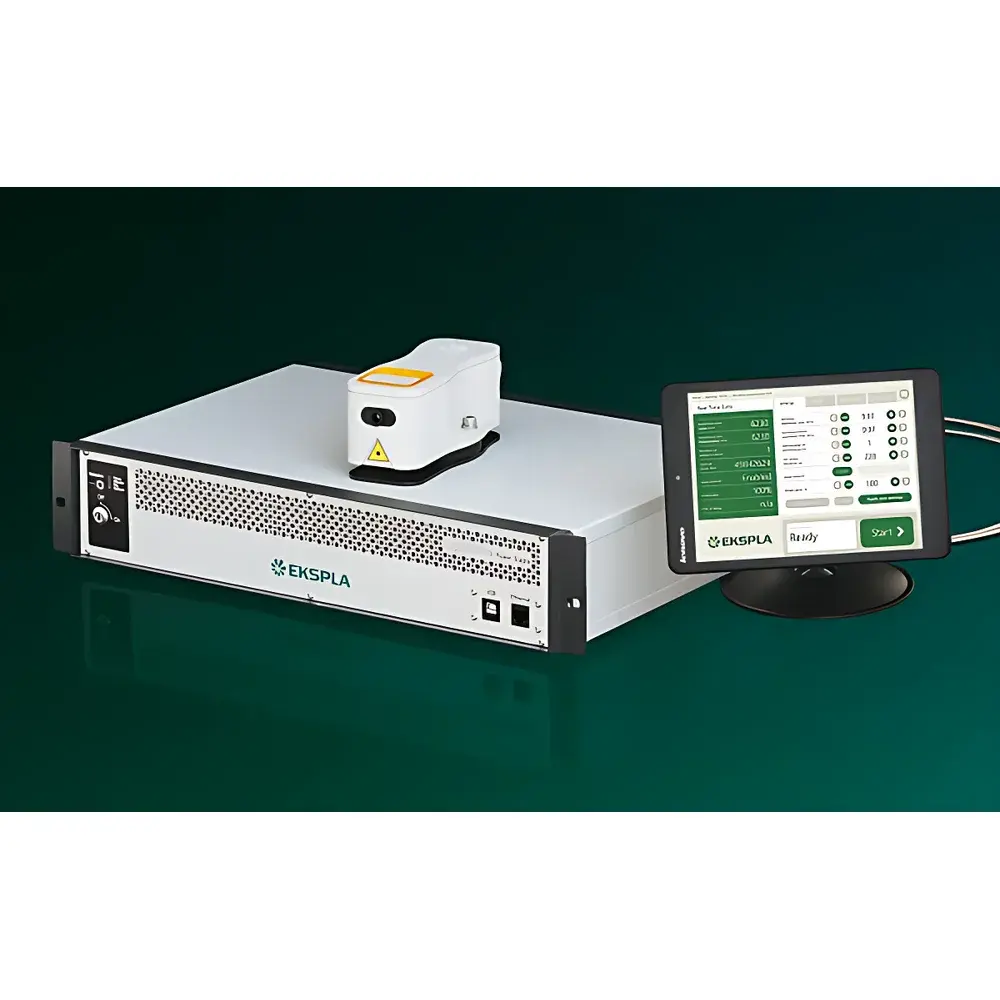
Ekspla LightWire FP200 Picosecond Fiber Laser
| Brand | Ekspla |
|---|---|
| Origin | Lithuania |
| Manufacturer Type | Original Equipment Manufacturer (OEM) |
| Product Category | Imported Instrument |
| Model | LightWire FP200 |
| Core Technology | All-Fiber, Diode-Pumped, Mode-Locked Picosecond Oscillator-Amplifier System |
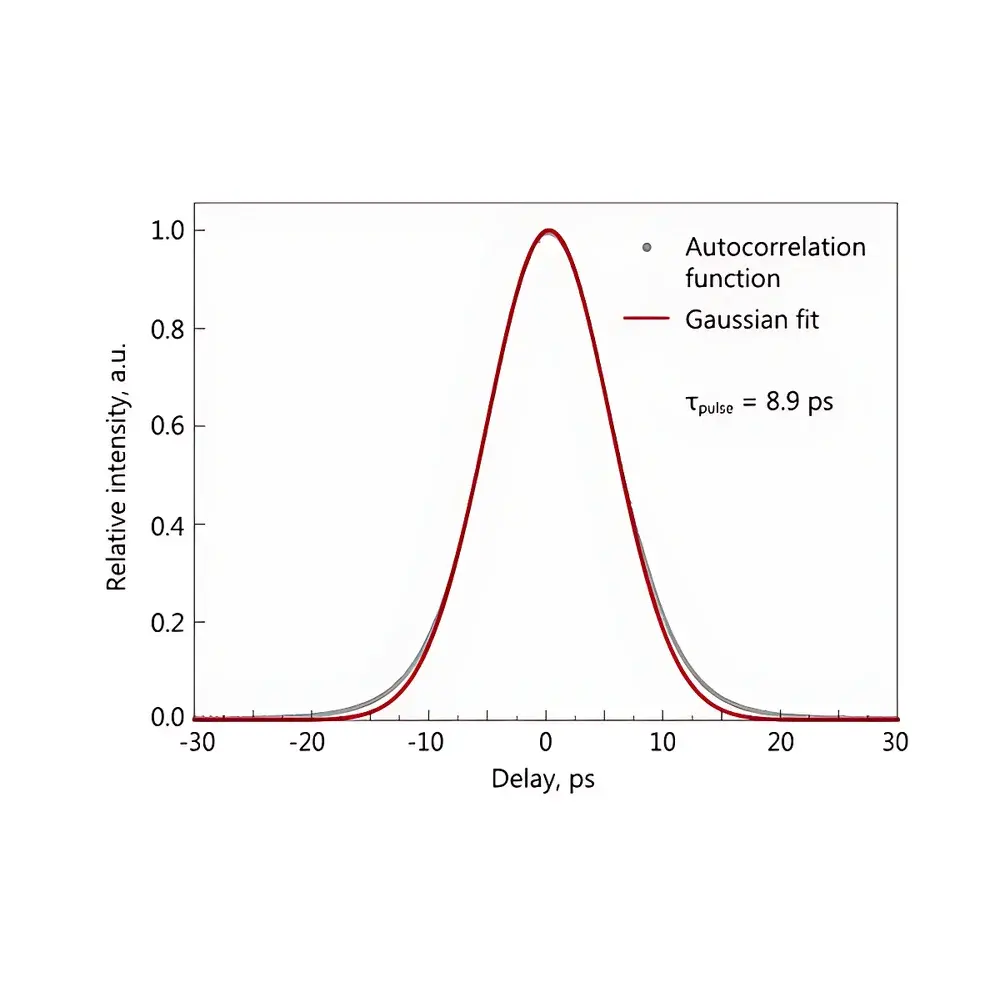
| Pulse Duration | 9 ps (transform-limited) |
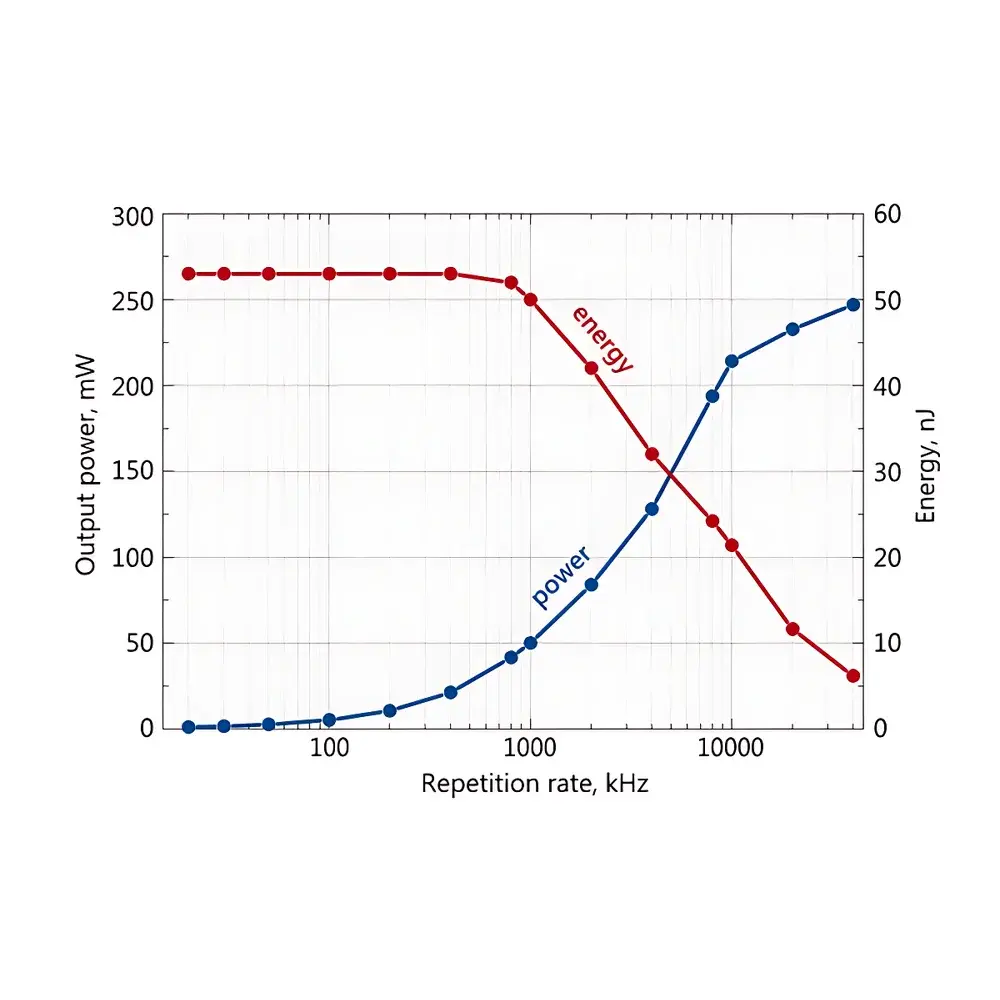
| Pulse Energy | >50 nJ at ≤200 kHz |
| Repetition Rate Range | 20 kHz – 40 MHz (continuous & burst mode) |
| Wavelength | 1064 nm (fundamental), optional 532 nm via SHG module (FP200-SH, peak conversion efficiency 20%) |
| Cooling | Air-cooled, maintenance-free operation |
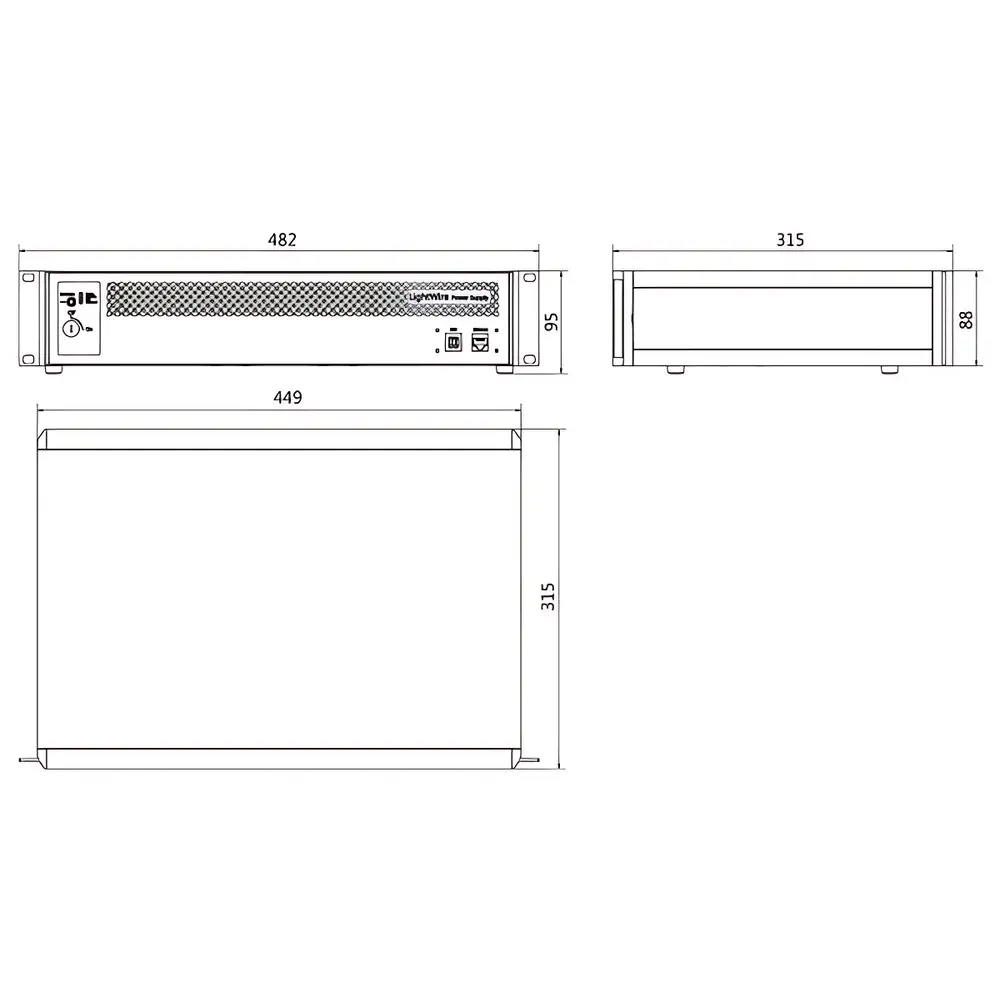
| Form Factor | Compact OEM-integrated module (19″ rack-mountable or benchtop) |
Overview
The Ekspla LightWire FP200 is a turnkey, all-fiber picosecond laser system engineered for precision ultrafast photonics applications requiring high temporal fidelity, long-term stability, and seamless integration into laboratory or industrial platforms. Based on a diode-pumped, polarization-maintaining fiber oscillator-amplifier architecture with nonlinear polarization evolution (NPE) mode-locking, the FP200 delivers transform-limited 9 ps pulses at 1064 nm—enabling minimal time-bandwidth product and optimal coherence for time-resolved measurements. Its fully monolithic fiber design eliminates free-space alignment, ensuring robustness against thermal drift and mechanical vibration. Unlike bulk solid-state lasers, the FP200 operates without water cooling or periodic optical realignment, fulfilling stringent requirements for 24/7 operation in OEM instrumentation, metrology workstations, and automated analytical systems.
Key Features
- Stable, carrier-envelope-phase (CEP)-stable picosecond pulses with <9 ps duration and near-transform-limited spectral phase profile
- Integrated fiber-based pulse picker enabling precise, software-controlled repetition rate adjustment from 20 kHz to 40 MHz—including discrete burst mode with user-defined pulse trains
- Air-cooled, maintenance-free operation with <10 W total power consumption and compact footprint (≤300 × 200 × 80 mm)
- High pulse-to-pulse energy stability (<1.5% RMS over 8 hours) and pointing stability (<5 µrad)
- OEM-optimized interface suite: TTL/RS-232/Ethernet control, analog modulation input, and interlock-ready safety circuitry compliant with IEC 60825-1:2014 Class 4 laser safety standards
- Optional second harmonic generation (SHG) module (FP200-SH) delivering up to 10 nJ per pulse at 532 nm with 20% peak conversion efficiency and <100 fs pulse compression capability
Sample Compatibility & Compliance
The LightWire FP200 is designed for direct integration into optical tables, confocal microscope scan heads, pump-probe delay stages, and THz generation/detection setups. Its low timing jitter (<30 fs RMS) and high beam quality (M² < 1.1) ensure compatibility with single-mode fiber coupling (FC/APC), acousto-optic modulators (AOMs), and electro-optic sampling (EOS) receivers. The system complies with EU CE marking directives (2014/35/EU Low Voltage Directive, 2014/30/EU EMC Directive), RoHS 2011/65/EU, and meets laser safety requirements per EN 60825-1:2014. For regulated environments—including GLP-compliant spectroscopy labs and ISO/IEC 17025-accredited calibration facilities—the FP200 supports optional audit-ready logging of operational parameters (pulse energy, rep rate, temperature) with timestamped records exportable in CSV format.
Software & Data Management
Ekspla provides the LightWire Control Suite—a cross-platform (Windows/Linux/macOS) application enabling full remote configuration via Ethernet or USB-C. The suite supports scripting through Python API (PyLightWire) and LabVIEW VI libraries, facilitating synchronization with data acquisition systems (e.g., National Instruments DAQ, Becker & Hickl TCSPC modules). All parameter changes are logged with ISO 8601 timestamps and user authentication metadata, satisfying traceability requirements under FDA 21 CFR Part 11 when used in GxP-aligned R&D workflows. Firmware updates preserve calibration coefficients and retain factory-set pulse dispersion compensation values, eliminating requalification cycles during routine maintenance.
Applications
- Ultrafast Spectroscopy: Pump-probe transient absorption, fluorescence upconversion, and coherent anti-Stokes Raman scattering (CARS) with sub-10 ps time resolution
- Nonlinear Microscopy: Two-photon excited fluorescence (TPEF), second-harmonic generation (SHG), and third-harmonic generation (THG) imaging in biological tissue and advanced materials
- Time-of-Flight Metrology: High-precision distance measurement, surface topography mapping, and optical coherence tomography (OCT) source seeding
- Terahertz Generation: Optical rectification in ZnTe or DAST crystals for broadband THz-TDS systems (0.1–4 THz bandwidth)
- OEM Integration: Embedded light engine for portable spectrometers, industrial laser-induced breakdown spectroscopy (LIBS) analyzers, and quantum optics testbeds
FAQ
Is the LightWire FP200 compatible with standard single-mode fiber coupling interfaces?
Yes—the output is collimated and polarization-maintained (PM980), with FC/APC connectorization and adjustable divergence optics for efficient coupling into SMF-28 or PM fibers.
Can the repetition rate be synchronized to an external clock signal?
Yes—via the SYNC IN BNC port supporting TTL-level reference signals from 10 kHz to 50 MHz, with phase-lock capability and <100 ps jitter transfer function.
Does the FP200-SH module require manual alignment or recalibration after installation?
No—the SHG module is factory-aligned and thermally stabilized; it integrates mechanically and optically with zero user intervention required post-installation.
What is the typical warm-up time to achieve specified pulse energy stability?
Less than 15 minutes from cold start, with full specification compliance verified after 30 minutes of continuous operation.
Is remote firmware update supported over Ethernet without physical access to the unit?
Yes—secure firmware upgrades are performed via HTTPS-based OTA (over-the-air) protocol with digital signature verification and rollback capability.





