
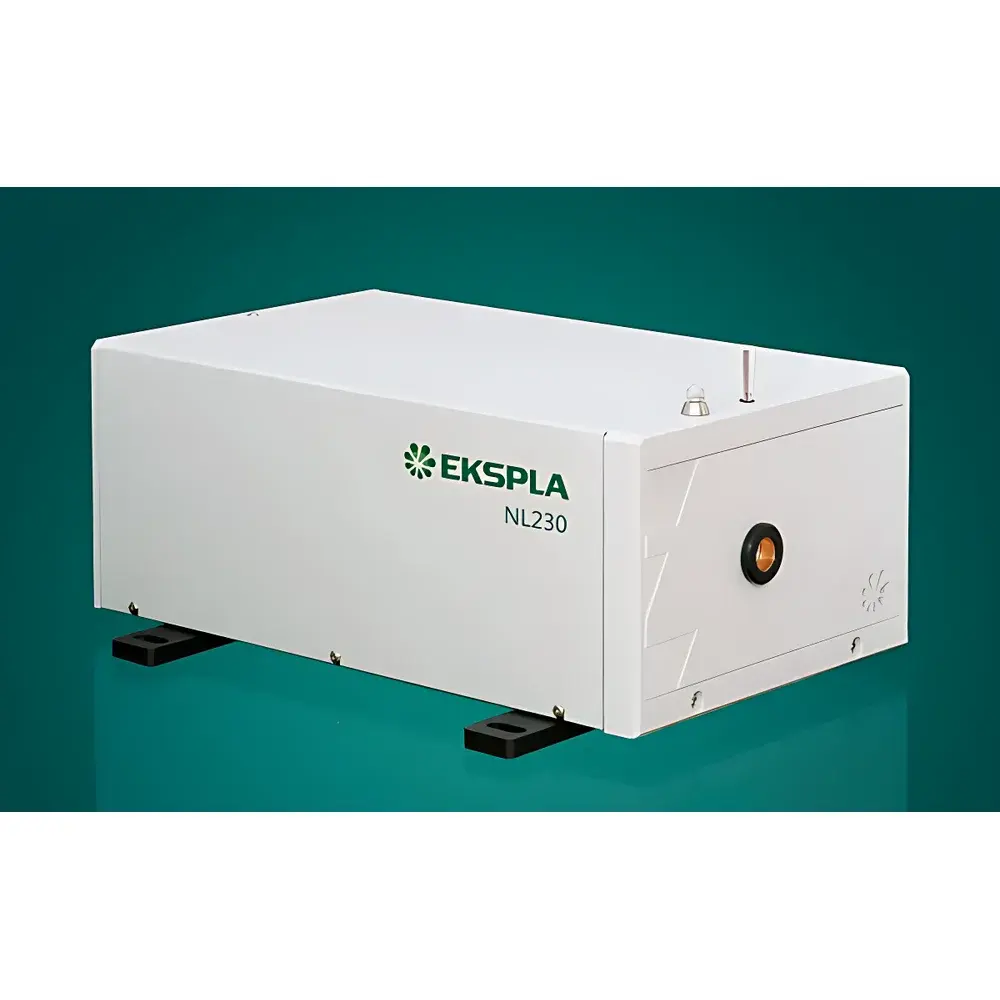
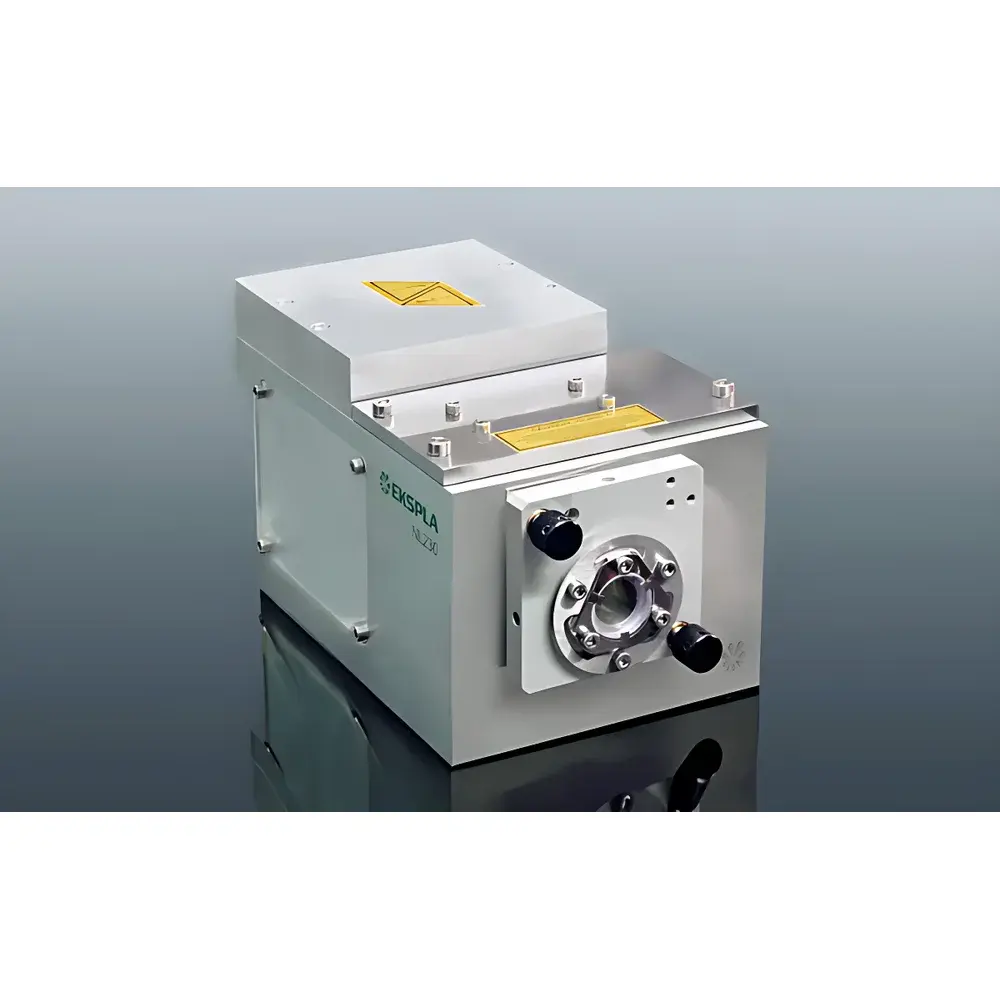
Ekspla NL230 High-Energy Nanosecond DPSS Nd:YAG Laser
| Brand | Ekspla |
|---|---|
| Model | NL230 |
| Laser Type | Diode-Pumped Solid-State (DPSS) Nd:YAG |
| Wavelength (Fundamental) | 1064 nm |
| Pulse Energy (1064 nm) | Up to 190 mJ |
| Repetition Rate | Up to 100 Hz |
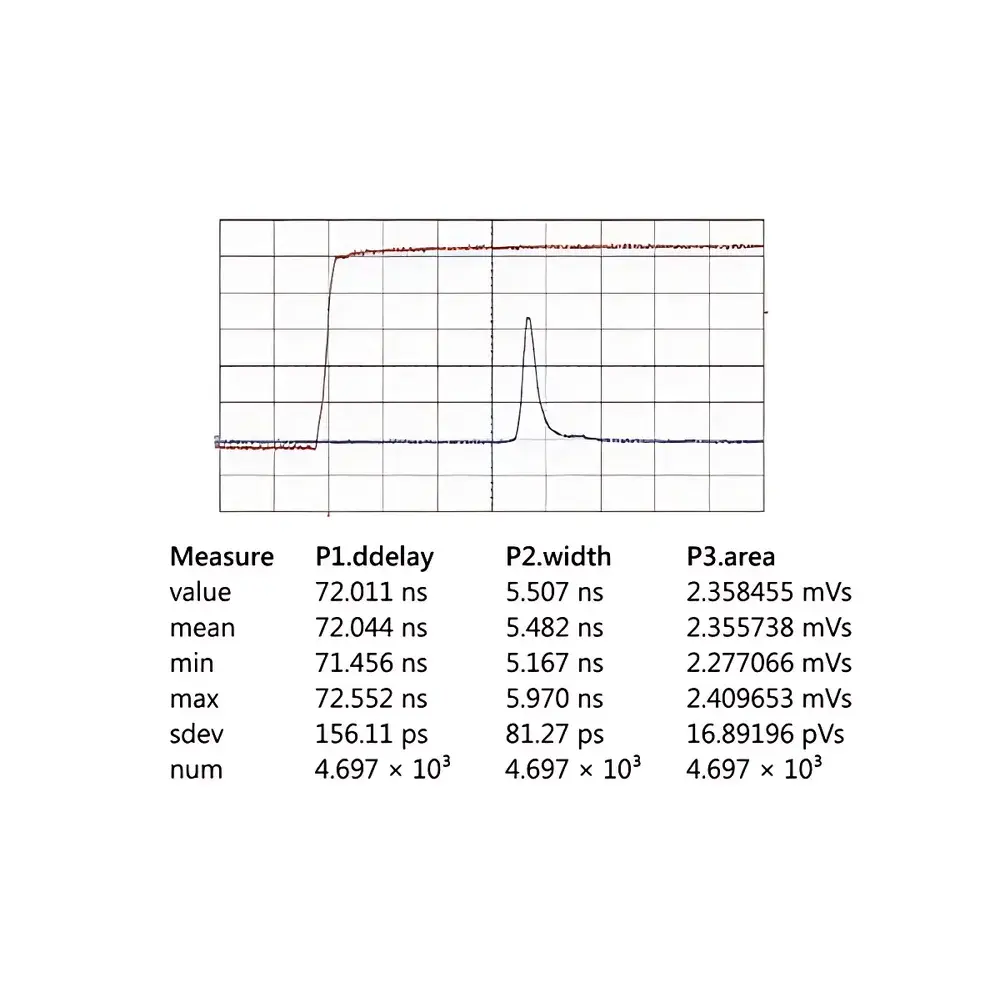
| Pulse Duration | 3–6 ns |
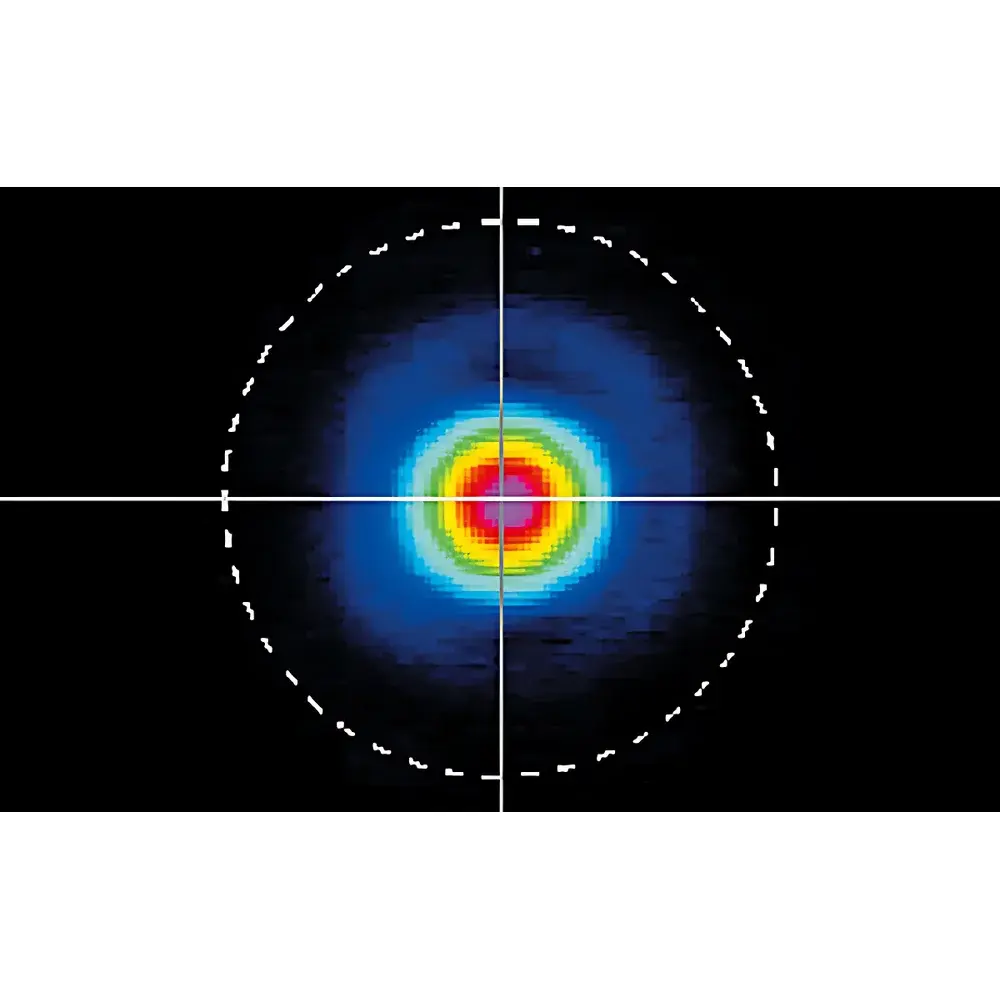
| Beam Divergence | Low (typ. < 1.5 mrad) |
| Output Coupler | Variable-Reflectivity |
| Harmonic Generation Options | Optional temperature-stabilized SHG (532 nm) and THG (355 nm) modules |
| Control Interfaces | USB, RS232, LAN, WLAN |
| Remote Control | REST API compliant |
| Operating Mode | Q-switched |
| Cooling | Forced-air or optional water-cooling |
| Enclosure | Sealed, monolithic, ruggedized laser head |
Overview
The Ekspla NL230 is a high-energy, diode-pumped solid-state (DPSS) Q-switched Nd:YAG laser engineered for demanding scientific and industrial applications requiring robust nanosecond pulse delivery with exceptional temporal and spatial stability. Operating at the fundamental wavelength of 1064 nm, the NL230 delivers up to 190 mJ per pulse with pulse durations tightly controlled within the 3–6 ns range—enabling high peak power (>30 MW) essential for nonlinear optical interactions and plasma generation. Its monolithic, sealed laser cavity eliminates sensitivity to environmental vibration and particulate contamination, making it suitable for integration into mobile platforms, cleanroom environments, and field-deployable instrumentation such as LIBS analyzers and LIDAR transmitters. Unlike flashlamp-pumped systems, the NL230 employs efficient, low-noise diode pumping—eliminating audible discharge noise, reducing thermal load, and extending operational lifetime without lamp replacement cycles.
Key Features
- High pulse energy output: up to 190 mJ at 1064 nm with excellent shot-to-shot stability (≤1.5% RMS over 1 hour)
- Flexible repetition rate: continuously adjustable from single-shot to 100 Hz, enabling optimization for time-resolved experiments or high-throughput analysis
- Nanosecond pulse fidelity: 3–6 ns FWHM duration maintained across full energy and repetition rate range, critical for precise ablation threshold control and plasma initiation timing
- Low beam divergence: typically <1.5 mrad (full angle), facilitating efficient coupling into optical parametric oscillators (OPOs), fiber launch systems, or long-path remote sensing configurations
- Modular harmonic generation: optional temperature-stabilized second-harmonic (532 nm) and third-harmonic (355 nm) generators with >50% conversion efficiency and active wavelength stabilization
- Multi-protocol digital control: native support for USB 2.0, RS232, Ethernet (TCP/IP), and Wi-Fi interfaces; fully programmable via RESTful API for seamless integration into LabVIEW, Python, MATLAB, or custom SCADA environments
- Ruggedized mechanical architecture: monolithic aluminum housing with integrated thermal management, rated for continuous operation in ambient temperatures from 15 °C to 30 °C and relative humidity ≤70% non-condensing
Sample Compatibility & Compliance
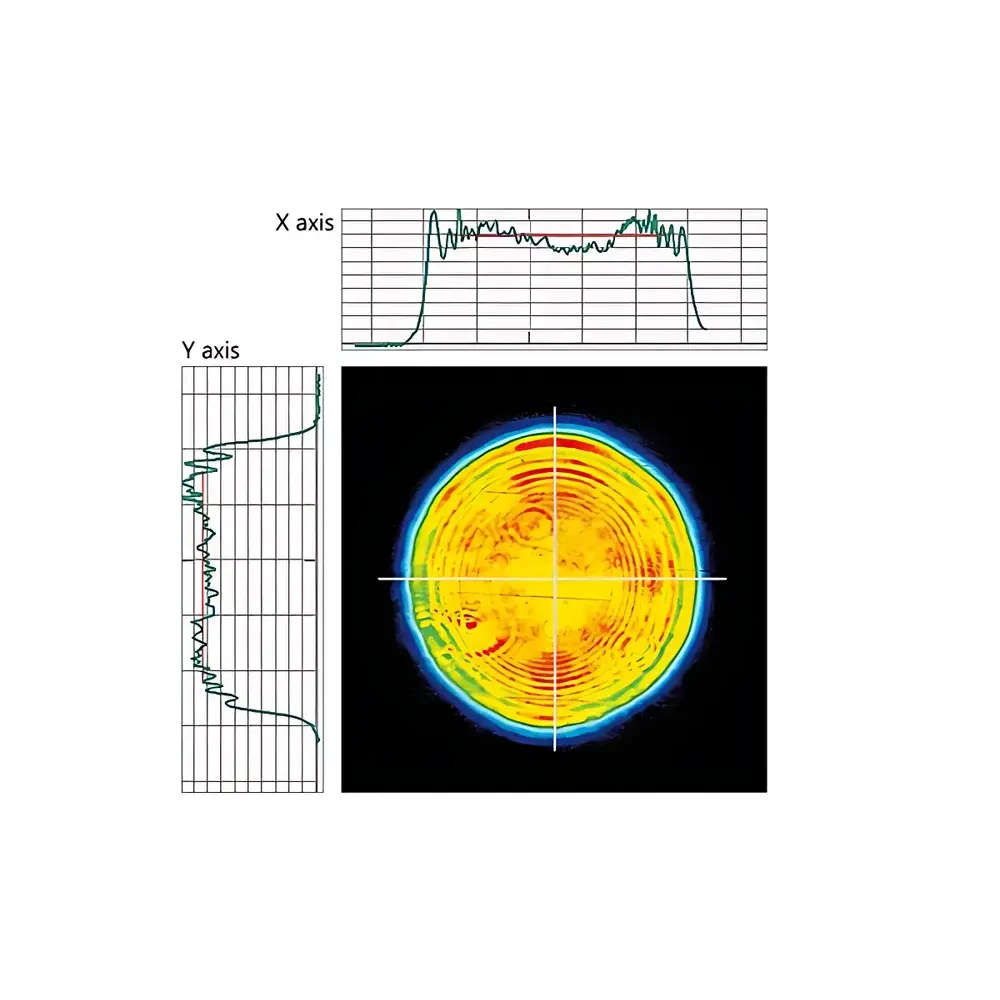
The NL230 is compatible with a broad range of solid, liquid, and gaseous samples used in analytical spectroscopy and material interaction studies. Its stable TEM00-dominant beam profile and low M² (<2.0) ensure reproducible focusing for micro-ablation, thin-film processing, and spark generation in LIBS. The system complies with IEC 60825-1:2014 Class 4 laser safety requirements and includes interlock-ready connectors for integration into ISO 13849-1-compliant safety circuits. All harmonic modules meet EN 60825-1 Annex G spectral purity specifications. For regulated environments, the REST API supports audit-trail logging and user-access level configuration—facilitating alignment with GLP and GMP documentation workflows where instrument control traceability is required.
Software & Data Management
Ekspla provides the NL230 Control Suite—a cross-platform application supporting Windows, Linux, and macOS—for real-time monitoring of laser parameters (pulse energy, repetition rate, internal temperature, diode current), diagnostics, and firmware updates. All operational logs—including timestamped command execution, error codes, and sensor telemetry—are exportable in CSV or HDF5 format. The REST API implements OAuth 2.0 authentication and supports JSON-based parameter queries and state changes, enabling synchronization with LIMS or ELN systems. Firmware versions include built-in self-calibration routines for pulse energy monitoring using an integrated photodiode reference channel, traceable to NIST-traceable calibration standards upon request.
Applications
- Laser-Induced Breakdown Spectroscopy (LIBS): High pulse energy and short duration enable reliable plasma generation on conductive and non-conductive targets—including metals, soils, polymers, and biological tissues—with minimal matrix effects
- Optical Parametric Oscillator (OPO) Pumping: Stable 1064 nm output serves as a primary pump source for tunable mid-IR generation in spectroscopic gas sensing and molecular fingerprinting
- LIDAR and Remote Sensing: Low-divergence, high-energy pulses support long-range atmospheric backscatter profiling, aerosol characterization, and differential absorption LIDAR (DIAL) configurations
- Laser Ablation Mass Spectrometry (LA-MS): Precise energy deposition enables stoichiometric sampling of heterogeneous materials such as geological samples, semiconductor wafers, and forensic evidence
- Laser-Induced Fluorescence (LIF): Harmonic outputs (355 nm, 532 nm) provide excitation wavelengths optimized for aromatic hydrocarbons, polycyclic compounds, and biological fluorophores
- Time-of-Flight Mass Spectrometry (TOF-MS) Source Development: Synchronized pulse triggering (jitter <1 ns) allows sub-nanosecond timing precision for ion extraction and acceleration control
FAQ
What is the typical pulse-to-pulse energy stability of the NL230 at maximum output?
At 190 mJ and 10 Hz, the RMS energy fluctuation is ≤1.5% over a 60-minute period under stabilized ambient conditions.
Can the NL230 be operated in external trigger mode?
Yes—it supports TTL-compatible external triggering with adjustable delay (0–100 ms, 10 ns resolution) and jitter <1 ns (RMS).
Is water cooling required for continuous 100 Hz operation?
For extended operation at ≥50 Hz and ambient temperatures >25 °C, optional water cooling (18–22 °C, 0.5–1.0 L/min) is recommended to maintain thermal lensing stability and diode lifetime.
Are harmonics internally generated or externally coupled?
Harmonic generation modules are integrated into the laser head as plug-in units with automated alignment and thermal lock-in; no external beam path modification is required.
Does the system support FDA 21 CFR Part 11 compliance?
While the base hardware does not include electronic signature functionality, the REST API and Control Suite support integration with third-party Part 11-compliant validation frameworks through configurable audit logging and role-based access controls.





