
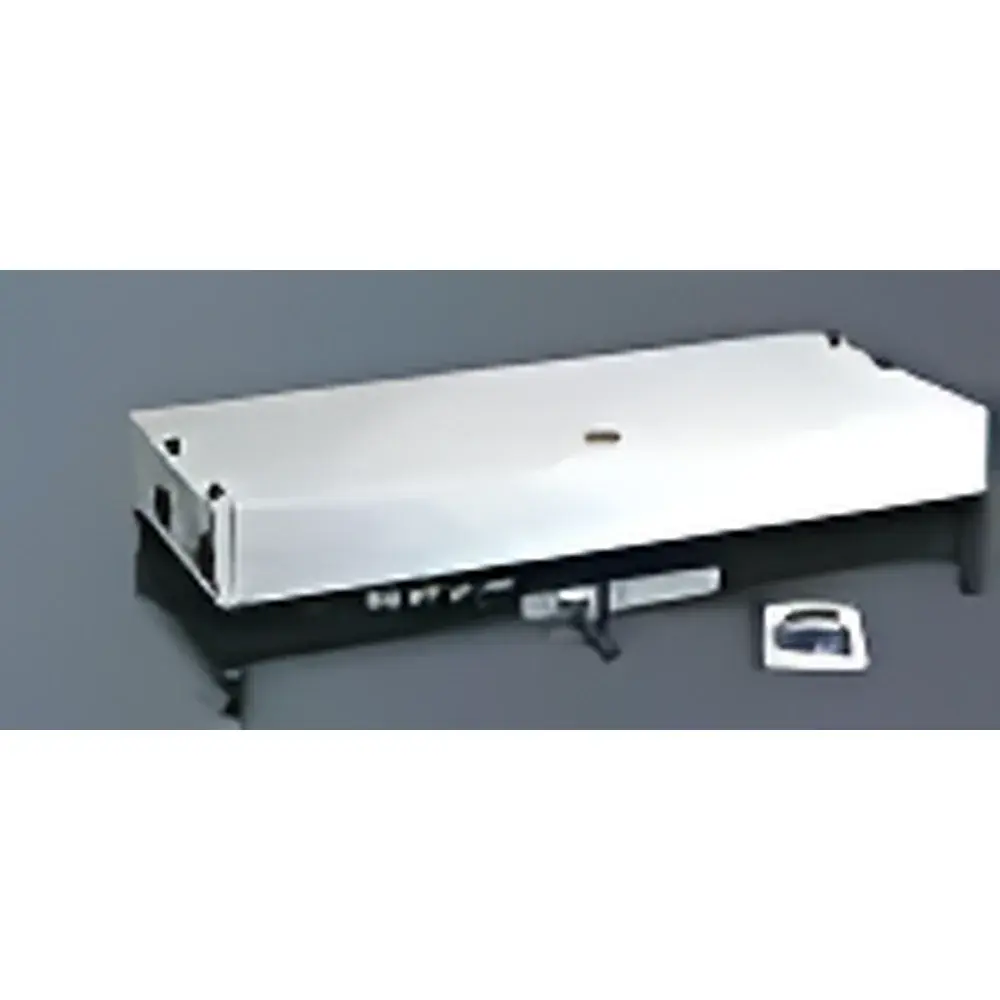
Ekspla PG411/511 Series Picosecond Optical Parametric Generator (OPG) with Near-Transform-Limited Linewidth
| Brand | Ekspla |
|---|---|
| Origin | Lithuania |
| Manufacturer Type | Original Equipment Manufacturer (OEM) |
| Product Category | Imported |
| Model | PG411/511 |
| Core Components | Diode-Pumped Solid-State (DPSS) Nd:YAG Laser System, Synchronously Pumped Picosecond Optical Parametric Oscillator (SPOPO), Traveling-Wave Optical Parametric Amplifier (OPA) |
| Wavelength Tuning Range | 420–2300 nm |
| Spectral Bandwidth | < 2 cm⁻¹ (FWHM) |
| Pulse Duration | ~25 ps |
| Output Energy Stability | < 7% (1σ, over 8 hours) |
| Single-Pulse Peak Energy | up to 800 mJ |
| Pump Source | Dual-Output Mode-Locked PL2140 Series Nd:YAG Laser |
| Control Interface | LabVIEW-compatible drivers, RS-232/Ethernet, Remote Operation Capable |
| Compliance | CE-marked, RoHS-compliant, Designed for ISO/IEC 17025-accredited laboratories |
Overview
The Ekspla PG411/511 Series Picosecond Optical Parametric Generator (OPG) is a high-performance, fully solid-state tunable laser system engineered for ultra-narrow spectral bandwidth generation in the visible to near-infrared range. Based on synchronously pumped optical parametric oscillation (SPOPO) and traveling-wave optical parametric amplification (OPA), the PG411/511 delivers near-transform-limited picosecond pulses with exceptional spectral purity and temporal coherence. Its core architecture leverages a dual-output, mode-locked PL2140 Nd:YAG laser (25 ps pulse duration, 1064 nm fundamental) as the pump source—ensuring precise temporal overlap between pump and signal/idler fields critical for linewidth suppression. The system achieves sub-2 cm⁻¹ bandwidth across its full tuning range (420–2300 nm), enabling applications demanding high-resolution spectroscopy, coherent Raman imaging, and time-resolved nonlinear optical studies where transform-limited pulse characteristics directly impact measurement fidelity and signal-to-noise ratio.
Key Features
- Sub-2 cm⁻¹ spectral bandwidth across 420–2300 nm, achieved via optimized SPOPO cavity design and traveling-wave OPA configuration
- Single-pulse peak output energy up to 800 mJ at selected wavelengths, with energy stability better than 7% (1σ, measured over 8-hour continuous operation)
- Integrated diode-pumped, all-solid-state PL2140 Nd:YAG laser platform providing dual synchronized outputs for stable pump delivery
- Computer-controlled wavelength selection, pulse energy modulation, and timing synchronization via standard LabVIEW drivers
- Robust mechanical and thermal architecture ensuring long-term alignment stability and minimal drift under laboratory ambient conditions
- Comprehensive remote operation capability via Ethernet and RS-232 interfaces, supporting integration into automated experimental workflows
Sample Compatibility & Compliance
The PG411/511 is compatible with standard optical table mounting, beam delivery optics (e.g., reflective collimators, dichroic mirrors, vacuum-compatible harmonic separators), and common detection systems including spectrometers (e.g., Andor Shamrock, Princeton Instruments IsoPlane), streak cameras, and single-photon counting modules. It operates within Class 4 laser safety requirements per IEC 60825-1:2014 and includes interlock-ready hardware for integration into certified laser enclosures. The system conforms to CE directives for electromagnetic compatibility (2014/30/EU) and low-voltage safety (2014/35/EU), and complies with RoHS 2011/65/EU restrictions on hazardous substances. Its design supports GLP/GMP-aligned environments through deterministic, traceable control logs and audit-ready operational parameters—particularly relevant for regulated spectroscopic validation per ASTM E1421 or ISO 13843.
Software & Data Management
Control and monitoring are implemented through a native Windows-based application with optional LabVIEW driver support (NI-VISA compliant). All instrument parameters—including wavelength position, pump energy, OPO cavity delay, and OPA gain settings—are programmatically addressable and timestamped. The software records operational metadata (e.g., ambient temperature, cooling water flow rate, pulse count) alongside spectral acquisition triggers, enabling full experimental traceability. Data export follows HDF5 and ASCII formats, facilitating interoperability with MATLAB, Python (NumPy/H5Py), and commercial spectroscopy analysis suites. Audit trails meet FDA 21 CFR Part 11 requirements when deployed with validated user authentication and electronic signature modules.
Applications
- High-resolution transient absorption spectroscopy requiring narrowband excitation and minimal chirp-induced broadening
- CARS (Coherent Anti-Stokes Raman Scattering) and SRS (Stimulated Raman Scattering) microscopy, where spectral selectivity enables chemical bond-specific contrast
- Time-resolved photoluminescence and carrier dynamics studies in semiconductors and 2D materials
- Ultrafast pump-probe experiments with polarization-resolved detection
- Generation of seed pulses for multi-stage amplification systems targeting few-cycle pulse synthesis
- Calibration reference sources for FTIR and grating-based spectrometers operating in the UV–NIR domain
FAQ
What is the typical warm-up time required to achieve spectral stability?
The system reaches thermal equilibrium and spectral reproducibility within 45 minutes after power-on, assuming stable lab temperature (20–25°C) and nominal cooling water flow (≥2 L/min at 18–22°C).
Is vacuum operation supported for the OPO cavity?
No—the OPO cavity is sealed and purged with dry nitrogen; it is not designed for vacuum integration. Optional purge gas ports allow continuous inert-gas flow during extended measurements.
Can the PG411/511 be integrated with third-party pulse compressors or spectral shapers?
Yes—its collimated, spatially filtered output beam (M² < 1.3) is compatible with standard 4f pulse shaper configurations and off-the-shelf grating compressors, provided dispersion compensation is applied post-amplification.
Does the system include factory calibration certificates for wavelength and energy accuracy?
Each unit ships with NIST-traceable calibration reports for central wavelength (±0.5 nm uncertainty) and pulse energy (±3% at 1064 nm, ±5% across tuning range), valid for 12 months from date of shipment.
What maintenance intervals are recommended for optimal long-term performance?
Optical alignment verification every 6 months; nonlinear crystal inspection and cleaning every 24 months; full coolant filter replacement annually. Ekspla recommends scheduled service by certified field engineers per ISO/IEC 17025 procedures.





