
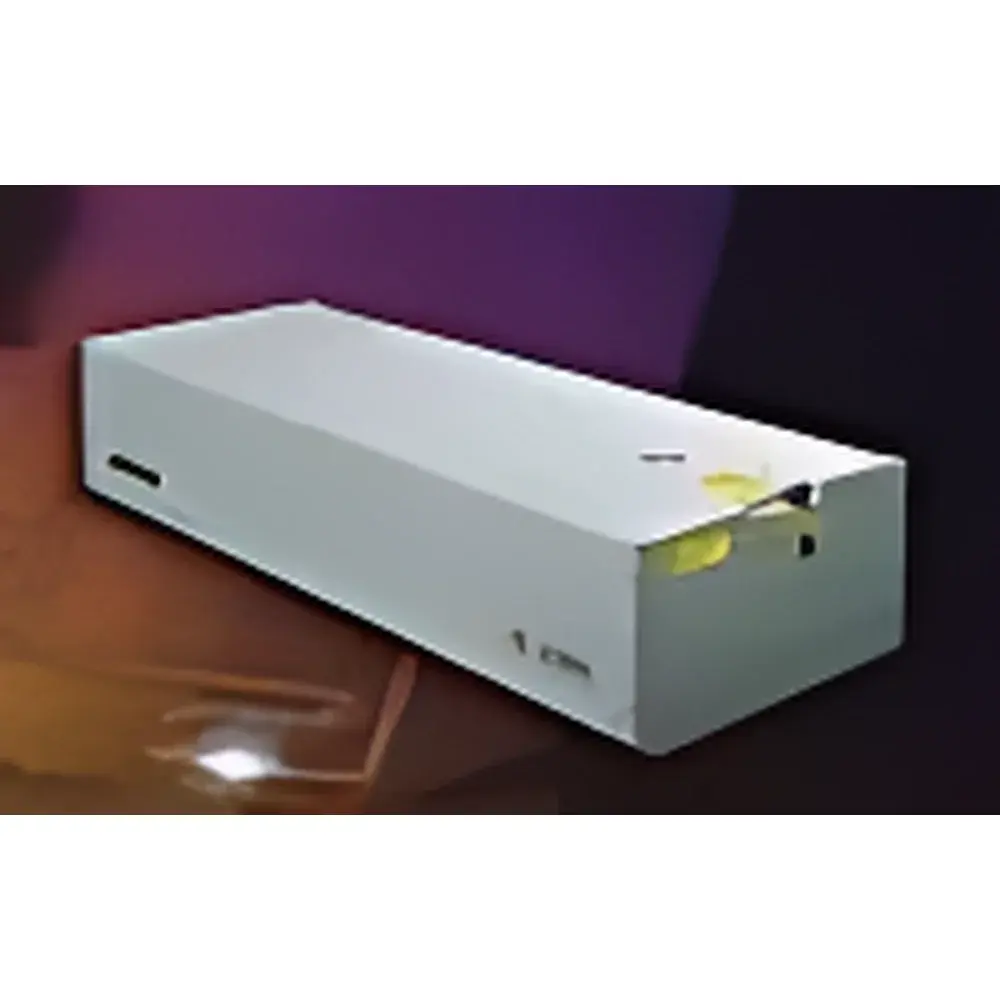
Ekspla PL10100 Industrial-Grade Diode-Pumped Picosecond Laser System
| Brand | Ekspla |
|---|---|
| Origin | Lithuania |
| Manufacturer Type | OEM Laser Manufacturer |
| Product Category | Imported |
| Model | PL10100 |
| Core Technology | Diode-Pumped Solid-State (DPSS) Mode-Locked Nd:YVO₄ Oscillator + Regenerative Amplifier |
| Output Power | 10 W @ 1064 nm |
| Pulse Energy | up to 200 µJ |
| Repetition Rate | up to 100 kHz |
| Pulse Duration | ~10 ps |
| Beam Quality | M² < 1.5 |
| Harmonics Options | 532 nm, 355 nm, 266 nm |
| Cooling | Air-Cooled |
| Electrical Supply | Single-Phase AC |
| Control Interface | PC-Controlled with Remote Keypad |
| Enclosure | Sealed, Monolithic Aluminum Alloy Housing |
| Maintenance | Field-Serviceable Consumables by Trained Technicians |
Overview
The Ekspla PL10100 is an industrial-grade, diode-pumped picosecond laser system engineered for high-precision, high-throughput micromachining in demanding manufacturing environments. Based on a robust architecture integrating a mode-locked Nd:YVO₄ oscillator, pulse picker, and diode-pumped regenerative amplifier, the PL10100 delivers stable, ultrashort pulses (~10 ps) with exceptional temporal and spatial coherence. Its fundamental output at 1064 nm provides 10 W average power and pulse energies up to 200 µJ—enabling ablation thresholds to be reliably exceeded across metals, ceramics, polymers, and thin-film composites without significant thermal diffusion. The system’s design prioritizes long-term parameter stability under variable ambient conditions (15–30 °C, non-condensing humidity), achieved through a hermetically sealed, monolithic aluminum alloy optical bench that minimizes mechanical drift and thermal lensing effects. As an OEM-integrated solution, the PL10100 meets stringent requirements for integration into automated production lines—including ISO 14644-1 Class 8 cleanroom compatibility, CE marking per 2014/35/EU (Low Voltage Directive) and 2014/30/EU (EMC Directive), and conformity with IEC 60825-1:2014 for Class 4 laser safety.
Key Features
- Industrial-grade ruggedization: Monolithic aluminum housing with precision-machined optical mounts ensures mechanical stability and resistance to vibration, shock, and thermal cycling.
- High pulse energy & repetition rate synergy: Up to 200 µJ pulse energy at repetition rates scalable from single-shot to 100 kHz—optimized for both high-resolution patterning and high-speed drilling.
- Diffraction-limited beam quality: M² < 1.5 enables tight focusing (< 10 µm spot diameter at f-theta lenses) and consistent fluence distribution over extended working distances (up to 300 mm).
- Harmonic generation readiness: Integrated harmonic modules support wavelength conversion to 532 nm (second harmonic), 355 nm (third harmonic), and 266 nm (fourth harmonic)—facilitating selective material interaction (e.g., UV-sensitive polymer ablation or transparent substrate processing).
- Hands-free operational reliability: Embedded self-diagnostics continuously monitor pump diode current, cavity alignment status, temperature gradients, and pulse energy stability—with real-time error logging and fault-code reporting via Ethernet or RS-232.
- Air-cooled thermal management: Eliminates dependency on external chiller units or deionized water loops—reducing facility infrastructure requirements and total cost of ownership.
Sample Compatibility & Compliance
The PL10100 is validated for processing a broad spectrum of industrial materials, including stainless steel (304, 316), copper, titanium alloys, silicon wafers, sapphire, fused silica, polyimide (Kapton®), PET, and ITO-coated glass. Its picosecond pulse duration ensures minimal heat-affected zone (HAZ) formation—critical for applications governed by ASTM F2971 (laser micro-machining of medical devices) and ISO 13485-compliant manufacturing workflows. The system supports GLP/GMP-aligned operation through optional audit-trail-enabled firmware (21 CFR Part 11 compliant data logging when paired with Ekspla’s LASEM software suite). All optical components comply with RoHS 2011/65/EU and REACH SVHC regulations.
Software & Data Management
Control and monitoring are executed via Ekspla’s LASEM (Laser System Environment Manager) software, a Windows-based application supporting remote configuration, real-time parameter logging (pulse energy, repetition rate, internal temperature), and script-driven automation (TCL/Lua scripting interface). The system exposes a TCP/IP API for integration into PLC-controlled production cells (Siemens S7, Beckhoff TwinCAT) and MES platforms (e.g., Siemens Opcenter, Rockwell FactoryTalk). Data export conforms to CSV and HDF5 formats, enabling traceability for quality documentation per ISO 9001:2015 Clause 8.5.2.
Applications
- Precision drilling of fuel injector nozzles and turbine blade cooling holes
- Surface texturing for tribological enhancement (e.g., piston rings, orthopedic implants)
- Thin-film removal in photovoltaic cell scribing (CIGS, perovskite)
- Microvia formation in HDI PCBs and flexible circuits
- Marking and engraving of medical device components (stents, catheter hubs) with UDI-compliant contrast
- Waveguide inscription in fused silica for integrated photonics prototyping
FAQ
Is the PL10100 suitable for cleanroom integration?
Yes—the sealed optical path, air-cooled design, and absence of outgassing elastomers enable direct installation in ISO Class 8 environments.
Can pulse energy be adjusted without compromising beam quality?
Yes—pulse picking and amplifier gain control allow continuous energy tuning from 10 µJ to 200 µJ while maintaining M² < 1.5 across the full range.
What maintenance intervals are recommended for industrial operation?
Optical coatings and pump diodes are rated for >20,000 hours; consumables (e.g., Q-switch crystals, harmonic crystals) are field-replaceable every 12–18 months depending on duty cycle.
Does the system support external triggering and synchronization?
Yes—it accepts TTL/RS-422 external triggers with jitter < 500 ps RMS and provides synchronized sync-out signals for motion stage coordination.
Is remote diagnostics available for predictive maintenance?
Yes—embedded web server enables secure remote access to system health metrics, calibration logs, and firmware update history via HTTPS.





