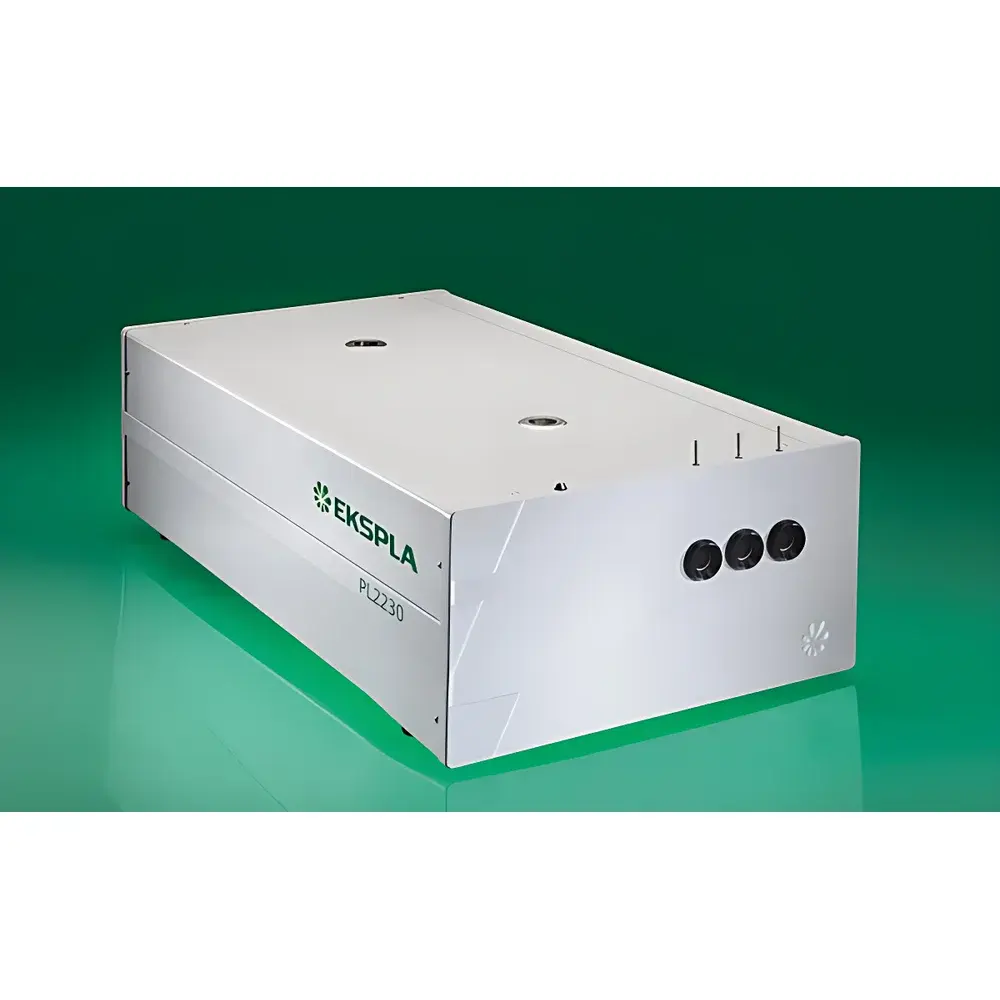
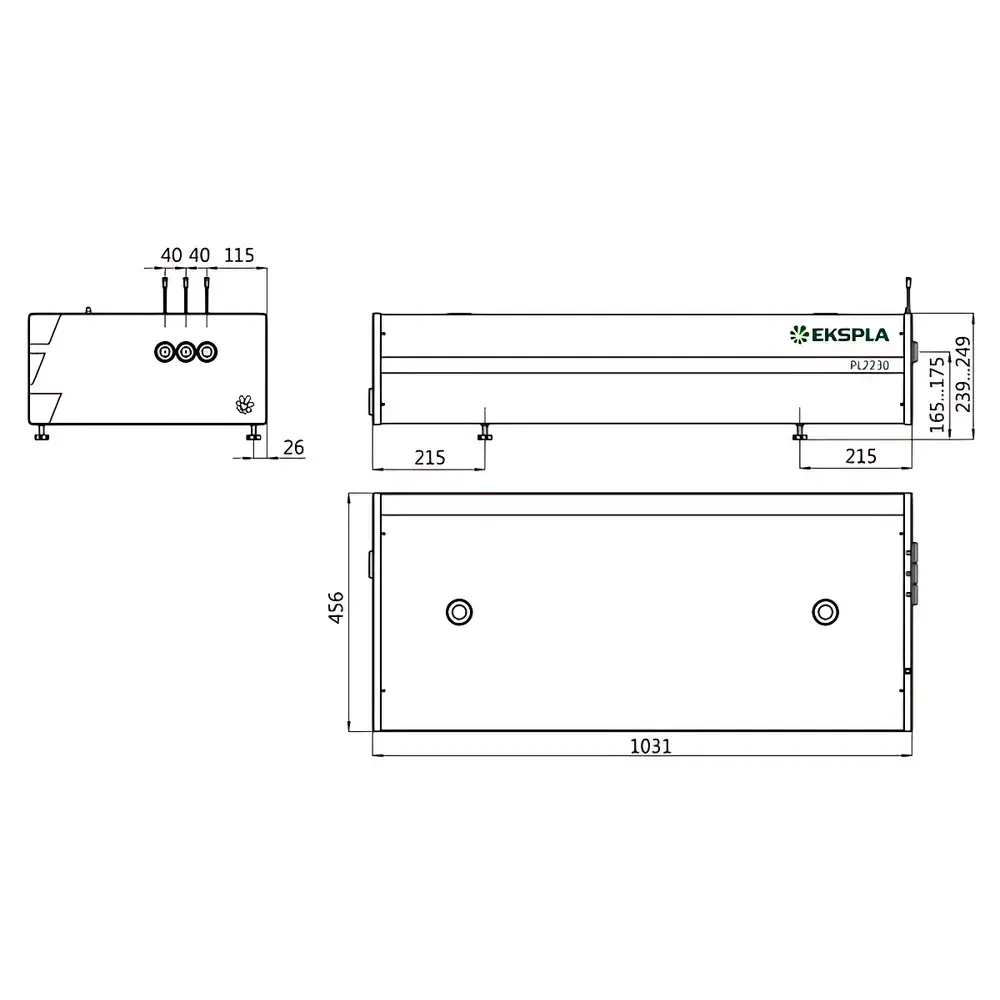
Ekspla PL2230 High-Energy Picosecond Laser System
| Brand | Ekspla |
|---|---|
| Origin | Lithuania |
| Manufacturer Type | Original Equipment Manufacturer (OEM) |
| Product Type | Diode-Pumped Solid-State (DPSS) Mode-Locked Laser System |
| Model | PL2230 |
| Pulse Duration | <28 ps |
| Wavelength (Fundamental) | 1064 nm |
| Max. Pulse Energy (1064 nm) | 35 mJ (up to 140 mJ with optional configuration) |
| Repetition Rate | Up to 100 Hz |
| Beam Pointing Stability | <5 µrad RMS (24 h) |
| Pulse-to-Pulse Energy Stability | <0.5% RMS (1064 nm) |
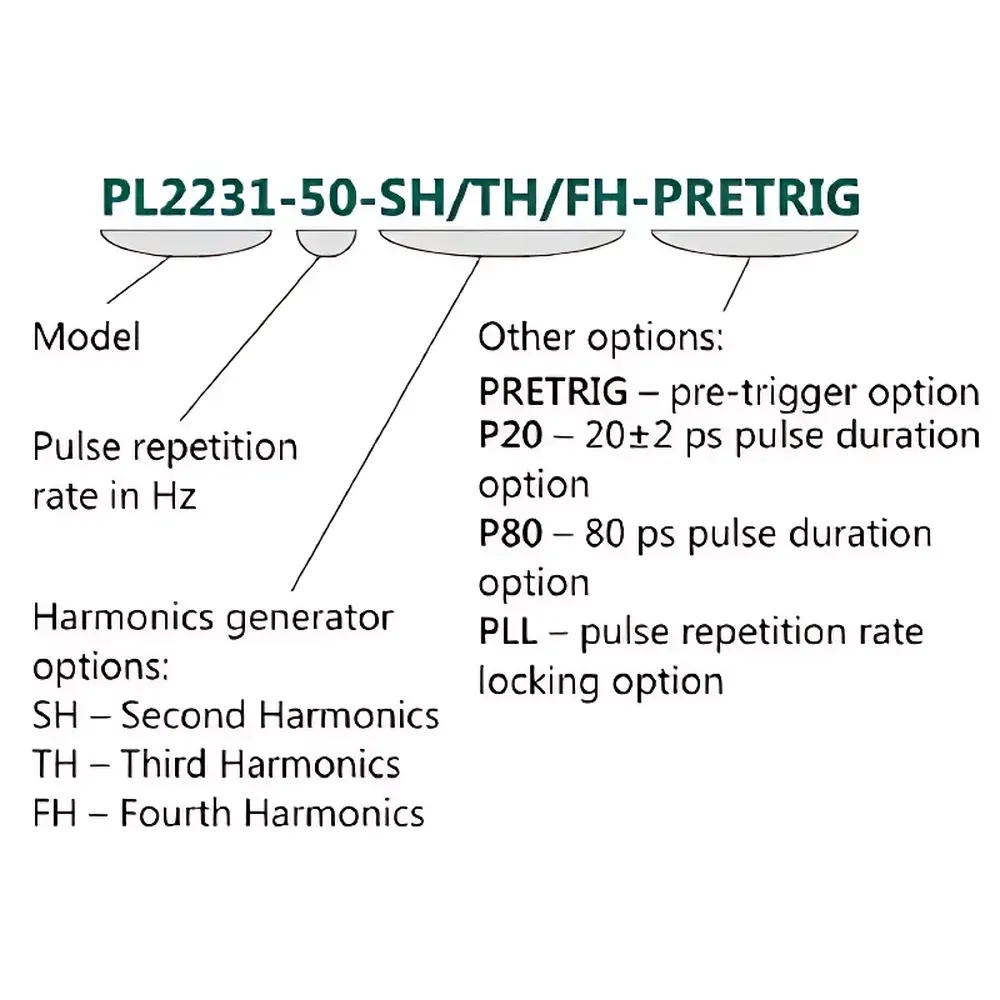
| Harmonic Generation | Thermo-stabilized 2nd/3rd/4th harmonic modules (532 nm, 355 nm, 266 nm) |
| Trigger Jitter | <10 ps (streak camera sync output) |
| Cooling | Air-cooled |
| Control Interface | USB + LabVIEW™ drivers + front-panel keypad |
Overview
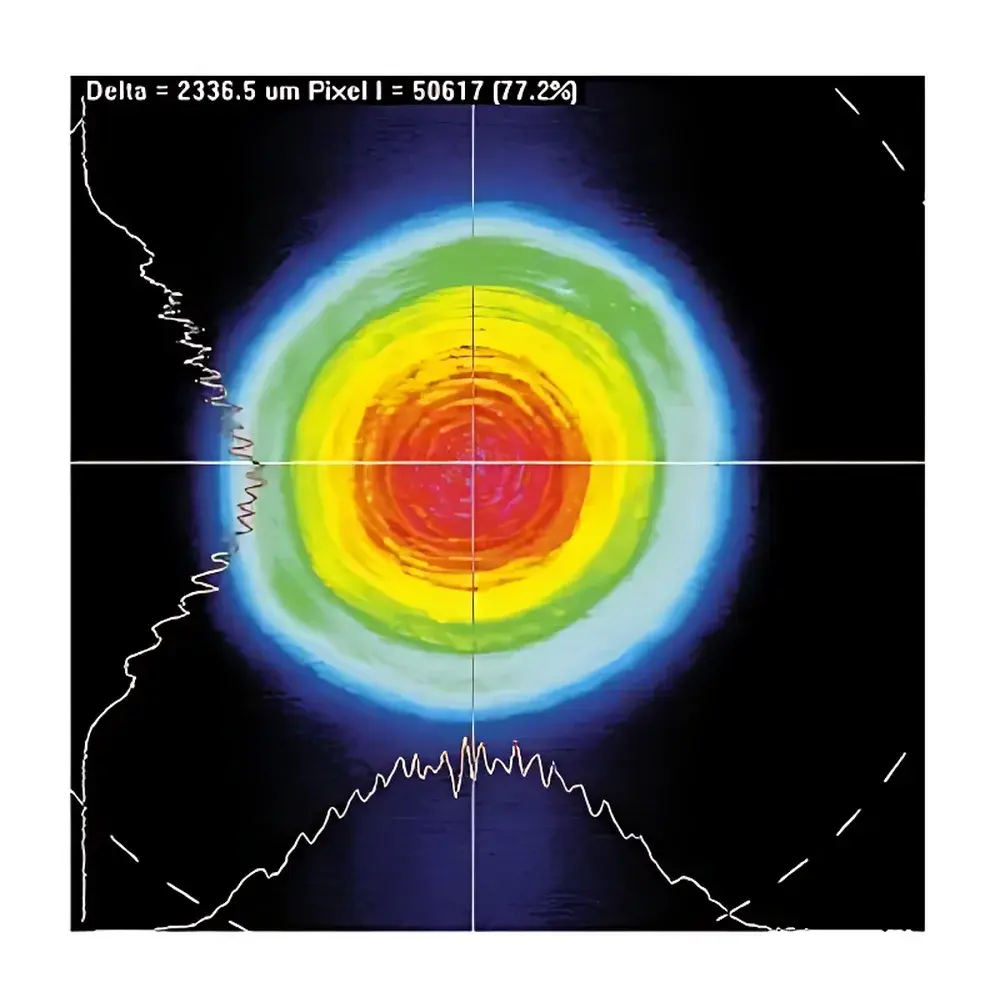
The Ekspla PL2230 is a fully diode-pumped, high-pulse-energy picosecond laser system engineered for demanding ultrafast science applications requiring exceptional temporal precision, pulse energy stability, and long-term operational reliability. At its core lies a hermetically sealed, monolithic DPSS mode-locked master oscillator generating a stable 88 MHz train of sub-28 ps pulses at nanojoule-level energy. This seed is amplified in two cascaded stages: a high-gain diode-pumped regenerative amplifier (gain ~10⁶) followed by a multi-pass diode-pumped power amplifier based on Nd:YAG. The architecture ensures near-Gaussian spatial profile preservation, minimal wavefront distortion, and efficient extraction of stored energy—enabling up to 35 mJ per pulse at 1064 nm (with preliminary configurations supporting up to 140 mJ). The system operates at repetition rates from single-shot to 100 Hz, with air-cooling eliminating the need for external chillers or water lines—critical for integration into compact optical tables and vacuum-compatible environments.
Key Features
- Diode-pumped solid-state (DPSS) master oscillator in a hermetically sealed monolithic block for long-term environmental stability and reduced sensitivity to acoustic vibration
- Regenerative amplifier + multi-pass power amplifier chain optimized for high gain, low thermal lensing, and beam quality retention (M² < 1.3)
- Pulse duration <28 ps (FWHM), verified via autocorrelation; intrinsic jitter <10 ps on the built-in streak camera trigger output
- Adjustable pulse energy control with ~1% resolution and <0.5% RMS pulse-to-pulse stability (1064 nm, 50 Hz, 8-hr measurement)
- Thermo-stabilized harmonic generation modules (KD*P/KDP) with oven-controlled crystal temperature (±0.05 °C) enabling reproducible SHG (532 nm), THG (355 nm), and FHG (266 nm) output
- Dual control interface: intuitive backlit keypad with real-time parameter feedback and full PC-based operation via USB 2.0 with native Windows® software and certified LabVIEW™ drivers (NI Certified)
- Built-in calibrated energy monitor per output port (fundamental + harmonics), with data logging and remote readout capability
- User-configurable trigger delay from –500 ns to +500 ns (0.25 ns resolution); PRETRIG option extends lead range to ±1000 µs for complex pump-probe synchronization
Sample Compatibility & Compliance
The PL2230 is designed for integration into Class 3B/4 laser laboratories compliant with IEC 60825-1:2014 and ANSI Z136.1-2022 safety standards. Its air-cooled architecture eliminates fluid leakage risks and simplifies CE marking for EU-based installations. All harmonic separation optics meet ISO 10110 surface quality specifications (scratch-dig 10–5), and harmonic purity exceeds OD4 rejection of fundamental wavelength at each output port. The system supports GLP/GMP-aligned workflows through audit-trail-enabled software logging (timestamped energy, repetition rate, harmonic selection, and user ID), compatible with FDA 21 CFR Part 11-compliant electronic record systems when deployed with validated third-party LIMS interfaces. No hazardous substances are used in optical coatings or housing materials—RoHS 3 and REACH SVHC declarations are available upon request.
Software & Data Management
Control and monitoring are implemented via Ekspla’s proprietary Windows® application, providing real-time oscilloscope-style visualization of pulse energy trends, repetition rate history, and harmonic conversion efficiency. All parameters—including pulse energy setpoint, harmonic selection, trigger delay, and oven temperatures—are programmable via ASCII command protocol over USB CDC virtual COM port. LabVIEW™ drivers include VI libraries for synchronous multi-device triggering (e.g., delay generators, ICCD cameras, spectrometers) and support NI TestStand® sequence integration. Raw energy monitor data is exportable in CSV format with microsecond-precision timestamps. Firmware updates are performed in-field via signed .bin files with SHA-256 verification, ensuring traceability and integrity in regulated research environments.
Applications
- Time-resolved spectroscopy (transient absorption, fluorescence upconversion)
- Sum-frequency generation (SFG) and second-harmonic generation (SHG) microscopy of buried interfaces
- Nonlinear optical characterization including optical parametric generation (OPG) and amplification (OPA) pumping
- Laser-induced breakdown spectroscopy (LIBS) with high signal-to-noise ratio due to precise pulse energy delivery
- Remote sensing and LIDAR applications requiring high peak power and pointing stability
- Satellite laser ranging (SLR) and time-of-flight metrology
- Ultrafast electron diffraction (UED) and X-ray generation via laser-plasma acceleration
- Photoelectron spectroscopy (ARPES, TR-ARPES) requiring synchronized pump-probe excitation
FAQ
What is the maximum achievable pulse energy at 355 nm (third harmonic)?
Typical conversion efficiency from 1064 nm to 355 nm is 12–15% under optimal phase-matching conditions; thus, 35 mJ input yields ~4.2–5.3 mJ per pulse at 355 nm.
Can the PL2230 be operated in burst mode?
No—PL2230 is designed for uniform pulse-to-pulse operation at fixed repetition rates (1–100 Hz). Burst-mode capability requires custom firmware and thermal management upgrades, available under OEM agreement.
Is the system compatible with vacuum chambers?
Yes—the laser head is constructed with vacuum-compatible materials (304 stainless steel housing, no outgassing elastomers); optional feedthroughs for USB and HV trigger cables are available.
Does the harmonic generator support continuous wavelength tuning?
No—harmonic generation is discrete (532/355/266 nm only); tunable output requires external OPA/OPO systems pumped by PL2230.
What maintenance intervals are recommended?
Optical alignment verification every 12 months; Nd:YAG rod replacement interval ≥2 × 10⁹ shots (typical lifetime >5 years at 50 Hz); no consumables in DPSS oscillator or harmonic ovens.