
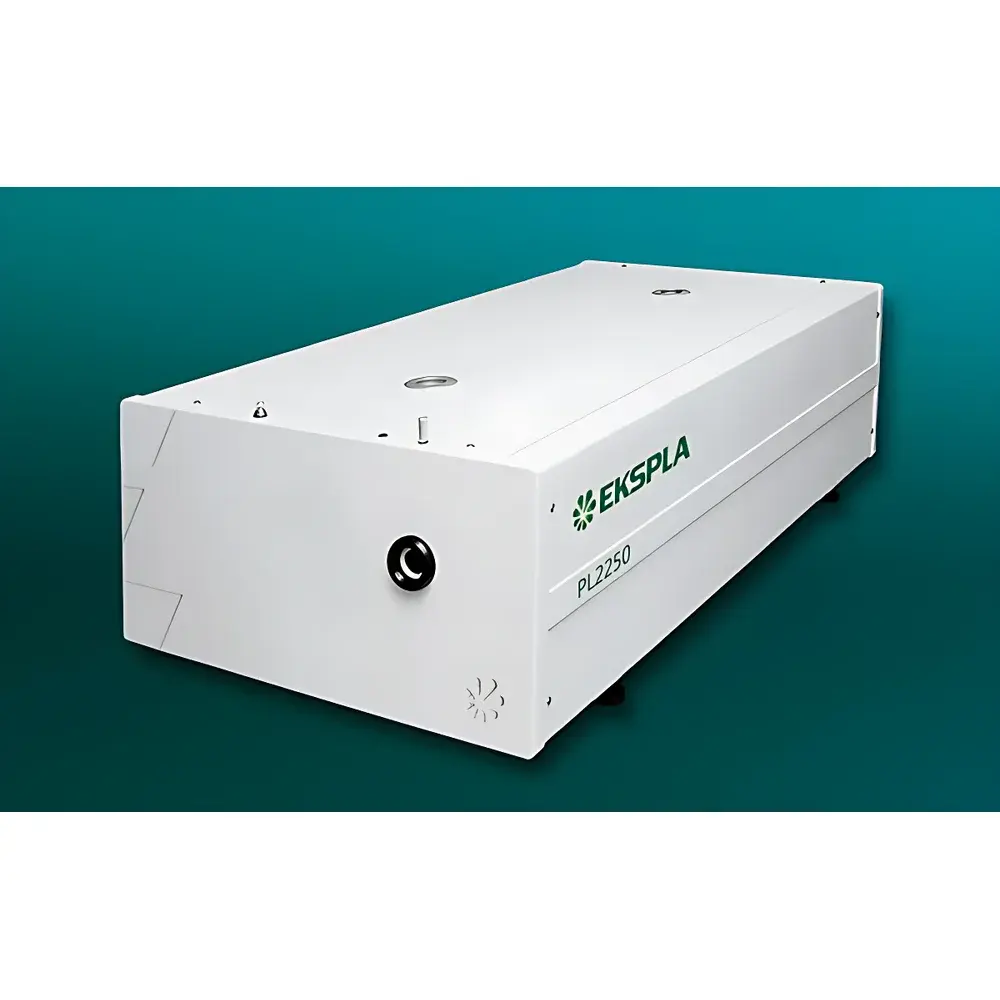
Ekspla PL2250 Flashlamp-Pumped Picosecond Nd:YAG Laser
| Brand | Ekspla |
|---|---|
| Origin | Lithuania |
| Manufacturer Type | Original Equipment Manufacturer (OEM) |
| Product Category | Imported Solid-State Laser System |
| Model | PL2250 |
| Pulse Energy | Up to 100 mJ @ 1064 nm |
| Pulse Duration | 30 ps (20 ps optional) |
| Repetition Rate | Up to 50 Hz |
| Beam Pointing Stability | <5 µrad RMS |
| Timing Jitter (Trigger Output) | <30 ps RMS |
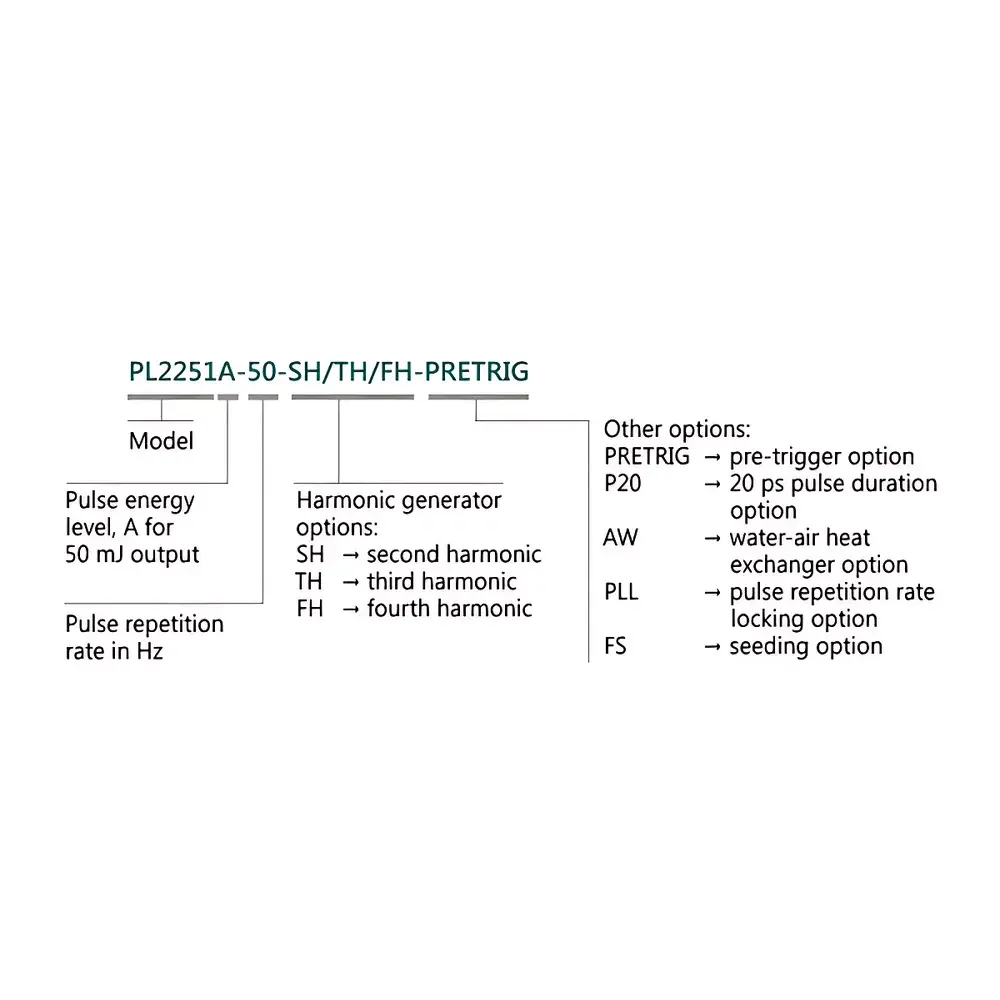
| Harmonic Generation | Thermo-Stabilized 2nd/3rd/4th Harmonics (SHG/THG/FHG) via KD*P/KDP |
| Control Interface | USB + LabVIEW™ Drivers, RS232 Optional |
| Pulse Energy Stability | <0.8% RMS (1064 nm) |
Overview
The Ekspla PL2250 is a high-energy, mode-locked picosecond Nd:YAG laser system engineered for demanding ultrafast optical experiments requiring precise temporal resolution and exceptional pulse-to-pulse stability. Based on a hybrid architecture combining diode-pumped solid-state (DPSS) oscillation with flashlamp-pumped amplification, the PL2250 delivers up to 100 mJ per pulse at 1064 nm with a nominal pulse duration of 30 ps—optionally configurable to 20 ps. Its design eliminates thermal lensing limitations common in flashlamp-pumped regenerative amplifiers by integrating a hermetically sealed monolithic DPSS master oscillator and a diode-pumped regenerative amplifier stage. This architecture enables stable operation across variable repetition rates (1–50 Hz), supports maintenance-free long-term deployment, and ensures sub-0.8% RMS pulse energy stability—critical for quantitative time-resolved measurements under GLP or ISO/IEC 17025-aligned laboratory conditions.
Key Features
- Hermetically sealed monolithic DPSS master oscillator for enhanced environmental robustness and long-term timing fidelity
- Diode-pumped regenerative amplifier replacing conventional flashlamp-pumped stages—reducing thermal load and enabling flexible repetition rate selection
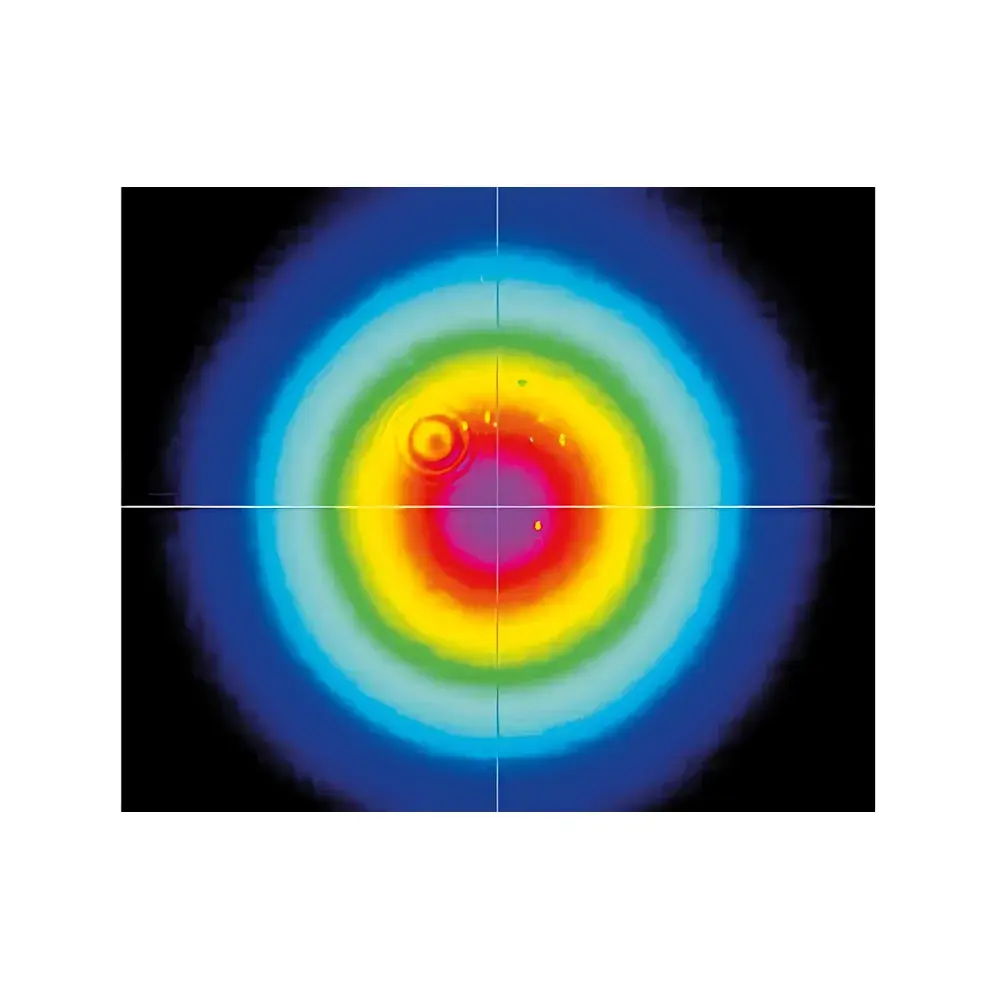
- Optimized multi-pass flashlamp-pumped power amplifier delivering near-Gaussian spatial profile (M² < 1.3) and low wavefront distortion (< λ/8 PV)
- Thermo-stabilized harmonic generators using angle-tuned KD*P and KDP crystals housed in precision ovens (±0.02 °C stability) for reproducible SHG/THG/FHG output
- Integrated real-time pulse energy monitoring with analog/digital readout accessible via remote keypad or PC interface
- Low-jitter (<30 ps RMS) synchronized trigger outputs with programmable lead/delay (0.25 ns resolution, up to 1000 µs pre-trigger capability)
- Full remote control via USB 2.0 with native Windows-compatible software suite and certified LabVIEW™ drivers compliant with NI VI architecture standards
Sample Compatibility & Compliance
The PL2250 is designed for integration into vacuum-compatible, optically isolated experimental stations used in academic, national lab, and industrial R&D environments. Its beam parameters—including TEM₀₀ spatial mode, polarization extinction ratio >100:1, and pointing stability <5 µrad RMS—are optimized for coupling into nonlinear crystals (e.g., BBO, LBO, BiBO), optical parametric amplifiers (OPAs), streak cameras, and time-of-flight spectrometers. The system meets CE marking requirements for Class 4 laser products (EN 60825-1:2014) and incorporates interlock-ready hardware interfaces compliant with IEC 61508 functional safety principles. Harmonic separation optics ensure spectral purity exceeding OD6 rejection between adjacent harmonics—supporting applications requiring strict compliance with ASTM E2912 (laser-based spectroscopic analysis) and USP (laser calibration in pharmaceutical analytical instrumentation).
Software & Data Management
Control and diagnostics are managed through Ekspla’s proprietary LaserControl™ software (Windows 10/11, 64-bit), offering real-time parameter logging, automated alignment routines, and exportable CSV/ASCII datasets traceable to NIST-traceable energy calibration certificates. All configuration changes, energy readings, and fault logs are timestamped and stored locally with optional network synchronization. LabVIEW™ drivers include full support for NI TestStand™ integration and meet FDA 21 CFR Part 11 requirements when deployed with electronic signature-enabled audit trails and user-role access controls. Remote operation via RS232 is supported for legacy DAQ systems requiring TTL-level command protocols (SCPI-compliant syntax).
Applications
- Time-resolved fluorescence and transient absorption spectroscopy (fs–ns dynamics)
- Sum-frequency generation (SFG) and second-harmonic generation (SHG) microscopy of interfacial molecular structures
- Pump-probe studies of carrier relaxation in perovskite photovoltaics and 2D materials
- Optical parametric generator (OPG) and amplifier (OPA) seeding for tunable ultrafast sources
- Remote laser sensing including atmospheric LIDAR and filamentation-based standoff detection
- Satellite laser ranging (SLR) with sub-centimeter precision using time-of-flight measurement
- Nonlinear optical characterization of novel dielectrics and metamaterials under high peak-power excitation
FAQ
What is the maximum achievable pulse energy at 532 nm (second harmonic)?
The PL2250 delivers up to 45 mJ at 532 nm with >60% conversion efficiency from 1064 nm, depending on crystal temperature tuning and input pulse energy.
Can the system operate continuously at 50 Hz for extended periods?
Yes—the diode-pumped oscillator and thermo-regulated harmonic modules enable 8-hour continuous operation at 50 Hz without performance drift, validated per ISO 10110-7 thermal stability testing protocols.
Is third-party software integration supported beyond LabVIEW™?
Python (PyVISA), MATLAB® Instrument Control Toolbox, and EPICS IOC drivers are available upon request for synchrotron and large-scale facility integration.
How is pulse energy calibrated and traceably maintained?
Each unit ships with a factory-calibrated pyroelectric energy sensor (NIST-traceable certificate), and in-field recalibration is supported via the built-in reference port and automated calibration routine in LaserControl™ software.
What cooling infrastructure is required?
The system operates with closed-loop chiller cooling (recommended: 18–22 °C, flow rate ≥8 L/min, pressure drop <1.5 bar); no external water tap connection is needed.




