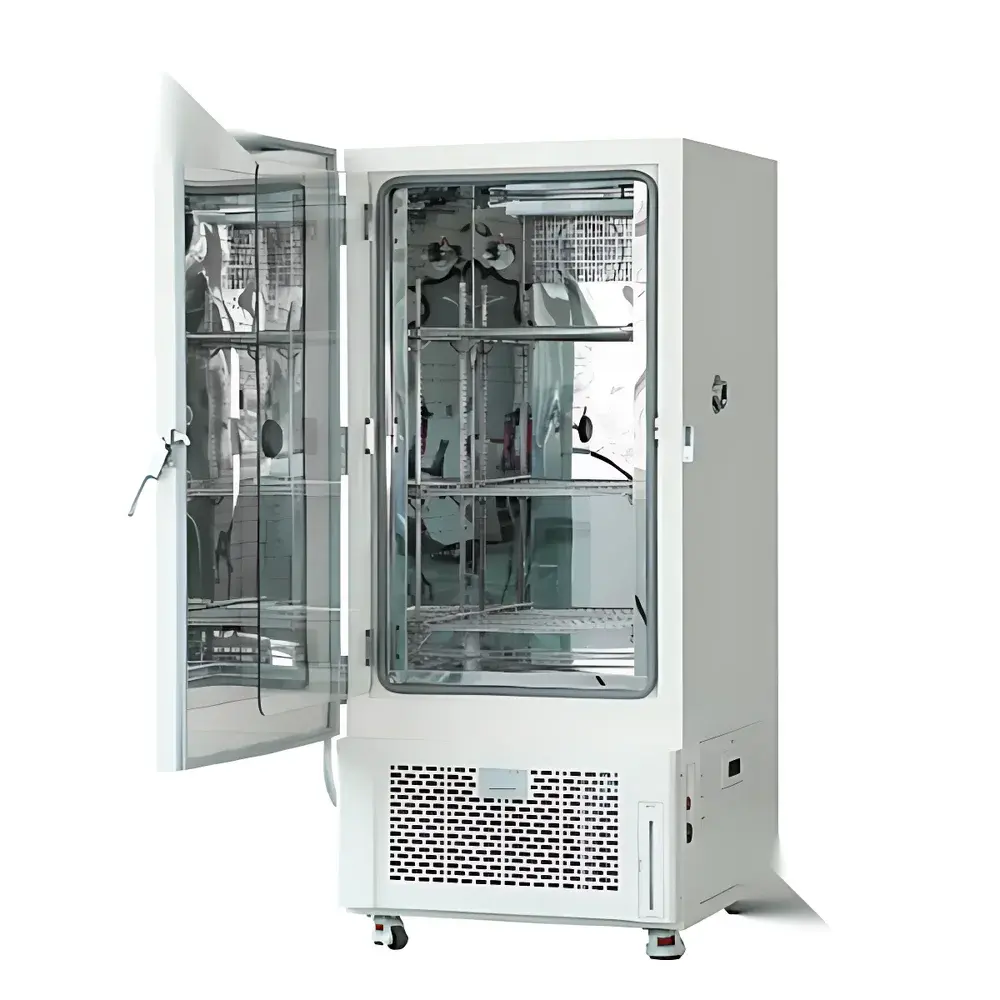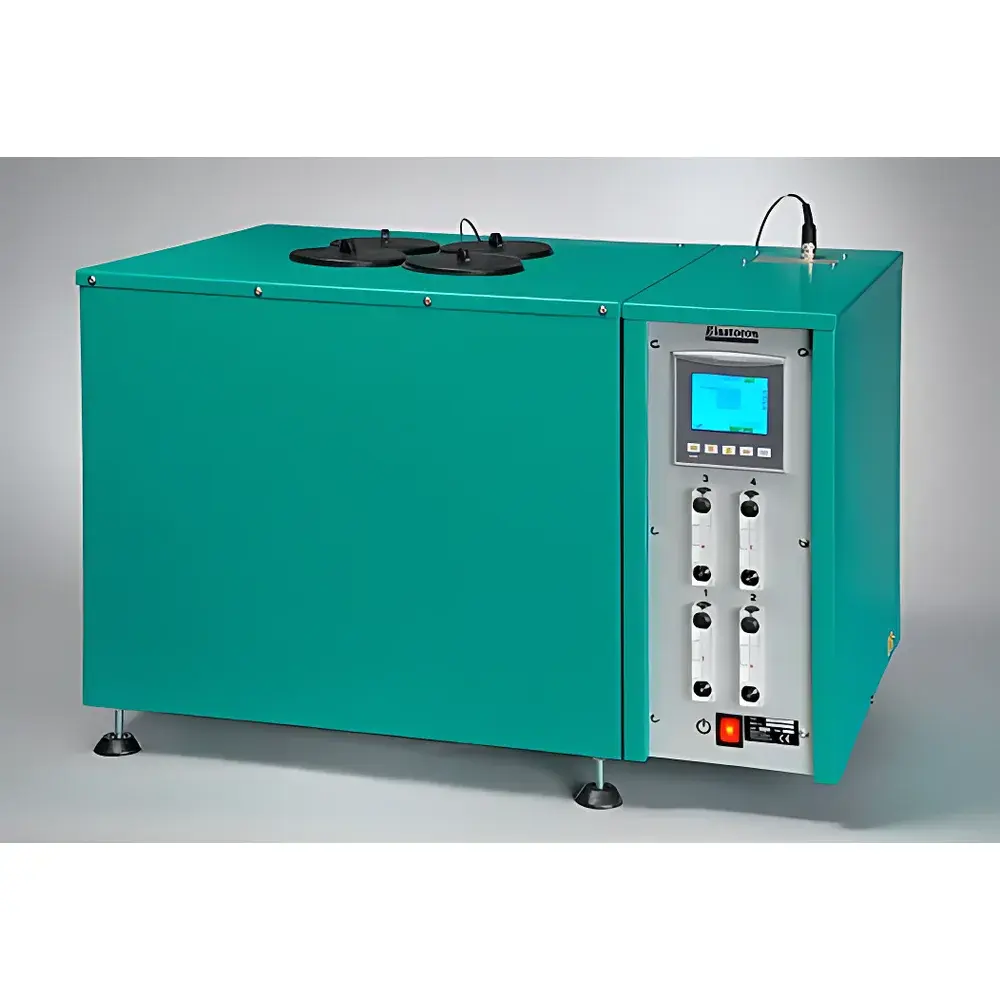
Elastocon EB 01-II / EB 19 / EB 20 Multi-Chamber Thermal Aging Oven
| Brand | Elastocon |
|---|---|
| Origin | Sweden |
| Model Variants | EB 01-II (4-chamber), EB 19, EB 20 |
| Compliance | ISO 188, ASTM D573, ASTM D865, DIN 53508, BS 903-A13 |
| Temperature Range | Ambient +10°C to +200°C |
| Temperature Uniformity | ±0.5°C (at setpoint) |
| Temperature Stability | ±0.3°C (over time) |
| Chamber Volume | EB 01-II: 4 × 12 L |
| EB 19 | 1 × 75 L |
| EB 20 | 1 × 120 L |
| Control System | PID digital controller with independent chamber monitoring (EB 01-II) |
| Display | Backlit LCD with real-time temperature and elapsed time |
| Data Logging | Internal memory for ≥30 days of 1-min interval data (configurable) |
| Interface | RS-232 & optional Ethernet for PC connectivity |
| Safety | Over-temperature cut-off, door interlock, audible/visual alarm |
Overview
The Elastocon EB 01-II, EB 19, and EB 20 Thermal Aging Ovens are precision-engineered laboratory instruments designed for standardized thermal aging of elastomeric, polymeric, and rubber-based materials under controlled, reproducible conditions. Based on the fundamental principle of accelerated thermal degradation—where material specimens are exposed to elevated, stable temperatures over defined durations to simulate long-term service aging—the ovens comply strictly with internationally recognized test standards including ISO 188 (Rubber — Accelerated ageing), ASTM D573 (Rubber—Deterioration in an air oven), ASTM D865 (Rubber—Deterioration in a circulating-air oven), DIN 53508, and BS 903-A13. Each model serves distinct throughput and configuration requirements: the EB 01-II features four independently controlled 12-liter chambers enabling parallel multi-condition testing (e.g., four different temperatures or exposure times within a single cycle); the EB 19 offers a single 75-liter chamber optimized for medium-batch evaluation; and the EB 20 provides a larger 120-liter volume for high-capacity sample loading or bulky component aging. All units are manufactured in Sweden and built around a robust double-wall insulated stainless-steel chamber architecture with forced-air circulation, ensuring minimal thermal gradient and high spatial uniformity across the working volume.
Key Features
- Independent PID-controlled temperature regulation per chamber (EB 01-II) with real-time deviation monitoring and automatic recalibration compensation
- Forced convection airflow system with calibrated fan speed control to maintain consistent heat transfer across all specimen positions
- Dual-stage over-temperature protection: primary electronic limit and secondary mechanical safety cut-off
- Backlit LCD interface displaying setpoint, actual chamber temperature, elapsed test time, and status alerts
- Integrated data logging with non-volatile memory supporting ≥30 days of timestamped 1-minute interval readings (user-configurable sampling rate)
- RS-232 serial port standard; optional Ethernet module available for integration into centralized lab data management systems
- Door-mounted safety interlock that halts heating and triggers alarm if opened during active test cycles
- Stainless-steel interior and exterior construction with electropolished chamber surfaces for corrosion resistance and cleanability
Sample Compatibility & Compliance
These ovens accommodate a broad range of specimen geometries—including dumbbell tensile strips, compression set plugs, O-rings, molded parts, and coated fabrics—without requiring custom fixtures. Specimen trays are supplied with perforated stainless-steel racks to ensure unobstructed airflow. All models are validated for conformance to GLP (Good Laboratory Practice) documentation requirements, with full traceability of calibration certificates, temperature mapping reports (per IQ/OQ protocols), and audit-ready event logs. The control firmware supports user-defined test profiles with up to 99 programmable steps (ramp/soak sequences), meeting traceability demands of ISO/IEC 17025-accredited laboratories. Optional validation packages include as-installed temperature uniformity mapping (±0.5°C tolerance per ISO 188 Annex B) and electronic signature-enabled operation logs compliant with FDA 21 CFR Part 11 when paired with validated software.
Software & Data Management
While standalone operation requires no external software, Elastocon provides the optional ElastoSoft™ Suite for Windows-based instrument control, remote monitoring, and automated report generation. The suite enables synchronized multi-oven scheduling, export of raw log data in CSV/Excel format, and generation of ASTM/ISO-compliant test reports with embedded calibration history and uncertainty statements. All data files include digital signatures and immutable timestamps. Audit trail functionality records every parameter change, user login/logout, alarm event, and calibration action—fully satisfying GMP and regulatory inspection requirements. Data export paths support direct integration with LIMS platforms via standard OPC UA or HTTP API interfaces.
Applications
- Accelerated aging studies for automotive rubber components (hoses, seals, bushings) per SAE J2236 and OEM-specific specifications
- Quality assurance of medical-grade silicone tubing and elastomeric closures under ISO 10993-12 protocols
- Long-term stability assessment of cable jacketing compounds (PVC, TPE, EPDM) per IEC 60811-501
- Formulation screening for heat-resistant polymer blends in aerospace sealant development
- Validation of shelf-life predictions for elastomeric pharmaceutical packaging components
- Research into oxidative degradation kinetics using Arrhenius modeling with multi-temperature aging datasets
FAQ
What is the maximum allowable operating temperature for each model?
All models are rated for continuous operation from ambient +10°C up to +200°C.
Can the EB 01-II run different temperatures simultaneously in each chamber?
Yes—the EB 01-II supports fully independent temperature control and programming for all four chambers.
Is third-party calibration certification included with purchase?
A factory-issued calibration certificate traceable to SWEDAC-accredited standards is provided; on-site IQ/OQ validation services are available upon request.
How is temperature uniformity verified across the chamber volume?
Each unit undergoes volumetric temperature mapping at three load conditions (empty, 50% loaded, full load) per ISO 188 Annex B prior to shipment.
Does the oven support unattended weekend-long aging tests?
Yes—robust thermal insulation, redundant safety systems, and battery-backed real-time clock enable uninterrupted operation for up to 999 hours.