
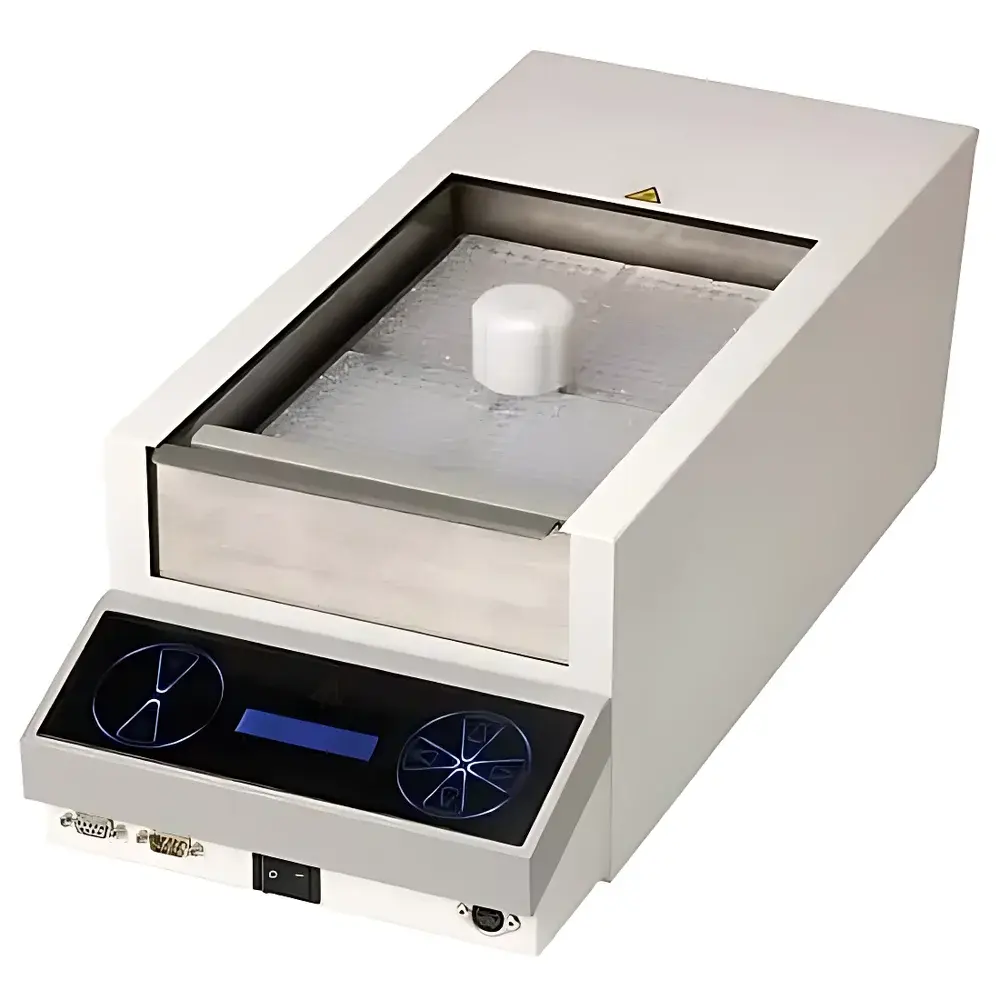
Electrothermal RS9000 Heating and Orbital Shaking Reaction Station
| Brand | Electrothermal |
|---|---|
| Origin | United Kingdom |
| Model | RS9000 |
| Voltage Options | 230 V / 115 V, 50–60 Hz |
| Power Rating | 900 W |
| Operating Temperature Range | Ambient to 150 °C |
| Orbital Shaking Speed | 100–600 rpm |
| Maximum Load per Block | 7 kg |
| Dimensions (W × D × H) | 240 × 510 × 165 mm |
| Weight (without block) | 42 kg |
| Construction Material | Stainless Steel |
| Pressure Rating | High-Pressure Compatible |
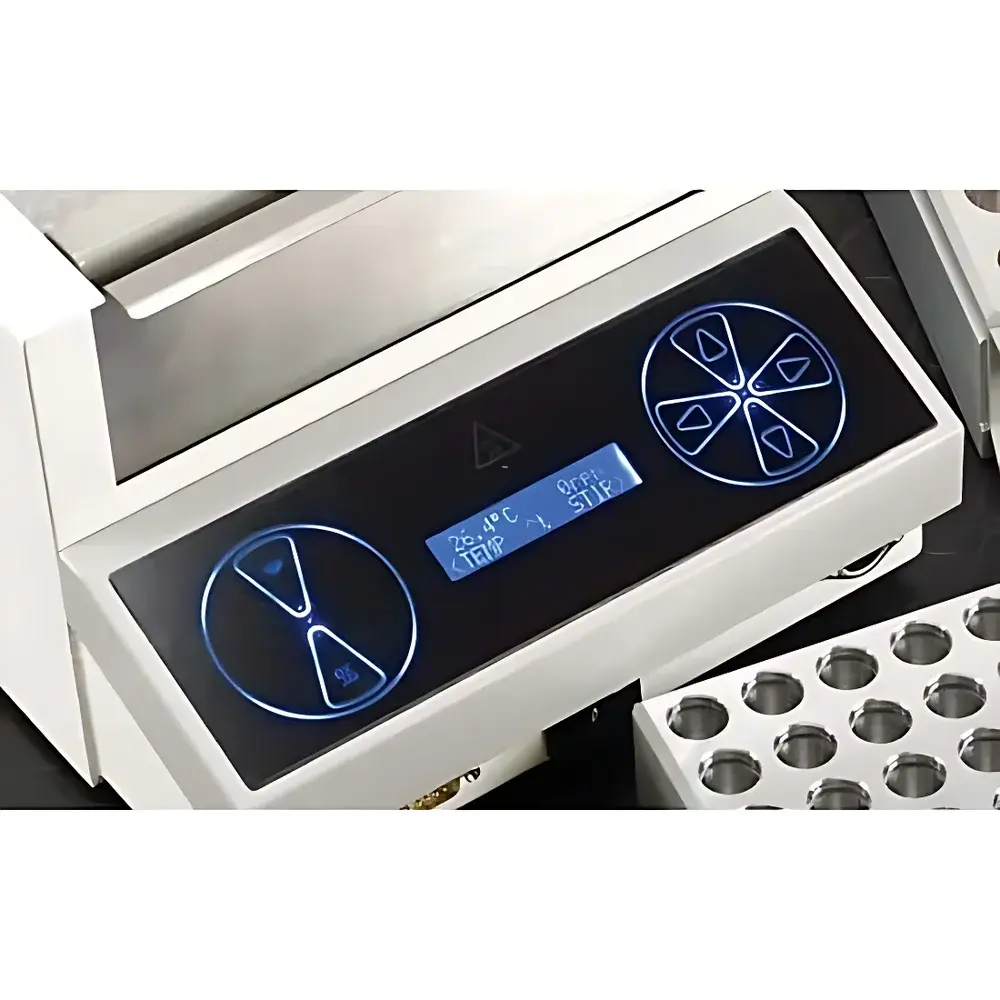
| Control Interface | Capacitive Touchscreen (CTC) with Anti-Glare Blue LCD |
| Communication Ports | RS232, RS485, GSIOC |
| Safety Features | Thermal Cut-Out, Hot Block LED Indicator, Mechanical Door Interlock, Auto-Park Function, Soft-Start Ramp |
Overview
The Electrothermal RS9000 Heating and Orbital Shaking Reaction Station is an engineered platform for precise thermal control and reproducible orbital agitation in synthetic chemistry, parallel reaction screening, and sample preparation workflows. Designed around a dual-axis X–Y orbital shaking mechanism mounted on a solid copper base, the RS9000 delivers uniform motion across all vessel positions without eccentric wobble or torque-induced drift—critical for maintaining reaction homogeneity under elevated temperatures and extended incubation periods. Its heating system employs embedded resistance elements within interchangeable stainless steel heating blocks, enabling rapid thermal equilibration and stable setpoint maintenance from ambient to 150 °C. The station operates as a standalone benchtop instrument or integrates seamlessly into automated laboratory systems via industry-standard serial protocols (RS232/RS485/GSIOC), supporting remote scheduling, parameter logging, and synchronized operation with liquid handlers or robotic arms.
Key Features
- Dual-axis X–Y orbital shaking system with copper-base mechanical architecture ensures long-term stability and minimal vibration transmission—optimized for 24/7 unattended operation.
- Interchangeable stainless steel heating blocks accommodate diverse consumables: 96 × 16 mm OD test tubes (PS80052), 40 × 24 mm OD tubes (PS80064), 96-well microtiter plates (PS80114), and PTFE-coated 96-well formats (PS80047); custom block designs available upon request.
- Capacitive touch control (CTC) panel with laminated 3-mm optical-grade glass, 2-mm anti-reflective coating, and hardened grey interlayer resists corrosion from organic solvents and dilute acids—compatible with ISO 15190-compliant lab environments.
- Backlit blue dual-line dot-matrix LCD display with glare-reduction film ensures legibility under variable lighting conditions while minimizing photoreactive interference with light-sensitive reagents.
- Soft-start ramp function mitigates splashing during acceleration; Auto-Park mode returns shaker to home position automatically—essential for repeatable robotic arm pickup and placement.
- Integrated thermal cut-out and “Hot Block” LED indicator (illuminated even when power is disconnected) provide fail-safe overtemperature protection aligned with IEC 61010-1 safety requirements.
Sample Compatibility & Compliance
The RS9000 supports a wide range of sealed and vented reaction vessels—including screw-cap vials, crimp-top tubes, and microplate formats—when used with appropriate heating blocks rated for high-pressure applications. All stainless steel components comply with ASTM A240/A240M standards for corrosion-resistant chromium–nickel alloys. The unit meets CE marking requirements under the EU Machinery Directive 2006/42/EC and Low Voltage Directive 2014/35/EU. Optional external temperature probe (AZ140940) enables independent verification of block temperature against internal sensor readings—a prerequisite for GLP-compliant method validation and audit-ready documentation.
Software & Data Management
While the RS9000 operates autonomously via its onboard CTC interface, its RS232/RS485/GSIOC ports support bidirectional communication with third-party laboratory information management systems (LIMS), electronic lab notebooks (ELN), and automation orchestration software. Command sets follow ASCII-based protocol conventions, allowing integration with Python, LabVIEW, or vendor-neutral middleware platforms. Time-stamped parameter logs—including setpoint, actual temperature, RPM, and runtime—can be exported for traceability. When deployed in regulated environments, the system supports 21 CFR Part 11-compliant audit trails when paired with validated host software that enforces user authentication, electronic signatures, and immutable record retention.
Applications
- Parallel synthesis of small-molecule libraries under controlled thermal and agitation conditions.
- Enzymatic assays requiring simultaneous heating and gentle orbital mixing to preserve protein conformation.
- Accelerated solvent extraction (ASE) and solid-phase reaction kinetics studies.
- Cell lysis, DNA/RNA hybridization, and antigen–antibody binding optimization in molecular biology workflows.
- Stability testing of pharmaceutical intermediates under ICH Q1A(R3)-aligned stress conditions.
- Automated sample prep for GC-MS, LC-MS, and ICP-MS analysis pipelines.
FAQ
What is the maximum safe operating pressure for reactions performed on the RS9000?
The RS9000 itself is not a pressure-rated vessel; however, it is compatible with externally rated high-pressure reaction tubes and vials (e.g., Wheaton® HP series or Chemglass® C-1000) when used with appropriate heating blocks. Users must ensure vessel integrity and pressure relief mechanisms conform to ASME B31.3 or PED 2014/68/EU standards.
Can the RS9000 be validated for GxP environments?
Yes—when equipped with the optional AZ140940 external temperature probe and operated under documented IQ/OQ protocols, the RS9000 supports qualification for GLP, GMP, and clinical research settings. Full validation documentation packages are available upon request.
Is firmware upgradable in the field?
Firmware updates are delivered via USB flash drive using Electrothermal’s certified update utility; version history and release notes are published on the manufacturer’s technical support portal.
Does the touchscreen retain calibration after power cycling?
Yes—the capacitive touch controller performs automatic self-calibration at boot, ensuring consistent positional accuracy across operational cycles without manual intervention.



