
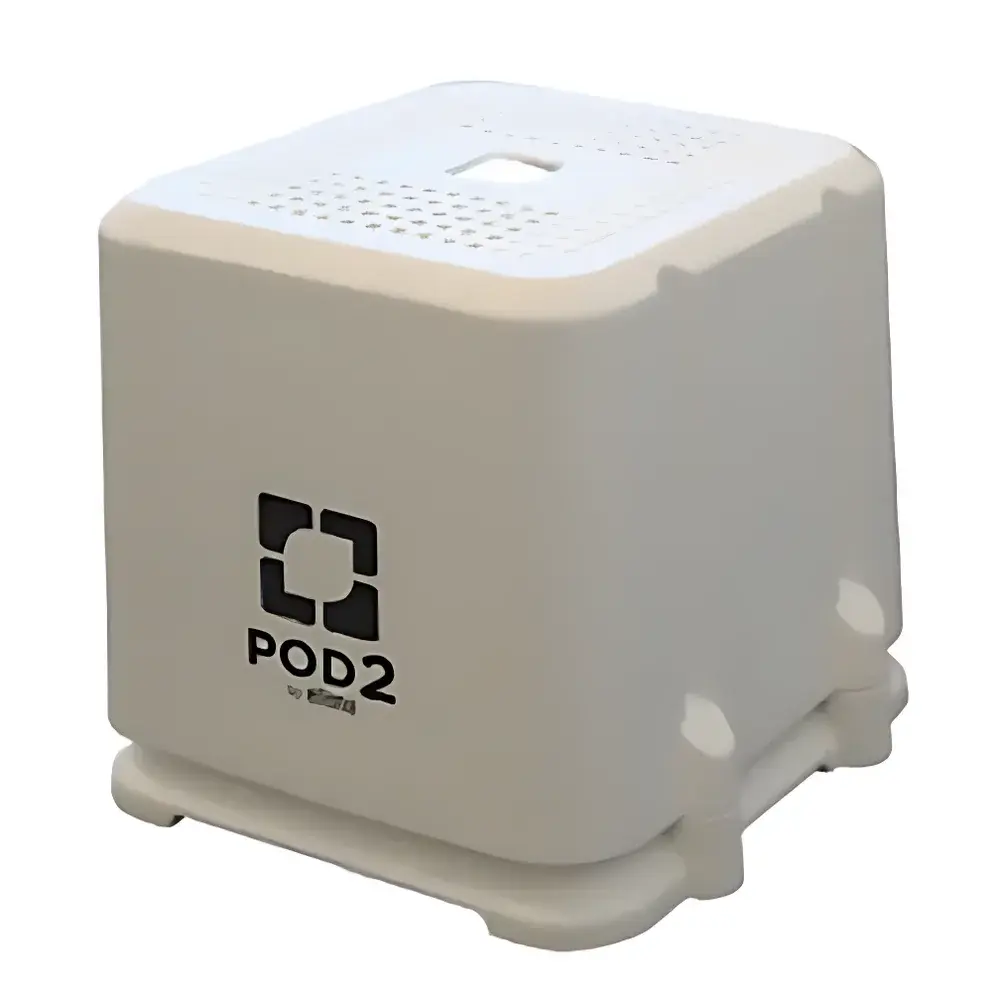
Ellona POD2 Indoor Environmental Monitoring System
| Brand | Ellona |
|---|---|
| Origin | France |
| Model | POD2 |
| Device Type | Integrated Indoor Environmental Quality (IEQ) Sensor Platform |
| Gas Channels | 5 simultaneous real-time gas measurements |
| VOC Detection | Yes, broad-spectrum volatile organic compound monitoring |
| Particulate Matter | PM1.0, PM2.5, PM10 |
| Acoustic Monitoring | Sound pressure level (SPL) with A-weighting |
| Lighting Metrics | Illuminance (lux), flicker frequency (Hz), flicker index |
| Environmental Baseline Sensors | Temperature (°C), Relative Humidity (%RH), Barometric Pressure (hPa), Triaxial Vibration (m/s²) |
| Alerting | SMS, Email, Webhook, SNMP traps |
| Integration Protocols | Modbus TCP, BACnet IP, MQTT v3.1.1 |
| Data Accessibility | QR-code–enabled public dashboard, role-based web interface |
| Compliance | CE, RoHS, EN 61000-6-3 (EMC), EN 61000-6-2 (Immunity), ISO 16000-29 (VOC sampling guidance), ISO 7730 (thermal comfort), CEN/TS 16798-1:2015 (indoor air quality classification) |
Overview
The Ellona POD2 Indoor Environmental Monitoring System is a modular, networked sensor platform engineered for continuous, multi-parameter assessment of indoor environmental quality (IEQ) in commercial, institutional, and high-performance building environments. Based on distributed sensing architecture and edge-processing firmware, the POD2 employs calibrated electrochemical, NDIR, PID, optical scattering, MEMS acoustic, photometric, and microbarometric transducers to acquire synchronized, time-stamped data streams across nine physical domains: five targeted gases (e.g., CO, CO₂, NO₂, O₃, SO₂ — configurable per deployment), total volatile organic compounds (TVOC), particulate matter (PM₁.₀, PM₂.₅, PM₁₀), broadband sound pressure level (dBA), illuminance and temporal light modulation (flicker frequency and index), ambient temperature, relative humidity, barometric pressure, and triaxial mechanical vibration. All measurements adhere to traceable calibration protocols aligned with ISO/IEC 17025-accredited reference standards. Data are transmitted via secure TLS 1.2–encrypted Ethernet or optional LTE-M connectivity to a centralized management server, enabling real-time spatial mapping, longitudinal trend analysis, and automated response triggering without reliance on cloud-only infrastructure.
Key Features
- Continuous 24/7 acquisition across all 9 sensor modalities with sub-second synchronization and onboard timestamping (NTP-synced RTC)
- Dual-mode gas detection: electrochemical cells for reactive species (CO, NO₂, Cl₂) and photoionization detection (PID) for broad-spectrum VOC quantification (0.1–2000 ppb range, isobutylene-equivalent)
- Optical particle counter with laser scattering principle (λ = 650 nm), validated per ISO 21501-4 for PM mass concentration estimation
- Class 2 sound level meter compliant with IEC 61672-1:2013, incorporating A-weighting and fast/slow time weighting
- Photometric module meeting CIE S 023/E:2018 requirements for flicker measurement (flicker percentage, flicker index, SVM)
- Integrated environmental baseline suite with ±0.2 °C temperature accuracy, ±2 %RH humidity uncertainty, and ±0.1 hPa barometric resolution
- Configurable threshold-based alerting via SMTP email, SMS gateway (GSM/LTE), SNMP traps, or HTTP webhooks with customizable payload schema
- Native BACnet IP and Modbus TCP support for direct integration into existing BMS/BAS infrastructures; MQTT client for IIoT edge deployments
- On-device QR code generator enabling instant, read-only access to localized IEQ metrics for occupants and facility staff without authentication
Sample Compatibility & Compliance
The POD2 is designed for permanent wall- or ceiling-mounted installation in conditioned indoor spaces (operating range: 0–45 °C, 10–90 %RH non-condensing). It does not require consumables, sample preparation, or periodic reagent replacement. All sensors undergo factory calibration against NIST-traceable references, with documented uncertainty budgets provided per unit. The system conforms to EU electromagnetic compatibility directives (EN 61000-6-2/-3), low-voltage safety (EN 62368-1), and environmental restriction standards (RoHS 2011/65/EU, REACH). For regulatory reporting contexts, data output formats comply with ISO 16000-29 Annex A (VOC sampling metadata), ISO 7730 (PMV/PPD thermal comfort indices), and CEN/TS 16798-1:2015 Annex D (IEQ parameter classification tiers). Audit trails, user access logs, and configuration change history meet GLP-aligned data integrity requirements.
Software & Data Management
The POD2 operates with Ellona’s IEQ Manager v4.x web application — a responsive, role-based interface supporting multi-tenant administration. Raw sensor data are stored locally on encrypted microSD (optional) and centrally in PostgreSQL-backed time-series databases with retention policies configurable per parameter. The software provides geospatial visualization (heatmaps, floor-plan overlays), statistical process control (SPC) charts, automated report generation (PDF/CSV), and API-driven export for integration with enterprise EAM or CMMS platforms. All user actions — including alarm acknowledgments, threshold adjustments, and device grouping — are logged with immutable timestamps and operator IDs. Full audit trail functionality satisfies FDA 21 CFR Part 11 requirements for electronic records and signatures when deployed in GxP-regulated facilities.
Applications
- Smart building operations: dynamic HVAC setpoint optimization based on real-time CO₂, VOC, and PM load signals
- Occupant wellness certification: documentation of WELL Building Standard v2 or RESET Air compliance metrics
- Academic and healthcare facility IAQ assurance: monitoring of disinfection by-products (e.g., ozone post-UV-C), anesthetic gases, or mold-related VOCs
- Noise-sensitive environments: long-term acoustic profiling in libraries, recording studios, or open-plan offices
- Lighting quality validation: flicker assessment for LED retrofit projects and circadian lighting design verification
- Vibration monitoring in laboratories housing sensitive instrumentation (e.g., electron microscopes, AFMs)
- Post-occupancy evaluation (POE) studies supporting LEED IEQ credit documentation
FAQ
What gases does the POD2 measure natively, and can sensor configurations be customized?
The POD2 ships with five preconfigured electrochemical or NDIR gas channels. Standard configurations include CO, CO₂, NO₂, O₃, and SO₂; however, custom combinations (e.g., H₂S, NH₃, Cl₂) are available upon request and subject to cross-sensitivity validation.
Does the system support historical data export for third-party analytics platforms?
Yes — via RESTful API (JSON/XML), ODBC connector, or scheduled SFTP dump. All timestamps are UTC-aligned with millisecond precision and include sensor-specific metadata (calibration date, drift compensation flag).
How is sensor calibration maintained over time?
Ellona recommends annual functional verification using certified gas standards. Field-zeroing for PM and VOC modules is supported via built-in clean-air purge cycle; full recalibration requires return to authorized service center.
Can the POD2 operate offline, and what happens to data during network outages?
Yes — onboard flash memory buffers up to 30 days of full-rate data. Upon network restoration, buffered records are transmitted with original timestamps, preserving temporal integrity.
Is the QR-code dashboard compliant with accessibility standards (e.g., WCAG 2.1)?
The public dashboard meets WCAG 2.1 AA criteria: sufficient color contrast, screen-reader–compatible markup, scalable text, and keyboard-navigable controls.
Related Products







