
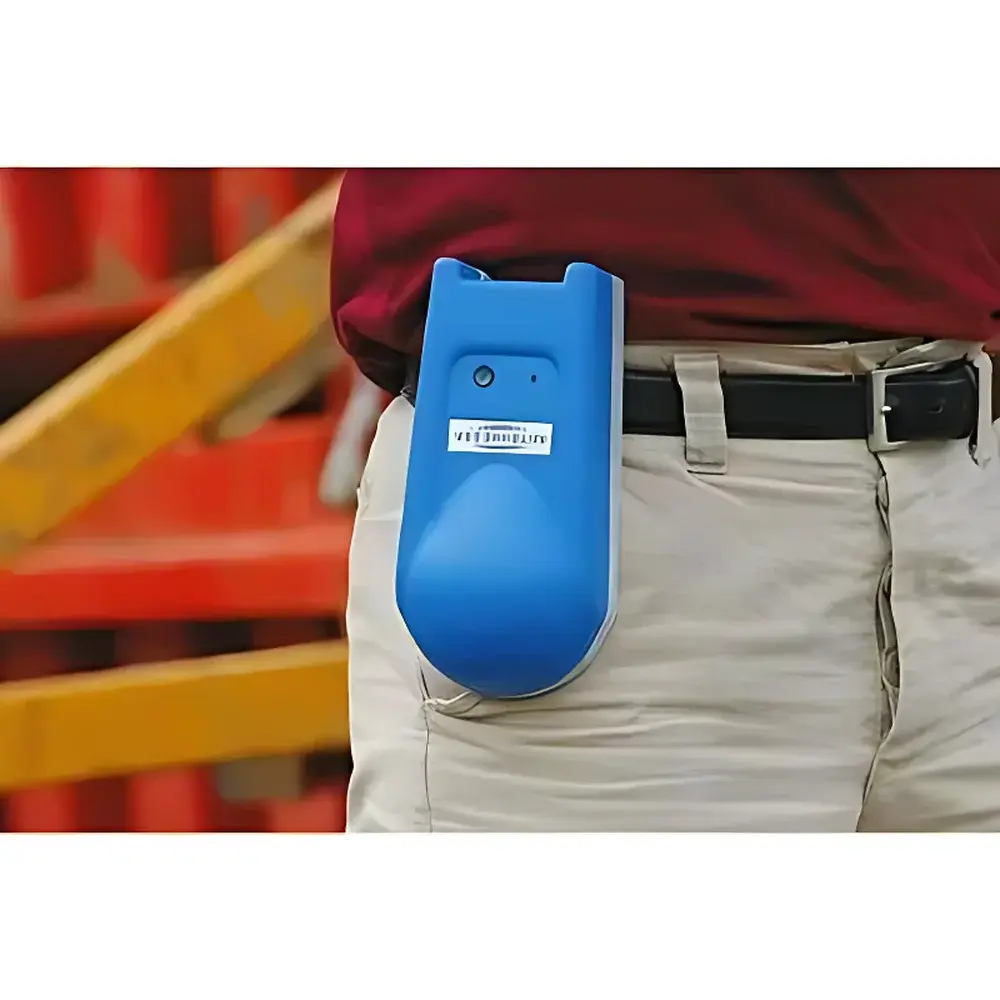
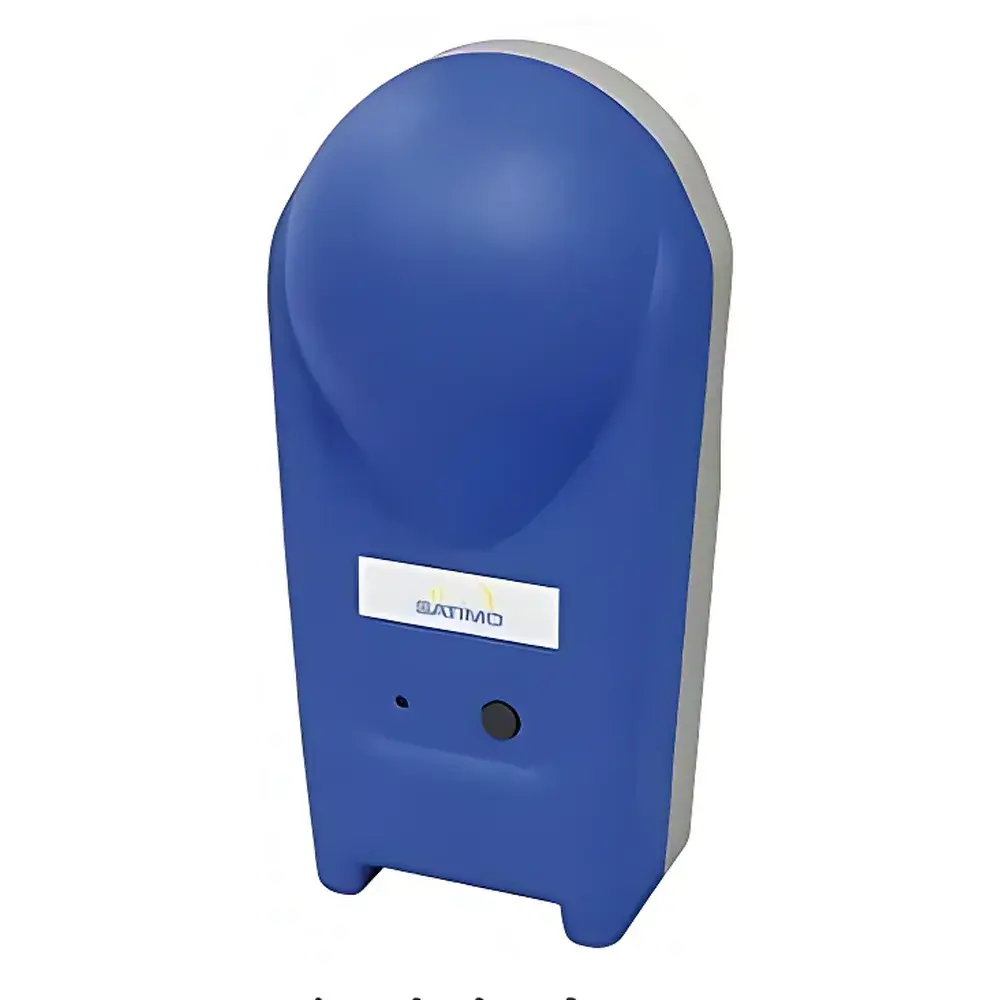
EME Spy 121/100 Electromagnetic Field Exposure Meter
| Origin | France |
|---|---|
| Manufacturer Type | Authorized Distributor |
| Origin Category | Imported |
| Model | EME Spy 121/100 |
| Price | Upon Request |
| Frequency Range (Spy 121) | 88 MHz – 2.5 GHz |
| Frequency Range (Spy 100) | 88 MHz – 2.17 GHz |
| Electric Field Probe | Triaxial isotropic E-field sensor |
| Sensitivity (Spy 121) | 0.05 V/m (dynamic range up to 10 V/m, 46 dB) |
| Sensitivity (Spy 100) | 0.05 V/m (dynamic range up to 5 V/m, 40 dB) |
| Data Points (Spy 121) | 12,540 |
| Data Points (Spy 100) | 7,168 |
| Logging Interval | 4–255 seconds |
| Operating Temperature | −10 °C to +50 °C |
| Relative Humidity | ≤85 % RH (non-condensing) |
| Battery | Rechargeable Li-ion |
| Battery Life | >20 days (typical continuous logging at 30-sec interval) |
| Power Adapter | 100–240 VAC, 50–60 Hz |
| Charger Output | Max 0.9 A |
| Dimensions (H × L × W) | 193 × 95.6 × 69.4 mm |
| Weight | 450 g |
| Ingress Protection | IP50 |
| Compliance Reference | ICNIRP 2020 Guidelines for Human Exposure to Electromagnetic Fields |
Overview
The EME Spy 121/100 is a professional-grade, portable electromagnetic field (EMF) exposure meter engineered for quantitative assessment of human exposure to radiofrequency (RF) electric fields across defined frequency bands. Designed in accordance with the measurement principles outlined in IEC 62232 and IEEE Std 1308, it employs a triaxial isotropic E-field probe to capture vector-summed field magnitudes without orientation dependency—ensuring traceable, repeatable measurements under real-world environmental conditions. Unlike broadband survey meters that integrate total power across wide spectra, the EME Spy series performs frequency-selective analysis within two distinct RF bands: the EME Spy 121 covers 88 MHz to 2.5 GHz (encompassing FM radio, DAB, UMTS, LTE, and 5G NR n78), while the EME Spy 100 spans 88 MHz to 2.17 GHz (optimized for legacy and current mobile infrastructure). Its primary application lies in occupational and public exposure compliance verification against ICNIRP 2020 reference levels, supporting regulatory reporting, site audits, and epidemiological exposure characterization in complex RF environments.
Key Features
- Triaxial isotropic E-field probe with calibrated response across full operating band—no repositioning required for accurate RMS field magnitude determination
- High dynamic range: 46 dB (0.05 V/m to 10 V/m) for Spy 121; 40 dB (0.05 V/m to 5 V/m) for Spy 100—enabling detection of weak ambient signals and proximity-level emissions from base stations or handsets
- Onboard data logging with configurable intervals (4–255 s); stores up to 12,540 time-stamped measurements (Spy 121) or 7,168 (Spy 100)
- IP50-rated enclosure ensures dust resistance during field deployment while maintaining compact ergonomics (193 × 95.6 × 69.4 mm, 450 g)
- Rechargeable lithium-ion battery delivering >20 days of operation under typical logging duty cycles—validated per IEC 62304 software lifecycle requirements
- Built-in real-time spectral identification algorithm assists in distinguishing dominant emission sources (e.g., broadcast vs. cellular vs. Wi-Fi) based on amplitude stability and temporal signature
Sample Compatibility & Compliance
The EME Spy 121/100 is validated for use in diverse operational contexts including telecom infrastructure audits, municipal EMF monitoring programs, university-based bioelectromagnetics research, and national regulatory inspections. It complies with the fundamental exposure restrictions and reference levels specified in ICNIRP (2020), and its calibration traceability is maintained to national metrology institutes (NMIs) via accredited laboratories. While not intrinsically safe for Zone 0 hazardous areas, its non-sparking design and absence of active RF transmission make it suitable for use near sensitive electronic equipment and in controlled laboratory settings. The instrument meets CE marking requirements under the EU EMC Directive 2014/30/EU and RoHS 2011/65/EU. Documentation includes a factory-issued calibration certificate compliant with ISO/IEC 17025:2017, covering all probe axes and nominal frequencies.
Software & Data Management
EME Spy Analysis Software (included on optical disc and available for Windows 10/11) provides post-processing functionality aligned with GLP-compliant workflows. Users can import logged datasets, apply user-defined exposure limit thresholds (ICNIRP, IEEE C95.1, or custom), generate time-series plots with percentile statistics (P1, P50, P95), and export reports in PDF or CSV format. Audit-trail features record all parameter changes, file exports, and report generation events—including timestamps and operator ID when integrated with domain authentication. The software supports batch processing of multi-instrument campaigns and permits overlay comparison of simultaneous measurements from multiple units—a capability essential for spatial mapping studies. All firmware updates are digitally signed and distributed through secure vendor channels, satisfying FDA 21 CFR Part 11 requirements for electronic records integrity where applicable.
Applications
- Pre-deployment RF safety assessments for 5G small-cell installations and macro base stations
- Long-term ambient EMF monitoring in schools, hospitals, and residential zones near broadcast towers
- Source attribution and emission profiling during spectrum interference investigations
- Validation of shielding effectiveness in architectural EMF mitigation projects
- Supporting epidemiological cohort studies requiring personal exposure metrics over extended durations
- Training and demonstration platforms for EMF safety officers and telecom technical staff
FAQ
What standards does the EME Spy 121/100 reference for exposure evaluation?
It implements the ICNIRP 2020 guidelines as its primary exposure reference framework, with software-configurable limit tables also supporting IEEE C95.1-2019 and national variants.
Is the device capable of measuring magnetic field (H-field) components?
No—this instrument is exclusively an E-field meter. For combined E/H-field assessment, complementary instrumentation such as a calibrated loop probe or broadband field analyzer is required.
Can the logging interval be synchronized across multiple EME Spy units?
Yes—units may be time-synchronized via USB connection to a host PC prior to deployment, enabling phase-coherent multi-point temporal correlation.
Does the system support remote data retrieval during operation?
No—data retrieval is offline only via USB interface after logging completion. Real-time telemetry is not implemented to preserve measurement integrity and battery longevity.
Is third-party calibration accepted for regulatory submissions?
Only calibrations performed by the manufacturer’s authorized service centers or ISO/IEC 17025-accredited labs using NIST-traceable reference sources are accepted for audit-ready documentation.
Related Products







