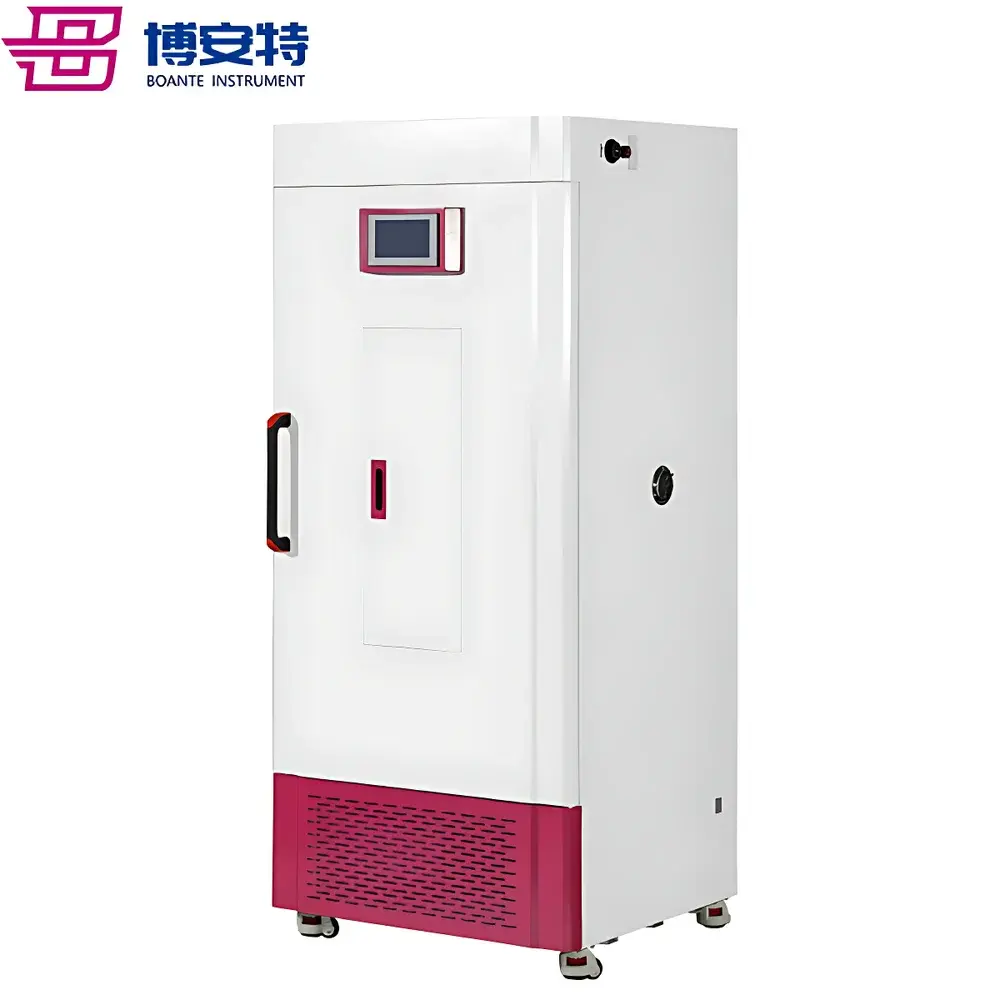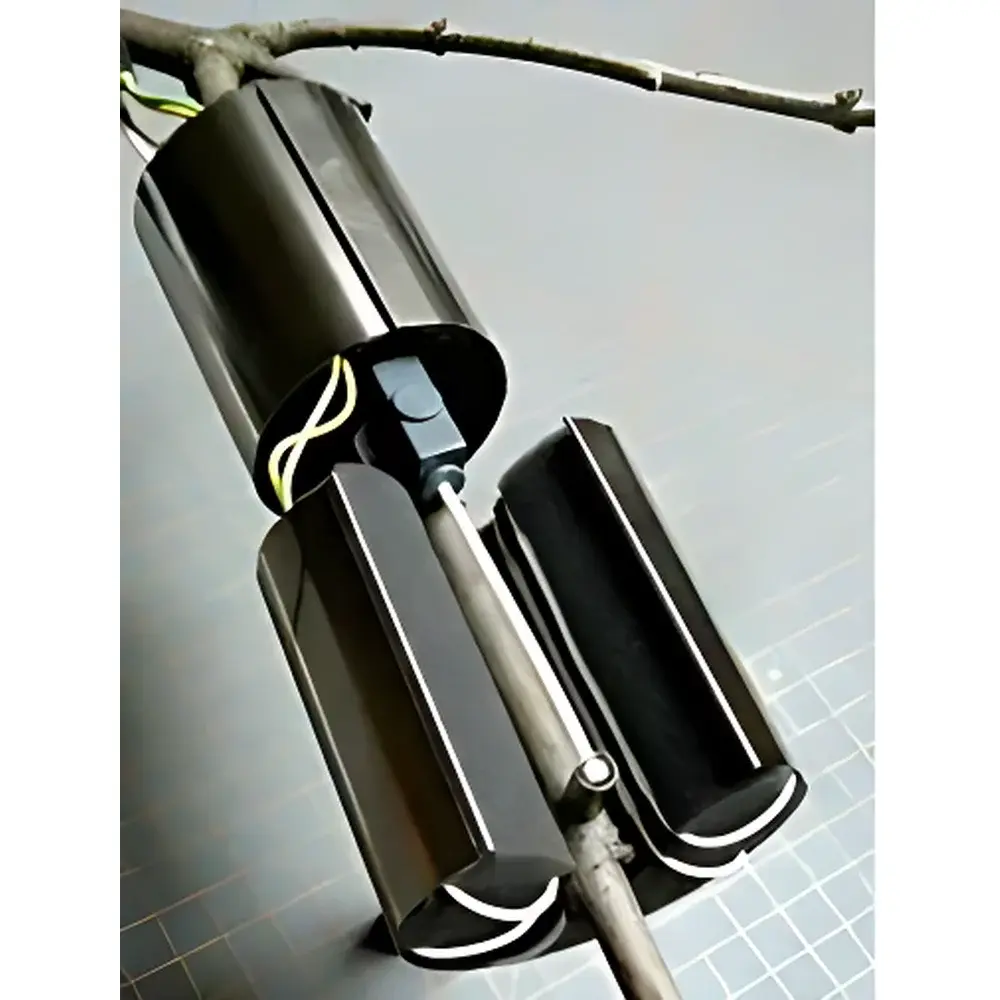
EMS-62 Portable Dual-Channel Plant Stem Flow Monitor
| Origin | Czech Republic |
|---|---|
| Manufacturer Type | Distributor |
| Origin Category | Imported |
| Model | EMS-62 Portable Dual-Channel Plant Stem Flow Monitor |
| Pricing | Upon Request |
Overview
The EMS-62 Portable Dual-Channel Plant Stem Flow Monitor is a field-deployable, high-fidelity instrumentation system engineered for continuous, non-destructive quantification of sap flow velocity and volumetric flux in woody plant stems. It implements the Stem Heat Balance (SHB) principle—a physically grounded, calibration-free method validated in peer-reviewed literature (Lindroth et al., 1995; Čermák et al., 2004). In SHB, a controlled thermal input is applied circumferentially to the stem via a split-cylinder heating element; the resulting temperature differential (ΔT) between upstream and downstream thermocouple pairs is measured with sub-kelvin precision. Stem flow rate (Q, kg·s⁻¹) is derived from the energy balance equation: P = Q · ΔT · cw + ΔT · z, where P is electrical power input (W), cw is specific heat capacity of water (4186 J·kg⁻¹·K⁻¹), and z represents conductive heat loss coefficient (W·K⁻¹). This first-principles approach eliminates empirical calibration drift, ensures traceable physical units (kg·hr⁻¹), and delivers long-term measurement stability under variable environmental conditions.
Key Features
- Dual-channel data logger with integrated real-time clock (RTC), supporting autonomous operation for up to 25,000 timestamped measurements per channel at user-defined intervals (10 s – 24 h); RTC accuracy: ±1 minute per month
- Two interchangeable SHB sensor modules: one optimized for stems 6–12 mm in diameter, the other for 10–20 mm—both employing custom 0.6 mm T-type thermocouples with fixed ΔT setpoints (2 K or 4 K)
- Low-power design: average power consumption 0.3–0.4 W per channel; compatible with rechargeable battery packs or photovoltaic charging systems for extended unattended deployment
- Infrared (IrDA) and USB data transfer protocols; no proprietary cables required—enables rapid field data retrieval without physical disconnection of sensors
- 16-bit analog-to-digital resolution across all measurement channels, ensuring high dynamic range and signal fidelity for low-flow conditions
- Modular expansion architecture: optional environmental and soil sensing modules integrate seamlessly via standardized digital interfaces
Sample Compatibility & Compliance
The EMS-62 is validated for use on herbaceous and semi-woody dicot stems within the specified diameter ranges (6–12 mm and 10–20 mm), including but not limited to young poplar, willow, grapevine, citrus, and fruit tree saplings. Its SHB methodology conforms to ISO 17025-aligned measurement principles for thermal-based flow metrology and supports experimental designs compliant with FAO Irrigation and Drainage Paper No. 56 (crop water use modeling) and ICID guidelines for plant-water relations research. While not certified to GLP or GMP standards (as it is a field research instrument, not a regulated clinical device), its data structure, time-stamping integrity, and audit-ready export formats facilitate traceability in peer-reviewed ecological and agronomic studies.
Software & Data Management
The EMS-62 includes free, platform-independent software (Windows/macOS/Linux) for configuration, data download, visualization, and statistical analysis. The software provides: configurable sampling schedules per channel; automatic unit conversion (mW → kg·hr⁻¹ using embedded cw and geometry parameters); overlay plots of sap flow vs. microclimate variables; batch export to CSV/Excel with metadata headers (sensor ID, UTC timestamp, ΔT, P, computed Q); and built-in tools for gap-filling, moving-average smoothing, and diurnal pattern extraction. All exported datasets include embedded provenance tags (firmware version, calibration constants, RTC sync status), satisfying FAIR (Findable, Accessible, Interoperable, Reusable) data principles for long-term ecological archives.
Applications
- Quantifying species-specific transpiration responses to drought stress, elevated CO₂, or warming treatments in common-garden experiments
- Validating remote-sensing evapotranspiration (ET) products using ground-truthed sap flux density scaling
- Assessing rootstock-scion hydraulic coupling efficiency in orchard management trials
- Parameterizing process-based vegetation models (e.g., SiB, CLM, TREES) with empirically constrained stomatal conductance and xylem transport terms
- Monitoring irrigation scheduling efficacy in viticulture and high-value horticulture via real-time sap flow thresholds
- Long-term phenological studies linking sap flow onset/cessation to budburst and leaf senescence under climate change gradients
FAQ
Does the EMS-62 require periodic recalibration?
No. The Stem Heat Balance method is inherently calibration-free—it relies on fundamental thermodynamic constants (cw) and direct electrical power measurement. Sensor geometry and thermocouple sensitivity are factory-characterized and stored in firmware.
Can the system operate continuously during rain or high humidity?
Yes. All sensor housings and cable connectors meet IP65 ingress protection standards. The split-cylinder design isolates the heating element from direct precipitation, and thermocouple junctions are epoxy-sealed against moisture-induced drift.
Is the data logger compatible with third-party environmental sensors?
Only through officially supported add-ons: the optional micro-meteorological station (temperature, RH, PAR) and dual soil modules (capacitance-based volumetric water content; gypsum-block-based soil water potential). Custom sensor integration is not supported due to firmware-level protocol constraints.
What is the maximum recommended deployment duration without data download?
At 10-minute intervals, the 25,000-point memory supports ~173 days of continuous logging per channel. For higher-resolution studies (e.g., 30-second intervals), field download every 2–4 weeks is advised to maintain data continuity.
How is sap flow scaled from kg·hr⁻¹ to mm·day⁻¹ for canopy-level ET estimation?
Scaling requires ancillary measurements: stem cross-sectional area (via caliper or digital imaging), sapwood depth (via bark probe or microcore), and stand density. The software includes a dedicated scaling wizard that applies standard allometric equations (e.g., Burgess et al., 2001) and exports spatially explicit flux maps.