
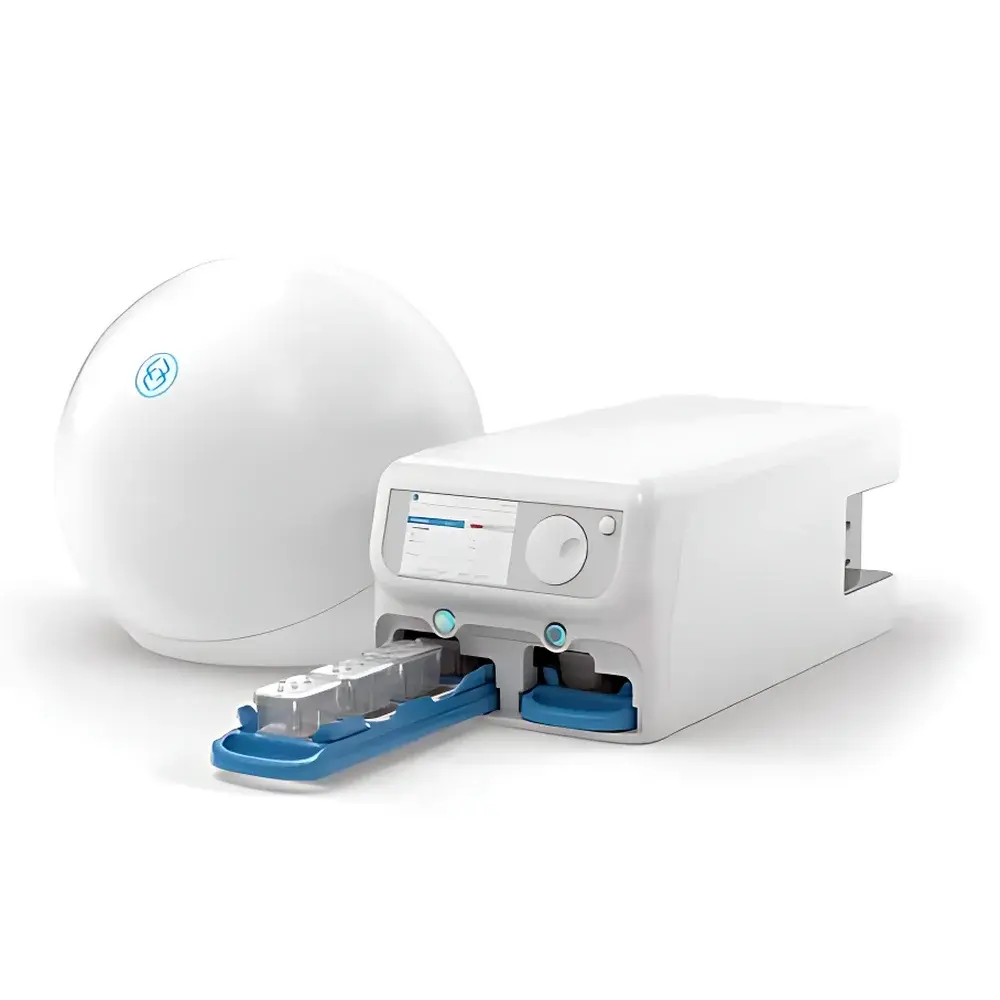
Emulate Brain-on-a-Chip System
| Origin | USA |
|---|---|
| Manufacturer Type | Authorized Distributor |
| Origin Category | Imported |
| Model | Emulate Brain Chip (Zoe Platform Compatible) |
| Chip Type | Organ-on-a-Chip |
| Number of Channels | 12 |
| Detection Targets | Neurotoxicity, Metabolic Stability, BBB Permeability |
| Flow Channel Dimension | ~1 µm (microfluidic lumen height) |
| Compliance | Designed for GLP-compliant workflows, supports 21 CFR Part 11–ready data audit trails via Zoe Cloud Software |
Overview
The Emulate Brain-on-a-Chip system is a physiologically relevant, human-cell-based microphysiological model engineered to recapitulate key structural and functional features of the human brain and blood-brain barrier (BBB). Built upon Emulate’s proprietary organ-chip technology, the Brain Chip integrates five primary human cell types—including cortical neurons, astrocytes, microglia, brain microvascular endothelial cells, and pericytes—within a dynamic, tunable microenvironment. Unlike static 2D monocultures or spheroid models, this platform applies controlled fluid shear stress and cyclic mechanical strain to emulate cerebral perfusion and neurovascular coupling. The chip architecture supports formation of a tight, functional BBB with transendothelial electrical resistance (TEER) values consistent with in vivo physiology, enabling quantitative assessment of compound penetration, efflux transporter activity (e.g., P-gp, BCRP), and neuroinflammatory responses under flow.
Key Features
- Human-relevant multicellular architecture: Co-culture of five neural and vascular cell types derived from primary or iPSC sources, maintaining species-specific signaling and barrier integrity.
- Dynamic microenvironment control: Independent regulation of luminal and abluminal flow rates across all 12 parallel channels, supporting bidirectional perfusion and establishment of physiological shear stress (0.5–5 dyn/cm²).
- Cyclic mechanical stimulation: Programmable stretch profiles (frequency: 0.1–0.3 Hz; amplitude: 5–15% strain) to mimic pulsatile intracranial pressure and vascular tone modulation.
- Integrated bubble mitigation: Proprietary Circulation™ technology minimizes air entrapment and flow disruption—critical for long-term neuronal viability (>21 days) and reproducible TEER measurements.
- Zoe Platform compatibility: Fully interoperable with the Zoe automated culture module, enabling unattended operation, remote experiment scheduling, and real-time parameter logging.
- Cloud-native data governance: Zoe Cloud software provides encrypted, timestamped, user-attributed logs of pressure, flow rate, stretch cycles, and environmental conditions—fully traceable for regulatory submissions.
Sample Compatibility & Compliance
The Brain Chip accepts cryopreserved or freshly isolated human primary cells, as well as iPSC-derived neural lineages differentiated under defined protocols. It is validated for use with standard neuropharmacological agents (e.g., caffeine, diazepam), BBB substrates (e.g., sucrose, dexamethasone), and neurotoxicants (e.g., methylmercury, acrylamide). The system adheres to design principles aligned with ASTM E3279-22 (Standard Guide for Characterization of Microphysiological Systems) and supports experimental workflows compliant with ICH S7B/S8 safety pharmacology guidelines. Data acquisition meets FDA 21 CFR Part 11 requirements when deployed with Zoe Cloud’s electronic signature and audit trail functionality. All chips are manufactured under ISO 13485-certified processes and supplied sterile, endotoxin-tested (<0.5 EU/mL), and qualified for GLP-regulated toxicology studies.
Software & Data Management
Zoe Cloud is a secure, browser-based application enabling full lifecycle management of organ-chip experiments. Users configure multi-day perfusion protocols, define stretch parameters per channel, and monitor real-time sensor outputs (pressure, flow, temperature) via intuitive dashboards. All operational metadata—including pump calibration logs, firmware versions, and user-initiated interventions—are automatically archived with cryptographic hashing. Export options include CSV, HDF5, and MIAME-compliant XML formats suitable for integration with LIMS or downstream PK/PD modeling platforms. Remote diagnostics and over-the-air firmware updates ensure continuous system validation without on-site service visits.
Applications
- Neurotoxicity screening: Quantify neuronal apoptosis, glial activation, and barrier leakage in response to environmental toxins or off-target drug effects.
- BBB permeability prediction: Rank candidate CNS therapeutics by apparent permeability (Papp) and efflux ratio under physiological flow and shear.
- Neuroinflammation modeling: Induce and monitor cytokine release (IL-1β, TNF-α), microglial morphological transformation, and endothelial adhesion molecule expression.
- Disease mechanism studies: Integrate patient-derived iPSCs to model Alzheimer’s, Parkinson’s, or multiple sclerosis pathophysiology in a human-relevant context.
- Combination therapy evaluation: Test drug–drug interactions at the BBB level, including transporter-mediated inhibition or induction.
FAQ
Can the Brain Chip be used with non-human primary cells?
No—this system is specifically validated for human-derived cells to preserve species-specific receptor expression, transporter kinetics, and barrier ultrastructure.
What is the typical duration of a functional BBB assay?
Barrier maturation is confirmed by TEER ≥150 Ω·cm² within 5–7 days post-seeding; assays routinely run for 14–21 days under continuous perfusion.
Is Zoe Cloud compatible with institutional firewalls and single sign-on (SSO) authentication?
Yes—Zoe Cloud supports SAML 2.0 integration and can be deployed behind enterprise proxies with TLS 1.2+ encryption.
How is chip-to-chip variability addressed during multi-channel experiments?
Each channel operates independently with calibrated microfluidic resistors and integrated pressure sensors, enabling per-channel normalization and statistical correction for inter-device drift.
Does Emulate provide protocol templates for common neuropharmacology endpoints?
Yes—validated SOPs for TEER measurement, immunofluorescence staining, RNA extraction, and LC-MS/MS metabolite quantification are included with platform licensing.




