
English Product Name
| Brand | Other Brands |
|---|---|
| Origin | Imported |
| Manufacturer Type | Authorized Distributor |
| Max. Test Mass | 75–500 kg |
| Shock Waveforms | Square Pulse & Half-Sine Pulse |
| Max. Acceleration | 1500 m/s² (150 g) for Square, 6000 m/s² (600 g) for Half-Sine |
| Max. Velocity Change | 7.6 m/s (Square), 7.3 m/s (Half-Sine) |
| Pulse Duration Range | 2–60 ms |
| Table Sizes | 500×500 mm to 1500×1500 mm |
| Compliance | JIS C 0041:1995, JIS Z 0119:1994, JIS Z 0202:1994, IEC 60068-2-27, MIL-STD-810E Method 516.3 |
Overview
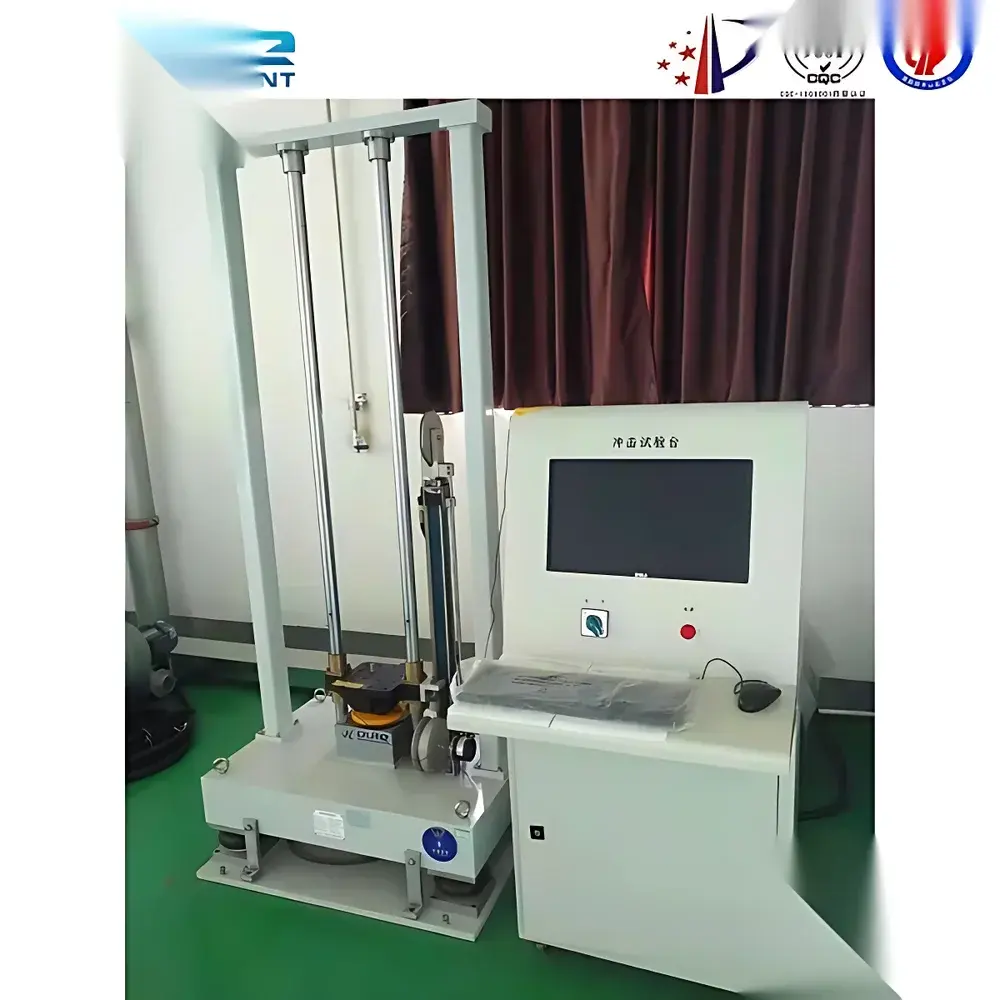
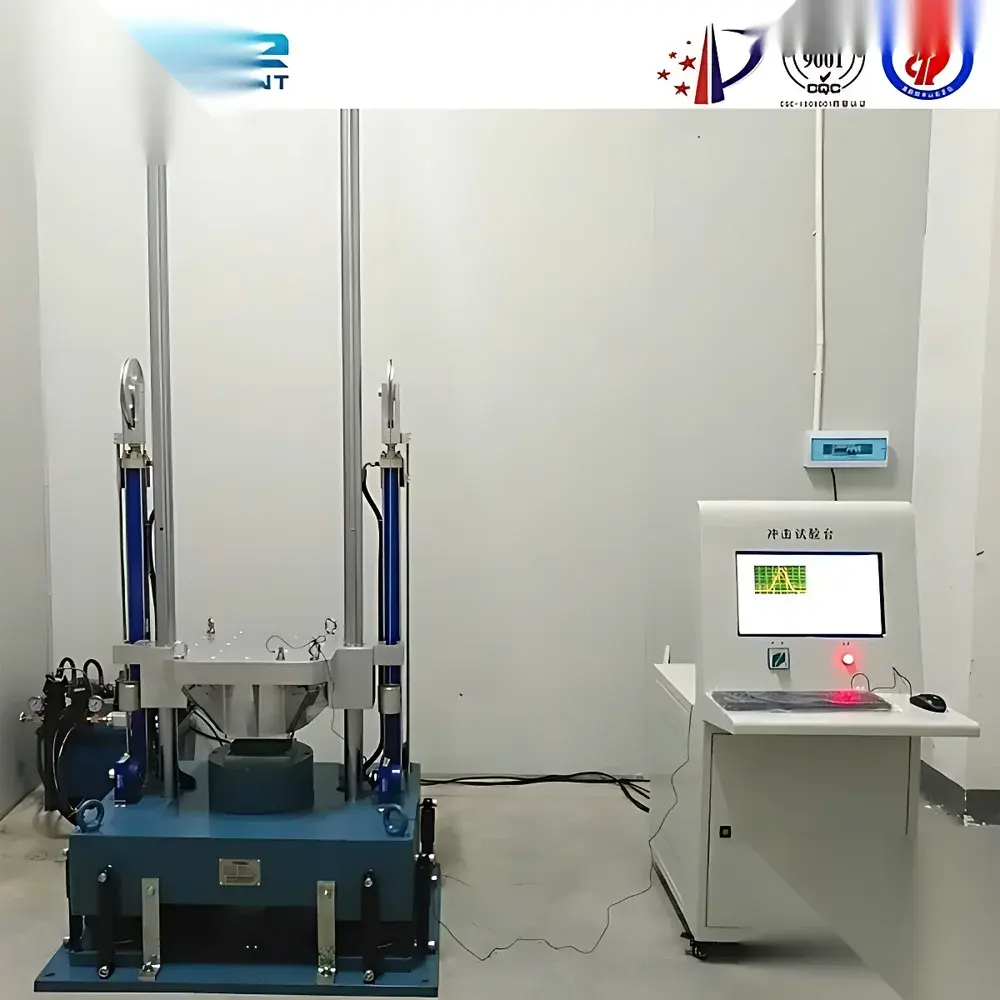
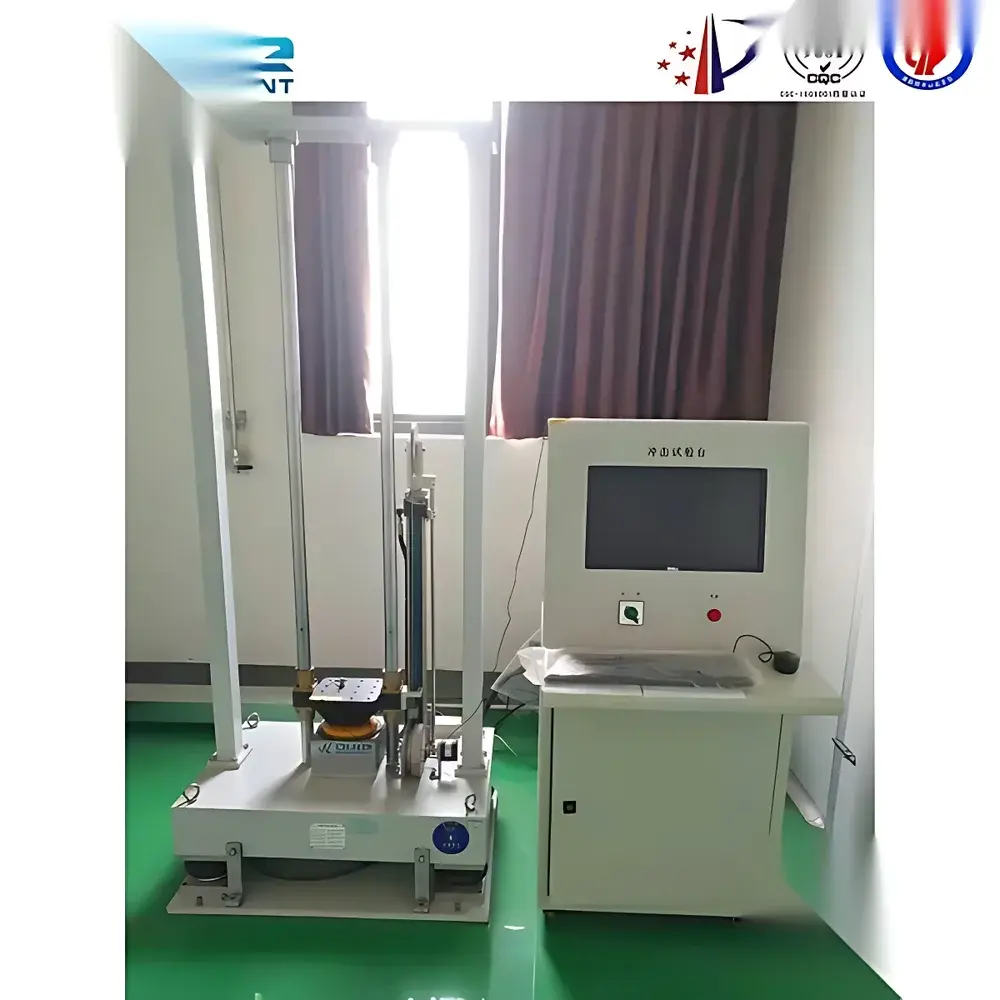
The OK-S Series Mechanical Shock Tester is a precision-engineered impact testing system designed for controlled, repeatable mechanical shock simulation in laboratory and quality assurance environments. Based on classical drop-mass and electromagnetic actuator principles, it generates calibrated shock pulses—including square-wave and half-sine waveforms—to replicate real-world transient mechanical stresses such as free-fall impacts, transportation jolts, and handling-induced shocks. Unlike quasi-static or vibration testing, this system delivers high-intensity, short-duration acceleration transients, enabling structural integrity assessment of electronic assemblies, packaging systems, automotive components, and aerospace subassemblies. Its rated capability extends to 20g nominal test conditions—though actual pulse profiles support peak accelerations up to 600 g—making it suitable for both standard compliance verification and accelerated durability screening per internationally recognized environmental stress protocols.
Key Features
- Programmable waveform generation: Independent control of square-pulse (6–60 ms duration) and half-sine pulse (2–3 ms duration) profiles with precise amplitude and timing resolution.
- Electronically synchronized impact control: Real-time calculation-based anti-rebound mechanism prevents secondary impact, ensuring single-event fidelity critical for accurate SRS (Shock Response Spectrum) analysis.
- Rigid, low-resonance test table: High-stiffness aluminum or steel platforms (500×500 mm to 1500×1500 mm) with integrated mounting patterns for secure fixture attachment and minimal modal interference.
- Integrated seismic isolation base: Passive damping structure minimizes energy transmission to surrounding infrastructure, eliminating the need for reinforced flooring or external anchoring in most Class A lab installations.
- Multi-channel acceleration acquisition: Simultaneous high-bandwidth (≥100 kHz) analog input for up to 8 channels, supporting time-domain synthesis, damage boundary curve generation, and shock response spectrum (SRS) computation.
- Modular hardware expansion: Optional add-ons include low-acceleration modules (≤1.4 m/s velocity change), high-acceleration actuators (0.2–1 ms pulses, 5000–50000 m/s²), corner/edge drop fixtures for ISTA-compliant packaging tests, and programmable half-sine waveform shapers.
Sample Compatibility & Compliance
The OK-S Series accommodates test specimens ranging from small PCBs and handheld devices (≤75 kg) to full-size industrial enclosures and palletized shipments (up to 500 kg), depending on selected table configuration. Fixture adaptability supports standardized mounting via T-slots, threaded inserts, or custom clamping solutions. The system is fully aligned with key international shock testing standards: JIS C 0041:1995 (electrical equipment), JIS Z 0119:1994 (packaging), JIS Z 0202:1994 (transportation simulation), IEC 60068-2-27 (environmental testing – shock), and MIL-STD-810E Method 516.3 (shock survivability). All delivered shock profiles are traceable to NIST-traceable calibration references, and test logs include timestamped waveform metadata compliant with GLP/GMP documentation requirements.
Software & Data Management
Control and analysis are performed via Windows-based software with deterministic real-time loop execution (≤1 ms jitter). The interface enables full parameter scripting—including pulse shape, amplitude, duration, repetition rate, and dwell time—alongside automated pass/fail evaluation against user-defined thresholds. Raw acceleration data is exported in IEEE 1159-compliant CSV or MATLAB .mat formats. Built-in SRS engine computes shock spectra per MIL-STD-810G Annex G, with overlay comparison against specification envelopes. Audit trails record operator ID, calibration status, environmental conditions, and all parameter changes—supporting FDA 21 CFR Part 11 compliance when deployed with electronic signature modules and role-based access controls.
Applications
- Structural validation of consumer electronics housings under drop-simulation conditions (e.g., smartphone chassis, tablet frames).
- Package performance qualification per ISTA 3A/3E protocols, including corner, edge, and face drop equivalence using fixture-assisted orientation control.
- Qualification of avionics mounting brackets and sensor housings subjected to launch or landing shock loads.
- Material-level investigation of solder joint fatigue, adhesive bond integrity, and micro-crack initiation under high-strain-rate loading.
- Production line screening of assembled modules prior to shipping, verifying consistency of mechanical robustness across batches.
- Root-cause analysis of field failures attributed to transport-related mechanical shock events.
FAQ
What does “20g-rated” mean for this shock tester?
The 20g designation refers to the nominal operational range optimized for routine qualification testing at moderate severity levels; however, the system’s full dynamic envelope supports peak accelerations up to 600 g via half-sine pulses, making it suitable for both standard compliance and high-severity development testing.
Is the system compatible with third-party data acquisition hardware?
Yes—standard BNC and LEMO analog outputs provide conditioned ±10 V signals synchronized to internal trigger events, enabling integration with external DAQ systems such as National Instruments PXI or Dewesoft X-series platforms.
How is calibration maintained over time?
Each unit ships with factory calibration certificate traceable to national metrology institutes. Annual recalibration is recommended, covering accelerometer sensitivity, pulse timing accuracy, and table displacement linearity—procedures documented in ISO/IEC 17025-compliant reports.
Can the system perform sequential multi-axis shock testing?
While inherently single-axis (vertical), optional rotary indexing tables or manual repositioning fixtures allow sequential orthogonal shock application. True triaxial simultaneous shock requires separate dedicated systems and is not supported by this platform.
What safety features prevent operator exposure during operation?
Standard equipment includes interlocked safety curtains, emergency stop circuits meeting IEC 61800-5-2 requirements, and optional pressure-sensitive safety mats installed around the test zone—automatically disabling actuation upon foot presence detection.
Related Products



