
English Product Name
| Brand | Other Brands |
|---|---|
| Origin | Imported |
| Manufacturer Type | Authorized Distributor |
| Max Test Load | 50–1000 kg |
| Worktable Dimensions | 50×50 cm to 120×120 cm |
| Pulse Peak Acceleration Range | 150–6000 m/s² (semi-sine), 150–2000 m/s² (haversine), 150–1000 m/s² (terminal-peak sawtooth & trapezoidal) |
| Pulse Duration | 18–1 ms (adjustable per waveform) |
| Waveform Options | Semi-sine, Terminal-Peak Sawtooth, Trapezoidal |
| Base Material | High-Strength Carbon Steel |
| Height Control | Digital Position Feedback System |
| Braking Mechanism | Integrated Hydraulic Brake |
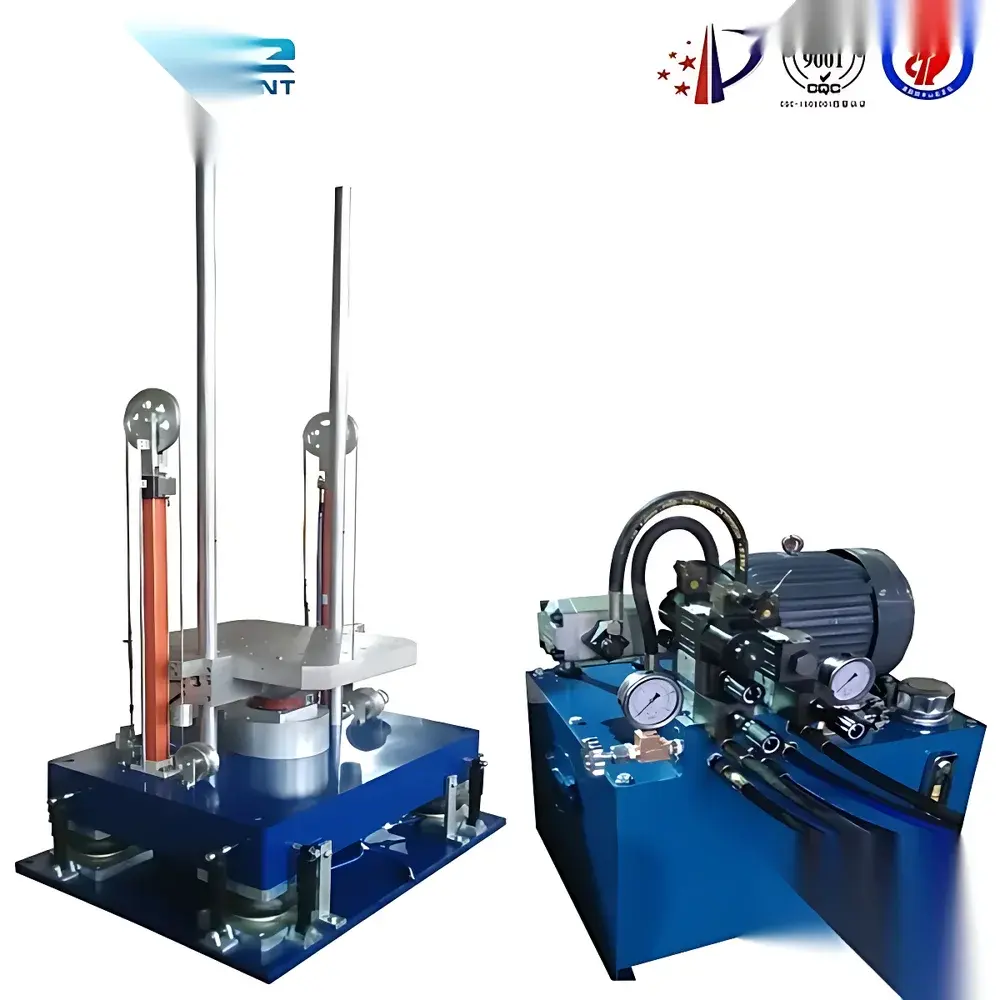
| Isolation System | Imported Air Spring + Hydraulic Damping |
| Compliance | Designed per ISO 2247, ASTM D999, MIL-STD-810G Method 516.6 (Shock) |
Overview
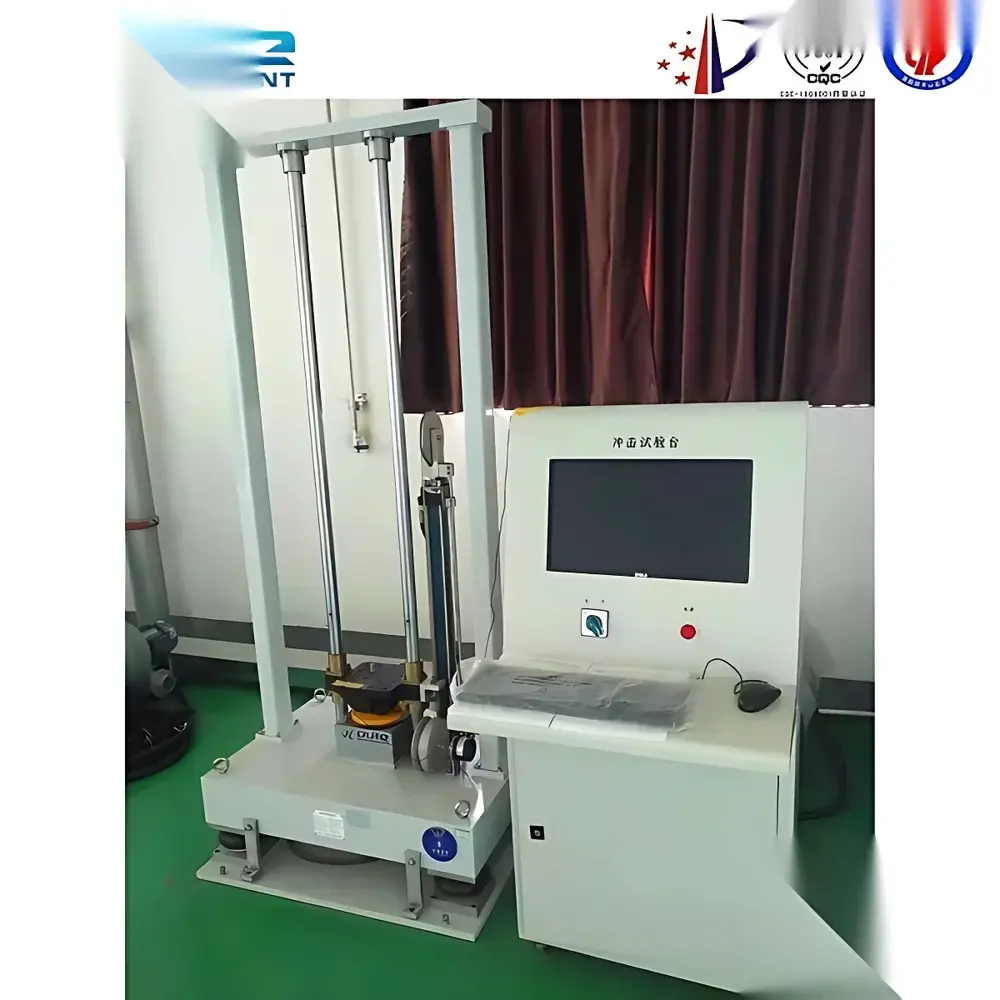
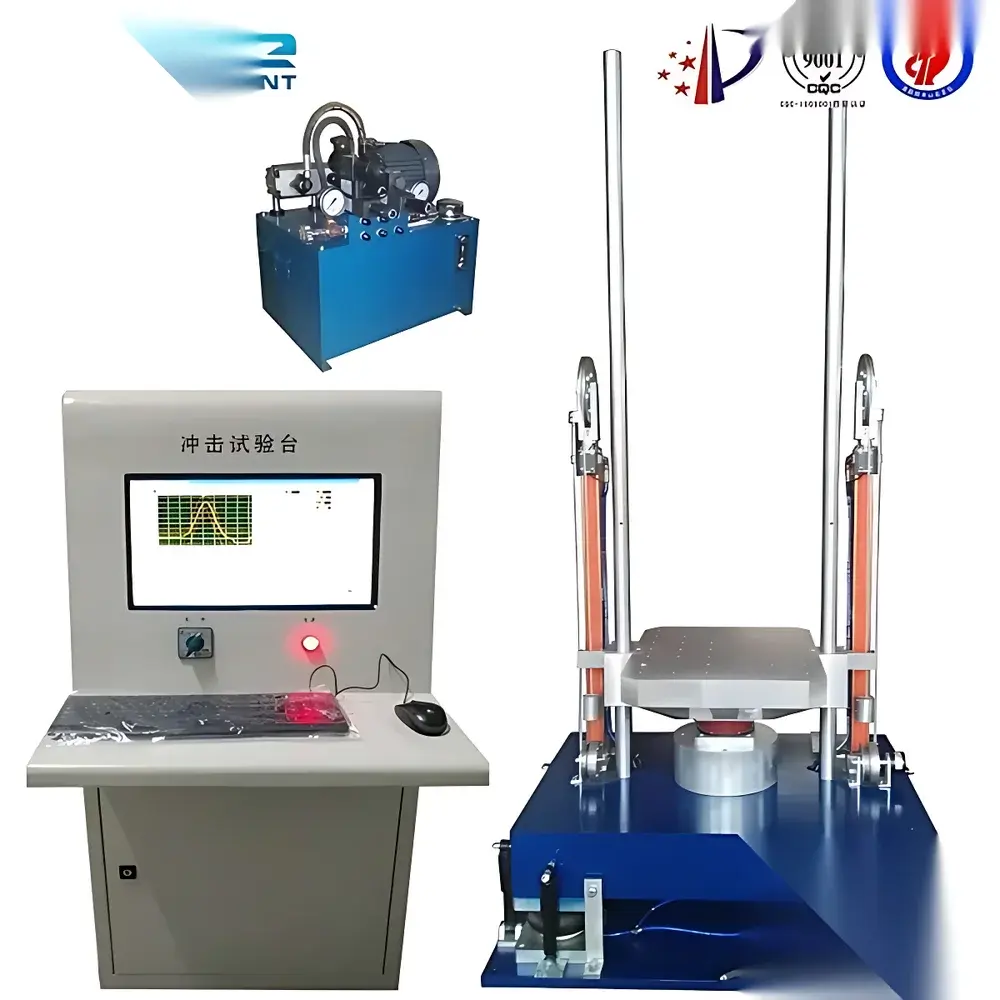
The OK-S Series Mechanical Shock Testing Machines are gravity-driven free-fall shock systems engineered for high-fidelity simulation of transient mechanical shock environments encountered during transportation, handling, and operational deployment. Based on classical Newtonian impact mechanics, these machines generate controlled, repeatable shock pulses by dropping a test table—loaded with the specimen—onto a precisely tuned waveform generator (anvil). The resulting acceleration-time history replicates real-world shock events such as drop impacts, pyrotechnic separations, or weapon recoil. Unlike electrodynamic shakers, which rely on force generation via electromagnetic coils, the OK-S series delivers high-energy, low-frequency shock pulses with exceptional amplitude fidelity and minimal phase distortion—making it particularly suitable for large-scale components where mass inertia dominates dynamic response.
Key Features
- High-stiffness carbon steel worktable with elevated first-mode resonance frequency (>300 Hz), minimizing structural ringing and ensuring clean pulse definition.
- Digital height feedback control system enables precise, repeatable drop-height adjustment with ≤±0.5 mm positional accuracy across full stroke range.
- Hydraulic braking mechanism integrated into the lift column prevents secondary rebound, eliminating post-impact oscillation and ensuring stable repositioning after each test cycle.
- Interchangeable anvil assemblies support three standardized shock waveforms: semi-sine (ISO 2247), terminal-peak sawtooth (ASTM D999), and trapezoidal (MIL-STD-810G)—each calibrated and traceable to NIST-traceable accelerometers.
- Self-contained air spring and hydraulic damping isolation system eliminates need for reinforced concrete foundations; vibration transmission to adjacent lab equipment remains below 0.05 g RMS at 10 Hz.
- Massive cast-iron base structure absorbs residual energy and suppresses structural coupling, preventing floor-borne resonance and maintaining pulse integrity under maximum load conditions (up to 1000 kg).
- Multi-layer safety architecture includes redundant limit switches, emergency stop circuitry, mechanical safety latches, and real-time acceleration monitoring with automatic abort on waveform deviation exceeding ±5% tolerance.
Sample Compatibility & Compliance
The OK-S series accommodates specimens ranging from small electronic enclosures (OK-S-50) to full-size automotive subassemblies or avionics racks (OK-S-1000). Worktable dimensions scale incrementally—from 50 × 50 cm to 120 × 120 cm—to maintain optimal mass ratio between payload and table (≥1:5 recommended for waveform fidelity). All models comply with international shock testing standards including ISO 2247 (packaging), ASTM D999 (vibration and shock testing of shipping containers), and MIL-STD-810G Method 516.6 (shock). Optional calibration packages include third-party certification per ISO/IEC 17025, supporting GLP/GMP audit readiness and regulatory submissions requiring documented metrological traceability.
Software & Data Management
Each OK-S system integrates with optional PC-based control and acquisition software compliant with FDA 21 CFR Part 11 requirements. The software provides synchronized control of drop height, waveform selection, and real-time acceleration capture at up to 1 MHz sampling rate using IEPE-accelerometer inputs. All test parameters—including timestamp, operator ID, calibration certificate number, and raw waveform data—are automatically logged into an encrypted database with full audit trail functionality. Export formats include CSV, MATLAB (.mat), and universal shock analysis files (SDF v2.0), enabling direct import into commercial shock response spectrum (SRS) tools such as VibrationVIEW or DIAdem.
Applications
These systems serve critical qualification roles across defense, aerospace, automotive, and industrial electronics sectors. Typical use cases include: qualification of satellite separation mechanisms under pyroshock-relevant semi-sine pulses; durability validation of naval radar housings subjected to deck shock per NAVSEA 090-1525; drop-test simulation for military handheld radios (MIL-STD-810G); and robustness assessment of battery packs in electric vehicles following simulated curb-drop scenarios. Laboratories performing ISTA-certified packaging validation also deploy OK-S units to replicate distribution shock profiles defined in ISTA 3A and 3E protocols.
FAQ
What shock waveforms does the OK-S series support, and how are they generated?
The system supports semi-sine, terminal-peak sawtooth, and trapezoidal waveforms—each produced by physically replacing the impact anvil with a geometry-optimized surface that shapes the deceleration profile during table contact.
Is foundation reinforcement required for installation?
No. The integrated air spring and hydraulic damping system isolates the machine from floor motion, allowing installation on standard 15 cm reinforced concrete slabs without anchoring.
Can the system be validated for ISO/IEC 17025-compliant calibration?
Yes. Optional factory calibration services include uncertainty budgets, traceable accelerometer verification, and formal certificates issued by an ILAC-MRA accredited laboratory.
How is test repeatability ensured across multiple operators?
All operational parameters—including drop height, load mass, and waveform selection—are stored as digital test templates with role-based access control, eliminating manual setup variability.
What safety certifications apply to the OK-S series?
The system conforms to IEC 61000-6-2 (immunity) and IEC 61000-6-4 (emissions), and meets CE Machinery Directive 2006/42/EC requirements for mechanical safety, including Category 3 PLd-rated emergency stop circuits.



