
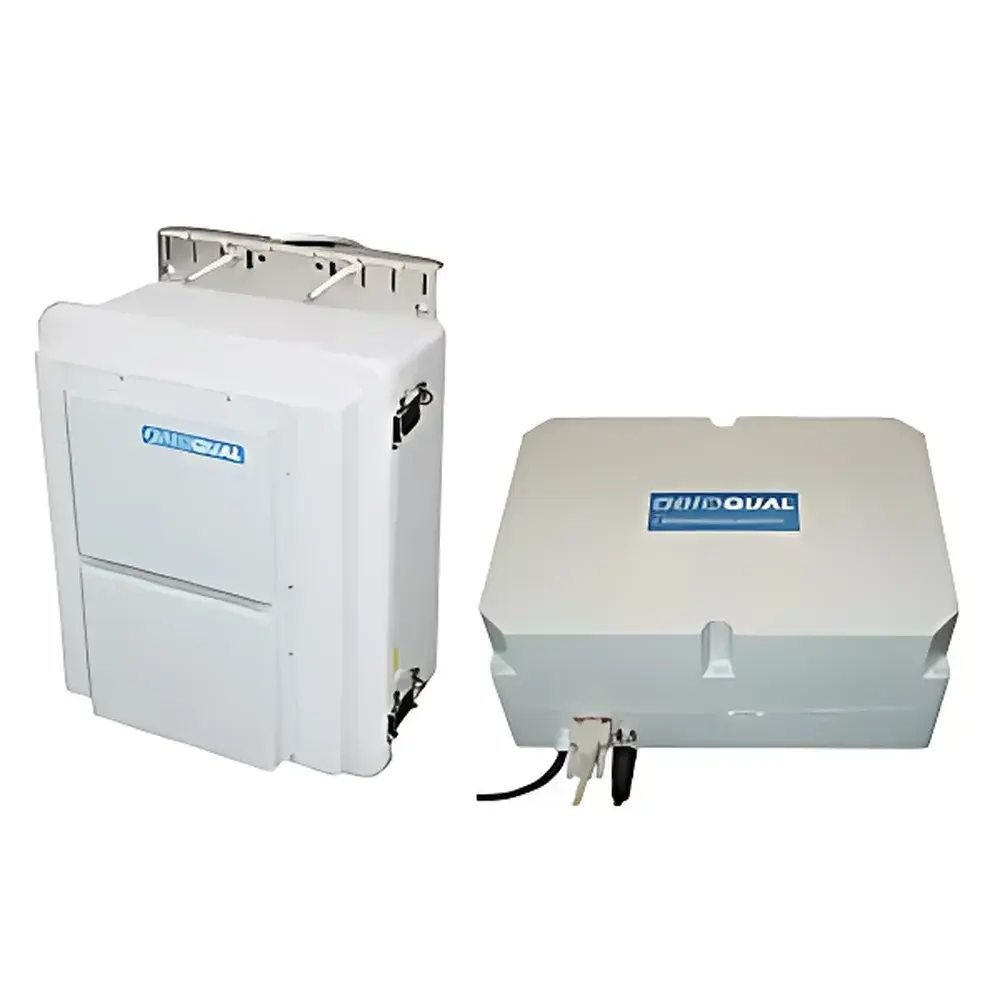
English Product Name
| Origin | Imported |
|---|---|
| Manufacturer Type | Authorized Distributor |
| Model | AQM60 |
| Gas Detection Range | O₃ (0–150 ppb, 0–500 ppb), NO₂ (0–200 ppb), CO (0–100 ppm), Non-Methane VOCs (0–25 ppm), Toluene (0–500 ppm), SO₂ (0–10 ppm), H₂S (0–10 ppm), NH₃ (0–100 ppm), CO₂ (0–2000 ppm, NDIR), Halogenated Hydrocarbons (0–500 ppm) |
| Sampling Pump | Brushless DC motor-driven helical vane |
| Sample Line Material | PFA, PTFE, Kynar |
| Enclosure Rating | IP66 / NEMA 4 |
| Dimensions | 361 × 254 × 165 mm |
| Weight | <10 kg (sensor-integrated unit) |
| Power Supply | 24 VDC, 1 A |
| Communication | RS232 / RS485 (DB9 / M12 connectors) |
| Data Logging Interval | 2 minutes |
| Certifications | FCC Part 15, EN 61000-6-3:2001, EN 61000-6-1:2001, CE, FC |
Overview
The AeroQual AQM60 Portable Ambient Air Quality Monitoring System is a field-deployable, multi-gas environmental monitoring platform engineered for continuous, real-time measurement of up to six regulated and hazardous gaseous pollutants in ambient air. Built upon electrochemical (EC), metal oxide semiconductor (MOS), and non-dispersive infrared (NDIR) sensing technologies—complemented by GSS (Gas Sensing Solutions) long-life optical sensors—the system delivers stable, trace-level detection with calibrated sensitivity across diverse atmospheric conditions. Its modular architecture supports both standalone operation and integration into larger environmental telemetry networks, including meteorological stations, solar-powered remote nodes, particulate matter (PM) monitoring subsystems, and industrial emission compliance frameworks. Designed to meet the operational constraints of unattended field deployment, the AQM60 requires minimal power draw (<24 W), compact physical footprint, and no external conditioning infrastructure—enabling rapid installation in urban curbside locations, rural boundary zones, industrial perimeters, or transportable mobile monitoring units.
Key Features
- Multi-parameter gas detection with simultaneous real-time acquisition of O₃, NO₂, CO, SO₂, H₂S, NH₃, VOCs (including toluene), CO₂, and halogenated hydrocarbons
- GSS-based optical sensor technology ensuring 5–6 year operational lifetime with low drift and reduced calibration frequency
- Active sampling system using brushless DC-driven helical vane pump for consistent flow control and minimized maintenance
- Programmable zero-point calibration: automated time-scheduled or externally triggered via dry-air purge using integrated carbon/alumina zero-air scrubber
- Robust enclosure rated IP66/NEMA 4, constructed from UV-stabilized polycarbonate and stainless steel for outdoor durability
- Standard RS232/RS485 serial interface (DB9/M12) supporting Modbus RTU protocol for seamless SCADA, PLC, or central data acquisition integration
- Modular expansion capability: optional temperature/humidity module (–20 °C to +100 °C, 0–100% RH), 1 GB flash memory logging, vacuum fluorescent display (VFD), AC power adapter (100–260 VAC), and solar charging interface
Sample Compatibility & Compliance
The AQM60 is validated for ambient air matrix analysis under variable temperature, humidity, and particulate loading conditions. Sensor cross-sensitivity profiles are characterized per IEC 60779 and ASTM D6330 for ambient ozone and nitrogen dioxide; CO and SO₂ measurements comply with EN 14625 and EPA Method IO-3. All electrochemical sensors undergo factory calibration traceable to NIST-certified reference gases, with documented uncertainty budgets provided in the Certificate of Conformance. The system meets electromagnetic compatibility (EMC) requirements per EN 61000-6-3 (emissions) and EN 61000-6-1 (immunity), and complies with FCC Part 15 Class B limits for unintentional radiators. Optional configurations support GLP-compliant audit trails when paired with certified data logging software and timestamped SD card storage.
Software & Data Management
Data acquisition is managed via AeroQual’s proprietary LogBox software (Windows-compatible), which enables configuration, real-time visualization, alarm threshold setting, and batch export in CSV/Excel format. The embedded firmware supports configurable sampling intervals (default 2-minute cycles), automatic data buffering during communication outages, and CRC-protected transmission integrity. For enterprise deployments, the AQM60 integrates with third-party platforms—including ThingWorx, Ignition SCADA, and custom MQTT brokers—via ASCII/Modbus ASCII protocols. Optional cloud-ready firmware upgrades provide TLS 1.2-secured HTTPS upload to AWS IoT Core or Azure IoT Hub, with configurable payload compression and retry logic for low-bandwidth 4G/LTE or GSM modem links.
Applications
- Urban and suburban ambient air quality monitoring networks (AQMN) for regulatory reporting under EU Directive 2008/50/EC and U.S. NAAQS
- Industrial fence-line monitoring at petrochemical facilities, wastewater treatment plants, landfills, and CAFO sites
- Tunnel ventilation control systems requiring real-time CO, NO₂, and O₃ feedback for dynamic fan scheduling
- Mobile monitoring on vehicle-mounted platforms for hotspot identification and pollution dispersion modeling
- Integration with meteorological stations (wind speed/direction, temperature, RH) for source apportionment and trajectory analysis
- Educational and research deployments where modularity, low power, and open communication protocols support method validation and sensor intercomparison studies
FAQ
What gas standards are used for factory calibration?
Factory calibration is performed using NIST-traceable certified reference materials (CRMs) for each target analyte, with calibration certificates documenting expanded uncertainty (k=2) per ISO/IEC 17025 requirements.
Can the AQM60 operate autonomously for extended periods without mains power?
Yes—when configured with an optional solar charge controller and deep-cycle battery bank, the AQM60 sustains continuous operation for >30 days under typical European insolation conditions (1.2 kWh/m²/day), drawing <1 A @ 24 VDC average load.
Is the system compliant with EPA or EU regulatory data quality objectives (DQOs)?
While not a certified Federal Equivalent Method (FEM) device, the AQM60 meets data quality targets for indicative monitoring per EU 2011/85/EU and supports supplementary monitoring programs aligned with EPA’s Air Quality System (AQS) Level 2 data acceptance criteria.
How is sensor drift managed over time in field use?
Drift compensation employs dual-stage correction: (1) scheduled zero-air purges using onboard scrubber, and (2) span adjustment via external gas challenge—both logged with full metadata (timestamp, operator ID, gas concentration) for audit readiness.
Are firmware updates available, and how are they deployed?
Firmware revisions are distributed quarterly via AeroQual’s secure customer portal; updates are applied via USB stick or over-the-air (OTA) through RS485 or optional cellular modem, preserving all configuration parameters and historical logs.







