
English Product Name
| Brand | KJ GROUP |
|---|---|
| Origin | Liaoning, China |
| Manufacturer Type | Authorized Distributor |
| Origin Category | Domestic (China) |
| Model | ME-L |
| Pricing | Upon Request |
| Light Source | Deuterium + Halogen Composite Lamp |
| Spectral Range (Standard) | 380–1000 nm (Expandable to 210–1650 nm or 193–2500 nm) |
| Measurement Time per Scan | 1–8 s |
| Thickness Repeatability | ±0.005 nm |
| Absolute Accuracy (Air Reference) | ψ = 45° ± 0.05°, Δ = 0° ± 0.1° |
| Mueller Matrix Diagonal Elements | m<sub>ii</sub> = 1 ± 0.005, Off-Diagonal Elements: m<sub>ij</sub> = 0 ± 0.005 |
| Spot Size | Macro-spot 2–3 mm |
| Angle Range | Auto-adjustable 45–90° |
| Optional Modules | Temperature-Controlled Stage (RT to 600 °C), Mapping Stage (up to 100 × 100 mm), Vacuum Pump, Transmission Adsorption Kit |
Overview
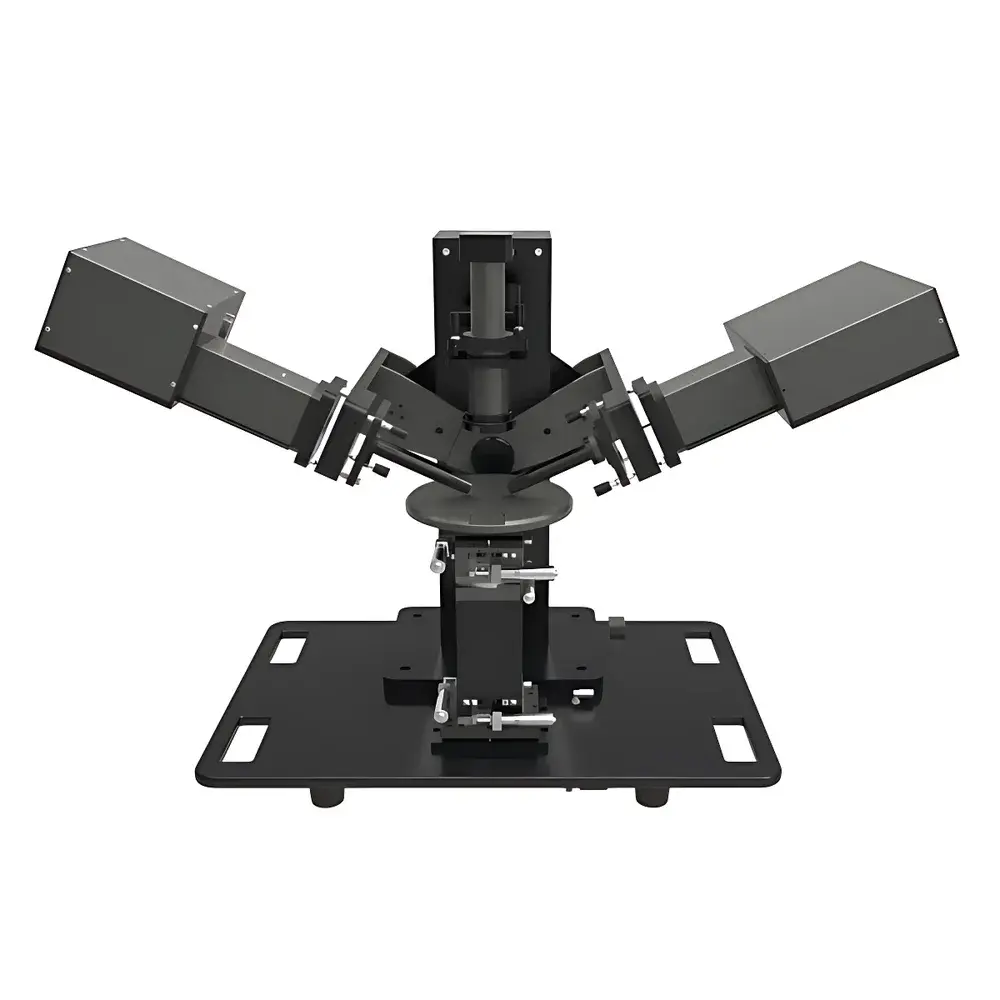
The KJ GROUP ME-L Fully Automated High-Precision Mueller Matrix Ellipsometer is a research-grade optical characterization system engineered for comprehensive anisotropic and depolarizing material analysis. Unlike conventional spectroscopic ellipsometers that extract only Ψ(λ) and Δ(λ) parameters under idealized assumptions of non-depolarizing behavior, the ME-L implements full Mueller matrix acquisition—measuring all 16 elements of the 4×4 Mueller matrix across wavelength and incidence angle. This capability enables rigorous quantification of depolarization, birefringence, dichroism, and chiral asymmetry in complex thin-film stacks, nanostructured surfaces, and bulk anisotropic media. Built upon a dual-rotating compensator (DRC) architecture with synchronized high-speed motor control, the instrument eliminates sequential polarization-state switching delays, achieving full-matrix acquisition in a single scan. Its composite deuterium–halogen light source ensures stable spectral irradiance from deep UV (193 nm) through near-IR (2500 nm), supporting applications ranging from atomic-layer semiconductor metrology to soft-matter interfacial studies. The system is calibrated traceably against NIST-traceable reference standards and conforms to ISO/IEC 17025–compliant laboratory practices when operated under controlled environmental conditions.
Key Features
- Full 4×4 Mueller matrix acquisition via dual-rotating compensator (DRC) configuration—enabling simultaneous measurement of all 16 matrix elements without polarization-state multiplexing.
- Composite broadband light source (deuterium lamp + tungsten-halogen lamp) delivering continuous spectral coverage from 193 nm to 2500 nm, with selectable spectral bands (V, UV, XN, DN+).
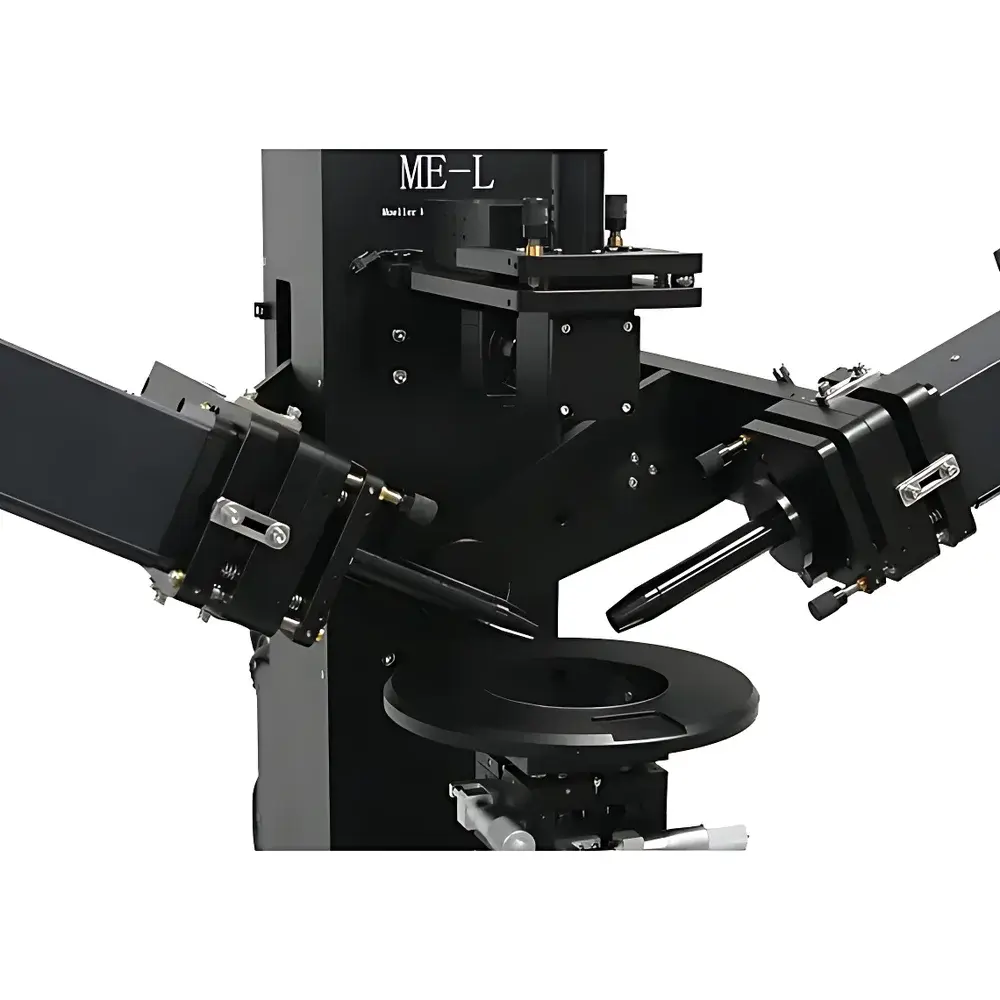
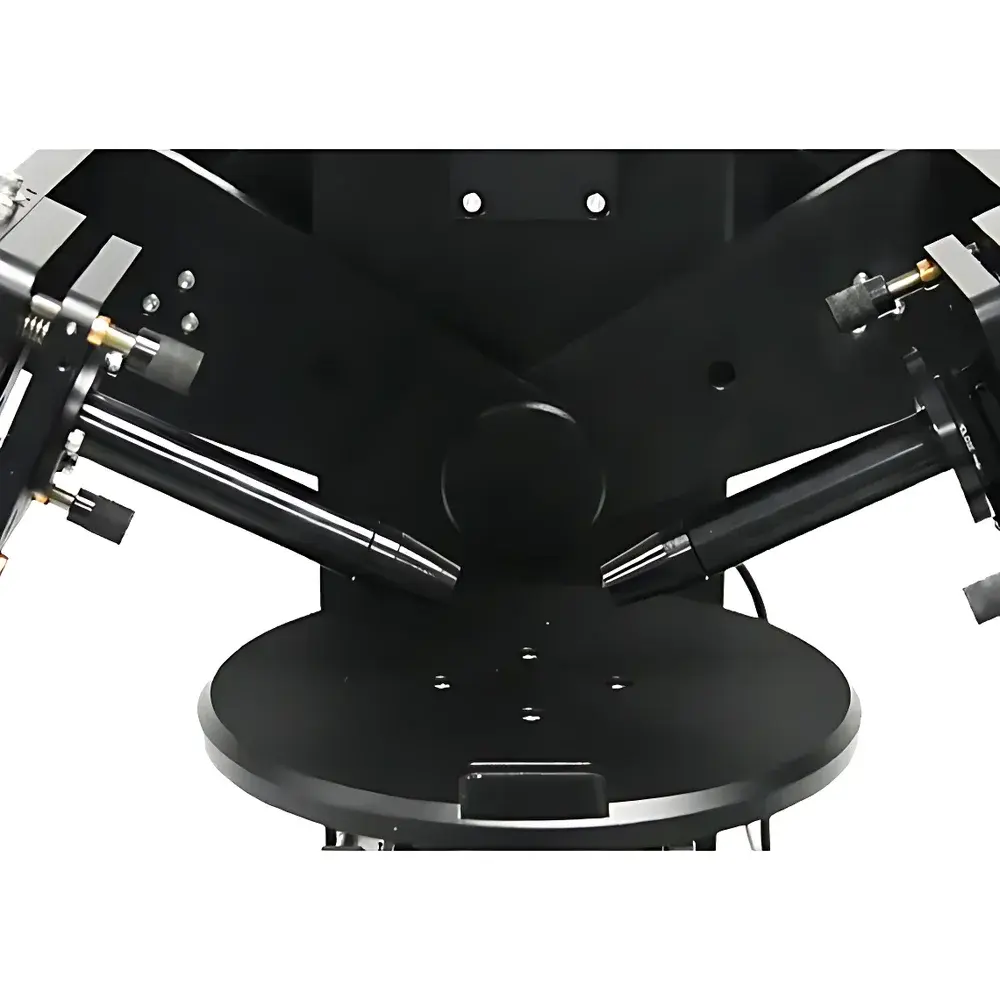
- Automated goniometer with precision angular resolution of ≤0.01° and repeatability <0.02°, supporting variable-angle measurements from 45° to 90° (motorized) or fixed-angle configurations (65°/90°).
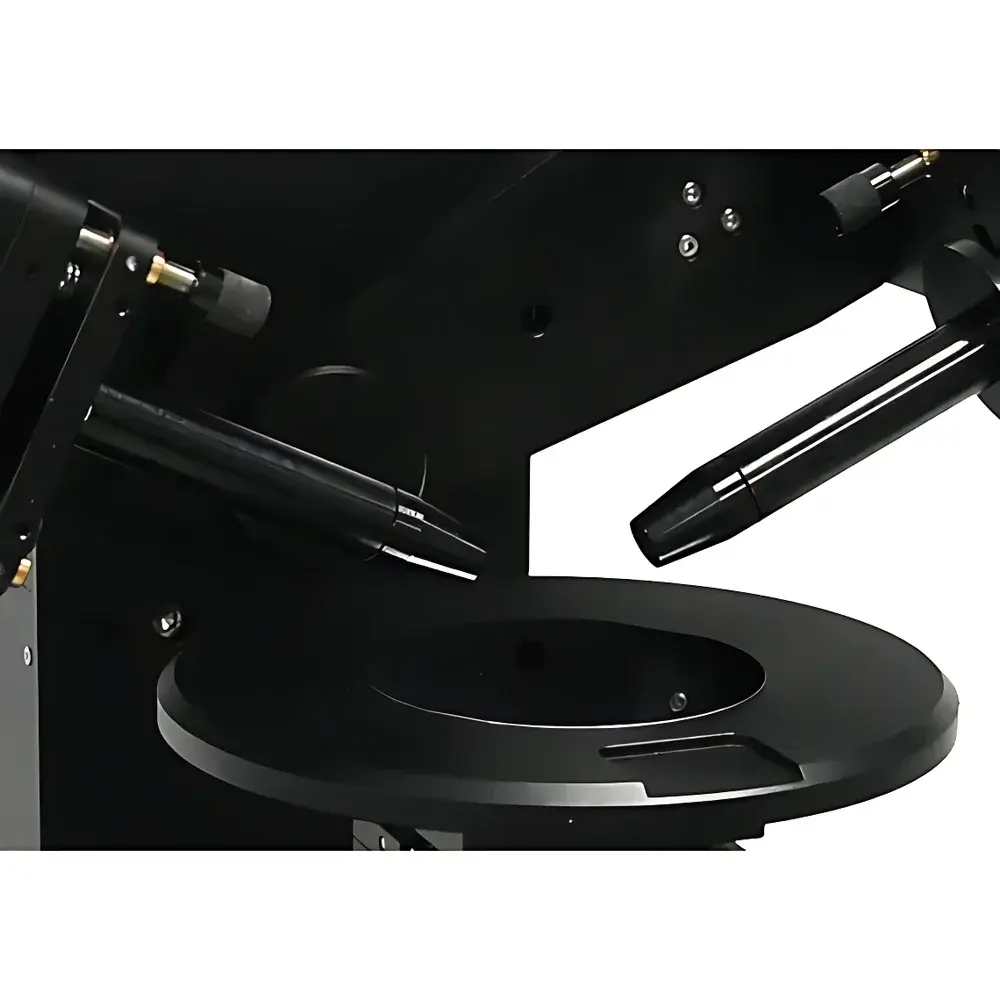
- Five-axis motorized sample stage (X/Y/Z/θ/φ) with sub-micron positioning accuracy, enabling precise alignment and automated spatial mapping over up to 100 × 100 mm areas.
- Achromatic compensator design minimizing wavelength-dependent phase retardation errors—critical for high-fidelity Mueller matrix reconstruction across broad spectral ranges.
- Integrated micro-spot optics (200 µm diameter, optional) for localized characterization of patterned devices, nanogratings, and heterogeneous interfaces.
Sample Compatibility & Compliance
The ME-L supports diverse sample classes including isotropic and anisotropic thin films (SiO₂, SiNx, Al₂O₃, ITO, perovskites), multilayer photonic crystals, 1D/2D nanostructured gratings (e.g., line-and-space, hole arrays), organic semiconductors, biomolecular monolayers, and high-temperature ceramics. It accommodates substrates up to 200 mm in diameter and thicknesses from 0.1 mm to 25 mm. Optional vacuum-compatible chamber and transmission adsorption module extend usability to in-situ gas-phase reaction monitoring and real-time thin-film growth analysis. All hardware and firmware comply with CE electromagnetic compatibility (EMC) directives and RoHS material restrictions. Data acquisition and reporting workflows support audit-ready documentation aligned with GLP and GMP principles, including electronic signatures, user access logs, and version-controlled calibration records per FDA 21 CFR Part 11 guidelines.
Software & Data Management
The proprietary EllipSoft™ platform provides a modular, scriptable environment for instrument control, data acquisition, and advanced modeling. Its intuitive wizard-guided interface reduces operator training time while retaining full manual override capability for expert users. The software integrates over 300 experimentally validated optical constants databases—including Palik, SOPRA, and refractiveindex.info—and supports multi-layer, effective medium approximation (EMA), rigorous coupled-wave analysis (RCWA), and parameterized grating geometry models. All fitting routines employ Levenberg–Marquardt nonlinear least-squares optimization with confidence interval estimation. Raw Mueller matrix data are stored in HDF5 format with embedded metadata (wavelength, angle, timestamp, instrument configuration), ensuring FAIR (Findable, Accessible, Interoperable, Reusable) data stewardship. Export options include CSV, MATLAB .mat, and industry-standard JADE-compatible formats for third-party metrology integration.
Applications
- Semiconductor process control: thickness, roughness, and compositional grading of ALD/CVD-grown dielectrics and metal oxides.
- Nanophotonic device metrology: critical dimension (CD), sidewall angle, line edge roughness (LER), and grating fill factor in EUV lithography masks and metasurfaces.
- Photovoltaic R&D: optical dispersion modeling of tandem cell absorbers (e.g., perovskite/Si), interface recombination layer characterization, and anti-reflection coating optimization.
- Functional coatings: real-time curing kinetics of UV-curable polymers, humidity-induced swelling in hydrogels, and electrochromic switching dynamics.
- Biointerfacial science: label-free quantification of protein adsorption kinetics, lipid bilayer phase transitions, and antibody–antigen binding stoichiometry on functionalized substrates.
- Advanced materials: anisotropy mapping in 2D transition metal dichalcogenides (TMDs), strain-induced birefringence in epitaxial oxides, and magneto-optic tensor extraction in ferrimagnetic thin films.
FAQ
What distinguishes Mueller matrix ellipsometry from conventional spectroscopic ellipsometry?
Mueller matrix ellipsometry measures all 16 elements of the full polarization transformation matrix, enabling detection of depolarization, scattering, and polarization-mode coupling absent in Ψ/Δ-only systems—essential for analyzing nanostructured, rough, or absorbing samples.
Can the ME-L perform in-situ or operando measurements?
Yes—when equipped with the optional vacuum pump, temperature-controlled stage (RT to 600 °C), and transmission adsorption kit, the system supports real-time monitoring of thermal annealing, catalytic reactions, and thin-film deposition processes.
Is RCWA modeling included for grating analysis?
Yes—the software includes built-in RCWA solvers for 1D and 2D periodic structures, with automatic mesh convergence control and sensitivity analysis for geometric parameter uncertainty quantification.
How is calibration traceability maintained?
The system ships with factory calibration using NIST-traceable reference standards (air, Si wafers, fused silica). Users may perform routine verification using the included air-reference protocol and documented SOPs compliant with ISO 12232 and ASTM E2535.
Does the software support batch processing and automation?
Yes—EllipSoft™ includes Python API access and macro scripting for unattended multi-sample mapping, temperature-ramped acquisitions, and integration into automated metrology workflows.



