English Product Name
| Origin | Shanghai, China |
|---|---|
| Manufacturer Type | Authorized Distributor |
| Country of Origin | China |
| Model | GHP-9160 / GHP-9270 |
| Power Supply | AC 220 V, 50 Hz |
| Heating Method | Water-jacketed |
| Temperature Range | RT + 5 °C to 65 °C |
| Temperature Uniformity | ±0.5 °C |
| Temperature Resolution | 0.1 °C |
| Input Power | 850 W (GHP-9160) / 1350 W (GHP-9270) |
| Chamber Dimensions (W×D×H) | 500×500×650 mm (GHP-9160) / 600×600×750 mm (GHP-9270) |
| External Dimensions (W×D×H) | 695×615×950 mm (GHP-9160) / 795×715×1030 mm (GHP-9270) |
| Chamber Volume | 160 L (GHP-9160) / 270 L (GHP-9270) |
| Standard Shelves | 2 pcs |
| Timer Range | 1–9999 min |
| Safety Features | Dual-limit temperature alarm, low-water-level cutoff, audible/visual alarm |
Overview
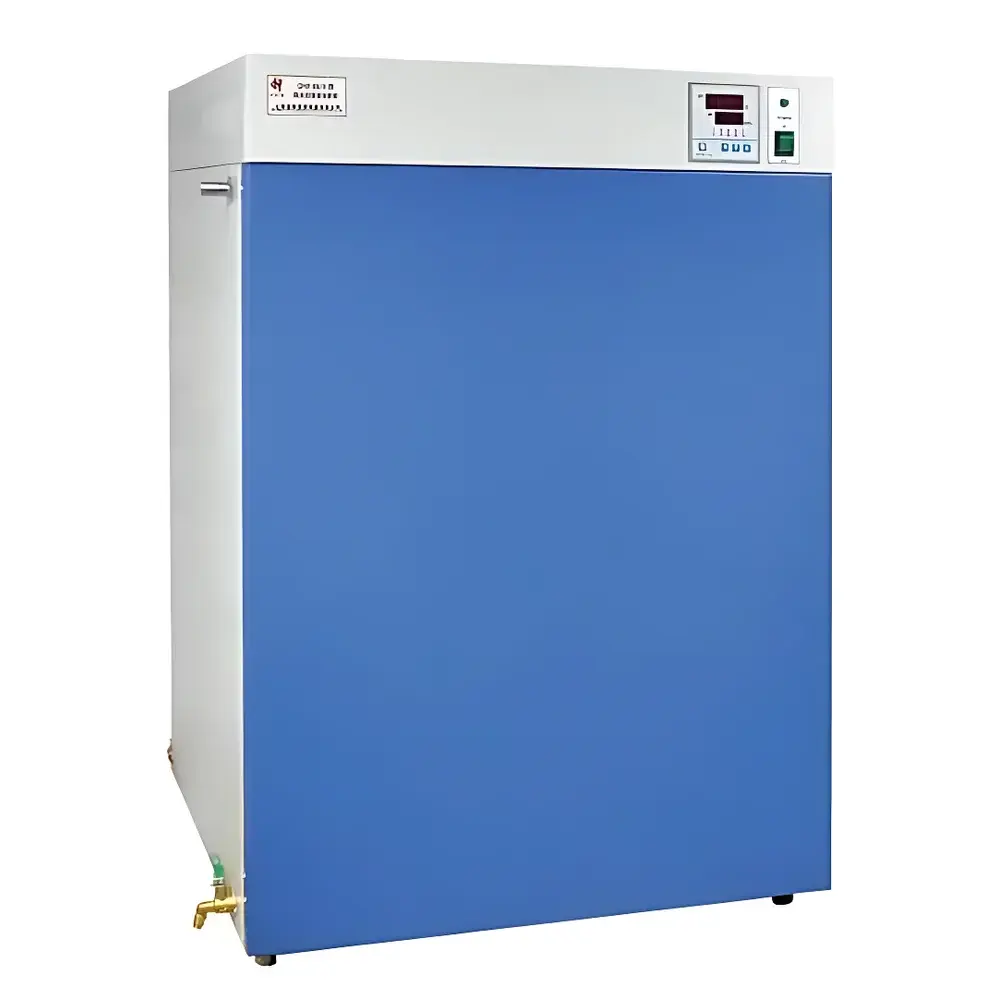
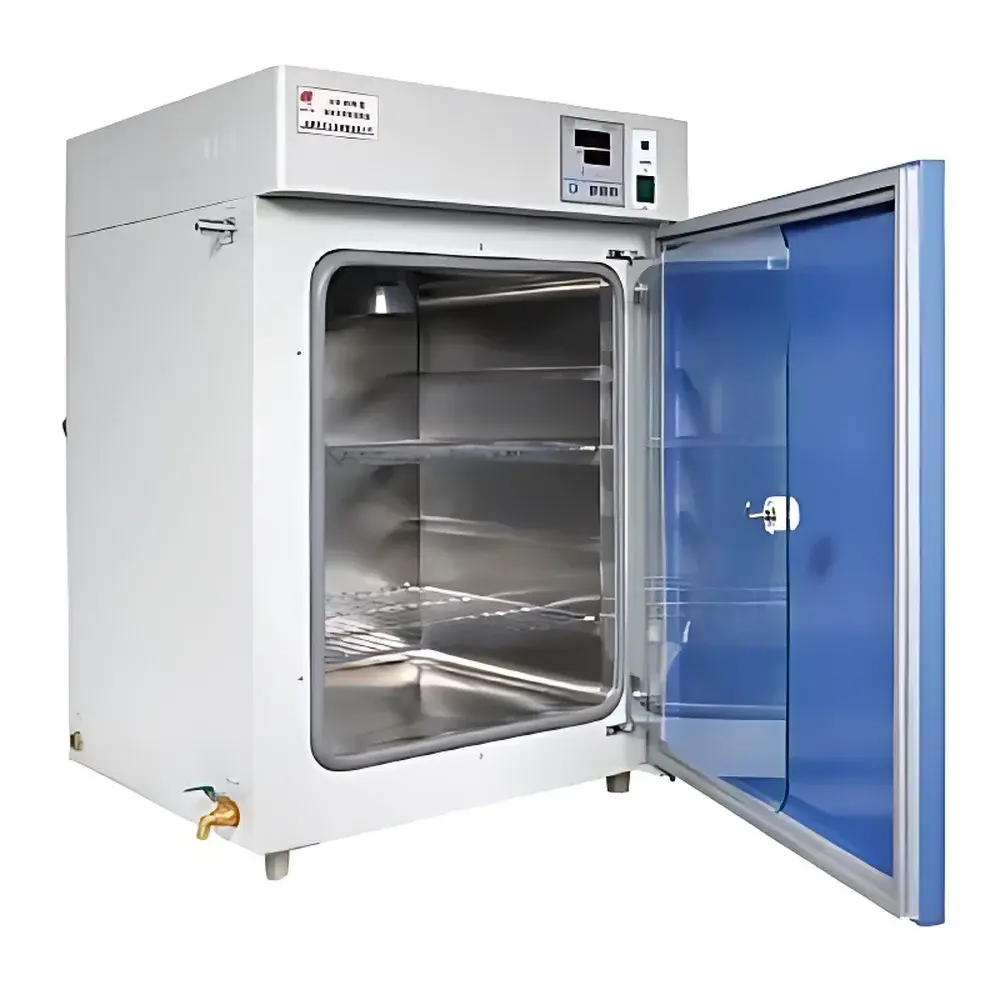
The GHP-9160 and GHP-9270 Water-Jacketed Constant Temperature Incubators are precision-engineered environmental chambers designed for sustained, uniform thermal control in life science laboratories. Unlike forced-air incubators, these models employ a water-jacketed heating architecture—where a sealed outer chamber circulates thermostatically controlled water around the inner working chamber—to deliver exceptional temperature stability, minimal spatial gradient, and extended thermal inertia during brief power interruptions. This design is especially critical for sensitive applications such as mammalian cell culture, microbial fermentation, and long-duration viability assays where even transient fluctuations (>±0.3 °C) may compromise experimental reproducibility. The large backlit LCD display presents real-time chamber temperature, setpoint, timer status, and system alerts simultaneously—enabling rapid operational verification without menu navigation. All units comply with IEC 61010-1 safety standards for laboratory equipment and are constructed to support GLP-compliant workflows through traceable temperature logging and configurable alarm thresholds.
Key Features
- Water-jacketed thermal insulation architecture ensures ±0.5 °C temperature uniformity across the full chamber volume and maintains stable conditions for >30 minutes after power loss.
- Double-door structure with tempered glass and magnetic seal minimizes heat exchange during observation—reducing thermal disturbance to cultured samples by >40% compared to single-door designs.
- Pressure-balanced air inlet system prevents water siphoning or backflow during refilling of the jacket reservoir, eliminating risk of contamination or overflow-related shutdowns.
- Electropolished mirror-finish stainless steel interior with radius-corner geometry facilitates complete cleaning and decontamination; shelf positions are fully adjustable to accommodate varied vessel heights (e.g., roller bottles, stacked flasks).
- PID-based digital temperature controller with independent over-temperature cut-off circuitry—meets ISO 13485 requirements for medical device manufacturing environments.
- Integrated acoustic-optical alarm triggers on low water level, over-temperature deviation, or timer completion; heating automatically disables when jacket water falls below operational threshold.
Sample Compatibility & Compliance
These incubators accommodate standard labware including T-flasks (up to 175 cm²), multiwell plates (6–96-well), Petri dishes, roller bottles, and bioreactor vessels up to 5 L. The chamber’s non-condensing humidity retention (achieved via passive water evaporation from jacket reservoir) supports growth of moisture-sensitive cultures without auxiliary humidification systems. Units conform to EN 61000-6-3 (EMC emission limits) and EN 61000-6-2 (immunity to electrostatic discharge and RF fields). Optional RS485 interface enables integration into centralized facility monitoring networks compliant with FDA 21 CFR Part 11 for electronic record integrity—including user authentication, audit trail generation, and data export in CSV or XML formats.
Software & Data Management
An optional USB or RS485 communication module allows connection to Windows-based PCs running dedicated incubator management software. This application supports real-time remote monitoring, scheduled data logging at user-defined intervals (1 sec–60 min), and automatic generation of timestamped temperature reports. All logged data includes metadata: operator ID, session start/end time, calibration certificate ID, and ambient lab conditions (if external sensors are linked). Audit trails are immutable and time-stamped per ISO/IEC 17025:2017 Annex A.2.2 requirements. Printer integration (via embedded thermal unit) produces hard-copy records suitable for regulatory submissions under USP and EU Annex 11.
Applications
- Mammalian and insect cell line maintenance (e.g., HEK293, CHO, Sf9) requiring strict thermal consistency over multi-day passages.
- Bacterial and fungal culture expansion under defined physiological conditions—particularly for ATCC strain preservation and QC testing.
- Enzyme activity assays and protein expression studies where reaction kinetics are highly temperature-dependent (Q₁₀ sensitivity >2.0).
- Seed germination and plant tissue culture protocols governed by OECD Test Guideline 208.
- Stability testing of biologics and diagnostics kits per ICH Q5C guidelines.
FAQ
What is the thermal recovery time after door opening?
For a 10-second door opening at 37 °C, temperature recovers to ±0.3 °C within 4.2 minutes (GHP-9160) and 4.8 minutes (GHP-9270), measured at center point per ASTM E145-22 Annex A3.
Can the water jacket be filled with deionized water only?
Yes—use of deionized or distilled water is mandatory to prevent mineral scaling and corrosion of the stainless steel jacket; tap water voids the 2-year warranty on thermal components.
Is validation support documentation provided?
Each unit ships with a Factory Acceptance Test (FAT) report including as-delivered temperature uniformity mapping (9-point grid), alarm response verification, and PID tuning parameters—fully traceable to NIST-calibrated reference thermistors.
How often does the water jacket require maintenance?
Water level and quality should be inspected weekly; full drain/refill is recommended every 3 months or when conductivity exceeds 5 µS/cm (measured with handheld meter).
Does the incubator meet ISO 14644-1 Class 5 cleanroom compatibility requirements?
While not rated as a cleanroom device, the smooth internal surfaces, zero particulate-generating components, and absence of internal fans make it suitable for placement inside ISO Class 5 laminar flow hoods or isolators when used with external HEPA-filtered air supply.