
English Product Name
| Origin | United Kingdom |
|---|---|
| Manufacturer Type | Authorized Distributor |
| Import Status | Imported |
| Model | LC Pro-SD |
| Pricing | Available Upon Request |
Overview
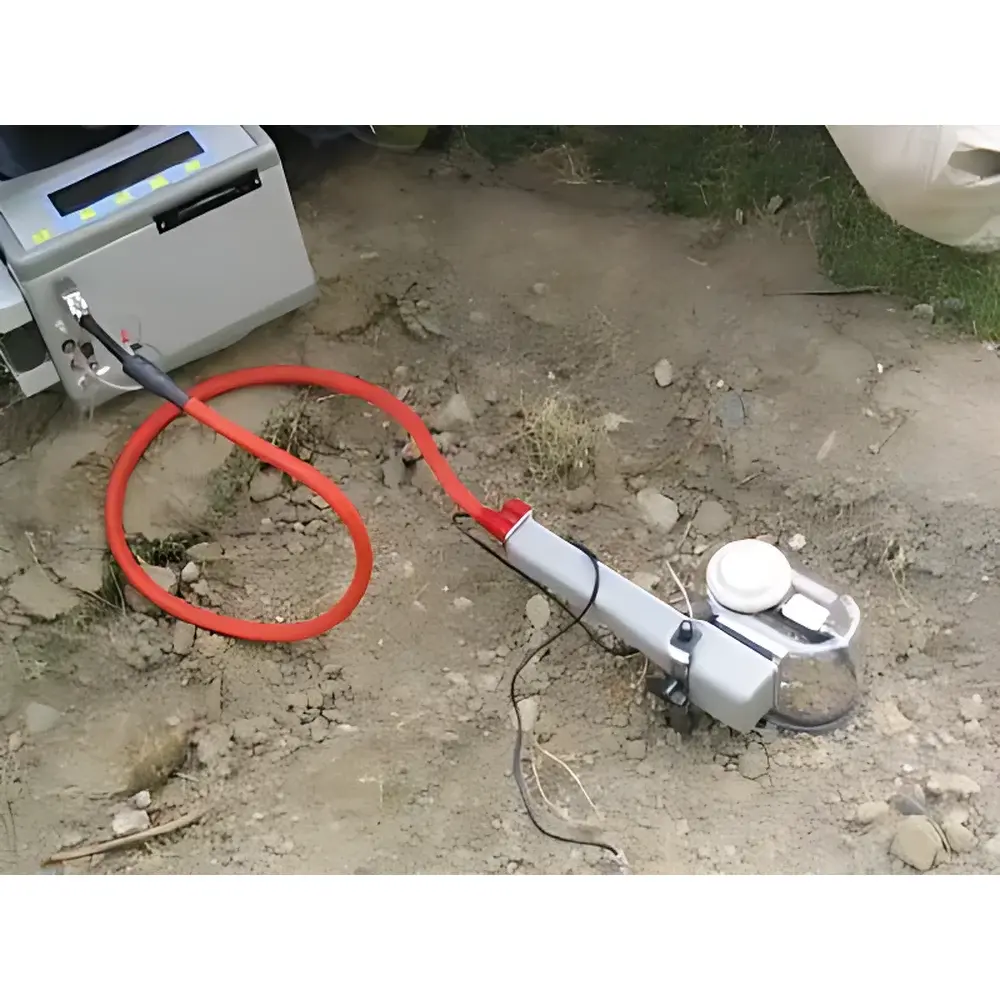
The ADC BioScientific LC Pro-SD is a field-deployable, fully autonomous photosynthesis measurement system engineered for high-fidelity, real-time quantification of gas exchange in plant leaves and small whole-plant systems. It operates on the principle of dual-channel infrared gas analysis (IRGA), integrating a miniature, leaf-chamber-mounted CO₂ analyzer with a dual-laser tunable diode absorption spectroscopy (TDLAS) water vapor sensor. This architecture enables simultaneous, high-temporal-resolution measurement of net photosynthetic rate (An), stomatal conductance (gs), transpiration rate (E), intercellular CO₂ concentration (Ci), and water use efficiency (WUE) under dynamically controlled environmental conditions. Designed for rigorous ecological physiology, crop stress phenotyping, and climate change research, the LC Pro-SD delivers laboratory-grade precision in uncontrolled outdoor environments—including high-humidity tropical canopies, arid dust-prone sites, and temperate alpine meadows—without compromising measurement stability or reproducibility.
Key Features
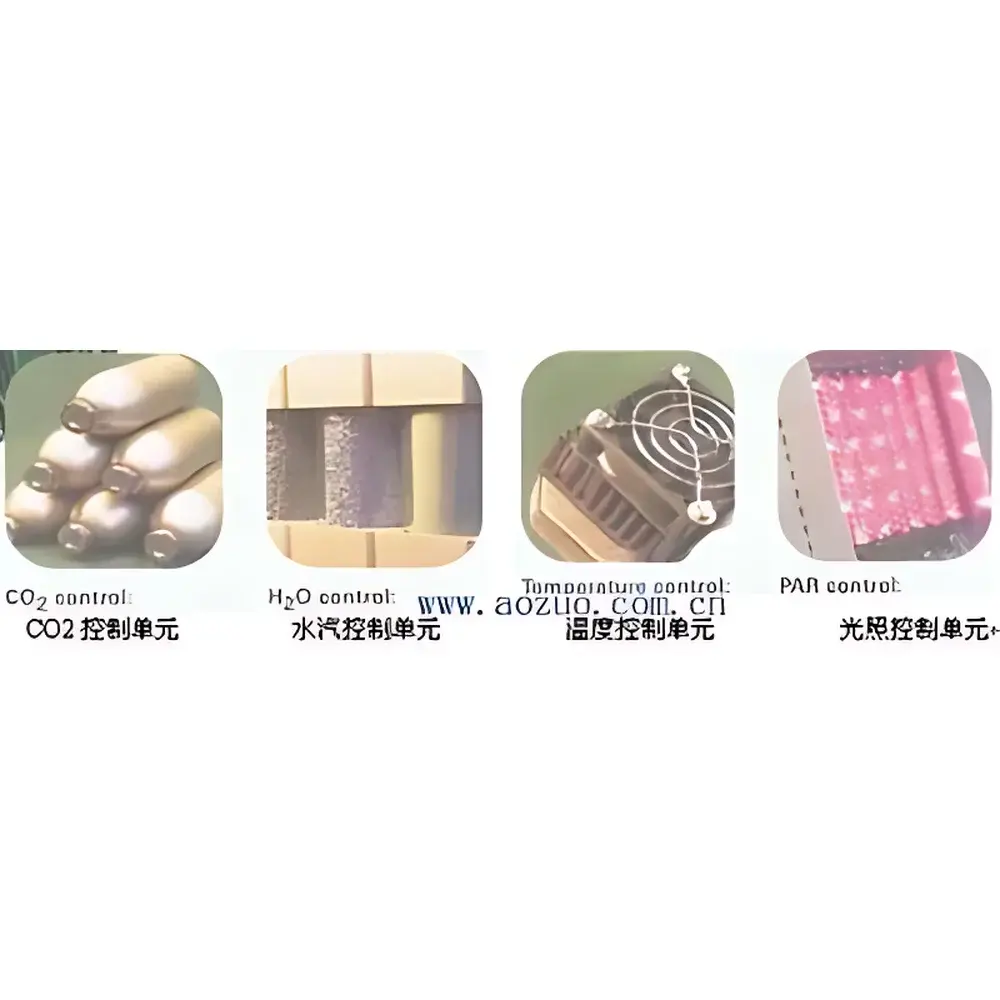
- Fully autonomous environmental control: independent regulation of CO₂ (0–2000 ppm), H₂O vapor pressure (±30 mbar from ambient), leaf chamber temperature (±14°C from ambient via Peltier), and photosynthetically active radiation (PAR; 0–2000 µmol·m⁻²·s⁻¹, red/blue LED array with cosine correction)
- Integrated miniaturized IRGA and TDLAS sensors housed directly within the leaf chamber—eliminating sample line lag and ensuring sub-second response to rapid physiological transitions
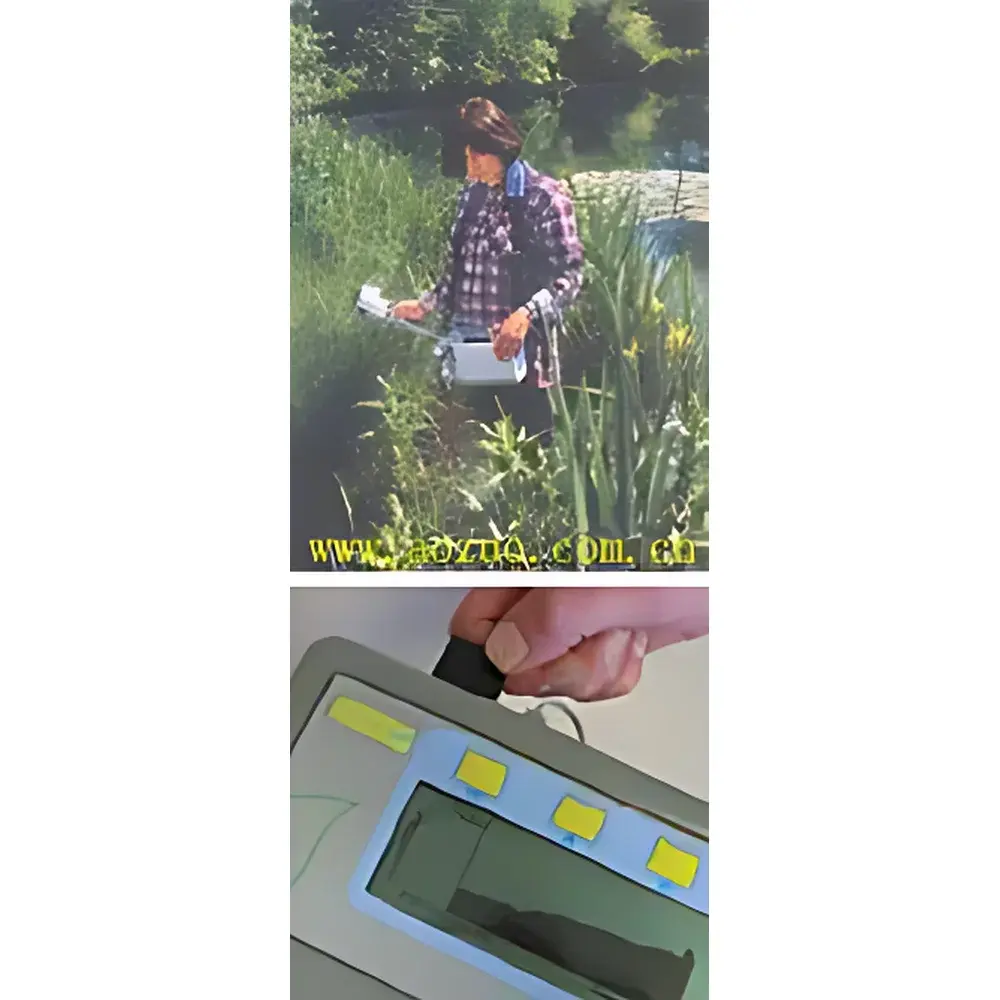
- Ergonomic, shoulder-carried design: total system weight 4.4 kg (main unit) + 0.8 kg (handheld chamber handle); dimensions 230 × 110 × 170 mm (unit), 300 × 80 × 75 mm (handle)
- Robust environmental tolerance: operational range 5–45°C ambient; sealed optics and corrosion-resistant chamber materials ensure reliability in high-dust, high-humidity field deployments
- High-capacity onboard data storage: 1 GB SD card supports up to 16 million discrete measurement records with timestamp, GPS metadata (optional), and full environmental parameter logging
- Low-power architecture: 12 V / 7 Ah rechargeable lead-acid battery enables continuous operation for up to 16 hours in standard measurement protocols
- Real-time graphical display: 3.5-inch TFT screen shows live An, gs, E, Ci, PAR, chamber T, and humidity traces during acquisition
- Modular chamber interface: standardized bayonet mount allows rapid interchange of leaf clips and specialized chambers without recalibration
Sample Compatibility & Compliance
The LC Pro-SD supports a broad spectrum of botanical samples through its expandable chamber ecosystem. Standard configurations include broadleaf (6.25 cm²), narrowleaf (5.8 cm²), coniferous (needle bundle), and micro-leaf (16.5 mm diameter) clips. Optional chambers extend capability to whole-plant assays (e.g., Arabidopsis thaliana rosettes), low-canopy herbaceous communities (<55 mm height), soil respiration (1 L volume with integrated Pt100 soil temperature probe), fruit respiration (dual-compartment transparent/enclosed design), and chlorophyll fluorescence integration via dedicated optical adapter. All chamber materials are selected for minimal CO₂ adsorption and negligible water vapor permeability—validated per ISO 17025-compliant calibration protocols. The system meets GLP documentation requirements for environmental physiology studies and supports audit-ready data export compliant with FDA 21 CFR Part 11 when paired with validated software workflows.
Software & Data Management
Data acquisition, visualization, and post-processing are managed via ADC’s proprietary Windows-based LC Pro Software Suite (v5.2+). The application provides real-time synchronization of gas exchange parameters with environmental setpoints, automated A/Ci curve generation, light-response (A/PAR) modeling, and stomatal limitation analysis (Farquhar-von Caemmerer-Berry framework). Raw data exports as CSV or Excel-compatible formats with full metadata headers—including instrument serial number, calibration dates, sensor drift corrections, and user-defined experimental annotations. USB Mini-B and RS-232 (38400 baud) interfaces enable direct transfer to laboratory PCs or legacy data loggers. Firmware updates and sensor diagnostics are performed in-field via SD card—no laptop required.
Applications
- Field-based drought and heat stress phenotyping in cereal and legume crops
- In situ assessment of photosynthetic acclimation to elevated CO₂ (FACE experiments)
- Comparative ecophysiology across plant functional types (C3/C4, evergreen/deciduous, succulent/non-succulent)
- Soil–plant–atmosphere continuum (SPAC) studies, including coupled soil respiration and leaf-level flux measurements
- Post-harvest physiology of fruits and vegetables under modified atmosphere storage
- Validation of remote sensing indices (e.g., PRI, NDVI) against ground-truth gas exchange metrics
- Teaching laboratories requiring robust, student-operable instrumentation for plant physiology curricula
FAQ
What calibration procedures are required before field deployment?
The LC Pro-SD performs automatic zero-point compensation for CO₂ using internal reference gas and applies real-time barometric pressure and temperature corrections. Users must perform a two-point span calibration (ambient air + known CO₂ standard) and H₂O vapor verification using saturated salt solutions prior to critical experiments—procedures documented in the ISO/IEC 17025-aligned calibration manual.
Is the system compatible with third-party fluorescence measurement systems?
Yes—via the optional Fluorescence Integration Adapter, the LC Pro-SD synchronizes TTL triggers and analog voltage outputs with commercial PAM fluorometers (e.g., Walz, Hansatech), enabling concurrent measurement of ΦPSII, NPQ, and qP alongside gas exchange.
How is data integrity maintained during extended unattended operation?
The embedded file system implements journaling and cyclic redundancy checks (CRC32) on all SD card writes. Power-loss recovery ensures no partial record corruption, and each dataset includes embedded checksums traceable to NIST-traceable gas standards used during factory calibration.
Can the LC Pro-SD operate in rain or fog?
The main unit and chamber electronics are rated IP54 for dust and water splashes. While not submersible, it functions reliably during light rain or high fog—provided the optical windows remain free of condensation via optional heated chamber window kits.
Does the system support regulatory compliance for GxP research?
When deployed with ADC’s validated software suite, electronic signature modules, and audit trail configuration, the LC Pro-SD meets core requirements for GLP and GCP studies involving plant physiological endpoints, including full 21 CFR Part 11 alignment for electronic records and signatures.




