
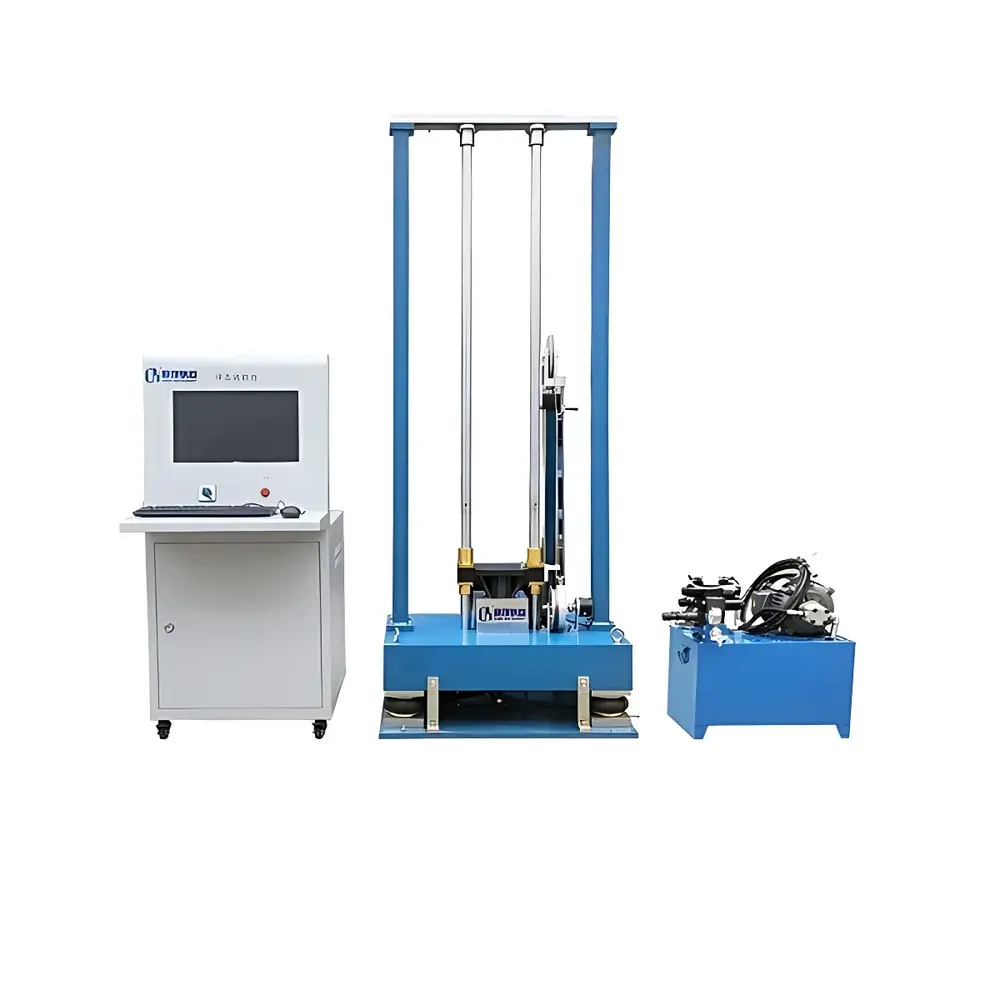
English Product Name
| Brand | OK Instrumentation |
|---|---|
| Origin | Imported |
| Manufacturer Type | Authorized Distributor |
| Price | USD 14,000–42,000 (FOB) |
| Load Capacity | 10–100 kg |
| Table Dimensions | 20×20 to 80×65 cm |
| Acceleration Range | 150–15,000 m/s² |
| Pulse Duration | 0.5–30 ms |
| Waveform Options | Half-sine, Trapezoidal, Post-peak Sawtooth |
| Power Supply | AC 380 V ±5%, 50/60 Hz, 3-phase 5-wire |
Overview
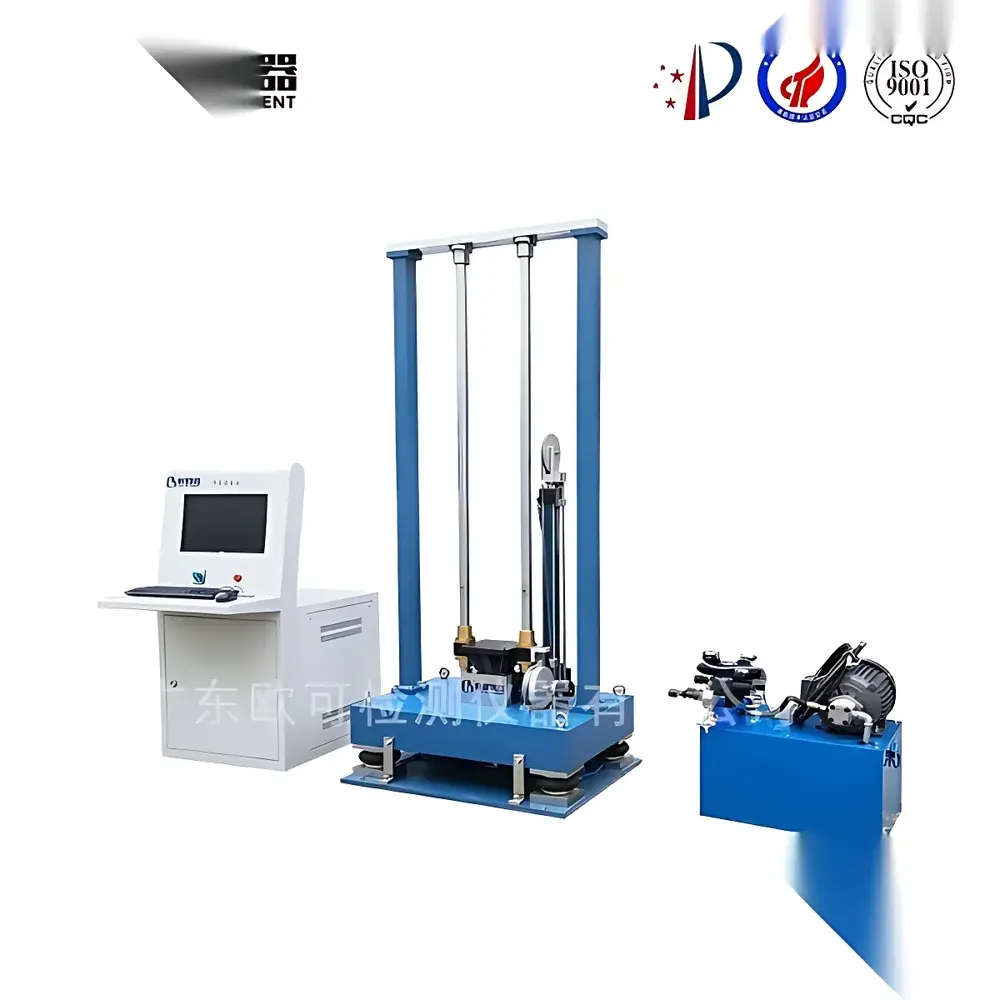
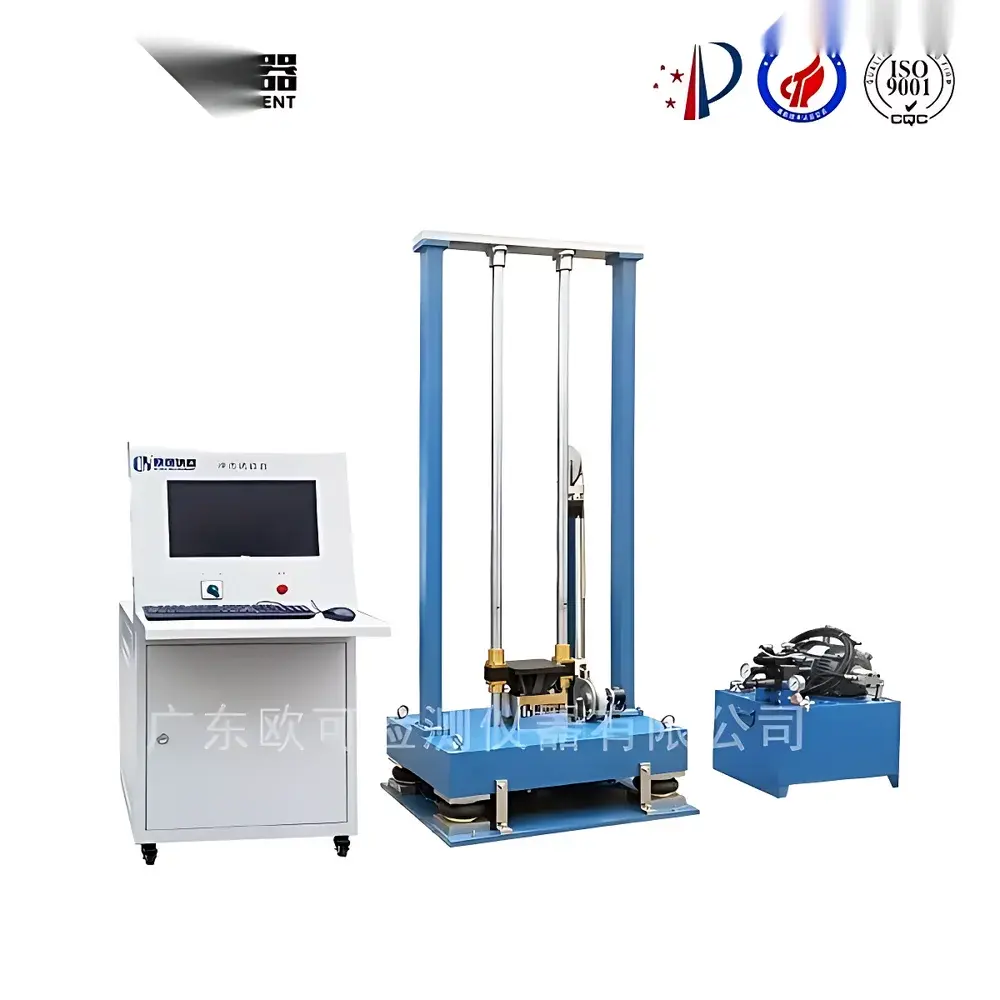
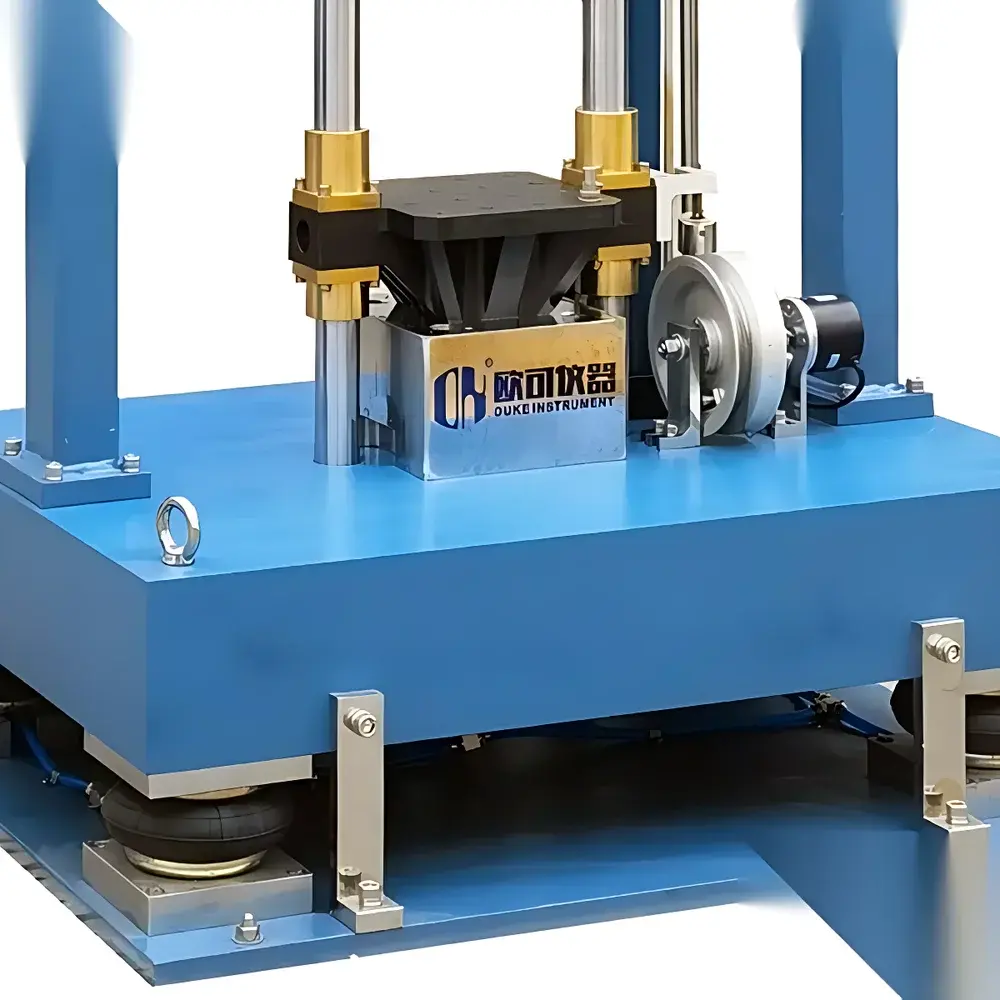
The OK-S Series Electromechanical Shock Testing Machine is a precision-engineered system designed for controlled, repeatable mechanical shock simulation in compliance with international environmental stress testing standards. It operates on the principle of electromechanically driven free-fall impact: a DC motor coupled with a gear-reduction lifting mechanism elevates the test table and impact mass to a programmable height; upon release, the mass strikes a calibrated elastomeric cushion, generating a defined acceleration pulse—typically half-sine, trapezoidal, or post-peak sawtooth—whose amplitude, duration, and shape are independently adjustable via mechanical parameters (drop height, spring compression, cushion thickness/material). Unlike pneumatic or hydraulic shock systems, this electromechanical architecture eliminates compressed gas dependency, ensures high reproducibility across thousands of cycles, and delivers superior waveform fidelity under varying load conditions. The machine’s rigid base incorporates passive damping elements to suppress structural resonance and minimize energy transmission to surrounding infrastructure—critical for laboratory environments where adjacent instrumentation must remain unaffected during high-g testing.
Key Features
- Integrated lift-and-drop actuation system with brushless DC motor and precision planetary gearbox, enabling precise control over impact velocity and pulse repetition frequency (adjustable via motor RPM)
- Modular cushioning assembly with interchangeable elastomer inserts (silicone rubber, polyurethane, neoprene), allowing empirical tuning of pulse duration from 0.5 ms to 30 ms
- No secondary rebound design: patented kinematic linkage and energy-absorbing base structure eliminate post-impact oscillations, ensuring single-pulse integrity per test event
- Structural isolation platform with tuned mass dampers reduces transmitted vibration to <5% of input energy, meeting ISO 2041:2022 requirements for laboratory-grade shock equipment
- Fail-safe interlock architecture: emergency stop circuitry, position-sensor redundancy, uninterruptible power monitoring, and automatic brake engagement during power loss or operator override
- Compliance-ready configuration: pre-validated waveform generation against IEC 60068-2-27, MIL-STD-810H Method 516.8, GJB 150.18A, JIS C 0041, and ASTM D999—fully traceable to NIST-traceable accelerometer calibration protocols
Sample Compatibility & Compliance
The OK-S series accommodates rigid and semi-rigid specimens up to 100 kg, including electronic enclosures, automotive ECUs, aerospace avionics housings, medical device packaging, and military-grade communication modules. Test tables feature T-slots (M6/M8) for secure fixture mounting and optional vacuum chucks for flat-panel devices. All models conform to GLP/GMP documentation requirements: each shock event logs timestamp, pulse type, peak g-value, duration, and waveform integral (m·s⁻¹) to an audit-trail-enabled database. System validation packages include IQ/OQ documentation templates aligned with FDA 21 CFR Part 11 electronic record integrity guidelines. Calibration certificates are issued annually by ISO/IEC 17025-accredited third-party laboratories, covering accelerometer linearity (±0.5% FS), timing resolution (≤1 µs), and pulse symmetry tolerance (±3% deviation from ideal half-sine envelope).
Software & Data Management
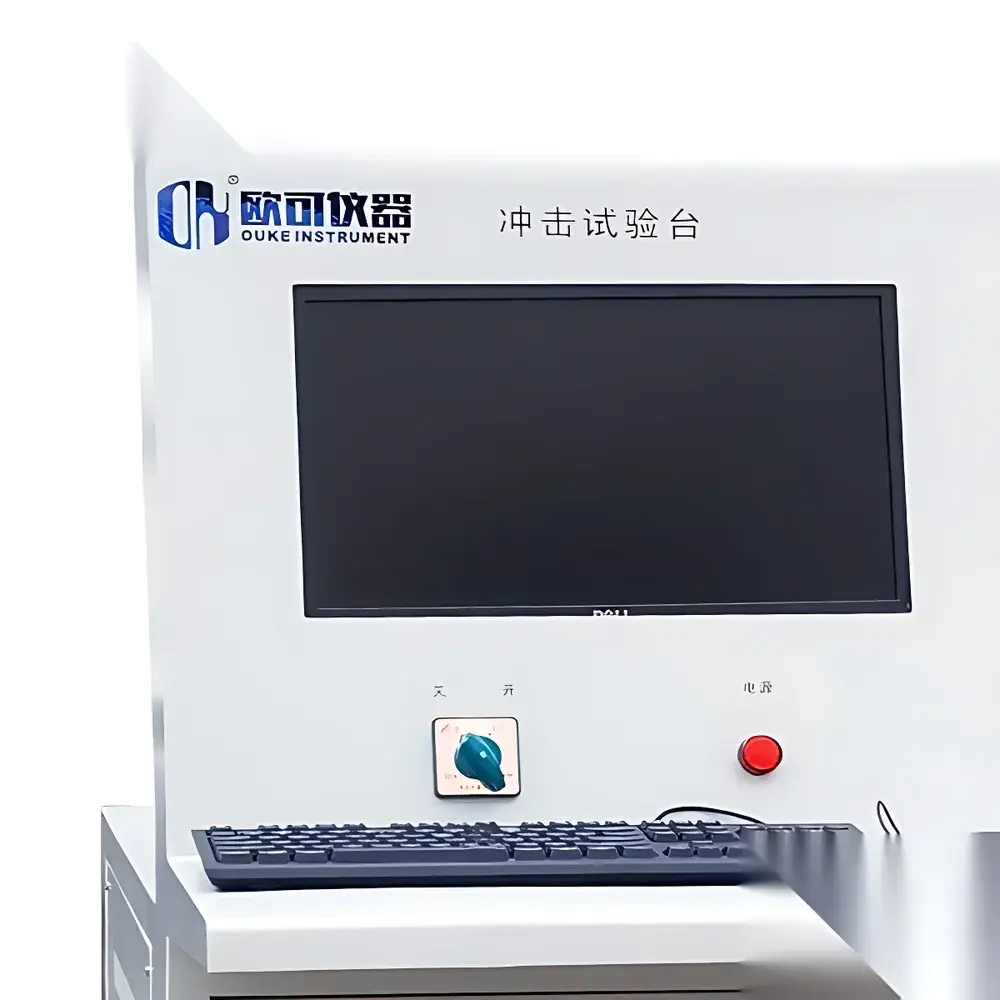
The OK-TestControl v4.2 software suite (Windows 10/11 compatible) provides real-time oscilloscope-style waveform visualization, automated pass/fail evaluation against user-defined tolerance bands, and batch test sequencing with conditional logic (e.g., “repeat if peak acceleration deviates >2%”). Raw data exports to CSV, MATLAB .mat, and universal HDF5 formats; metadata embedding supports ISO/IEC 17025-compliant reporting. Integrated FFT analysis enables spectral assessment of residual vibrations post-impact. Audit trail functionality records all parameter changes, user logins, and report generations with immutable timestamps—meeting requirements for regulated industries subject to FDA, EMA, or DoD quality audits. Remote monitoring via Ethernet/IP allows integration into centralized lab management systems (LIMS) using OPC UA protocol.
Applications
This system is routinely deployed in reliability engineering labs for qualification testing of products subjected to transportation shock (ASTM D4169), drop-test simulation of handheld electronics (IEC 60068-2-32), durability validation of solder joints in PCB assemblies (IPC-9701), and mechanical robustness assessment of implantable medical devices (ISO 14971 risk management framework). Aerospace suppliers use it for DO-160 Section 8 shock certification of flight-critical sensors; automotive Tier-1 vendors apply it to ISO 16750-3 mechanical stress screening of ADAS control units. Its deterministic pulse generation also supports research into material fatigue thresholds under transient loading, particularly for polymer composites and MEMS packaging substrates.
FAQ
What waveform types are natively supported without add-on hardware?
Half-sine waveforms are generated as standard; trapezoidal and post-peak sawtooth waveforms require optional cushion kits and firmware upgrade (OK-S-WF-PRO license).
Is the system compliant with FDA 21 CFR Part 11 for electronic signatures?
Yes—user authentication, electronic signature capture, and audit trail logging meet Part 11 requirements when deployed on validated Windows OS configurations.
Can the machine be integrated into an automated test cell with PLC control?
Absolutely—the system provides Modbus TCP and digital I/O interfaces (24 VDC) for synchronization with robotic handlers, environmental chambers, and data acquisition networks.
What is the recommended calibration interval and scope?
Annual full-system calibration is advised, covering accelerometer sensitivity, drop-height encoder accuracy, motor speed regulation, and cushion force-deflection hysteresis curves.
Does the warranty cover wear parts such as impact cushions and lifting belts?
Standard 24-month warranty excludes consumables; however, cushion sets and drive belts are available as scheduled maintenance kits with extended-life specifications (≥50,000 cycles per set).



