
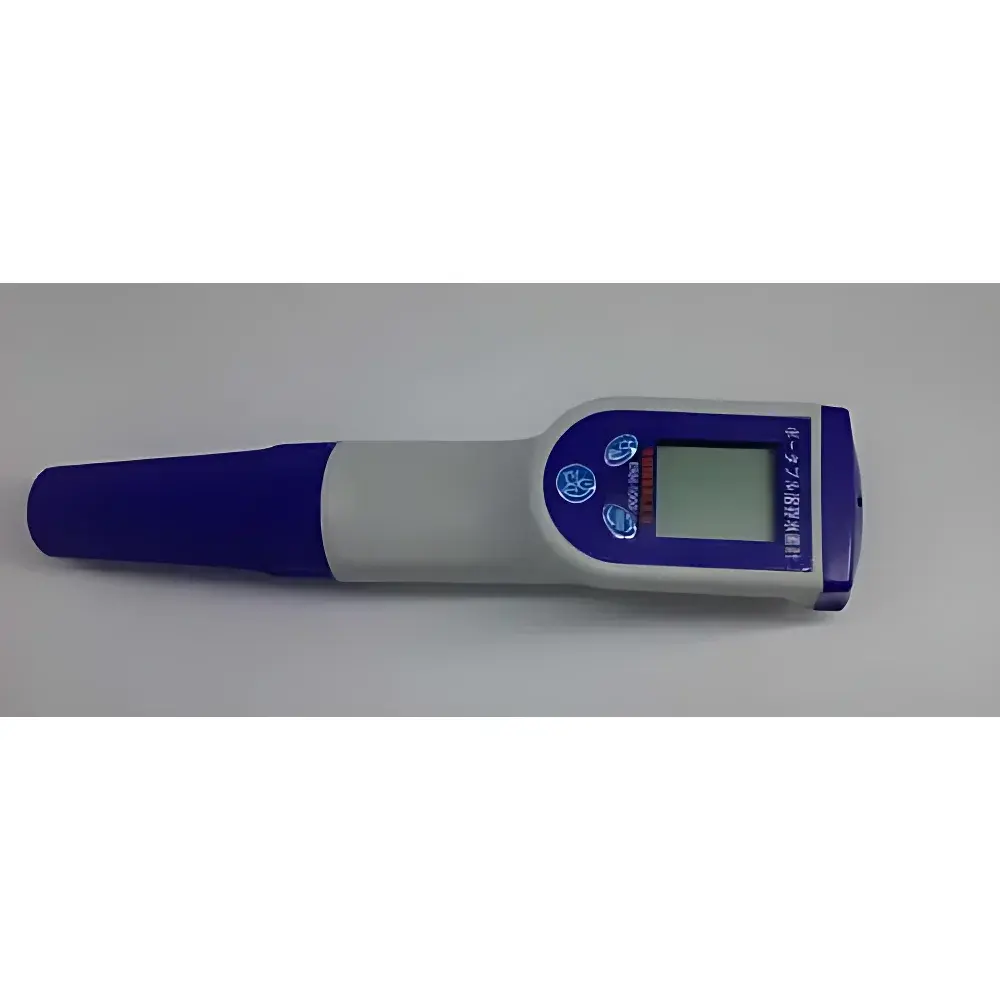
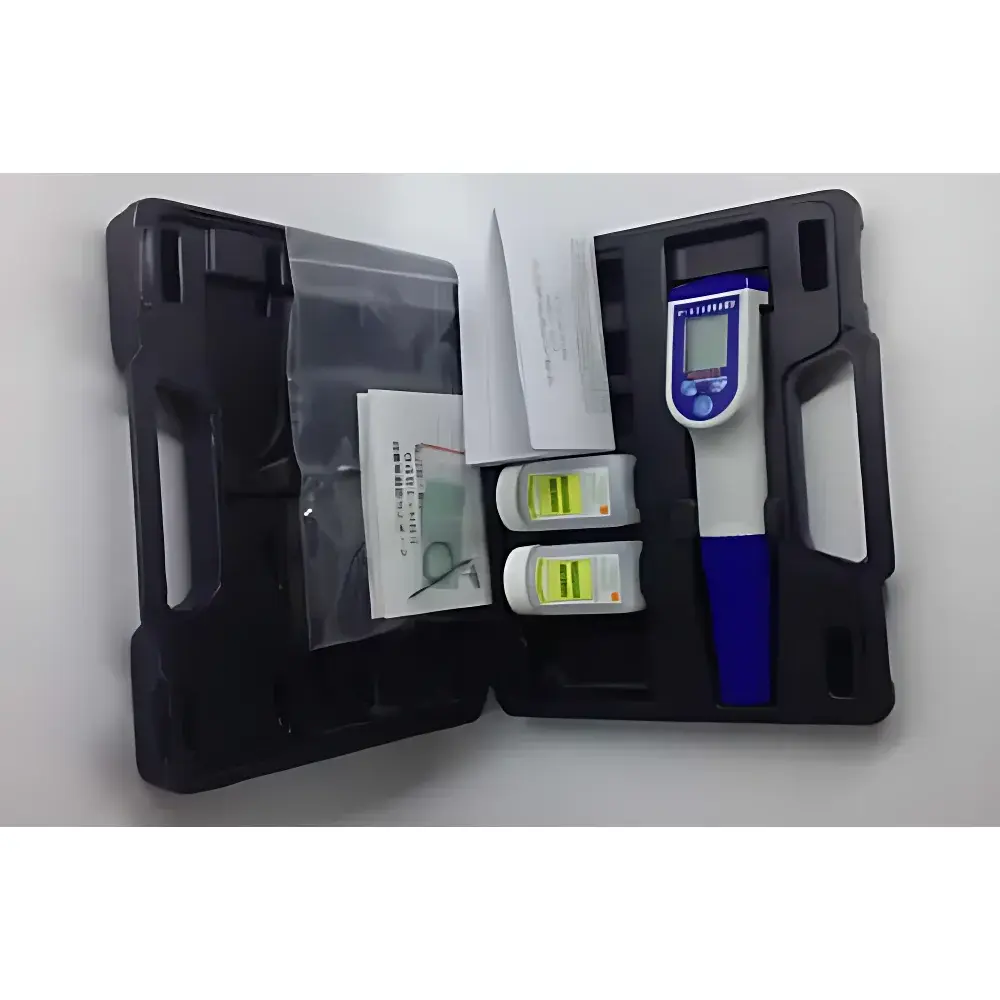
ENH-1000 Portable Dissolved Hydrogen Analyzer
| Origin | Japan |
|---|---|
| Manufacturer Type | Authorized Distributor |
| Origin Category | Imported |
| Model | ENH-1000 |
| Price | USD 795 (FOB) |
| Measurement Range | 0–2000 ppb |
| Accuracy | ±5 ppb |
| Power Supply | DC 6 V (4 × AA batteries) |
| Dimensions | 40 mm (W) × 195 mm (H) × 40 mm (D) |
| Weight | 135 g |
| Electrode Protection Solution | Included (2 vials) |
| Accessories | Waterproof O-rings (2), Electrode Cleaning Paper, Carrying Case, User Manual |
Overview
The ENH-1000 Portable Dissolved Hydrogen Analyzer is a compact, field-deployable electrochemical instrument engineered for the precise quantification of molecular hydrogen (H₂) dissolved in aqueous solutions—primarily targeting hydrogen-rich water (HRW) generated by electrolytic, magnesium-based, or platinized catalyst systems. It operates on the principle of amperometric detection via a proprietary hydrogen-selective membrane-covered microelectrode, where dissolved H₂ diffuses across a gas-permeable membrane and undergoes catalytic reduction at a polarized noble metal working electrode. The resulting faradaic current is linearly proportional to H₂ concentration under controlled diffusion-limited conditions, enabling direct readout in parts per trillion (ppt) or parts per billion (ppb). Designed for rapid in-situ verification—without sample dilution, reagent addition, or laboratory infrastructure—the ENH-1000 delivers trace-level resolution (±5 ppb) with sub-second response time (t₉₀ < 3 s), making it suitable for real-time quality control during HRW production, clinical hydration studies, and functional beverage R&D.
Key Features
- True portable architecture: 135 g mass and palm-sized form factor (40 × 195 × 40 mm) enable handheld operation in manufacturing lines, clinical settings, or field sampling locations.
- Hydrogen-specific amperometric sensor: Pt/Ir alloy working electrode with hydrophobic PTFE membrane ensures high selectivity against interfering species (e.g., O₂, Cl⁻, NO₂⁻) and eliminates cross-sensitivity to redox-active solutes.
- Calibration-free operation: Factory-calibrated against NIST-traceable H₂-saturated water standards; zero-point stability maintained via built-in reference electrode and temperature-compensated electronics.
- Battery-powered reliability: Operates continuously for >12 hours on four standard AA alkaline cells (DC 6 V); no external power supply or USB dependency required.
- Ruggedized design: IP67-rated enclosure with dual silicone O-rings (included) seals the electrode port and battery compartment against moisture, dust, and incidental immersion.
- Direct ppb-scale display: Real-time numeric output (0–2000 ppb) with 1-ppb resolution; no software installation or data logging required for basic measurement.
Sample Compatibility & Compliance
The ENH-1000 is validated for use with deionized water, mineral water, electrolyzed reduced water (ERW), magnesium-hydrogen infusion solutions, and low-conductivity functional beverages (conductivity 10 ppm free chlorine or strong oxidants, which may degrade the sensing membrane. While not certified to ISO/IEC 17025 for accredited testing, its measurement protocol aligns with ASTM D8083–21 (Standard Guide for Measurement of Dissolved Molecular Hydrogen in Water) for method validation. Device firmware and calibration records support GLP-compliant documentation when used within controlled QA/QC workflows.
Software & Data Management
The ENH-1000 operates as a standalone instrument with no embedded memory or Bluetooth/Wi-Fi connectivity. All measurements are displayed locally on a high-contrast LCD screen with backlight. For traceable data capture, users may manually record values alongside timestamps, sample IDs, and environmental notes in laboratory notebooks or LIMS-compatible spreadsheets. Optional third-party USB-to-serial adapters (not included) allow analog voltage output (0–200 mV = 0–2000 ppb) for integration into SCADA or custom DAQ systems—subject to user-configured signal conditioning and sampling rate alignment.
Applications
- Verification of hydrogen output from commercial water ionizers, PEM-based H₂ generators, and magnesium stick reactors.
- Batch release testing of hydrogen-infused bottled water and ready-to-drink functional beverages.
- Academic research on H₂ pharmacokinetics: correlation of dissolved concentration with headspace analysis and breath H₂ profiling.
- On-site evaluation of hydrogen retention stability during storage (e.g., PET bottle permeability studies at 4 °C vs. 25 °C).
- Technical support diagnostics for OEM manufacturers—identifying electrode fouling, membrane clogging, or power supply drift during service calls.
FAQ
Does the ENH-1000 require regular recalibration?
No. The sensor is factory-calibrated using gravimetrically prepared H₂-saturated water standards and maintains accuracy for ≥12 months under normal use. Recalibration is only recommended after mechanical impact, prolonged exposure to chlorinated water, or observed deviation exceeding ±10 ppb during routine verification with saturated reference samples.
Can the electrode be cleaned or refurbished?
Yes. The replaceable sensing tip may be gently wiped with included electrode cleaning paper moistened with deionized water. Aggressive solvents or abrasive tools must be avoided. Electrode protection solution (provided) should be applied before storage to prevent membrane desiccation.
Is temperature compensation automatic?
Yes. An integrated thermistor measures sample temperature in real time and applies algorithmic correction based on the known temperature dependence of H₂ solubility and diffusion coefficient (validated from 5–40 °C).
What is the minimum sample volume required?
A stable reading is achieved with ≥5 mL of stirred sample. Immersion depth must exceed 20 mm to ensure full coverage of the sensing membrane and avoid air-gap artifacts.
Does the device comply with FDA 21 CFR Part 11?
No. As a non-networked, non-auditable, non-electronic-record-keeping instrument, the ENH-1000 does not meet Part 11 requirements. It is intended for supportive measurement—not as a primary release criterion in regulated GMP environments without supplemental procedural controls.
Related Products







