
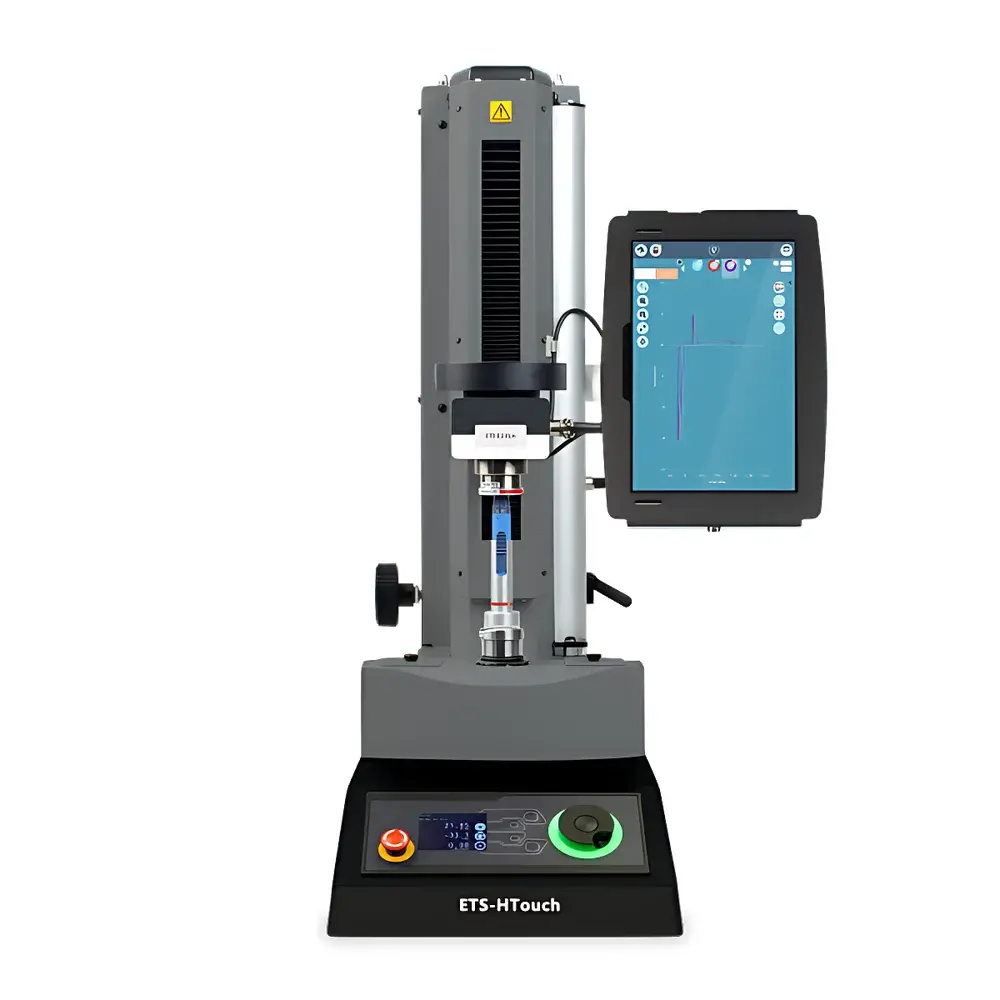
ENSOUL ETS Series High-Precision Automated Torsion Testing System
| Brand | ENSOUL |
|---|---|
| Origin | USA |
| Manufacturer Type | Authorized Distributor |
| Origin Category | Imported |
| Model | ETS-HPro / ETS-HTouch |
| Price | Upon Request |
| Torque Sensor Options | 0.1 / 0.2 / 0.3 / 1 / 1.5 / 3 / 6 N·m |
| Accuracy | ±0.5% of Full Scale |
| Resolution | 1:50,000 |
| Axial Load Capability | Yes (simultaneous axial force application during torsion) |
| Compliance | ISO 9001–certified manufacturing |
| Software | VPro with FDA 21 CFR Part 11–compliant audit trail and role-based user permissions |
Overview
The ENSOUL ETS Series High-Precision Automated Torsion Testing System is an electromechanical torque measurement platform engineered for traceable, high-reproducibility torsional characterization of small- to medium-scale components. It operates on the principle of controlled angular displacement under defined rotational load, with real-time acquisition of torque–angle response curves via calibrated rotary transducers. Designed specifically for applications where sub-mN·m resolution and minimal mechanical hysteresis are critical—such as luer connector integrity verification, child-resistant cap validation, micro-gear train analysis, and precision fastener torque profiling—the system integrates a rigid, low-backlash drive train, active gravitational counterbalance mechanism, and modular sensor interchangeability. Its architecture eliminates parasitic torque contributions from fixture mass through dynamic weight compensation, ensuring that only the specimen’s intrinsic torsional behavior is quantified. The system meets foundational metrological requirements for laboratory-grade mechanical testing and serves as a primary or secondary reference instrument in regulated environments.
Key Features
- ISO 9001–certified mechanical construction with hardened steel frame, precision-ground lead screws, and zero-backlash harmonic drive transmission
- Integrated gravitational counterbalance system that dynamically nullifies fixture weight effects, enabling accurate measurement of torques as low as 0.002 N·m (0.2 mN·m)
- Seven interchangeable torque sensors (0.1, 0.2, 0.3, 1, 1.5, 3, and 6 N·m full scale), each supplied with NIST-traceable calibration certificate compliant with ISO/IEC 17025
- Simultaneous axial loading capability (up to 500 N) synchronized with torsional actuation—critical for evaluating torque-to-seal performance in medical connectors per ISO 80369-7
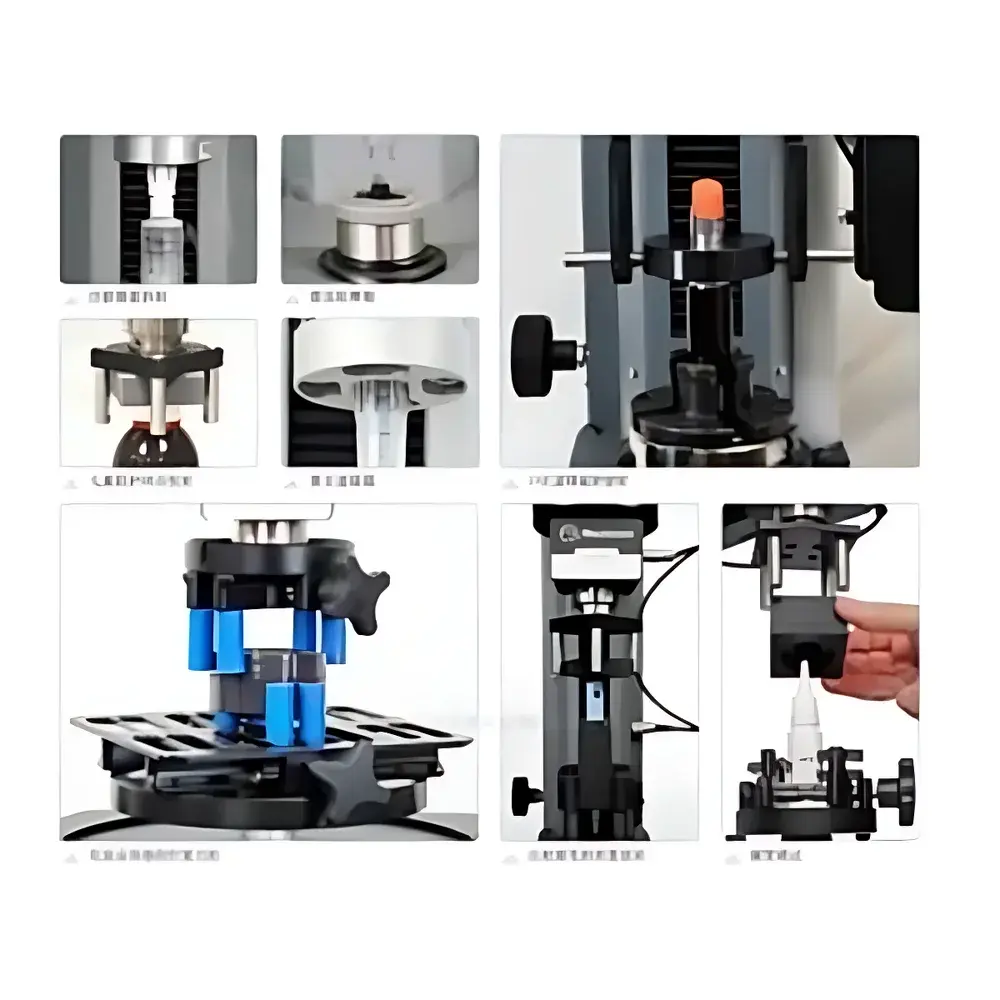
- Modular fixture interface compatible with custom-designed grips, collets, and alignment jigs for diverse component geometries (e.g., syringe barrels, vial caps, MEMS actuators)
- Thermally stable base plate and vibration-damped mounting platform to minimize environmental drift during long-duration creep or relaxation tests
Sample Compatibility & Compliance
The ETS Series accommodates specimens ranging from 3 mm diameter micro-components to 150 mm diameter assemblies, provided appropriate fixturing is selected. It supports standardized test methods including ASTM F2160 (torque retention of child-resistant packaging), ISO 80369-7 (small-bore connectors for liquids and gases), USP (container closure integrity), and ISO 11607-2 (packaging validation). All hardware and firmware comply with IEC 61000-6-2/6-4 electromagnetic compatibility standards. Mechanical safety conforms to ISO 13857 and ANSI B11.19. The system’s design and documentation support GLP/GMP-aligned validation protocols, including IQ/OQ/PQ execution, and its software architecture satisfies FDA 21 CFR Part 11 requirements for electronic records and signatures.
Software & Data Management
VPro software is a Windows-native, object-oriented control and analysis suite built exclusively for the ETS platform. It provides real-time torque–angle curve visualization with adjustable sampling rates (up to 1 kHz), automatic peak detection, hysteresis loop calculation, and slope-based yield point identification. Test sequences can be constructed using drag-and-drop logic blocks—including conditional branching, multi-step ramp/hold profiles, and pass/fail tolerancing against reference curves. All user actions, parameter changes, and result exports are logged in an immutable, time-stamped audit trail. Role-based access control enforces separation of duties: operators execute pre-approved methods; supervisors approve deviations; administrators manage user accounts and system configurations. Raw data exports to CSV, XML, and HDF5 formats ensure interoperability with LIMS, MES, and statistical process control platforms.
Applications
- Medical device testing: Luer lock engagement/disengagement torque, IV set connector integrity, catheter hub torsional strength
- Pharmaceutical packaging: Child-resistant closure torque verification, blister pack peel–twist resistance, dropper pump actuation consistency
- Electronics: Micro-switch actuation torque, connector mating/unmating cycles, MEMS mirror rotational stiffness
- Jewelry & cosmetics: Hinge durability of compact cases, magnetic clasp release torque, lipstick twist mechanism repeatability
- Automotive: Seat adjustment knob torque profile, HVAC blend door actuator calibration, sensor housing sealing torque
- R&D labs: Polymer viscoelastic torsional modulus, composite laminate interlaminar shear response, bioresorbable implant torsional degradation kinetics
FAQ
What torque ranges does the ETS Series support?
The system supports full-scale measurements from 0.1 N·m to 6 N·m across seven sensor options. Each sensor offers ±0.5% accuracy and 1:50,000 internal resolution.
Can axial force be applied concurrently with torsion?
Yes—integrated linear actuation enables simultaneous application of up to 500 N axial load while acquiring torque–angle data, essential for simulating clinical use conditions of medical connectors.
Is VPro software compliant with regulatory requirements for electronic records?
Yes—VPro implements full 21 CFR Part 11 compliance, including electronic signatures, audit trails, and role-based access controls validated for GxP environments.
How is sensor calibration maintained?
Each torque sensor ships with a NIST-traceable calibration certificate. Users may perform in-house verification using certified reference standards; recalibration services are available through ENSOUL-authorized metrology centers.
What industries commonly deploy the ETS Series?
Primary adopters include medical device manufacturers, pharmaceutical QA/QC labs, aerospace component suppliers, precision electronics OEMs, and academic tribology research groups.



