
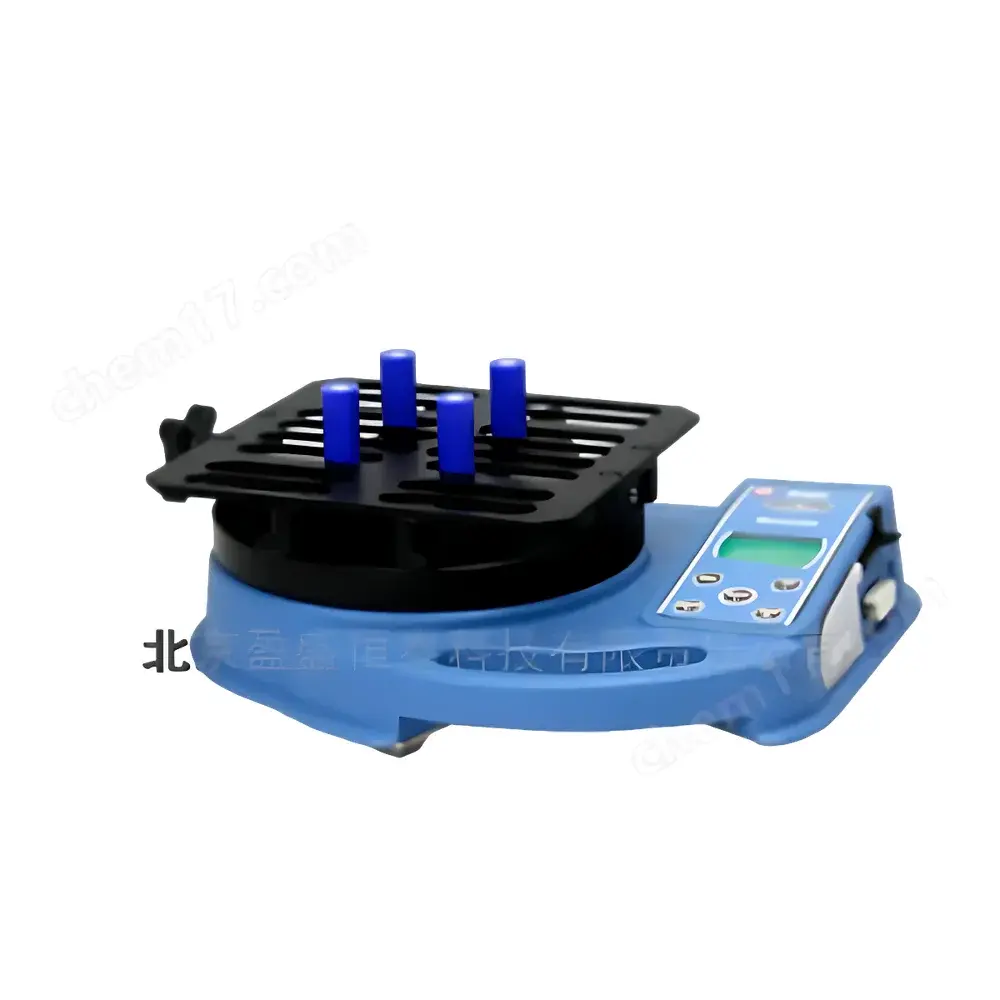
ENSOUL Orbis Manual Digital Torque Tester
| Brand | ENSOUL |
|---|---|
| Model | Orbis |
| Type | Manual Digital Torque Tester |
| Measurement Range | 0–6 N·m (0–50 lbf·in) |
| Display | High-resolution digital LCD |
| Sampling Rate | ≥1 kHz |
| Power Supply | AC adapter or rechargeable battery |
| Output Interface | RS232 serial port |
| Operating Direction | Bidirectional (clockwise & counterclockwise) |
| Construction | Rigid aluminum alloy frame with integrated load cell base |
| Weight | <2.5 kg |
| Dimensions | 180 × 120 × 240 mm (W × D × H) |
| Compliance | CE, RoHS |
| Software Compatibility | VectorPro Lite (data logging, real-time curve plotting, peak hold, statistical export) |
Overview
The ENSOUL Orbis Manual Digital Torque Tester is a precision-engineered instrument designed for static and dynamic torque verification of low-torque rotating components in laboratory, quality control, and production line environments. Based on strain-gauge transducer technology embedded directly into the base structure, the Orbis delivers high-fidelity torque measurement through direct mechanical coupling—eliminating gear backlash, slippage, or rotational inertia artifacts common in motorized systems. Its fixed-base architecture ensures mechanical stability during manual actuation, enabling repeatable application of rotational force without external fixtures or mounting constraints. The device operates on the fundamental principle of measuring torsional deformation across a calibrated sensing element, converting mechanical twist into proportional electrical output via Wheatstone bridge circuitry. With a full-scale range of 6 N·m (50 lbf·in), the Orbis targets applications where sub-Newton-meter resolution and peak-capture fidelity are critical—particularly in closure integrity validation, fastener assembly verification, and functional testing of miniature actuators and micro-mechanical assemblies.
Key Features
- Bidirectional torque measurement capability—supports both clockwise and counterclockwise testing without recalibration or sensor reorientation.
- Integrated high-stability load cell housed within the rigid aluminum base—minimizes thermal drift and mechanical hysteresis over extended use cycles.
- Digital LCD display with ≥1 kHz sampling rate—enables precise capture of transient torque peaks, including overshoots and relaxation events typical in plastic-thread engagement or elastomeric seal compression.
- Portable, self-contained design—weighing under 2.5 kg with compact footprint (180 × 120 × 240 mm)—facilitates deployment across multiple workstations or mobile QC stations.
- Dual power mode—operates seamlessly via AC adapter or internal rechargeable battery, supporting uninterrupted operation during shift changes or field audits.
- RS232 serial interface compliant with standard ASCII protocol—enables direct integration with LIMS, MES, or custom data acquisition platforms for traceable recordkeeping.
Sample Compatibility & Compliance
The Orbis accommodates a broad spectrum of small-to-medium rotational components—including screw caps (e.g., PET beverage closures, pharmaceutical vial seals), miniature connectors, dial indicators, rotary switches, and MEMS-based actuators. Its universal jaw-style fixture permits secure clamping of cylindrical, hexagonal, or flat-bottomed specimens up to 60 mm in diameter. The instrument meets CE marking requirements for electromagnetic compatibility (EMC Directive 2014/30/EU) and low-voltage safety (LVD Directive 2014/35/EU), and conforms to RoHS 2011/65/EU restrictions on hazardous substances. While not certified to ISO 6789-1:2017 for hand torque tools, its metrological performance aligns with the repeatability (≤±0.5% FS) and linearity (≤±0.3% FS) benchmarks specified in that standard for Class I instruments—making it suitable for internal process control and non-regulated verification tasks under GLP-aligned workflows.
Software & Data Management
The Orbis interfaces natively with VectorPro Lite—a lightweight, Windows-based software application developed for torque analytics and documentation. Through the RS232 connection, users can stream live torque values, generate time-stamped torque-vs.-time curves, identify maximum and minimum torque events, and export CSV-formatted datasets for statistical process control (SPC) analysis. VectorPro Lite supports audit-trail-enabling features including user login tracking, parameter change logging, and timestamped test reports—meeting foundational expectations for FDA 21 CFR Part 11 compliance when deployed in conjunction with organizational electronic record policies. All raw data files retain native resolution and are stored locally without cloud dependency, preserving data sovereignty and simplifying validation protocols.
Applications
- Verification of torque specifications for child-resistant and senior-friendly closures in pharmaceutical and nutraceutical packaging.
- Validation of assembly torque consistency for medical device components such as syringe plungers, inhaler actuators, and diagnostic cartridge latches.
- Quality assurance of cosmetic pump mechanisms, aerosol valve crimps, and fragrance cap engagements.
- Production-line testing of automotive interior fasteners—including HVAC control knobs, infotainment bezels, and seat adjustment dials.
- Educational use in mechanical engineering labs for hands-on instruction in torsion mechanics, material yield behavior, and sensor calibration principles.
FAQ
What is the recommended calibration interval for the Orbis torque tester?
ENSOUL recommends annual calibration against traceable standards (e.g., NIST or UKAS-accredited torque calibrators), or more frequently if subjected to >500 test cycles per week or exposure to mechanical shock.
Can the Orbis measure breakaway torque accurately?
Yes—the ≥1 kHz sampling rate and real-time peak-hold function allow reliable detection of initial breakaway events in static friction-dominated scenarios, provided the operator applies smooth, continuous rotation without jerk-induced inertial artifacts.
Is the RS232 interface compatible with modern USB-only computers?
Yes—standard USB-to-RS232 adapters (FTDI chipset-based) are fully supported; drivers and connection settings are documented in the VectorPro Lite installation guide.
Does the Orbis support statistical batch reporting?
VectorPro Lite enables calculation of mean, standard deviation, Cp/Cpk, and histogram generation for up to 1,000 test records per session—exportable as PDF or Excel-compatible CSV.
Can the device be used for destructive testing?
No—the Orbis is designed for non-destructive verification only; it lacks overload protection beyond 120% of full scale and is not rated for sustained torque exceeding 6 N·m.



