
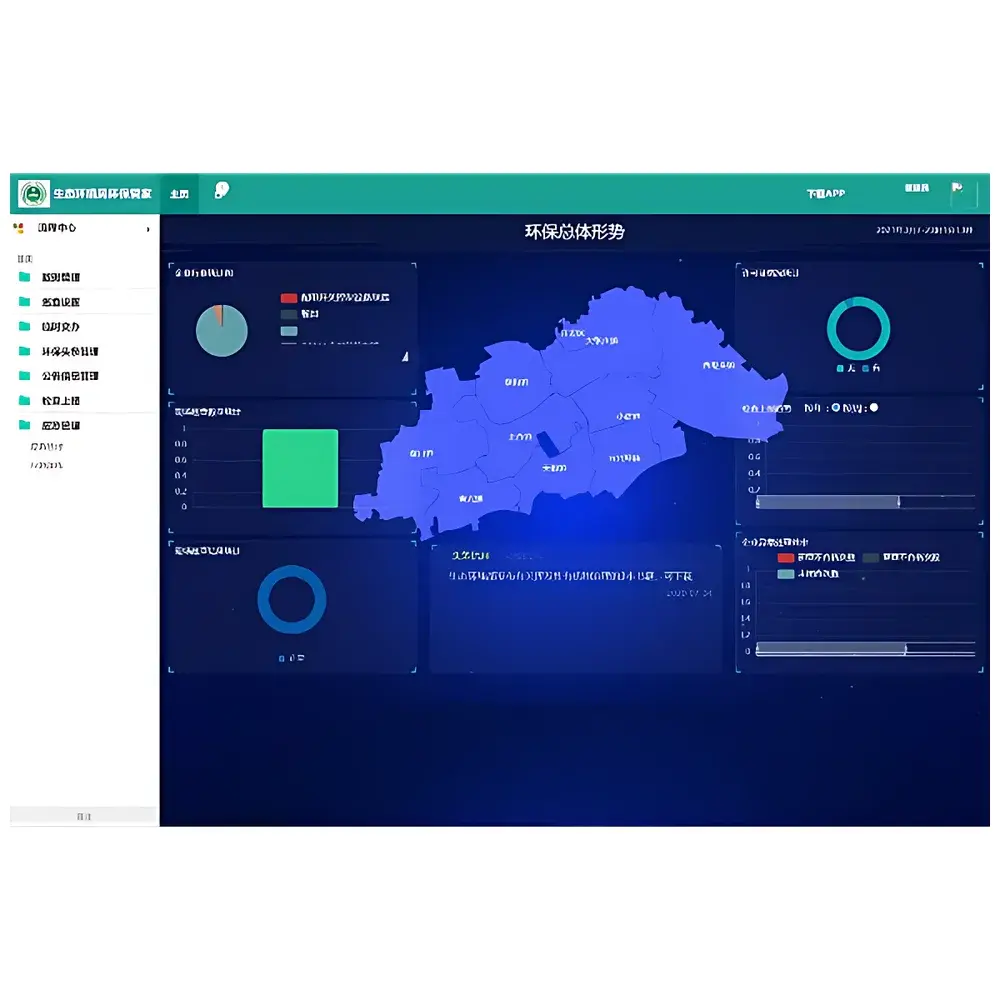
Environmental Protection Concierge Service Integrated Platform by PERIC
| Brand | PERIC |
|---|---|
| Origin | Hebei, China |
| Manufacturer Type | Direct Manufacturer |
| Regional Classification | Domestic (China) |
| Model | Customized Environmental Protection Concierge Service Integrated Platform |
| Pricing | Available Upon Request |
Overview
The Environmental Protection Concierge Service Integrated Platform by PERIC is a purpose-built digital infrastructure designed to support industrial enterprises, municipal environmental departments, and third-party environmental service providers in achieving regulatory compliance, operational transparency, and continuous improvement in environmental performance. Unlike conventional monitoring hardware or standalone consulting services, this platform integrates real-time facility status telemetry, regulatory knowledge management, workflow orchestration, and outcome-based reporting into a unified SaaS-enabled architecture. It operates on a data-centric governance model—ingesting inputs from distributed environmental monitoring instruments (e.g., CEMS, water quality analyzers, VOC sensors), facility maintenance logs, regulatory document repositories, and field inspection records—to generate actionable intelligence aligned with China’s *Environmental Protection Law*, *Measures for the Administration of Environmental Information Disclosure*, and local ecological environment bureau requirements. The system is engineered for scalability across multi-site operations and supports role-based access control (RBAC), audit-trail logging, and version-controlled policy documentation.
Key Features
- One-Enterprise-One-File Digital Archiving: Automatically constructs and maintains dynamic environmental dossiers per facility—including permits, emission inventories, monitoring reports, corrective action records, and historical compliance assessments.
- Real-Time Operation Status Monitoring: Aggregates live operational data from connected environmental protection facilities (e.g., wastewater treatment units, dust suppression systems, flue gas desulfurization installations) and analytical instruments via standardized Modbus TCP, OPC UA, or MQTT protocols.
- Regulatory Compliance Workflow Engine: Embeds jurisdiction-specific checklists for routine inspections, self-audits, and mandatory reporting cycles; triggers automated alerts for upcoming deadlines, parameter exceedances, or documentation gaps.
- Emergency Response Simulation & Drill Management: Supports scenario-based environmental incident drills (e.g., chemical spill, odor complaint escalation), tracks drill execution timelines, participant feedback, and post-drill gap analysis against GB/T 29639–2020 (Guidelines for Emergency Plan Development).
- Standardized Environmental Management Framework: Implements a modular implementation roadmap aligned with ISO 14001:2015 principles, covering environmental aspect identification, legal register maintenance, objective/KPI setting, and internal audit scheduling.
- Training & Capacity-Building Module: Delivers role-tailored e-learning content (e.g., operator SOPs, EHS officer refresher courses, regulatory update briefings), with completion tracking and assessment scoring integrated into personnel competency records.
Sample Compatibility & Compliance
The platform is protocol-agnostic and interoperable with heterogeneous instrumentation commonly deployed in Chinese industrial settings—including continuous emission monitoring systems (CEMS) compliant with HJ 75–2017 and HJ 76–2017, online water quality analyzers meeting HJ 353–2019, and noise/vibration monitors conforming to HJ 972–2018. All data ingestion, storage, and transmission processes adhere to the *Information Security Technology – Basic Requirements for Cybersecurity Level Protection 2.0* (GB/T 22239–2019). Audit logs retain full traceability for GLP-aligned internal reviews and provincial ecological environment bureau inspections. Data retention policies are configurable to meet statutory minimums under the *Regulations on Environmental Information Disclosure* and local enforcement directives.
Software & Data Management
Built on a containerized microservices architecture, the platform employs PostgreSQL for structured relational data and TimescaleDB for time-series telemetry storage. Role-based dashboards present KPIs such as “% Facilities Within Permit Limits”, “Average Time-to-Corrective-Action”, and “Regulatory Document Expiry Risk Index”. All user actions—including report generation, file uploads, and configuration changes—are logged with immutable timestamps, IP addresses, and authenticated user IDs to satisfy traceability requirements under China’s *Administrative Measures for Environmental Information Disclosure*. Exported reports comply with standard formats (PDF/A-2, Excel .xlsx) and include embedded digital signatures for integrity verification. API endpoints support integration with enterprise ERP (e.g., SAP S/4HANA), government e-platforms (e.g., National Pollutant Discharge Permit Management Information Platform), and third-party analytics tools.
Applications
- Supporting environmental departments in supervising clusters of small-to-medium enterprises (SMEs) across industrial parks through centralized oversight dashboards and risk-prioritized inspection routing.
- Enabling environmental service companies to deliver auditable, SLA-governed concierge packages—including remote diagnostics, predictive maintenance scheduling, and quarterly compliance health checks.
- Assisting multinational manufacturing facilities in harmonizing local regulatory adherence (e.g., Hebei Provincial EIA requirements) with global corporate EHS standards (e.g., ISO 14001, CDP reporting frameworks).
- Facilitating environmental impact assessment (EIA) follow-up monitoring by linking baseline study parameters to ongoing operational telemetry and generating trend analyses for cumulative effect evaluation.
FAQ
Is the platform certified for use in government-regulated environmental supervision activities?
Yes—the system architecture and data handling protocols align with technical specifications outlined in HJ 1082–2019 (*Technical Guidelines for Construction of Environmental Information Platforms*) and have been validated in pilot deployments with municipal ecological environment bureaus in Hebei Province.
Can the platform integrate with legacy environmental monitoring hardware already installed on-site?
Yes—via configurable protocol adapters supporting Modbus RTU/TCP, RS-485/232 serial interfaces, and HTTP-based RESTful APIs; custom driver development is available for proprietary instrument firmware.
Does the platform support multi-tenant deployment for environmental service providers managing multiple client accounts?
Yes—logical tenant isolation, cross-client anonymized benchmarking, and white-label branding options are included in the enterprise subscription tier.
How frequently is the regulatory rulebase updated within the platform?
Regulatory updates are synchronized biweekly via an automated feed from the Ministry of Ecology and Environment’s official gazette database, with manual override capability for jurisdiction-specific interpretations.
Related Products







