
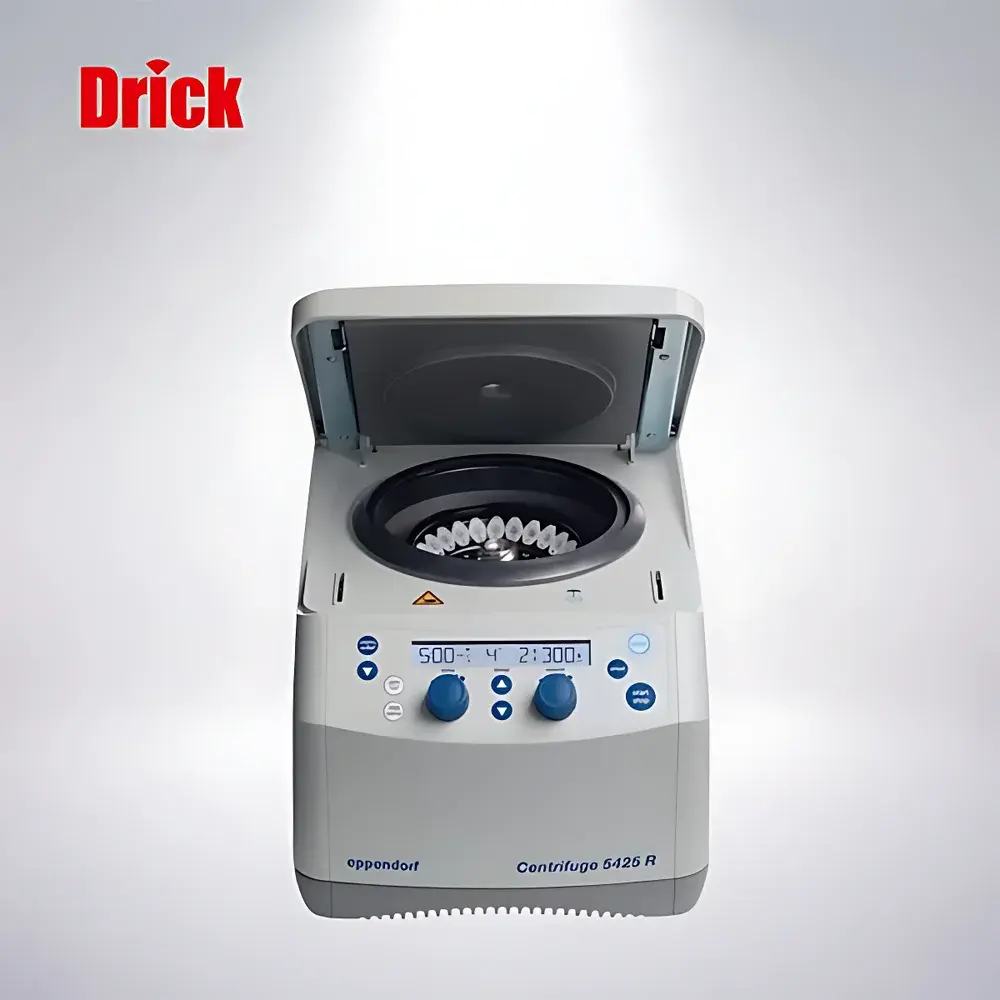
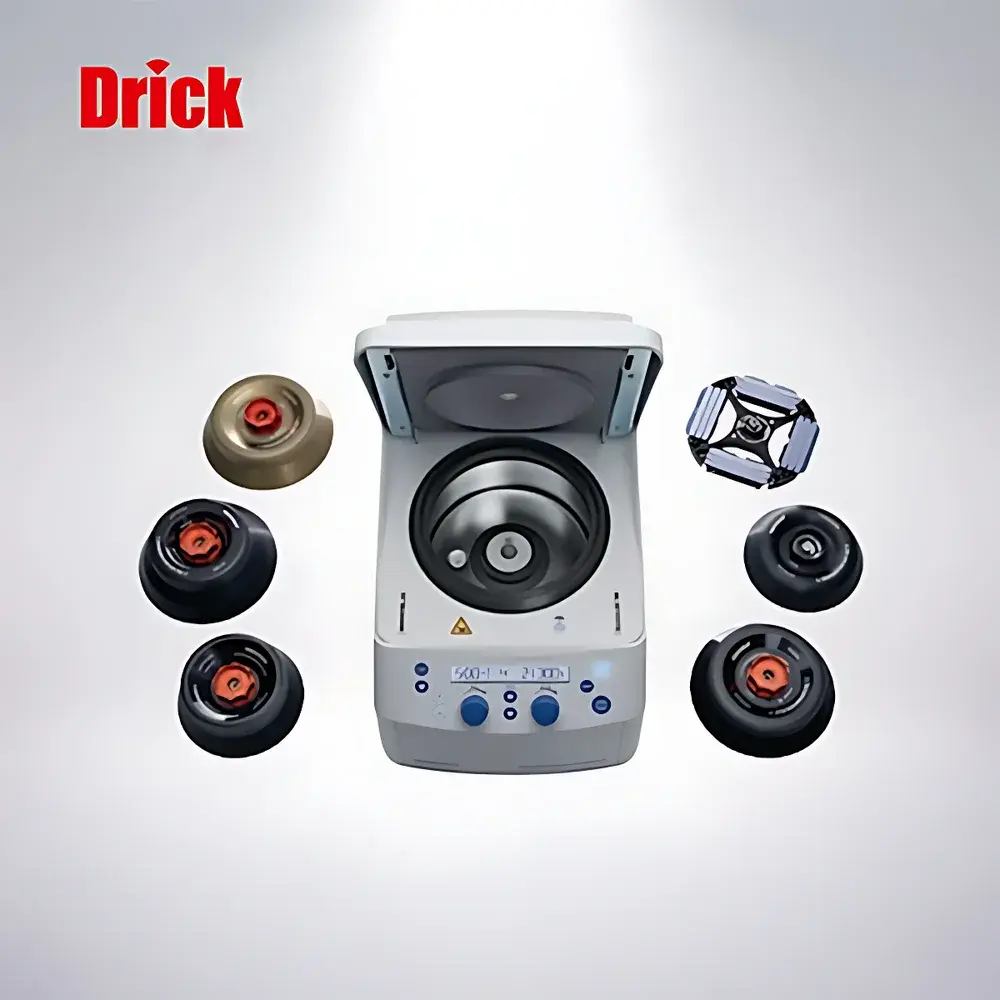
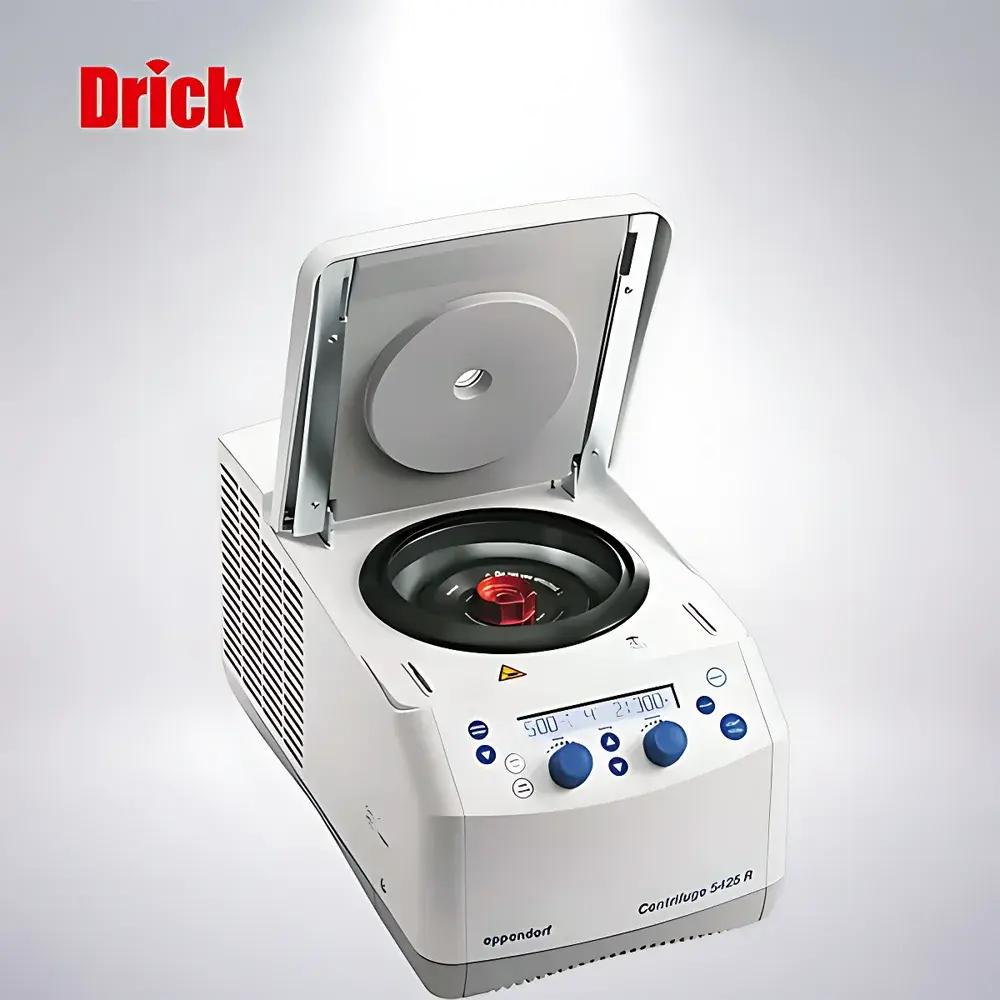
Eppendorf Centrifuge 5425 R High-Speed Refrigerated Benchtop Centrifuge with FA-24×2 Fixed-Angle Rotor
| Brand | Eppendorf |
|---|---|
| Origin | Germany (manufactured under Eppendorf quality system |
| Instrument Type | Refrigerated Benchtop Centrifuge |
| Model | Centrifuge 5425 R |
| Dimensions | 29 × 48 × 26 cm |
| Maximum RCF | 21,300 × g |
| Max Speed | 15,060 rpm |
| Temperature Range | –10 °C to +40 °C |
| Precool Time | ≤8 min (from 21 °C to 4 °C) |
| Noise Level | ≤45 dB(A) (first 12 min, with FA-24×2 rotor) |
| Timer Range | 10 s – 9 h 59 min, continuous mode supported |
| Acceleration/Deceleration | Programmable ramps (Soft Brake function with 10 profiles) |
| Display | Large backlit LCD |
| Power Supply | 230 V, 50–60 Hz |
| Max Power Consumption | 360 W |
| Net Weight | 21.0 kg |
Overview
The Eppendorf Centrifuge 5425 R is a high-performance refrigerated benchtop centrifuge engineered for precision, reproducibility, and ergonomic efficiency in molecular biology, cell culture, and clinical diagnostics laboratories. Based on the proven Centrifuge 5424 platform, the 5425 R integrates an advanced compressor-based cooling system, acoustic optimization via OptiBowl® design, and enhanced rotor compatibility—making it ideal for temperature-sensitive applications including DNA/RNA purification, plasmid isolation, PCR/qPCR setup, and small-volume microbial pelleting. It operates on the principle of sedimentation under controlled centrifugal force, where relative centrifugal force (RCF) is precisely regulated to separate particles by size, density, and shape within liquid suspensions. Its maximum RCF of 21,300 × g at 15,060 rpm ensures rapid separation of subcellular components, nucleic acids, and microorganisms without compromising sample integrity.
Key Features
- Refrigerated performance with rapid precool: Patented compressor technology enables stable temperature control from –10 °C to +40 °C; achieves 4 °C setpoint from ambient (21 °C) in ≤8 minutes—critical for preserving labile biomolecules during routine spin-down steps.
- Ultra-quiet operation: OptiBowl® acoustic enclosure and balanced rotor dynamics reduce noise to ≤45 dB(A) during initial 12-minute runs—meeting ISO 7779 and IEC 60705 standards for laboratory equipment noise emission.
- Eppendorf QuickLock® hermetic lid: Single-hand, tool-free lid closure with integrated safety interlock prevents accidental opening during operation and ensures containment compliance per IEC 61010-2-020 for centrifuge safety.
- Intelligent rotor management: Automatic rotor recognition (via embedded RFID in FA-series rotors) validates speed/temperature limits and recalls rotor-specific protocols, supporting GLP/GMP traceability requirements.
- Programmable acceleration/deceleration: Ten customizable ramp profiles—including Soft Brake—minimize resuspension of delicate pellets and protect sensitive samples such as ribonucleoprotein complexes or fragile organelles.
- Ergonomic interface: Backlit LCD display with intuitive button navigation supports glove-compatible operation; three programmable quick-access buttons store frequently used protocols for consistent workflow execution.
Sample Compatibility & Compliance
The Centrifuge 5425 R accommodates a broad range of consumables across life science workflows. Standard configuration includes the FA-24×2 fixed-angle rotor, optimized for simultaneous processing of 24 × 1.5/2.0 mL tubes or spin columns (e.g., QIAprep, NucleoSpin). Optional rotors expand capability: FA-18×2-Kit for column-based kits with lid-supporting geometry (prevents cap shearing), and FA-10×5 for 5.0 mL Eppendorf Tubes®—enabling bacterial harvesting, yeast/cell pellet formation, and large-scale plasmid prep. Adapters support 0.2 mL PCR tubes, 8-strip tubes, and split 96-well plates without rotor change. All rotors are certified to DIN EN 61010-2-020 and comply with ISO 13485 for medical device manufacturing environments. The unit meets FDA 21 CFR Part 11 requirements when paired with Eppendorf epMotion® or VisioNize Lab Suite software for electronic audit trails.
Software & Data Management
While the 5425 R operates independently via its onboard controller, it is fully compatible with Eppendorf’s VisioNize Lab Suite—a cloud-connected laboratory data platform. This integration enables remote monitoring, protocol synchronization across multiple instruments, and automated generation of electronic records compliant with ALCOA+ principles (Attributable, Legible, Contemporaneous, Original, Accurate). All run logs—including timestamp, RCF, temperature, duration, rotor ID, and user authentication—are stored locally and exportable in CSV or PDF formats. Firmware updates follow IEC 62304 Class B software lifecycle management, ensuring regulatory readiness for ISO 13485 and GxP audits.
Applications
- Routine nucleic acid purification (spin-column and precipitation-based methods)
- Microbial pelleting (E. coli, S. cerevisiae, mammalian suspension cells)
- qPCR master mix preparation and post-amplification cleanup
- Small-volume protein precipitation and desalting
- Clinical sample processing (serum separation, PBMC isolation in low-volume tubes)
- Quality control testing in biopharmaceutical labs (e.g., residual host cell DNA quantification)
FAQ
Does the Centrifuge 5425 R support rotor validation for ISO/IEC 17025 accreditation?
Yes—rotor calibration certificates, torque verification reports, and maintenance logs are available upon request and align with ISO/IEC 17025 clause 6.4.2 for equipment fitness-for-purpose assessment.
Can the FA-24×2 rotor be used for centrifuging open-top spin columns without cap damage?
Yes—the FA-24×2 rotor features a raised rim design that fully supports open column lids during high-speed rotation, eliminating cap shear—a known failure mode in MiniPrep workflows.
Is continuous operation permitted at maximum speed and minimum temperature?
Continuous operation is supported at any speed and temperature setting; however, sustained use at ≥14,000 rpm and –10 °C requires periodic thermal stabilization checks per Eppendorf Technical Bulletin TB-012.
What safety certifications does the instrument carry?
It complies with IEC 61010-1 (Safety Requirements for Electrical Equipment), IEC 61010-2-020 (Particular Requirements for Centrifuges), and carries CE, UL, and KC marks for global deployment.
How does the cooling system maintain stability during extended runs?
The dual-stage compressor with adaptive duty-cycle control modulates refrigerant flow based on real-time thermal load, maintaining ±0.5 °C accuracy at 4 °C even after 90 minutes of continuous operation with full rotor load.



