
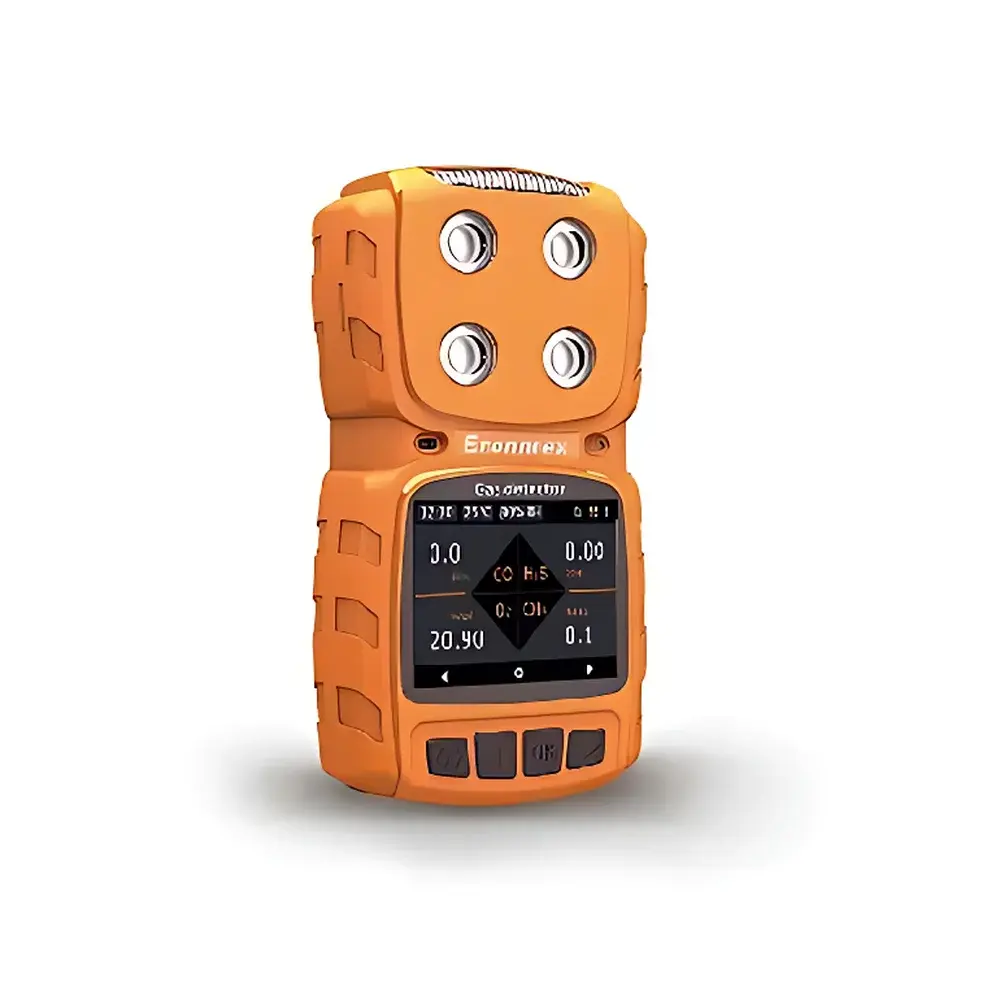
Eranntex MS104K-C8H10 Portable Xylene Gas Detector
| Brand | Eranntex |
|---|---|
| Origin | Guangdong, China |
| Manufacturer Type | OEM/ODM Producer |
| Country of Origin | China |
| Model | MS104K-C8H10 |
| Instrument Type | Portable Gas Detector |
| Detection Target | Xylene (C₈H₁₀) |
| Detection Principle | PID (Photoionization Detection), Catalytic Combustion, or Thermal Conductivity (selectable) |
| Detection Range | 0–10 ppm / 0–100 ppm (customizable) |
| Resolution | 0.01 ppm (0–100 ppm), 0.1 ppm (0–1000 ppm), 1 ppm (>1000 ppm) |
| Accuracy | ≤±3% FS |
| Response Time (T90) | ≤30 s |
| Recovery Time | ≤30 s |
| Display | 2.31″ 320×240 Color TFT Screen |
| Data Storage | 100,000 entries (real-time, timed, or alarm-triggered) |
| Power Supply | 3.7 V DC, 2100 mAh Rechargeable Polymer Battery |
| Operating Temp. | −40°C to +70°C |
| Humidity Range | 0–95% RH (non-condensing) |
| Temp. Measurement (optional) | −40°C to +70°C, ±0.5°C |
| Humidity Measurement (optional) | 0–100% RH, ±3% RH |
| Protection Rating | IP65 |
| Explosion-Proof Certification | Exia II CT4 Ga |
| Dimensions | 130 × 68 × 34 mm (L×W×H) |
| Weight | 200 g |
| Certifications | CMC (China Metrology Accreditation), GB Standard Compliance |
Overview
The Eranntex MS104K-C8H10 Portable Xylene Gas Detector is a field-deployable, multi-gas monitoring instrument engineered for precise, real-time detection of xylene (C8H10) in industrial and environmental settings. It employs photoionization detection (PID) as its primary sensing principle—optimized for aromatic hydrocarbons with ionization energies below 10.6 eV—enabling selective, low-concentration measurement down to 0.01 ppm. Optional sensor configurations support catalytic combustion (for LEL-range monitoring) or thermal conductivity (for high-concentration binary gas analysis), allowing adaptation to diverse exposure assessment requirements. Designed for occupational hygiene, leak detection, confined space entry verification, and ambient air quality screening, the MS104K-C8H10 delivers laboratory-grade repeatability in a ruggedized handheld platform compliant with intrinsic safety standards for hazardous locations.
Key Features
- Intrinsically safe design certified to Exia II CT4 Ga, suitable for Zone 0/1 hazardous areas per IEC 60079-0 and GB 3836.1–2010
- IP65-rated enclosure providing full protection against dust ingress and water splashes from any direction
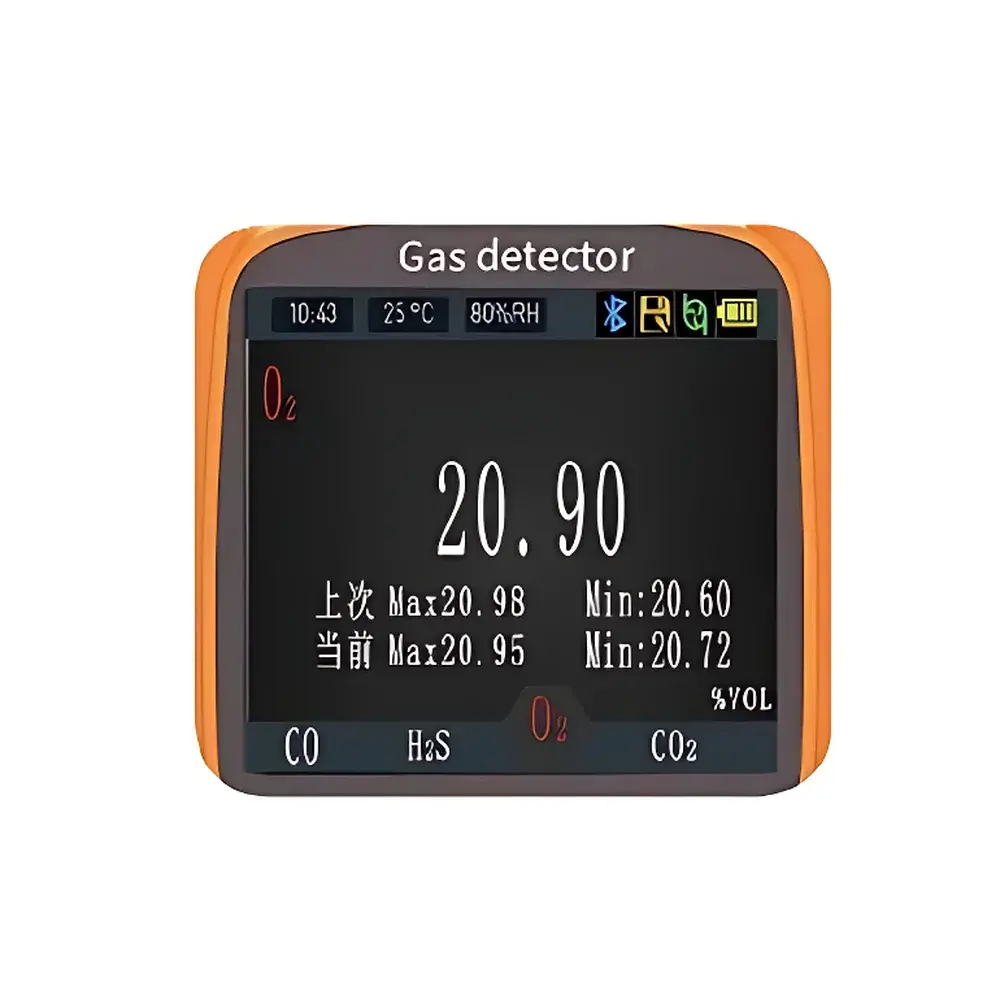
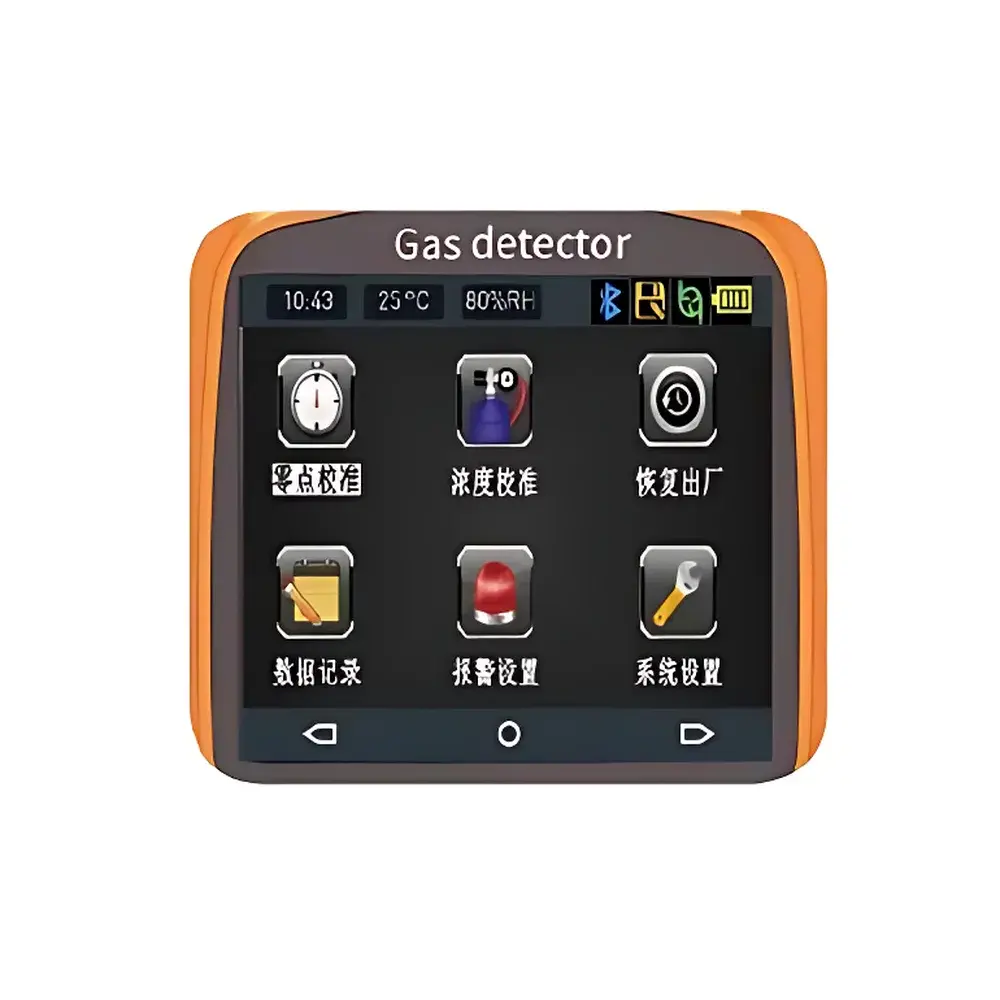
- 2.31-inch high-resolution color TFT display (320×240) with intuitive icon-based UI, supporting dual-language operation (English/Chinese)
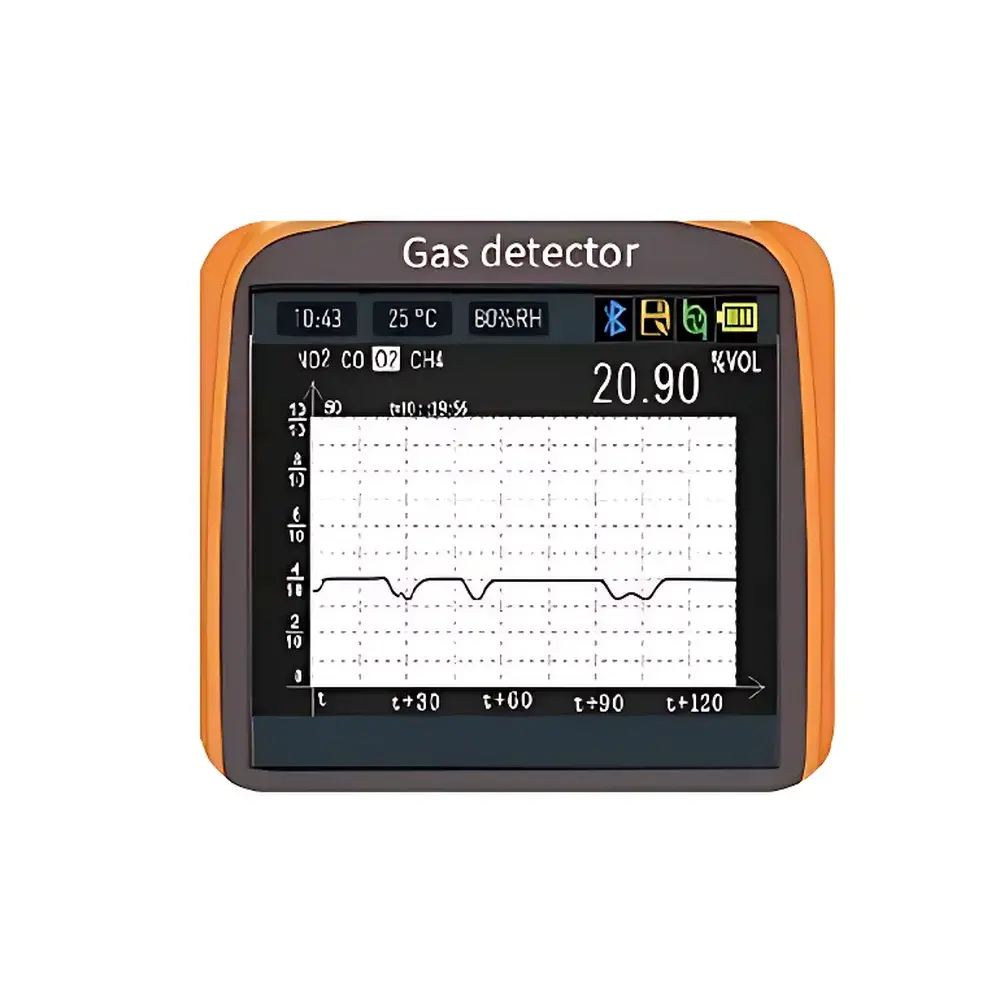
- Multi-mode display: simultaneous 4-channel concentration view, large-font single-gas cycling, or real-time trend curve visualization
- Configurable alarm logic—including low/high, TWA/STEL, and user-defined interval thresholds—with triple-alert output (audible, visual, and vibratory)
- Robust data management: 100,000-point internal storage with timestamped logging; supports on-device review, selective deletion, and USB mass-storage export for traceable reporting
- Intelligent power architecture featuring 2100 mAh lithium polymer battery, 5-level charge indicator, and comprehensive overvoltage/overcurrent/overtemperature protection
- Auto-zero tracking and multi-point calibration support with misoperation detection to prevent invalid calibration events
- Expandable functionality via optional RS485 Modbus RTU interface, external sampling pump (0.4–0.9 m stainless steel probe), and integrated temperature/humidity sensing (±0.5°C / ±3% RH)
Sample Compatibility & Compliance
The MS104K-C8H10 is validated for direct diffusion-mode sampling of ambient air and process headspace gases containing xylene isomers (ortho-, meta-, para-xylene). Its PID sensor exhibits minimal cross-sensitivity to common interferents such as methane, CO2, and water vapor—critical for reliable readings in petrochemical, pharmaceutical manufacturing, and waste treatment environments. The instrument meets China’s mandatory metrological verification requirements under CMC (China Metrology Certification) and conforms to GB/T 50493–2019 (Design Code for Detectors and Alarm Systems of Flammable and Toxic Gases in Petrochemical Enterprises). While not pre-certified to ATEX or IECEx, its Exia II CT4 Ga marking ensures compatibility with international safety management systems when deployed within harmonized risk assessments per ISO 45001 and OSHA 1910.120.
Software & Data Management
Data acquisition and post-processing are facilitated through vendor-supplied PC software compatible with Windows 10/11. The application enables spectral calibration validation, time-series graphing, statistical summary generation (min/max/avg/std dev), and customizable report templates compliant with GLP documentation practices. All stored records include immutable metadata: sensor ID, calibration date, operator tag (if entered), GPS coordinates (when paired with optional Bluetooth GNSS module), and environmental conditions (T/RH if enabled). Audit trail functionality logs all configuration changes, calibration attempts, and alarm activations—supporting regulatory readiness for FDA 21 CFR Part 11–aligned workflows where electronic records are subject to review during GMP audits.
Applications
- Occupational exposure monitoring in paint formulation, printing, adhesive manufacturing, and resin synthesis facilities
- Leak detection along piping networks, flange joints, and storage tank vents in refineries and chemical terminals
- Confined space entry pre-screening per OSHA 1910.146 and EN 13429, verifying xylene levels below 100 ppm (NIOSH REL) or 10 ppm (ACGIH TLV-TWA)
- Ambient air quality surveys near industrial clusters, landfills, and transportation corridors
- Post-remediation verification following soil vapor extraction or indoor air cleaning interventions
- Mobile QA/QC support for mobile emission testing laboratories conducting EPA Method TO-15 or ASTM D5504–22 field validations
FAQ
What detection principle does the MS104K-C8H10 use for xylene?
It primarily uses photoionization detection (PID) with a 10.6 eV UV lamp, optimized for aromatic VOCs like xylene. Catalytic combustion and thermal conductivity sensors are available as configurable alternatives.
Can the device be calibrated in the field without specialized equipment?
Yes—zero calibration is automated via ambient air exposure; span calibration requires only certified xylene standard gas and a simple two-point procedure via the onboard menu.
Is the data export format compatible with LIMS or enterprise EHS platforms?
Raw CSV files generated via USB export contain ISO 8601 timestamps, sensor IDs, and SI-unit concentrations—readily ingestible by most LIMS, SAP EHS, or Intelex deployments.
Does the instrument meet requirements for use in Class I Division 1 areas?
Its Exia II CT4 Ga rating certifies suitability for Group A–D gas atmospheres in Zone 0/1 per IEC 60079; consult local AHJ for jurisdiction-specific Division 1 equivalency rulings.
How frequently should bump testing and full calibration be performed?
Bump testing is recommended before each shift; full calibration every 30 days or after exposure to >10× full-scale concentration, consistent with OSHA 1910.120 and manufacturer service guidelines.







