ExAddon & CERES Micro/Nano-Scale Electrochemical Metal 3D Printer
| Origin | Switzerland |
|---|---|
| Manufacturer Type | Authorized Distributor |
| Origin Category | Imported |
| Model | ExAddon, CERES |
| Pricing | Available Upon Request |
Overview
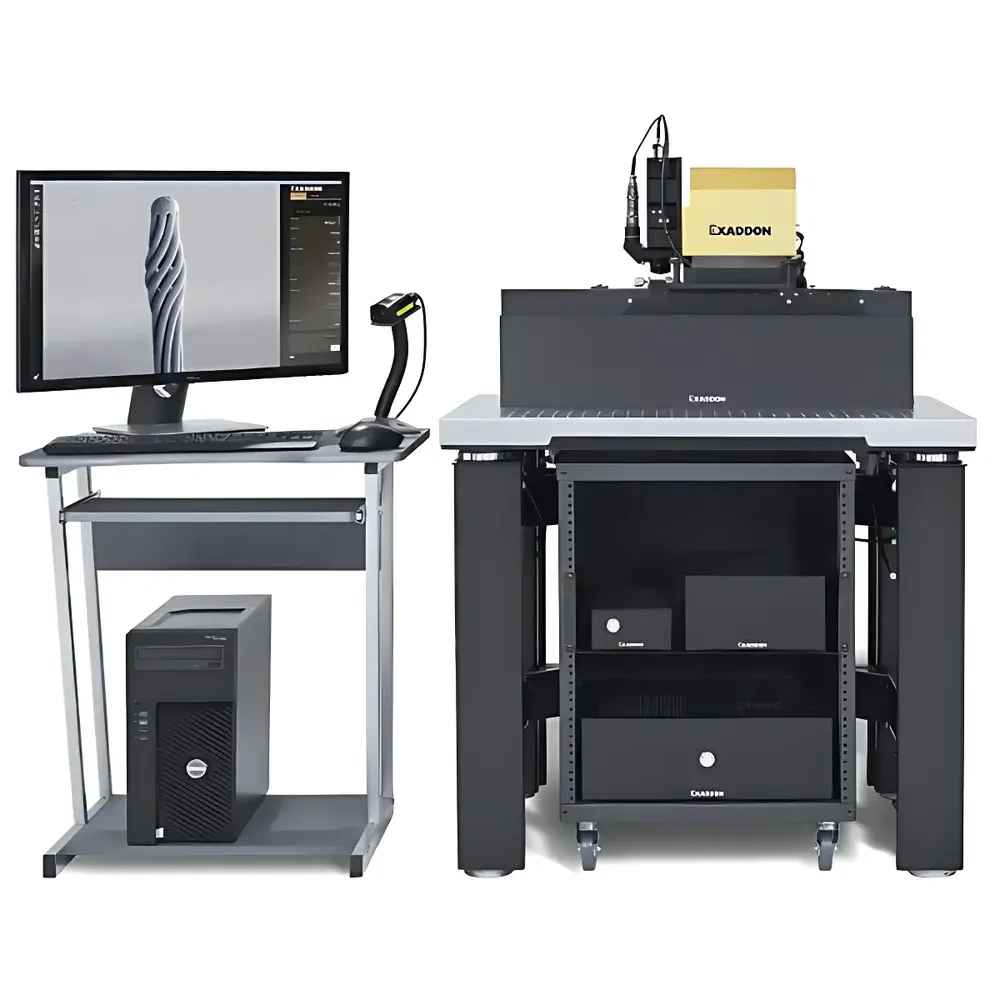
The ExAddon and CERES systems represent a class of micro- and nano-scale electrochemical additive manufacturing platforms engineered for direct-write metal fabrication at sub-micrometer resolution. Unlike conventional powder-bed or binder-jet metal 3D printing technologies, these instruments operate on the principle of localized electrochemical deposition (EC-D) — enabling true 3D metal structuring via controlled ion reduction at a scanning microelectrode tip in proximity to a conductive substrate. This technique eliminates thermal stress, phase segregation, and post-processing requirements typical of laser-based sintering or melting processes. The system achieves volumetric deposition control down to the femtoliter (fL) level, supporting deterministic growth of freestanding metallic features—including vertical overhangs up to 90°—without sacrificial support structures. Designed for integration into cleanroom-compatible lab environments, both ExAddon and CERES operate at ambient temperature and pressure, preserving substrate integrity and enabling compatibility with temperature-sensitive materials (e.g., polymers, biological scaffolds, and pre-fabricated MEMS devices).
Key Features
- Sub-micrometer spatial resolution: Capable of printing metallic 3D structures with lateral and vertical feature sizes below 500 nm, verified by SEM and AFM metrology.
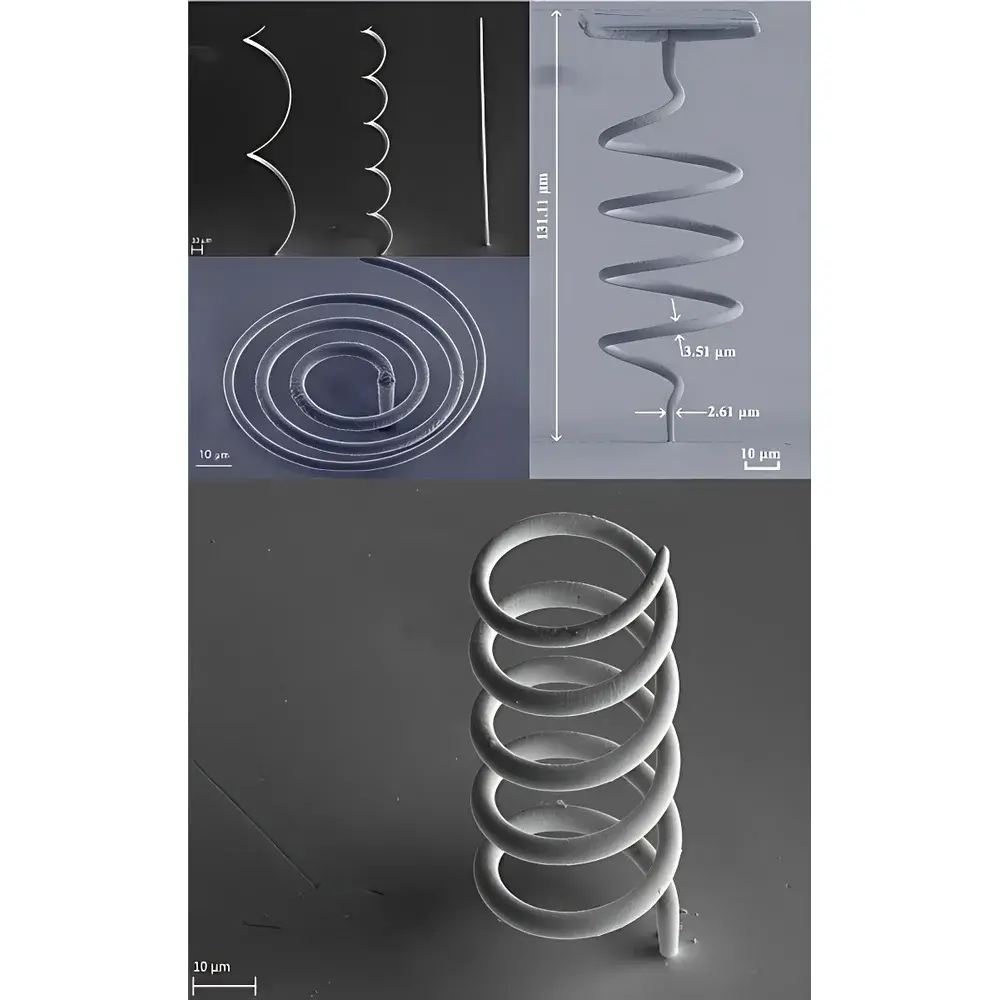
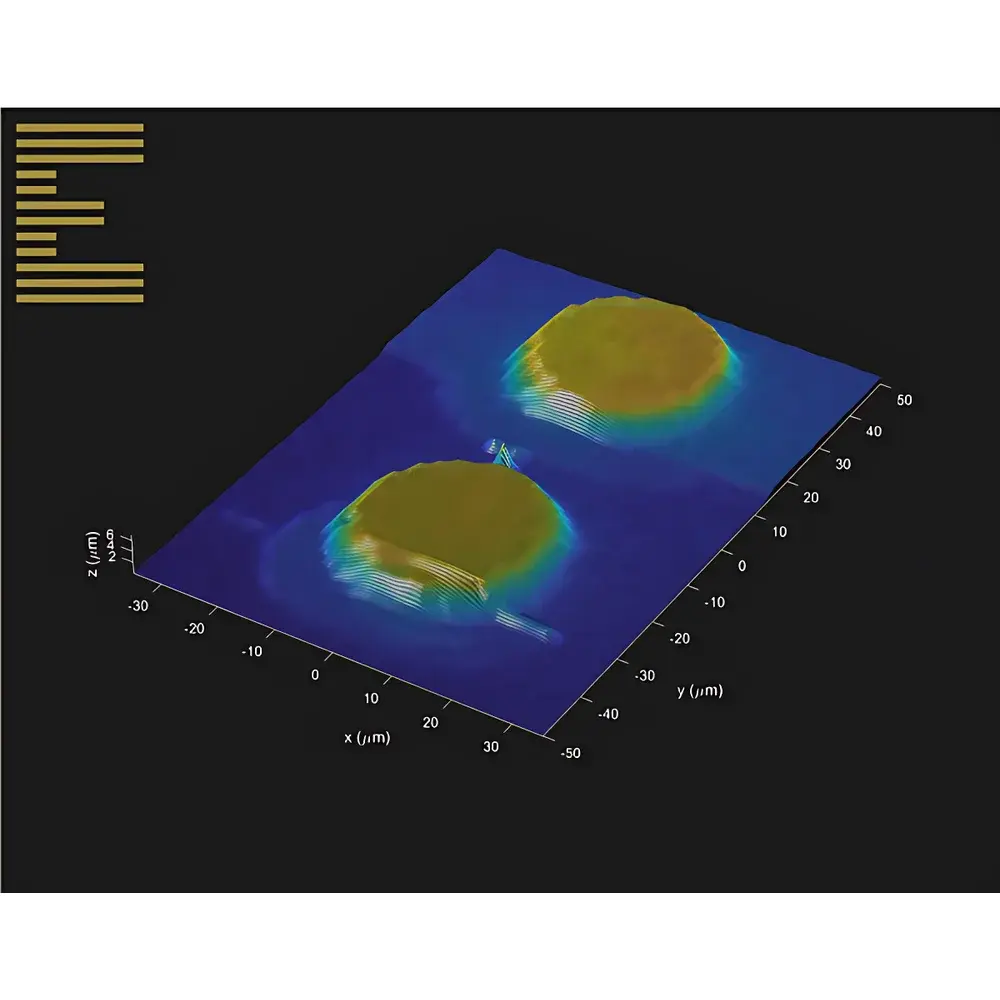
- True 3D freeform capability: Enables fabrication of cantilevers, helices, bridges, and interdigitated electrodes with ≥90° overhang angles—no support removal required.
- Femtoliter-level dispensing precision: Real-time electrochemical feedback coupled with piezo-driven nanoscale tip positioning ensures dose accuracy in the 1–10 fL range per voxel.
- Multi-material electrochemical compatibility: Native support for Cu, Ag, Pt, and Ni; additional alloy systems (e.g., CoFe, NiCo, AuAg) accessible via custom electrolyte formulation and potential waveform tuning.
- Hybrid functionality beyond 3D printing: Integrated capabilities include nanolithography (via programmed dose/scan modulation), surface functionalization, site-specific nanoparticle (≤200 nm) immobilization, and electrografting of molecular monolayers.
- Modular architecture: Interchangeable probe configurations (e.g., dual-tip for differential deposition, coaxial for multi-electrolyte delivery) and optional environmental enclosures for O₂/H₂O-controlled operation.
Sample Compatibility & Compliance
The ExAddon and CERES systems accommodate substrates ranging from silicon wafers and ITO/glass to flexible polymer films (e.g., PI, PET) and biofunctionalized surfaces. Substrate conductivity is essential for cathodic deposition, though insulating surfaces may be metallized first via seed-layer sputtering or electroless plating. All hardware and software modules comply with CE marking requirements for laboratory equipment (2014/30/EU EMC Directive and 2014/35/EU LVD). Data acquisition and instrument control firmware support audit-trail logging aligned with GLP-compliant workflows. While not certified under FDA 21 CFR Part 11 out-of-the-box, the system’s software architecture allows integration with validated electronic lab notebook (ELN) and LIMS platforms for regulated environments.
Software & Data Management
Control is executed through a Python-based graphical interface (CERES Studio) offering scripting access to all hardware parameters: tip-substrate gap, deposition potential/current, scan velocity, dwell time, and electrolyte flow rate. Predefined templates support rapid transition between nanolithography, repair, and 3D stacking modes. All experimental metadata—including electrode calibration logs, electrolyte batch IDs, and environmental sensor readings (T, RH)—are embedded in HDF5-formatted output files. Export options include G-code (for interoperability with CAD/CAM pipelines), STL (meshed reconstructions), and CSV (voxel-wise current/time series). Version-controlled firmware updates are delivered via secure HTTPS channel with SHA-256 integrity verification.
Applications
- Microelectronics: Repair of photomask defects, prototyping of THz waveguides and mmWave antennas, and fabrication of ultra-low-inductance interconnects.
- MEMS & NEMS: Direct integration of metallic actuators, sensors, and thermal management features onto released microstructures.
- Plasmonics & Metamaterials: Fabrication of chiral gold nanostructures, Fano-resonant lattices, and broadband absorbers with sub-wavelength periodicity.
- Biomedical Engineering: Printing of microneedle arrays with integrated drug reservoirs, conductive neural probes, and scaffold-integrated electrodes for electroactive tissue engineering.
- Fundamental Materials Science: In-situ mechanical testing of freestanding nanowires, grain boundary engineering via localized alloying, and electrochemical strain mapping during deposition.
FAQ
What metals can be deposited with this system?
Standard electrolytes support high-purity Cu, Ag, Pt, and Ni. Over 30 additional elements—including Co, Fe, Sn, Zn, Pd, and Au—are accessible using proprietary or user-formulated electrolytes, subject to redox stability and complexation requirements.
Is post-processing required after printing?
No thermal sintering, annealing, or chemical etching is needed. As-deposited structures exhibit bulk-like conductivity and crystallinity, confirmed by XRD and TEM analysis.
Can the system print on non-planar or curved substrates?
Yes—autofocus-enabled Z-tracking and programmable tilt compensation allow conformal deposition on substrates with radii of curvature down to 500 µm.
How is process reproducibility ensured across multiple users or labs?
Each system includes traceable calibration kits (reference electrodes, step-height standards, and certified electrolyte batches), and all deposition protocols are exportable as versioned JSON configuration files.
What maintenance is required for long-term operational stability?
Routine maintenance consists of quarterly microelectrode tip inspection/replacement, monthly electrolyte filtration, and biannual recalibration of the potentiostat and piezo positioners using NIST-traceable references.