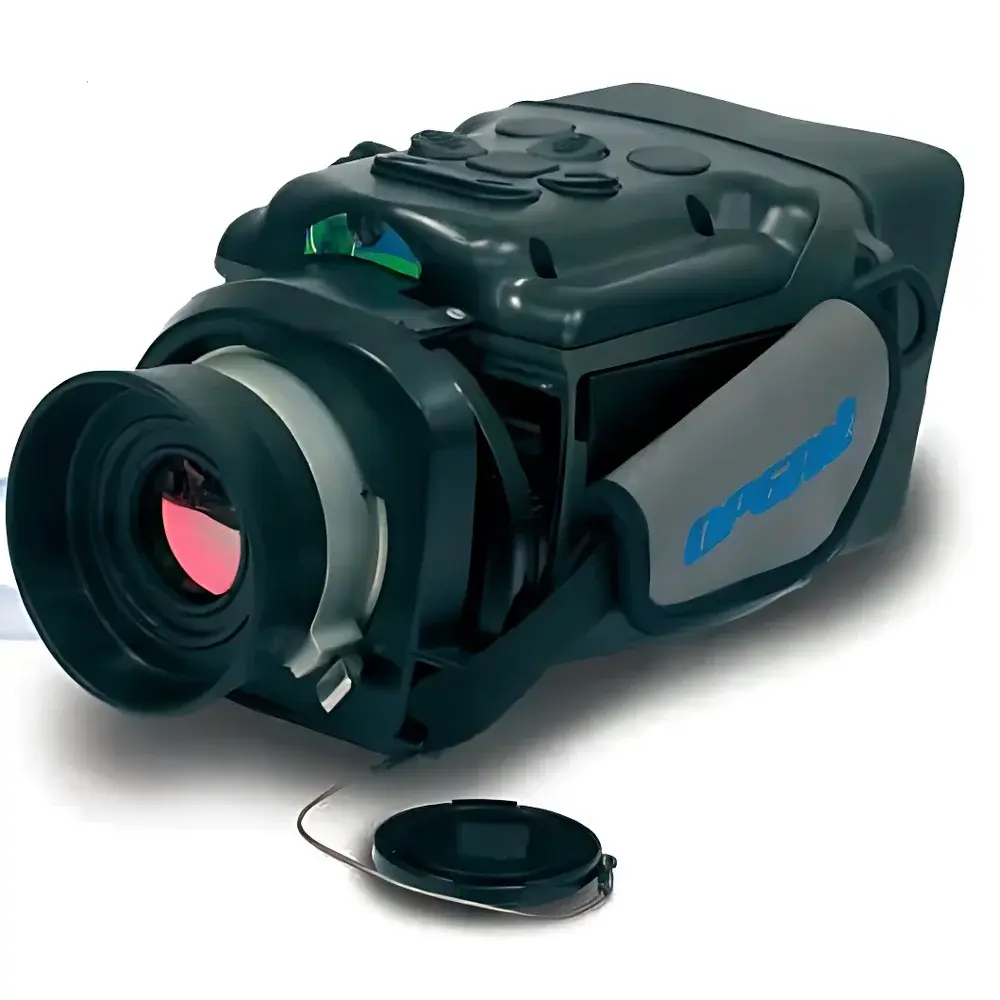
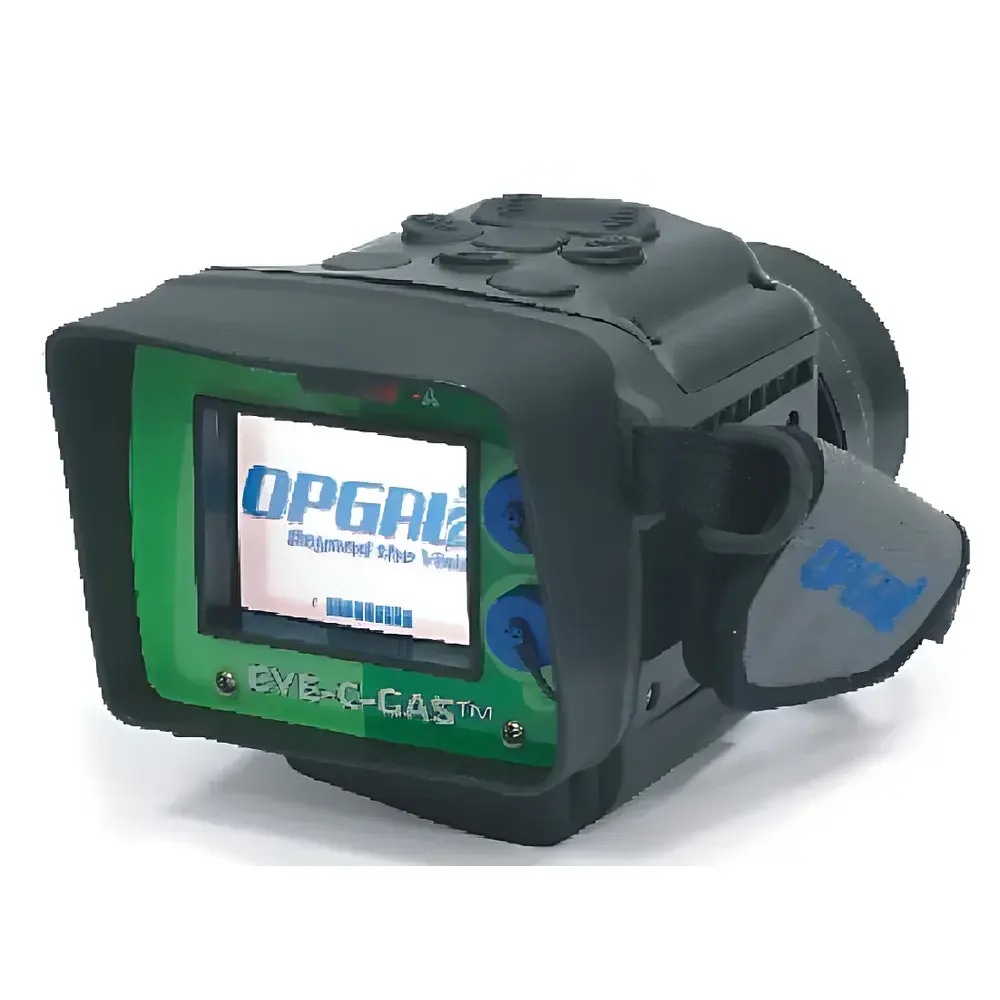
EyeCGas™ VOC Emission Monitoring Camera by OPGAL
| Origin | Israel |
|---|---|
| Manufacturer Type | Authorized Distributor |
| Origin Category | Imported |
| Model | EyeCGas™ |
| Pricing | Upon Request |
Overview
The EyeCGas™ VOC Emission Monitoring Camera, developed by OPGAL—a leading Israeli manufacturer of optical gas imaging (OGI) systems—is an intrinsically safe, portable infrared (IR) camera engineered for real-time, visual detection of volatile organic compound (VOC) leaks in industrial environments. Operating on the principle of passive optical gas imaging via cooled mid-wave infrared (MWIR) detection (3–5 µm spectral range), the system leverages spectral absorption signatures of hydrocarbons—including methane, ethane, propane, benzene, toluene, and other C1–C6 aliphatic and aromatic compounds—to render invisible gas plumes as high-contrast, moving thermal anomalies against the background scene. Designed specifically for LDAR (Leak Detection and Repair) program compliance and fugitive emission monitoring, the EyeCGas™ meets stringent operational requirements across upstream, midstream, and downstream oil & gas facilities, petrochemical plants, refineries, and chemical manufacturing sites.
Key Features
- Intrinsically safe design certified for hazardous locations: UL 1604 (Class I, II, III; Division 2), CSA C22.2 No. 213-M1987 (Class I & II, Division 2), and ATEX II 3G Ex nL IIC T6 (Zone 2/22)—enabling deployment without hot work permits or zone-specific safety escorts.
- High-sensitivity cooled MWIR detector with optimized quantum efficiency for hydrocarbon absorption bands—delivering superior minimum detectable leak rate (MDLR) performance compared to uncooled OGI systems, particularly for low-concentration, low-velocity plumes.
- Integrated 7-inch high-resolution color LCD display with real-time IR video overlay, intuitive on-screen menus, and dual-mode visualization (Standard and Enhanced Contrast modes) for rapid plume identification under variable ambient conditions.
- Built-in synchronized audio and video recording (H.264 encoded) with timestamping, GPS tagging (optional), and internal SD card storage—supporting audit-ready documentation per EPA Method 21, ASTM D7520, and ISO 16000-28 requirements.
- Ruggedized aluminum housing rated IP65 for dust and water resistance; operational temperature range: −20 °C to +50 °C; shock-tested to MIL-STD-810G for field durability.
Sample Compatibility & Compliance
The EyeCGas™ is validated for qualitative and semi-quantitative detection of gaseous VOCs and hydrocarbon vapors emitted from valves, flanges, connectors, pumps, compressors, and open-ended lines. It is not intended for quantification of absolute concentration (ppm·m) but provides reliable pass/fail assessment aligned with regulatory LDAR thresholds (e.g., ≥500 ppmv for light hydrocarbons per EPA 40 CFR Part 60, Subpart VV). The instrument complies with international standards governing gas detection instrumentation, including IEC 60079-0 (explosive atmospheres), IEC 61241-0 (dust ignition protection), and supports GLP/GMP-aligned data integrity workflows when paired with compliant reporting software.
Software & Data Management
OPGAL’s proprietary EyeCGas™ Desktop Software enables post-acquisition analysis, annotation, report generation (PDF/CSV), and integration with enterprise CMMS or environmental management systems (EMS). All recorded videos retain embedded metadata (date/time, operator ID, location, camera settings), satisfying FDA 21 CFR Part 11 and EU Annex 11 requirements for electronic records and signatures when deployed in regulated pharmaceutical or fine chemical facilities. Audit trails, user access controls, and encrypted export options are configurable to meet ISO/IEC 17025 laboratory accreditation criteria.
Applications
- Regulatory LDAR program execution per EPA, EEA, and national air quality directives
- Fugitive emission surveys during turnaround, startup, and routine maintenance
- Pre-commissioning and commissioning leak verification of piping systems and containment equipment
- Environmental compliance verification for ISO 14001-certified operations
- Process safety incident investigation and root cause analysis of unplanned releases
- Training and competency assessment for field technicians conducting OGI inspections
FAQ
Does the EyeCGas™ provide quantitative concentration measurements?
No—it delivers qualitative plume visualization and semi-quantitative leak ranking based on plume size, contrast, and dynamics. Quantitative flux estimation requires complementary methods (e.g., tracer gas correlation or enclosure techniques).
Can it detect non-hydrocarbon gases such as ammonia or hydrogen sulfide?
No—the MWIR spectral response is optimized for C–H bond absorption; detection of NH₃ or H₂S requires LWIR (8–12 µm) or tunable diode laser (TDLAS) technology.
Is calibration required before each use?
The system performs automatic non-uniformity correction (NUC) on startup and includes built-in reference sources; no user-performed radiometric calibration is needed for standard LDAR applications.
What training is recommended for operators?
OPGAL offers certified OGI operator training aligned with QAL1 (Quality Assurance Level 1) principles per EN 15267 and EPA OGI Field Certification Guidelines.
How is data integrity ensured during remote inspections?
All recordings include cryptographic hash verification, tamper-evident metadata logging, and optional secure cloud synchronization with role-based access control.