
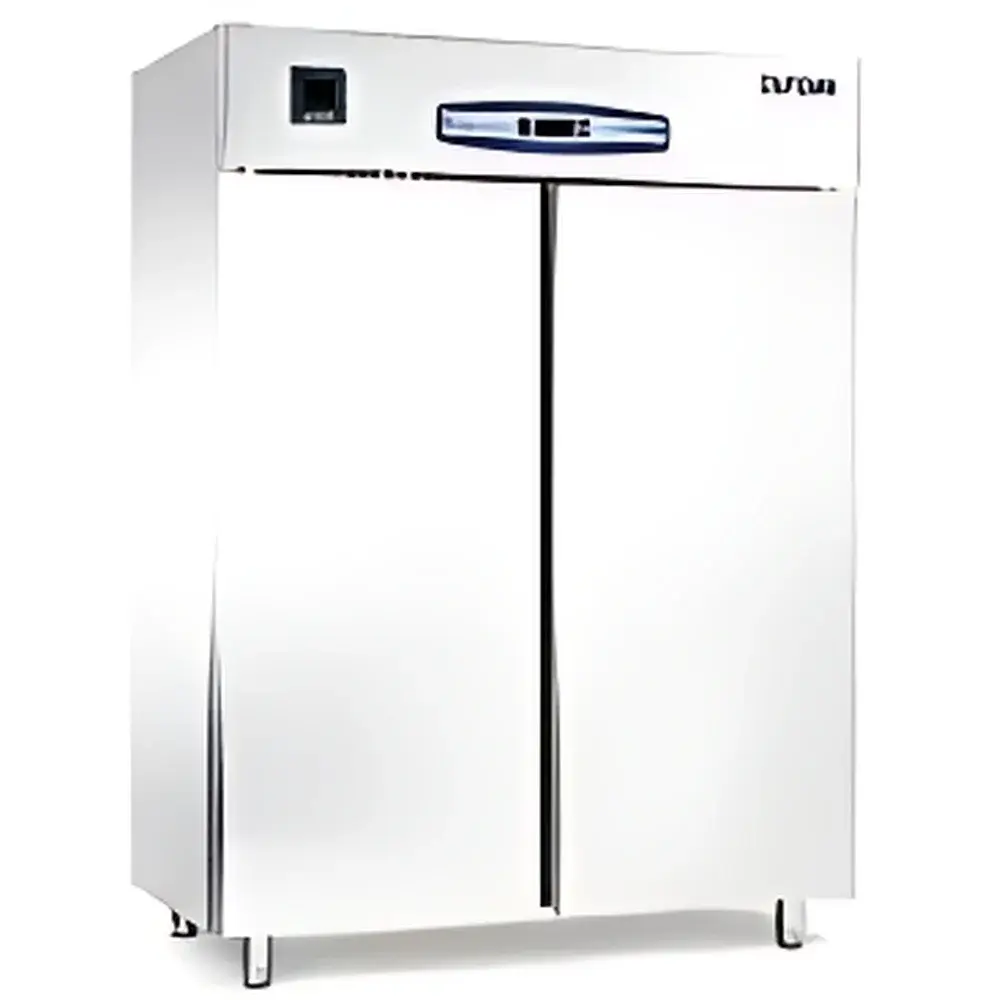
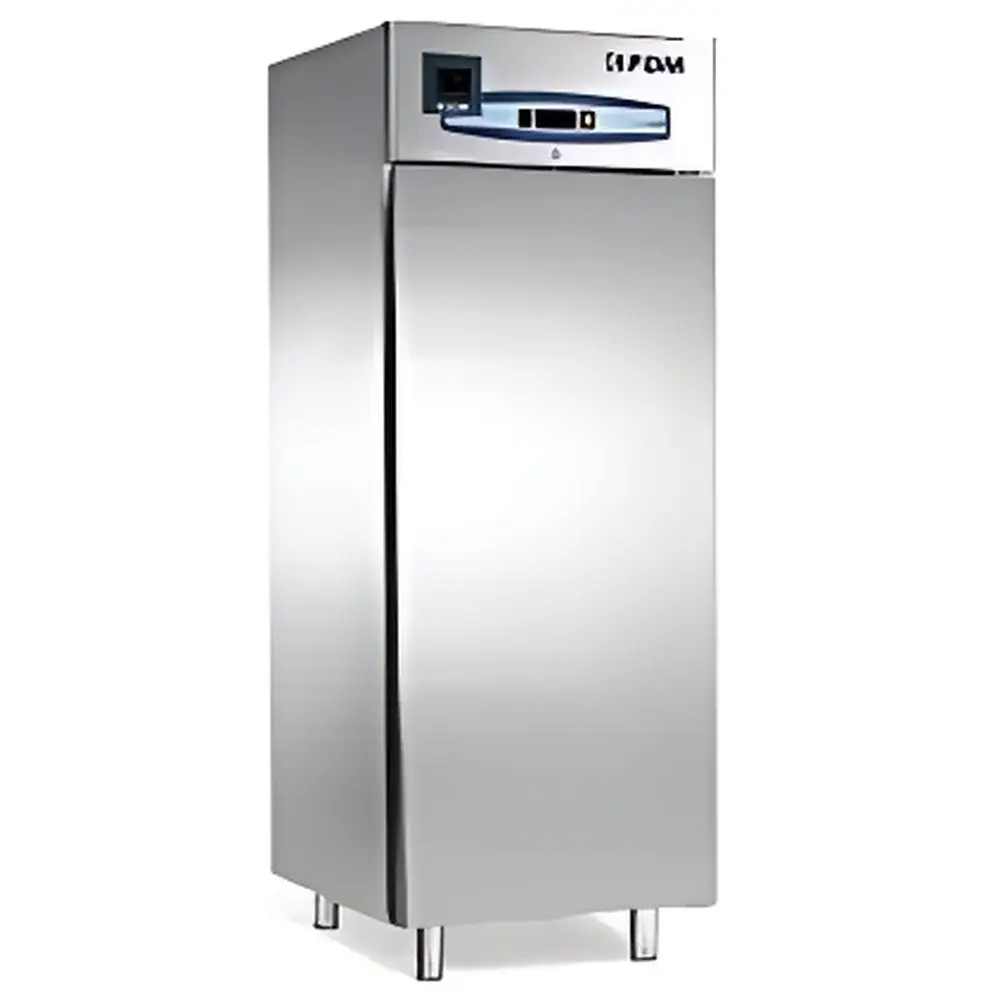
FDM C140 Plant and Animal Growth Chamber
| Origin | Italy |
|---|---|
| Manufacturer Type | Authorized Distributor |
| Origin Category | Imported |
| Model | C140 |
| Price Range | USD 6,800–13,600 (FOB) |
| Temperature Range (lamp off) | −10 °C to +50 °C |
| Temperature Range (lamp on) | −5 °C to +55 °C |
| Temperature Stability | ±0.1 °C |
| Temp. Resolution | 0.1 °C |
| Heating Rate | +1.5 °C/min (IEC 60068-3-5) |
| Cooling Rate | −1.2 °C/min (IEC 60068-3-5) |
| Illumination Range (per shelf) | 5,000–30,000 lux |
| Photosynthetic Photon Flux (PPF) | 150–280 µmol/m²·s |
| Humidity Control Range | 10–98 %RH ±1 % |
| Humidity Source | Deionized or softened water (CaCO₃ ≤ 400 ppm), supply pressure 1–10 bar |
| Chamber Volume | 140 L |
| External Dimensions (W×D×H) | 615 × 475 × 669 mm |
| Internal Dimensions (W×D×H) | 519 × 475 × 669 mm |
| Door Configuration | Single left/right-swing door with auto-closing & thermal lock (>90 °C) |
| Sealing | Magnetic gasket |
| Shelving | Adjustable steel shelves with polymer coating |
| Lighting | Independently controllable fluorescent lamps per shelf |
| Ventilation | Dual internal fans for uniform temp./RH distribution |
| Controller | Microprocessor-based, 20-step programmable cycle, real-time monitoring of setpoint/actual values |
| Safety | Password-protected limit editing, audible/visual alarms, DIN 12880 Class 1 manual-reset overtemperature cutoff |
| Insulation | CFC-/HCFC-free polyurethane foam |
| Construction | Galvanized steel with white epoxy coating or AISI 304 stainless steel option |
Overview
The FDM C140 Plant and Animal Growth Chamber is an ISO-compliant, CE-marked environmental simulation system engineered for precise control of temperature, relative humidity, and spectrally optimized illumination in life science research settings. Designed and manufactured in Italy, the C140 integrates dual-purpose functionality—supporting both animal organ culture (e.g., ex vivo tissue explants, embryoid body development) and photobiologically active plant tissue culture (e.g., callus induction, photomorphogenesis, seed germination assays). Its core measurement architecture relies on high-stability PID-controlled heating/cooling circuits, low-inertia resistive heating elements, and a forced-air convection system validated per IEC 60068-3-5 for thermal ramp fidelity. Illumination is delivered via narrow-band fluorescent tubes calibrated to replicate key regions of the solar spectrum—specifically the blue (400–500 nm) and red (600–700 nm) wavelengths critical for cryptochrome and phytochrome activation. Each adjustable shelf operates as an independent photic zone, enabling stratified light intensity profiling across multi-tier experiments.
Key Features
- Microprocessor-based controller with 20-step programmable cycles, supporting complex diurnal light/dark transitions and ramp-hold temperature profiles
- Thermally isolated chamber constructed from either epoxy-coated galvanized steel or optional AISI 304 stainless steel—compliant with GLP laboratory hygiene standards
- Dual-fan forced-air circulation ensures ±0.3 °C spatial uniformity (measured at 9 points per shelf, per ASTM E145-22)
- Magnetic door seal and auto-closing mechanism with fail-safe thermal lock (>90 °C) meet DIN 12880 Class 1 safety requirements
- Humidity regulation via low-pressure steam generator compatible with deionized or soft water (0–400 ppm CaCO₃); no external humidifier plumbing required
- Real-time monitoring interface displays simultaneous setpoint/actual values for temperature, RH, and illumination intensity
- Password-protected parameter editing with audit trail capability—supports 21 CFR Part 11–aligned data integrity workflows when integrated with validated LIMS
Sample Compatibility & Compliance
The C140 accommodates standard Petri dishes (up to 150 mm), multi-well plates (6–96-well), Magenta boxes, and tissue culture flasks (T25–T75) on its four vertically adjustable shelves. Its interior geometry (519 × 475 × 669 mm) permits unobstructed access and minimizes shadowing effects during vertical lamp configuration. Regulatory alignment includes conformity with IEC 61000-6-2 (immunity), IEC 61000-6-4 (emissions), and EN 61010-1 (safety for laboratory equipment). For GxP environments, the system supports IQ/OQ documentation packages and can be configured with optional calibration ports for third-party traceable sensor validation (NIST-traceable RTDs and capacitive RH sensors available upon request).
Software & Data Management
The embedded controller logs timestamped temperature, RH, and lamp status data at user-defined intervals (1–60 min), storing up to 30 days of continuous operation locally. Export is supported via USB flash drive in CSV format for downstream analysis in MATLAB, Python (pandas), or statistical platforms such as JMP or GraphPad Prism. Optional Ethernet connectivity enables remote monitoring through secure HTTP/S API endpoints—compatible with enterprise SCADA systems and compliant with IEEE 1394-2008 data transmission protocols. All alarm events—including out-of-spec excursions, door-open duration >60 s, and steam generator dry-run detection—are time-stamped and retained for ≥90 days, satisfying FDA 21 CFR Part 11 electronic record retention requirements when paired with qualified electronic signature modules.
Applications
- Photoperiodic studies in Arabidopsis thaliana, Oryza sativa, and Medicago truncatula under controlled PPFD gradients (150–280 µmol/m²·s)
- Ex vivo maintenance of murine hippocampal slices and human intestinal organoids requiring stable 37 °C ±0.1 °C and 95 %RH
- Seed viability testing per ISTA guidelines (e.g., Phaseolus vulgaris germination at 20/15 °C day/night with 16-h photoperiod)
- Phytochemical induction assays where UV-B supplementation (via optional lamp upgrade) modulates flavonoid biosynthesis
- Pre-clinical toxicology screening of nanomaterials on zebrafish embryos under standardized lighting per OECD TG 236
FAQ
What lighting spectra are provided by the standard fluorescent lamps?
Standard lamps emit continuous spectra peaking at 435 nm (blue) and 615 nm (red), closely matching photosynthetically active radiation (PAR) requirements for dicot and monocot species.
Can the C140 operate continuously at −10 °C with lamps ON?
No. Lamp operation reduces the minimum operational temperature to −5 °C due to radiant heat contribution; sub-zero photoperiods require lamp-off configuration.
Is humidity control active during cooling cycles?
Yes. The steam generator remains functional across the full 10–98 %RH range regardless of compressor duty cycle, verified per ISO 17025-accredited humidity uniformity mapping.
Does the system support automated logging to network drives?
Local USB export is standard; network-attached storage (NAS) integration requires optional Ethernet module and IT-administered SMB/CIFS configuration.
What calibration certificates are supplied with delivery?
Factory calibration report (temperature, RH, lux) traceable to national metrology institutes (INRIM, Italy) is included; on-site verification services available under separate service agreement.





