
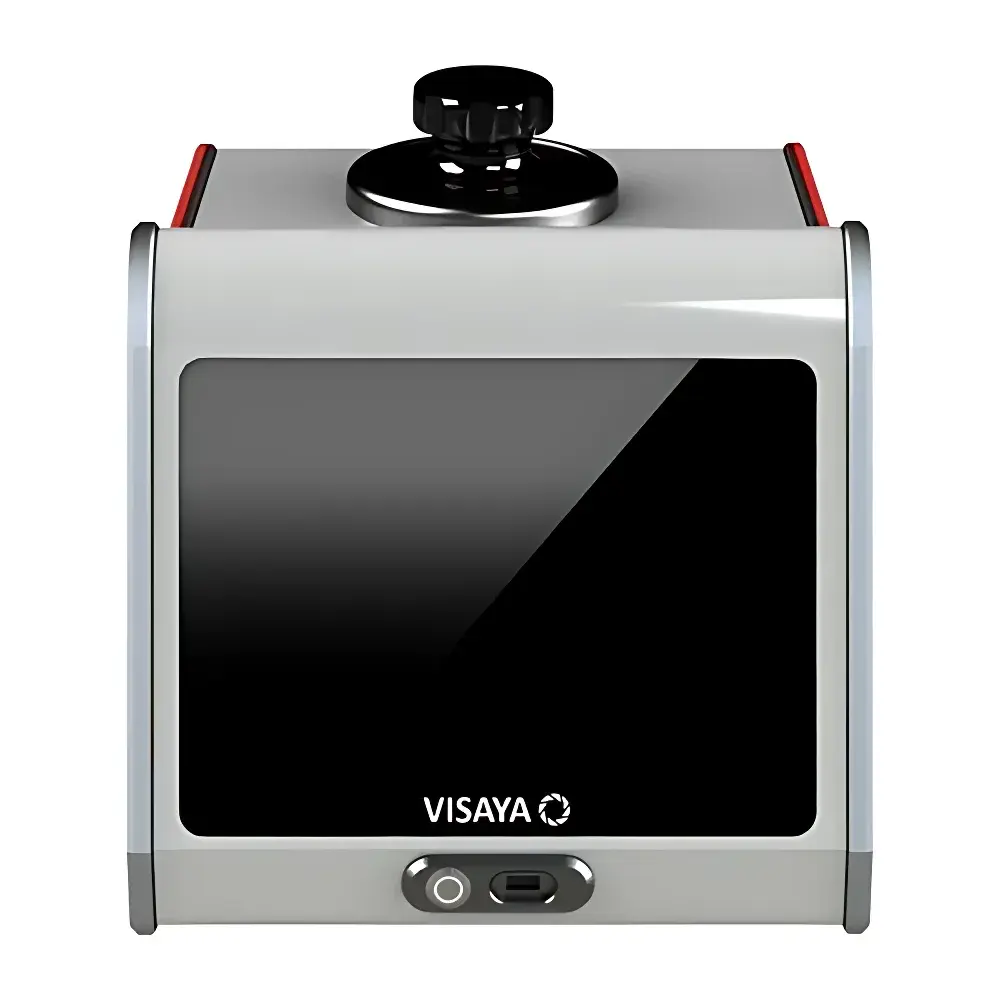
FeDDI Digital Rust Rating System for Steel Rods
| Brand | Ayalytical |
|---|---|
| Model | FeDDI |
| Origin | USA |
| Type | Automated Image-Based Corrosion Quantification Instrument |
| Compliance | ASTM D665, GB/T 11143, NACE TM-0172 |
Overview
The FeDDI Digital Rust Rating System is an automated, image-based analytical instrument engineered to objectively quantify rust formation on standardized steel test rods following immersion corrosion protocols. Unlike subjective visual assessment methods defined in ASTM D665 (Standard Test Method for Rust-Preventing Characteristics of Inhibitors in Mineral Oil), GB/T 11143 (Chinese national standard equivalent), and NACE TM-0172 (Laboratory Evaluation of Rust Inhibitive Properties of Fluids), the FeDDI system applies high-resolution digital imaging coupled with calibrated grayscale segmentation algorithms to measure the exact surface area fraction affected by corrosion products. It operates on the principle that rust morphology—particularly red-brown iron oxide/hydroxide deposits—exhibits consistent optical contrast against polished steel under controlled illumination. By capturing full-surface scans at micron-level spatial resolution and applying ISO/IEC 17025-aligned image processing routines, FeDDI delivers repeatable, operator-independent rust rating scores expressed as percentage surface coverage (0–100%) and classified per ASTM D665’s five-tier visual scale (0 to 5), with traceable digital audit trails.
Key Features
- Fully automated image acquisition: Motorized stage with precision Z-axis focus control ensures uniform lighting geometry and pixel-perfect registration across rod length (standard 3.18 mm diameter × 76.2 mm length).
- Calibrated RGB + near-infrared (NIR) dual-channel imaging: Enables differentiation between hydrated oxides (FeOOH), magnetite (Fe3O4), and non-corrosive staining or handling marks.
- Embedded calibration reference: Integrated NIST-traceable grayscale target and geometric fiducials correct for lens distortion, vignetting, and ambient light drift.
- ASTM D665/NACE TM-0172-compliant reporting engine: Generates PDF reports with annotated images, rust area heatmaps, statistical summaries (mean, SD, CV%), and direct mapping to rust rating categories (0 = no rust; 5 = heavy pitting + >50% coverage).
- Robust architecture: Industrial-grade aluminum chassis, IP54-rated enclosure, and fanless thermal management for continuous operation in QC laboratories.
Sample Compatibility & Compliance
The FeDDI system is validated for use with ASTM D665-compliant steel rods (SAE 1018, 3.18 mm ± 0.025 mm diameter, 76.2 mm ± 0.5 mm length, surface finish Ra ≤ 0.4 µm). It accepts rods pre-conditioned per ASTM D665 Section 7 (cleaning, drying, weighing) and post-test specimens removed from test fluids after 24 h ± 15 min immersion at 60 °C ± 1 °C. No sample coating, etching, or vacuum drying is required—specimens are analyzed in ambient air post-rinse. The system conforms to data integrity requirements under FDA 21 CFR Part 11 when deployed with optional networked server mode and electronic signature modules. All image metadata (EXIF, timestamp, operator ID, environmental log) is embedded and cryptographically hashed for GLP/GMP audit readiness.
Software & Data Management
FeDDI Control Suite v3.2 (Windows 10/11 64-bit) provides a validated, locked-down interface with role-based access control (Administrator, Analyst, Reviewer). Raw TIFF images (16-bit depth, 4800 dpi) are stored in AES-256 encrypted project folders alongside processed CSV datasets containing rust area (%), centroid coordinates, maximum Feret diameter, and classification confidence score. Audit logs record every user action—including parameter changes, reprocessing events, and report exports—with immutable timestamps. Optional integration with LIMS via HL7 or RESTful API enables automatic ingestion of sample IDs, test method parameters, and final ratings into enterprise quality databases. Software validation documentation (IQ/OQ/PQ protocols) and computer system validation (CSV) packages are available upon request.
Applications
- Quality control of rust inhibitors in lubricants, hydraulic fluids, and turbine oils per ASTM D665 and NACE TM-0172.
- Comparative evaluation of additive package performance during formulation development.
- Third-party certification testing for OEM specifications requiring objective rust rating evidence (e.g., Caterpillar EC-1, Komatsu KES-00001).
- Research into corrosion initiation kinetics using time-series imaging of rods exposed to variable humidity or contaminant levels.
- Training and calibration of sensory assessors by providing ground-truth reference data for visual grading exercises.
FAQ
Does FeDDI replace the entire ASTM D665 test procedure?
No—it replaces only the subjective visual rating step (Section 12). All upstream steps—including rod preparation, fluid conditioning, immersion duration/temperature, and post-test rinsing—must still be performed per ASTM D665.
Can FeDDI distinguish between rust and other surface discolorations?
Yes. Its dual-channel (RGB+NIR) imaging and spectral reflectance modeling differentiate Fe2O3/FeOOH rust from copper sulfide stains, carbon deposits, or fingerprint residues based on wavelength-dependent absorption profiles.
Is software validation included with the system?
Yes. A complete CSV package—including installation qualification (IQ), operational qualification (OQ), and performance qualification (PQ) protocols—is supplied with each FeDDI unit and updated annually per GAMP 5 guidelines.
What is the measurement uncertainty of rust area quantification?
Under controlled lab conditions (23 ± 2 °C, 50 ± 5% RH), expanded uncertainty (k=2) for rust area % is ±0.8% for coverage >5%, verified against gravimetric corrosion loss standards per ISO 9223 Annex B.
Does FeDDI support multi-rod batch analysis?
Yes. The motorized stage accommodates up to 12 rods sequentially; batch processing mode auto-names files, aggregates statistics, and generates comparative summary reports across all samples in a single run.






