
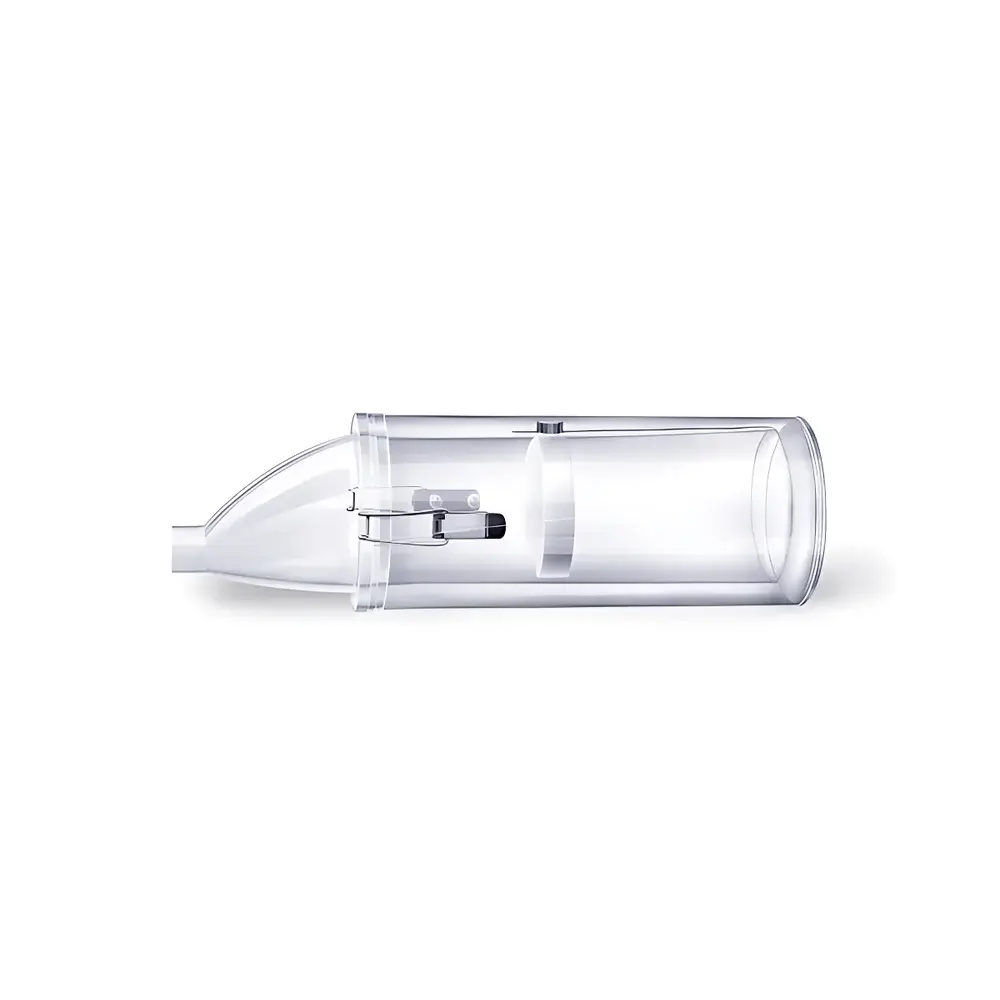
Ferret Restraint Tube
| Brand | Huironghe |
|---|---|
| Origin | Beijing, China |
| Manufacturer Type | Authorized Distributor |
| Country of Origin | China |
| Model | HRH-——— |
| Pricing | Available Upon Request |
Overview
The Ferret Restraint Tube is a purpose-engineered, non-invasive immobilization device designed specifically for safe and ethical handling of ferrets (Mustela putorius furo) during routine laboratory procedures. Unlike generic restraint methods involving manual holding or improvised enclosures, this tube operates on the principle of gentle physical containment—leveraging the animal’s natural tendency to remain motionless in confined, dark, and secure environments. It is not a sedation or anesthesia substitute, but rather a critical component of humane experimental workflow design compliant with international guidelines for the care and use of laboratory animals (e.g., NIH Guide for the Care and Use of Laboratory Animals, EU Directive 2010/63/EU, and AAALAC International standards). The device enables consistent positioning for precise administration of compounds, collection of biological samples (e.g., blood via saphenous or jugular venipuncture), ophthalmic examinations, or imaging setup—minimizing stress-induced physiological artifacts that compromise data integrity.
Key Features
- Smooth-bore, low-friction interior surface constructed from medical-grade, autoclavable acrylic or polycarbonate—ensuring durability, optical clarity, and compatibility with disinfectants including 70% ethanol and accelerated hydrogen peroxide solutions.
- Ergonomic tapered design with adjustable ventilation slots and removable end caps to accommodate ferrets across standard weight ranges (0.5–2.0 kg), supporting both juvenile and adult subjects without compression or respiratory restriction.
- Integrated handle and stable base footprint for one-handed operation and secure placement on laboratory benches or within laminar flow hoods—reducing operator fatigue and enhancing procedural repeatability.
- Opaque exterior finish to simulate burrow-like conditions, significantly lowering cortisol response compared to transparent restraint systems, as validated in peer-reviewed behavioral studies (e.g., Journal of the American Association for Laboratory Animal Science, 2021).
- Modular configuration options available—including optional integrated bite guards, tail-access ports, and compatible mounting brackets for stereotaxic alignment or microinjection platforms.
Sample Compatibility & Compliance
This restraint system is validated exclusively for ferrets and should not be used for other mustelids (e.g., minks or weasels) without prior institutional veterinary assessment. It meets structural safety criteria outlined in the Guide for the Care and Use of Laboratory Animals (NRC, 2011) regarding internal diameter (≥5.5 cm), minimum length (≥25 cm), and static load capacity (>5 kg). All materials comply with ISO 10993-5 (cytotoxicity) and ISO 10993-10 (irritation/sensitization) biocompatibility standards. Institutional Animal Care and Use Committees (IACUCs) routinely approve its use under protocols emphasizing the 3Rs—particularly Reduction (via improved procedural success rate) and Refinement (through reduced handling time and stress markers).
Software & Data Management
The Ferret Restraint Tube is a standalone mechanical device with no embedded electronics, firmware, or software interface. As such, it requires no cybersecurity validation, firmware updates, or electronic audit trails. Its use is fully compatible with GLP- and GCP-compliant workflows where manual procedure logs, video documentation (e.g., timestamped recordings of restraint duration and animal response), and IACUC-approved SOPs serve as primary data traceability mechanisms. When integrated into automated imaging or dosing platforms, the tube’s standardized dimensions allow seamless mechanical coupling without proprietary digital integration.
Applications
- Oral gavage and intraperitoneal injection with minimized risk of aspiration or needle deviation due to stabilized head and torso positioning.
- Non-terminal blood collection via lateral saphenous or cephalic vein access—facilitating serial sampling over longitudinal studies.
- Ophthalmic assessments including intraocular pressure measurement, fundoscopy, and topical drug delivery.
- MRI, CT, or ultrasound imaging where motion artifact reduction is essential for high-resolution anatomical reconstruction.
- Behavioral acclimation protocols prior to cognitive testing, enabling habituation to confinement without pharmacological intervention.
FAQ
Is this device suitable for long-term restraint?
No. Continuous restraint exceeding 15 minutes is contraindicated. Recommended maximum duration per session is 5–10 minutes, aligned with IACUC guidance on acute handling stress.
Can the tube be sterilized using ethylene oxide (EtO)?
Yes—though autoclaving at 121°C for 15 minutes is preferred for routine decontamination. EtO sterilization is acceptable when thermal sensitivity of attached accessories (e.g., silicone seals) is a concern.
Does the manufacturer provide IACUC protocol language or validation documentation?
Huironghe supplies a technical dossier including material certifications, dimensional schematics, and references to applicable regulatory frameworks—intended to support institutional protocol development and review.
Related Products



