
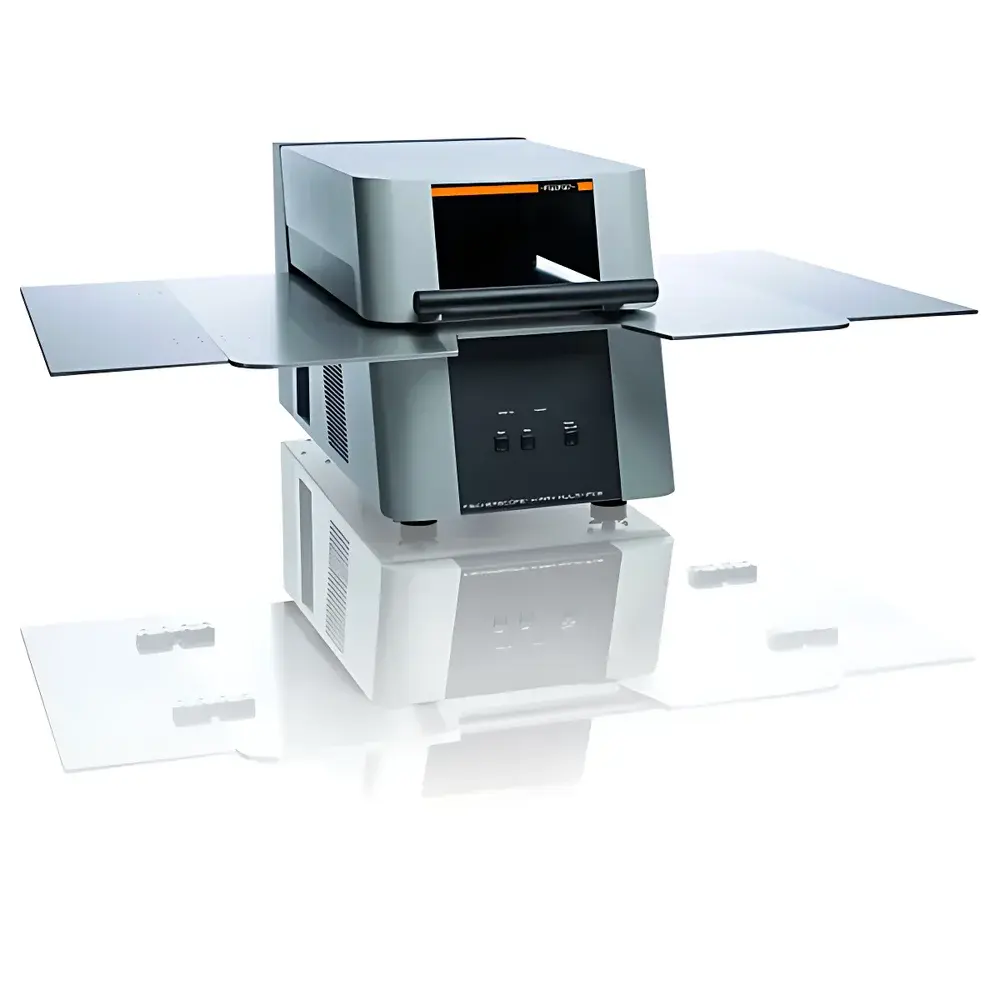
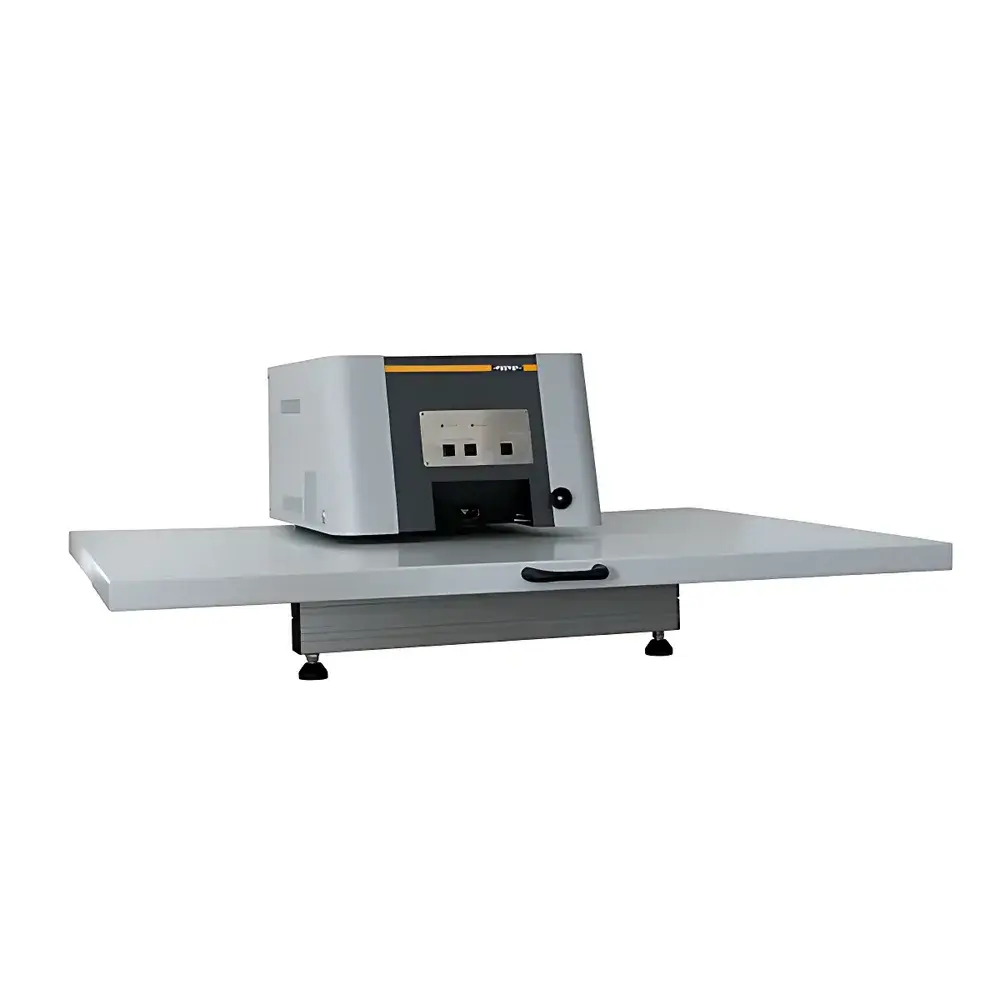
Fischer X-RAY XULM Multi-Layer Plating Thickness Analyzer for Gold and Nickel Coatings
| Origin | Germany |
|---|---|
| Manufacturer Type | Authorized Distributor |
| Origin Category | Imported |
| Model | Fischer X-RAY XULM |
| Pricing | Available Upon Request |
Overview
The Fischer X-RAY XULM is a high-precision, non-destructive X-ray fluorescence (XRF) thickness analyzer engineered for quantitative and qualitative elemental analysis of multi-layer electroplated coatings—particularly gold (Au), nickel (Ni), copper (Cu), chromium (Cr), tin (Sn), and other functional metals. Based on the fundamental principle of energy-dispersive X-ray fluorescence spectroscopy, the instrument excites characteristic X-ray emissions from atoms in the sample using a microfocus X-ray tube; emitted photons are then resolved by a silicon-based detector to determine both elemental composition and layer thickness with nanometer-scale resolution. Designed for industrial metrology in demanding production environments, the XULM delivers traceable, repeatable measurements compliant with ISO 3497, ASTM B568, and DIN 50983 standards. Its architecture supports simultaneous quantification of up to 24 elements across up to five distinct layers—enabling rigorous process control in PCB manufacturing, semiconductor packaging, decorative and functional plating lines, and precious metal refining.
Key Features
- Microfocus tungsten-target X-ray tube with beryllium window (≤50 µm focal spot), enabling high spatial resolution and minimal beam divergence for accurate small-area measurement (down to 100 µm diameter)
- Four motorized interchangeable collimators (0.05 × 0.05 mm to Ø0.3 mm) and three selectable primary beam filters for optimized excitation conditions across diverse coating systems (e.g., Au/Ni/Cu/Fe or Sn/Cu/Brass)
- Proportional counter (PC) detector with high count-rate capability (>50 kcps), optimized for routine plating thickness verification in electroplating baths and finished components
- Fully integrated calibration management: pre-loaded reference standards for common stack configurations (e.g., Ni over Cu on steel, Au over Ni on PCB pads); user-definable calibrations traceable to NIST SRMs
- Motorized XYZ stage with integrated HD optical microscope (20× magnification) and auto-focus functionality for precise positioning of irregular or miniaturized samples (e.g., connector pins, SMT pads, MEMS contacts)
- Rugged industrial enclosure rated IP54, designed for continuous operation in factory-floor environments with ambient temperature stability ±1°C and humidity control <70% RH non-condensing
Sample Compatibility & Compliance
The XULM accommodates flat, curved, and slightly textured substrates up to Ø150 mm × 50 mm height, including rigid PCBs, flexible circuits, stamped metal parts, jewelry components, and semiconductor leadframes. It supports both bottom-up (C-frame) and top-down (open-chamber) measurement geometries depending on sample accessibility and fixture requirements. All measurement protocols adhere to ISO/IEC 17025–accredited laboratory practices when operated under documented SOPs. Data integrity meets FDA 21 CFR Part 11 requirements via built-in audit trail, electronic signature support, and role-based access control. Analytical reports include uncertainty budgets calculated per GUM (Guide to the Expression of Uncertainty in Measurement) principles, referencing certified reference materials (CRMs) such as NIST SRM 2135a (Au/Ni/Cu multilayer) and BAM CRM 100a (Sn/Cu).
Software & Data Management
Fischer’s FISCHERSCOPE® WinFTM® v3.5 software provides unified workflow control—from method setup and real-time spectral acquisition to multi-layer deconvolution, statistical process monitoring (SPC), and automated reporting. The software implements fundamental parameter (FP) algorithms validated against international interlaboratory comparisons (e.g., EURAMET 1212). Batch measurement routines support programmable sequences across multiple locations, with pass/fail thresholds configurable per layer and element. Export formats include CSV, XML, PDF, and direct OPC UA integration for MES/SCADA connectivity. All raw spectra and processing parameters are archived with time-stamped metadata, satisfying GLP/GMP documentation requirements for regulated industries.
Applications
- Quantitative thickness verification of immersion gold (ENIG), electroless nickel (ENEPIG), and hard gold plating on PCB surface finishes
- In-line monitoring of Ni underlayer thickness beneath Au flash in semiconductor wire-bond pads
- Composition analysis of Au-Ni-Pd alloys used in high-reliability connectors and RF shielding components
- Process bath chemistry validation via electrolyte sampling (e.g., Au concentration in potassium gold cyanide baths)
- Failure analysis of delamination or interdiffusion in multi-layer stacks (e.g., Cr/Ni/Cu on ABS plastic)
- Compliance screening for restricted substances (e.g., Pb, Cd, Cr⁶⁺) in RoHS-compliant plating systems
FAQ
What is the minimum measurable thickness for a gold layer on nickel?
For a typical Au/Ni/Cu/Fe stack measured under optimized conditions (microfocus tube, Ø0.1 mm collimator, 30 kV excitation), the detection limit for Au is approximately 0.5 nm at 95% confidence (k=2), assuming uniform deposition and surface roughness < Ra 0.1 µm.
Can the XULM analyze light elements such as sulfur or phosphorus in nickel-phosphorus (Ni-P) deposits?
No—the standard configuration uses a Be-window tube and PC detector, limiting reliable detection to elements with Z ≥ 13 (Al). For P (Z=15) or S (Z=16), performance is marginal; for full light-element capability (Na–F), vacuum-compatible models like the XDV-Vacuum are required.
Is calibration transfer possible between different Fischer X-RAY instruments?
Yes—WinFTM supports method migration via standardized .ftm files, provided identical hardware configurations (tube type, detector, collimator set) are used; cross-platform transfer requires re-validation using traceable CRMs.
Does the system support automated pass/fail decision logic for inline quality gates?
Yes—user-defined tolerance bands per layer can trigger visual alerts, audible signals, and digital I/O outputs compatible with PLC-controlled sorting systems.
What maintenance intervals are recommended for long-term accuracy?
Annual recalibration of high-voltage supply and detector gain is advised; quarterly verification using certified reference foils (e.g., Fischer’s Au/Ni check standards) ensures ongoing measurement consistency per ISO 9001 clause 7.1.5.



