
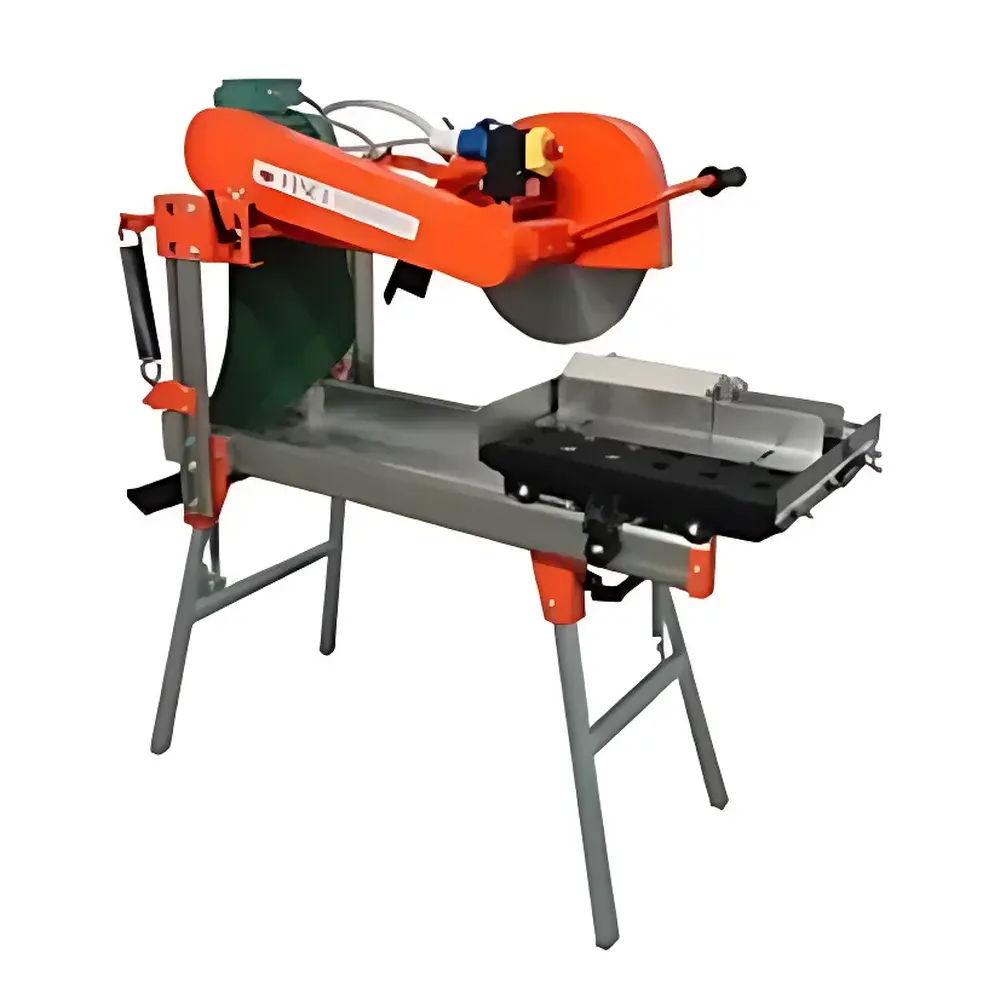
FLOXLAB RSS 400 Precision Rock Sample Cutting Machine
| Brand | FLOXLAB |
|---|---|
| Origin | France |
| Model | RSS 400 |
| Saw Blade Diameter | 400 mm (16 in) or 500 mm (20 in) |
| Max Cutting Depth | 125 mm (5 in) or 150 mm (6 in) |
| Max Sample Length | 300 mm |
| Cooling Medium | Water (standard), Optional Oil |
| Weight | 100 kg |
| Dimensions | 50 × 30 × 25 cm |
| Power Supply | 220 V, 50–60 Hz |
Overview
The FLOXLAB RSS 400 is a benchtop precision rock sample cutting machine engineered for reproducible, low-damage sectioning of geological, ceramic, and composite specimens in laboratory and core analysis environments. It operates on the principle of controlled abrasive cutting using diamond-impregnated circular saw blades rotating at regulated speeds under continuous liquid cooling. Unlike high-speed grinding or thermal ablation methods, this wet-cutting approach minimizes microfracturing, heat-induced phase alteration, and edge chipping—critical for preserving structural integrity prior to petrographic microscopy, X-ray diffraction (XRD), or scanning electron microscopy (SEM) preparation. Designed for compliance with ISO 14688-1 (geotechnical investigation) and ASTM D5079 (core specimen preparation), the RSS 400 supports standardized sample geometry generation across sedimentology, mining QA/QC, and materials research workflows.
Key Features
- Interchangeable blade mounting system accommodating both 400 mm (16 in) and 500 mm (20 in) diamond saw blades, enabling optimization between fine-sectioning resolution and bulk material removal rate.
- Adjustable vertical feed mechanism with micrometer-scale depth control (±0.1 mm repeatability), ensuring consistent slice thickness for serial sectioning applications.
- Dual-mode coolant delivery: programmable water-based circulation (standard) with optional oil-cooling interface for heat-sensitive or hydrophilic samples requiring non-aqueous thermal management.
- Integrated splash guard and sealed motor housing rated IP54, meeting IEC 60529 requirements for dust and water ingress protection in shared lab environments.
- Stainless-steel sample clamping vise with T-slot base and adjustable angular stops (0°–90° in 5° increments), supporting planar, oblique, and orthogonal cuts without re-fixturing.
- Brushless AC induction motor delivering stable torque across 1,200–2,800 rpm range, coupled with electromagnetic braking for rapid, vibration-free blade stoppage.
Sample Compatibility & Compliance
The RSS 400 accommodates heterogeneous geological matrices including basalt, granite, shale, sandstone, and cemented sediments, as well as sintered ceramics, refractory bricks, and polymer-matrix composites. Maximum sample dimensions (300 mm length × 150 mm width × 150 mm height) align with standard core logging trays and thin-section mounting frames. All mechanical and electrical subsystems conform to CE marking directives (2014/30/EU EMC Directive, 2014/35/EU Low Voltage Directive) and are validated per EN 61000-6-2 (immunity) and EN 61000-6-4 (emission). Optional documentation packages include Factory Acceptance Test (FAT) reports and traceable calibration certificates compliant with ISO/IEC 17025-accredited metrology practices.
Software & Data Management
While the RSS 400 operates via analog/manual controls for operational robustness and regulatory simplicity, it integrates seamlessly into digital lab infrastructures through optional RS-232 and USB-C data ports. These interfaces support bidirectional communication with LIMS platforms (e.g., LabVantage, Thermo Fisher SampleManager) for automated logging of cut parameters—including timestamp, blade ID, coolant temperature, and cumulative runtime—enabling full audit trails required under GLP and GMP frameworks. Firmware updates are delivered via signed binary packages verified against SHA-256 checksums, satisfying FDA 21 CFR Part 11 electronic record integrity requirements.
Applications
- Petrographic thin-section preparation for optical mineralogy and cathodoluminescence mapping.
- Core plug extraction from drill cores in petroleum reservoir characterization studies.
- Sectioning of hardened concrete or asphalt specimens for air void analysis per ASTM C457.
- Manufacturing QA of refractory linings and turbine blade substrates prior to metallographic evaluation.
- Archaeometric sampling of lithic artifacts with minimal surface degradation.
- Preparation of certified reference materials (CRMs) for inter-laboratory proficiency testing programs.
FAQ
What blade types are compatible with the RSS 400?
Standard configuration supports segmented or continuous-rim diamond blades with ISO 22810-compliant arbor dimensions (32 mm bore, M14 thread). Custom blades with kerf widths from 0.8 mm to 2.2 mm may be installed following torque verification per manufacturer specifications.
Is the machine suitable for cutting metallic alloys?
Yes—when equipped with metal-bonded diamond blades and oil-based coolant; however, ferrous alloy cutting requires additional dust extraction per OSHA 1910.1000 silica exposure limits and is not recommended without local exhaust ventilation.
Can cutting parameters be logged for regulatory audits?
Yes—via optional serial/USB interface and companion software module that records operator ID, cut sequence, coolant flow rate, and blade rotation history with cryptographic time-stamping.
Does the RSS 400 require compressed air or external vacuum systems?
No—it operates as a self-contained unit; only electrical supply and coolant reservoir filling are required for standard operation.
What maintenance intervals are recommended?
Daily coolant level and blade tension checks; biweekly inspection of vise jaw wear and belt tension; annual motor bearing lubrication and encoder calibration by FLOXLAB-certified service engineers.



