

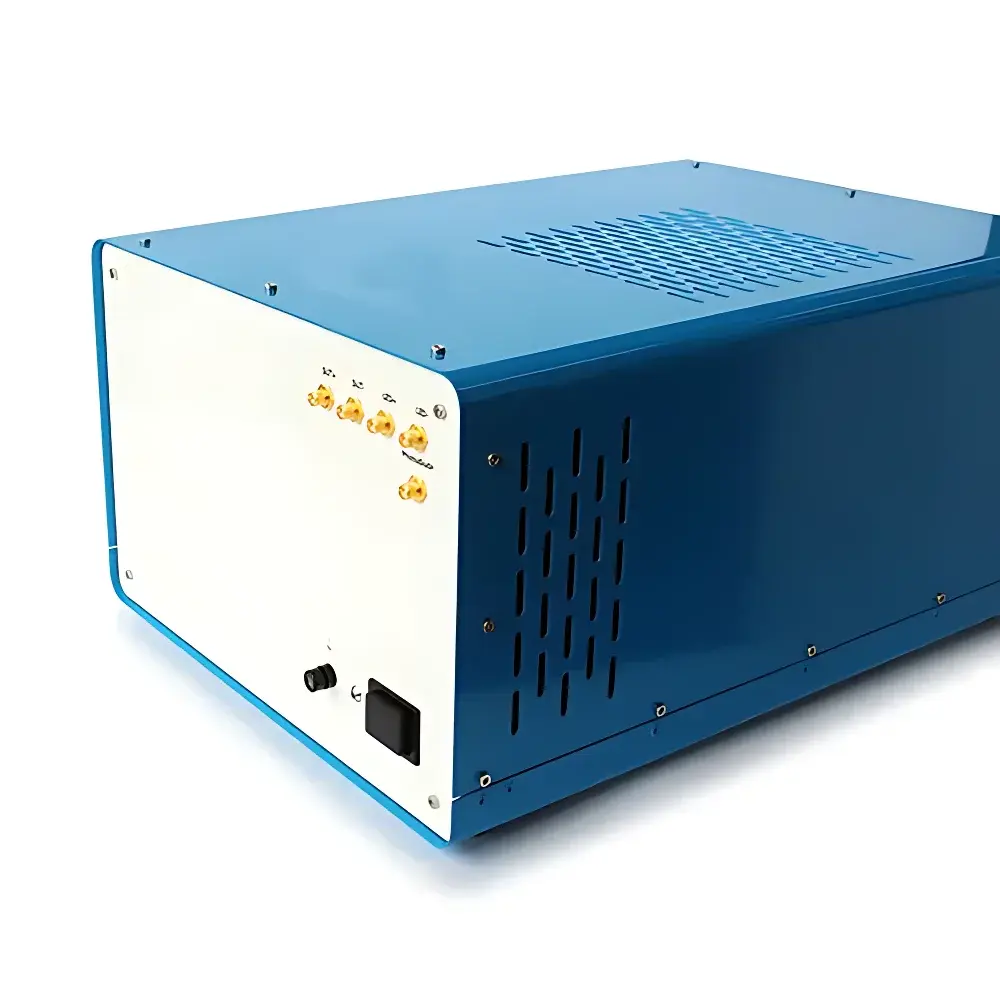
Fluxim PTC-TPV Transient Photocarrier Characterization System
| Brand | Fluxim |
|---|---|
| Origin | Switzerland |
| Model | PTC-TPV |
| Sampling Rate | 60 MS/s |
| Time Resolution | 18 ns |
| Frequency Range | 10 mHz – 10 MHz |
| Current Resolution | < 100 pA |
| LED Rise Time | 100 ns |
| Current Range | ±100 mA |
| Voltage Range | ±12 V |
| Optional Modules | Solar Cell & OLED Dual Configuration, Multi-Wavelength LED Source (360–1100 nm), Cryogenic/Heated Stage (−120 °C to +150 °C), Integrated Spectrometer, SMU Extension (±60 V, 1 pA current resolution) |
Overview
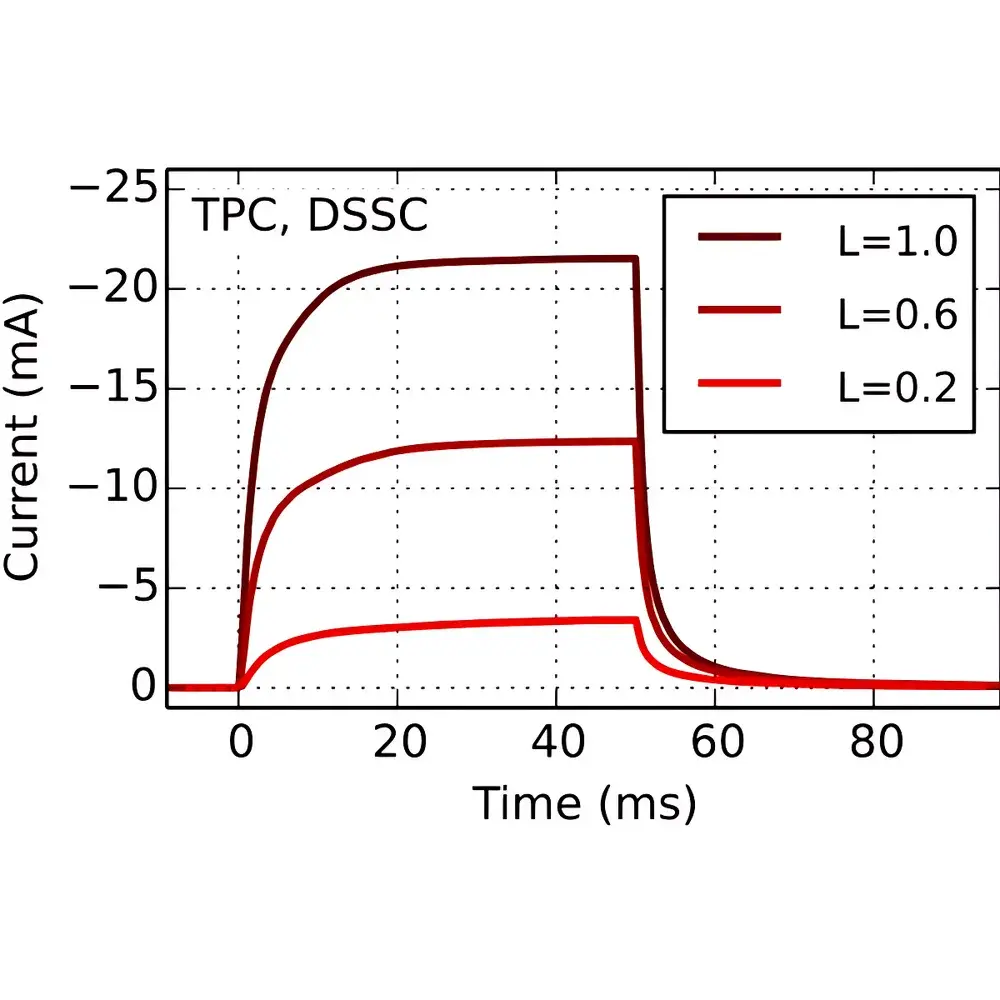
The Fluxim PTC-TPV Transient Photocarrier Characterization System is a research-grade, modular instrumentation platform engineered for quantitative, time-resolved analysis of charge carrier dynamics in optoelectronic thin-film devices. Based on time-domain transient photocurrent (TPC), transient photovoltage (TPV), and frequency-domain techniques—including intensity-modulated photocurrent spectroscopy (IMPS) and intensity-modulated photovoltage spectroscopy (IMVS)—the system enables direct extraction of fundamental semiconductor parameters under operational bias conditions. Its architecture implements high-fidelity analog signal acquisition with 60 MS/s sampling and 18 ns temporal resolution, enabling unambiguous discrimination of sub-microsecond carrier transport, recombination, trapping, and extraction processes. Designed specifically for perovskite solar cells (PSCs), organic photovoltaics (OPVs), quantum dot devices, dye-sensitized solar cells (DSSCs), CIGS/CdTe absorbers, and light-emitting architectures (OLEDs, PeLEDs, LECs), the PTC-TPV supports both steady-state and dynamic characterization in compliance with ISO 18597, ASTM F2848, and IEC 61215-2 MQT 18 testing frameworks.
Key Features
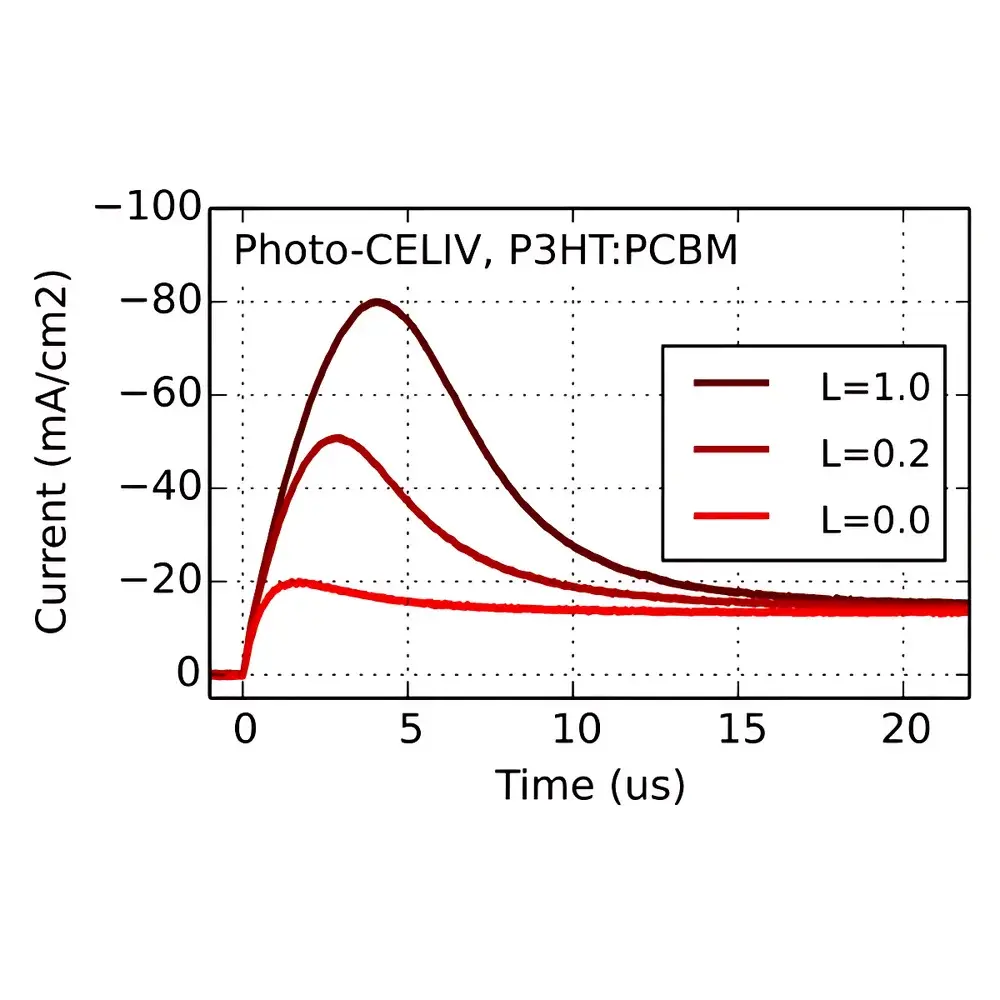
- Multi-modal transient measurement suite: TPC, TPV, IMPS, IMVS, Dark-CELIV, Photo-CELIV, Delaytime-CELIV, Injection-CELIV, MIS-CELIV, DLTS, C–V, C–f, impedance spectroscopy, and transient electroluminescence (TEL)
- Simultaneous dual-channel high-speed digitization (60 MS/s, 18 ns resolution) with synchronized optical excitation (LED rise time ≤ 100 ns)
- Programmable voltage/current stimulus generation (±12 V / ±100 mA standard; extendable to ±60 V / 1 pA resolution via SMU module)
- Multi-wavelength LED source (360–1100 nm) supporting external quantum efficiency (EQE) calibration and spectral response mapping
- Integrated cryo-thermal stage option (−120 °C to +150 °C) for temperature-dependent kinetics studies and trap activation energy determination
- Modular configuration: field-upgradable from solar cell–optimized to OLED/PeLED–optimized operation via software-defined measurement protocols
Sample Compatibility & Compliance
The PTC-TPV accommodates standard device geometries including glass/ITO/PEDOT:PSS/active layer/MoO₃/Ag, inverted OPV stacks, planar and mesoscopic perovskite architectures, and small-molecule or polymer OLED test structures. All measurement modes adhere to GLP-compliant data acquisition protocols, with full audit trail logging, timestamped metadata embedding (bias history, illumination intensity, ambient temperature), and optional 21 CFR Part 11–compliant electronic signature support. Device-specific calibration routines align with ISO/IEC 17025 traceability requirements for carrier mobility (via SCLC and CELIV), lifetime (via TPV decay fitting), and trap density (via DLTS and thermal admittance spectroscopy).
Software & Data Management
Fluxim’s proprietary PTC-Analysis Suite provides model-based parameter extraction using physics-informed fitting engines—e.g., distributed RC network models for impedance spectra, Shockley–Read–Hall recombination kinetics for TPV decay, and drift-diffusion simulations for CELIV transients. Raw data are stored in HDF5 format with embedded experimental context (pulse width, delay, modulation frequency, DC bias). Batch processing supports statistical comparison across sample sets, while export modules generate publication-ready plots compliant with IEEE and ACS formatting standards. All algorithms undergo periodic validation against NIST-traceable reference devices and inter-laboratory round-robin datasets.
Applications
- Quantification of carrier mobility and energetic disorder in perovskite absorbers using SCLC and Photo-CELIV
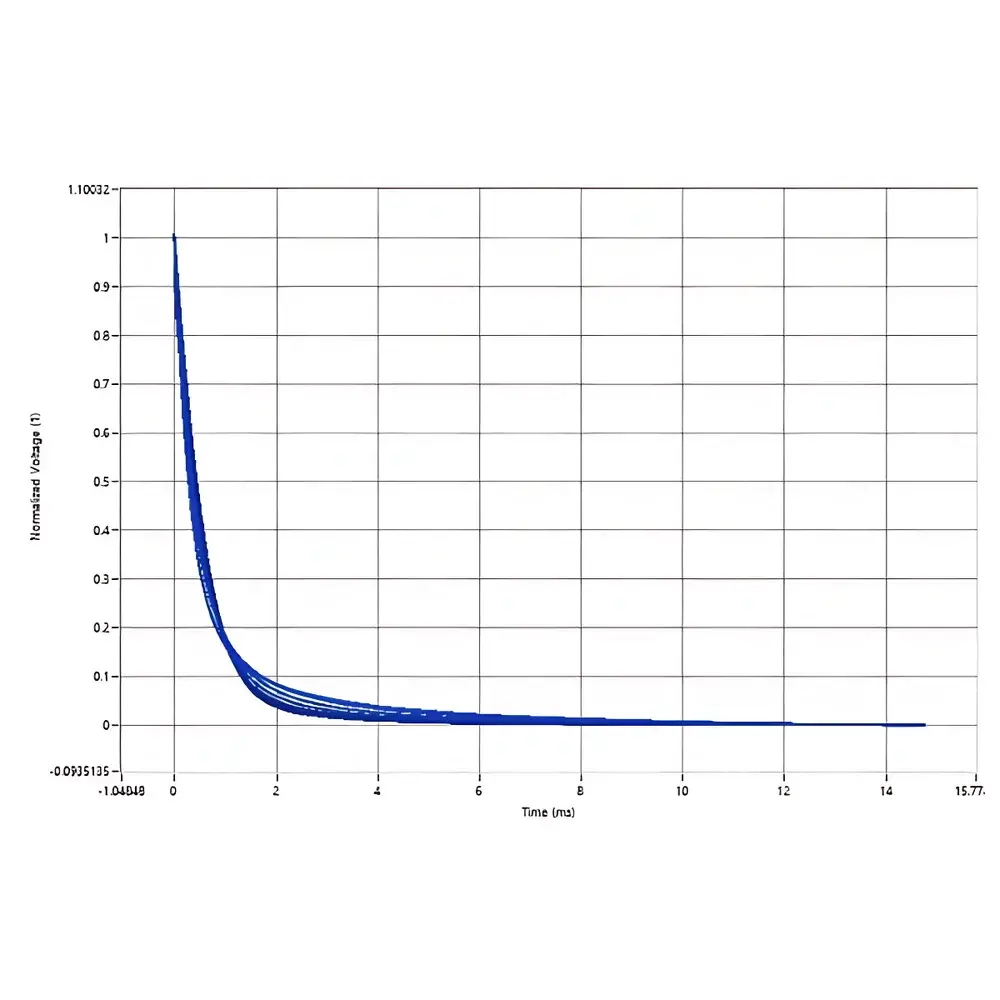
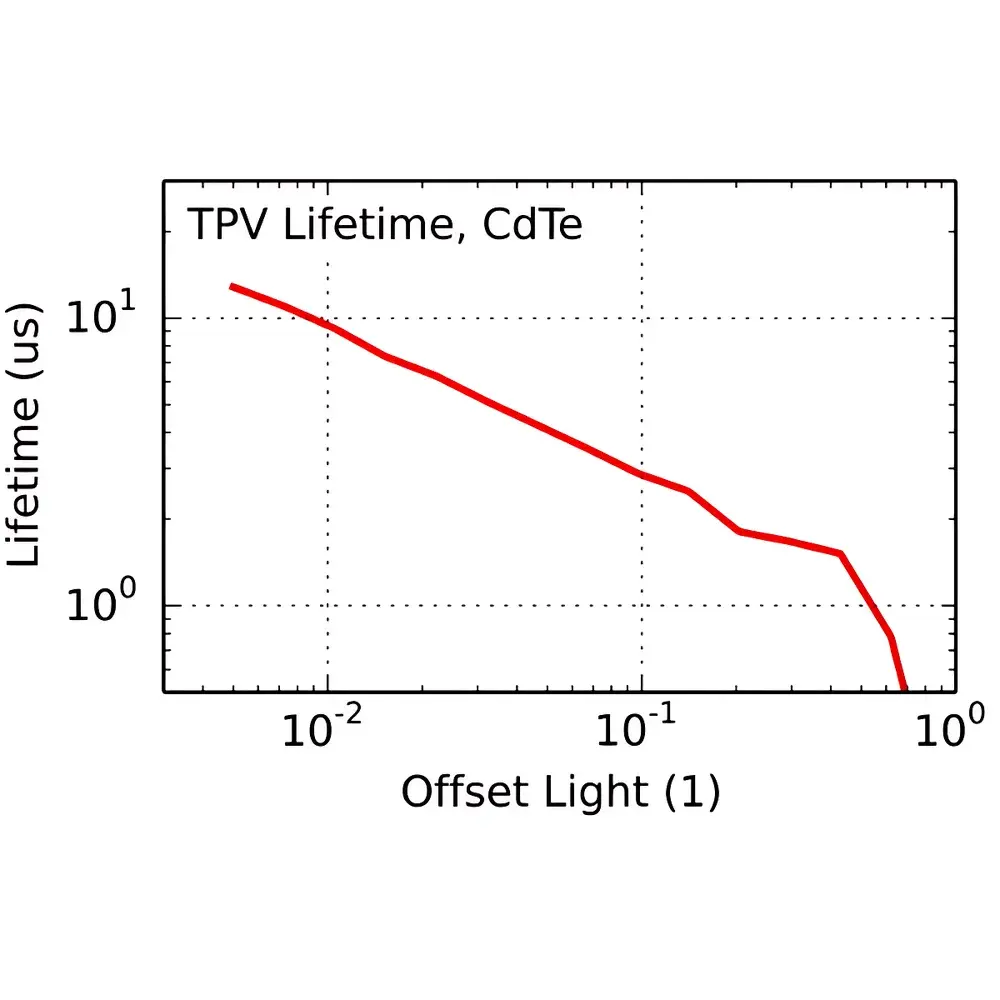
- Discrimination of monomolecular vs. bimolecular recombination pathways via TPV amplitude and decay time constants
- Trap depth and density profiling in mixed-halide perovskites using variable-temperature DLTS and Delaytime-CELIV
- Interface recombination velocity estimation at ETL/perovskite and HTL/perovskite junctions via IMVS-derived τrec maps
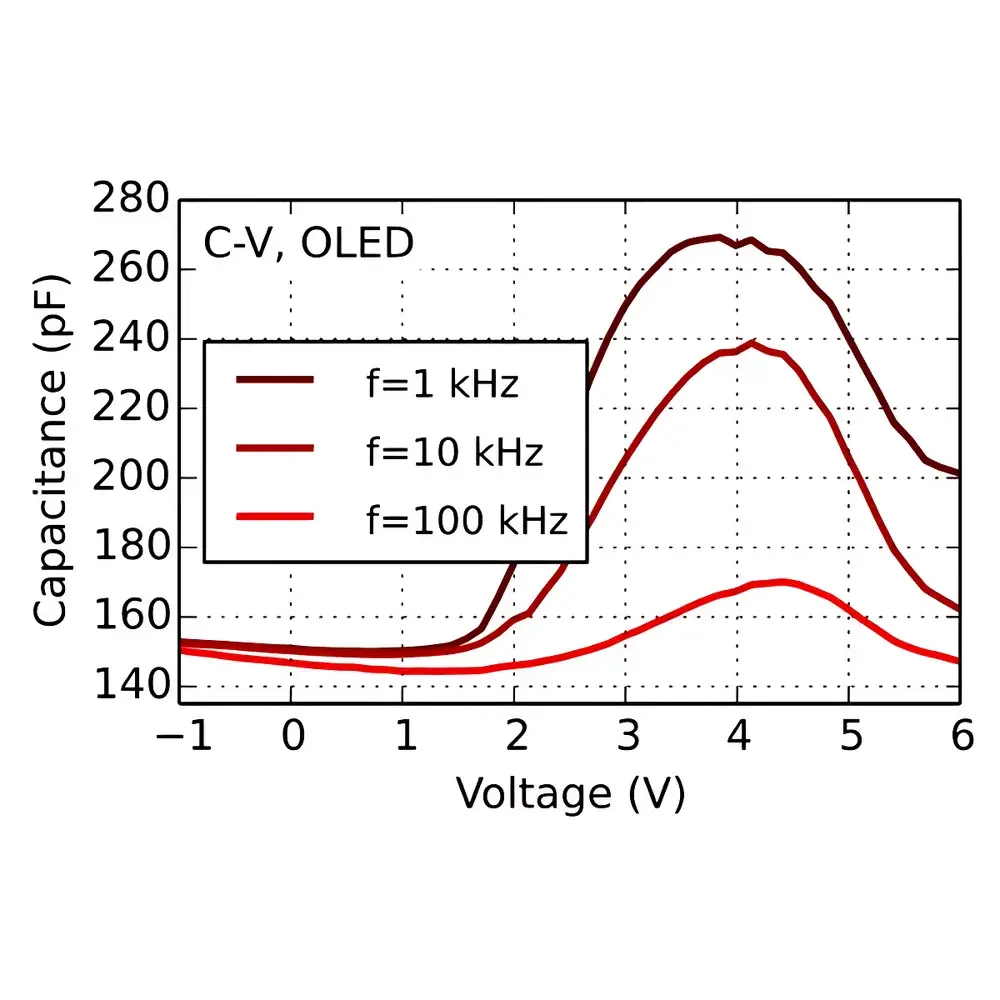
- Charge injection barrier quantification in OLED emissive layers via C–V built-in potential and TEL turn-on delay analysis
- RC-limited collection efficiency assessment in tandem solar cells using frequency-domain IMPS phase lag analysis
- Stability-driven degradation mode identification via accelerated aging protocols coupled with in situ TPV/TPC monitoring
FAQ
What distinguishes PTC-TPV from conventional IV or EQE systems?
Unlike static characterization tools, PTC-TPV resolves time-dependent carrier behavior—separating transport, recombination, and trapping contributions through controlled transient stimuli and multi-parameter deconvolution.
Can the system characterize both solar cells and LEDs on the same platform?
Yes—hardware is shared; measurement mode selection (TPC/TPV for photovoltaics vs. TEL/C–V for electroluminescent devices) is software-configured and validated per IEC 62788-5-2 and CIE 127:2007 guidelines.
Is low-temperature operation supported out-of-the-box?
The base system operates at ambient temperature; cryogenic functionality requires optional integrated stage with vacuum-compatible thermal interface and PID-controlled ramping.
How is data reproducibility ensured across laboratories?
All firmware includes automated self-calibration sequences, reference diode traceability, and standardized pulse protocol templates aligned with the International Summit on Perovskite PV Stability (ISPVPS) consensus guidelines.
Does the system support third-party data import for correlative analysis?
Yes—HDF5, CSV, and MAT file formats are natively supported; APIs enable integration with MATLAB, Python (SciPy/NumPy), and COMSOL Multiphysics for multi-physics modeling workflows.



