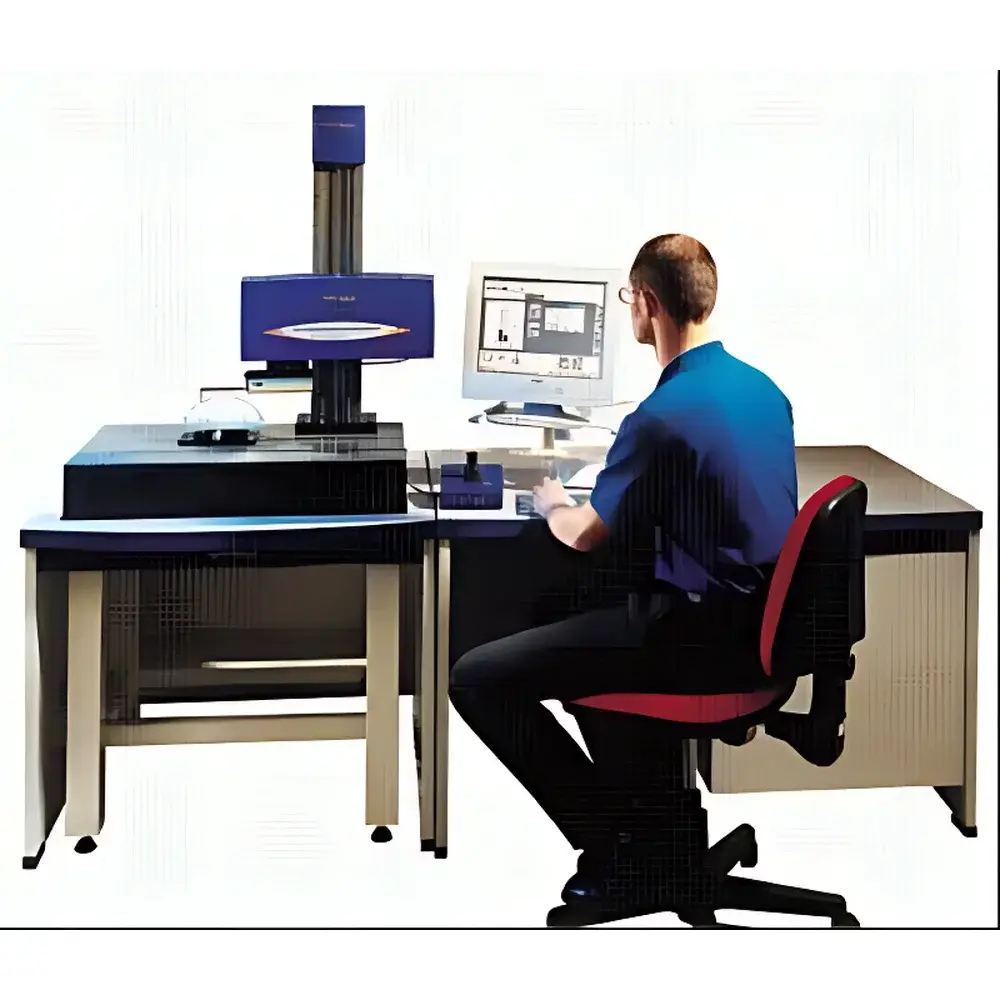
Form Talysurf PGI Profilometer
| Origin | UK |
|---|---|
| Manufacturer Type | Authorized Distributor |
| Origin Category | Imported |
| Model | Form Talysurf PGI |
| Product Type | Contact Profilometer / Surface Roughness Tester |
| Travel Length | 200 mm or 120 mm |
| Measurement Principle | Stylus-based Inductive Displacement Sensing |
| Aspheric Measurement Mode | Phase-Grating Interferometric Reconstruction (Reverse Engineering) |
| Profile Range | 4 mm (60 mm diamond stylus, simultaneous roughness & form) / 8 mm (120 mm spherical stylus, form-only) |
| Software Capabilities | 2D/3D surface topography analysis, aspheric deviation mapping, sag table export compliant with optical design software (e.g., Zemax, Code V) |
Overview
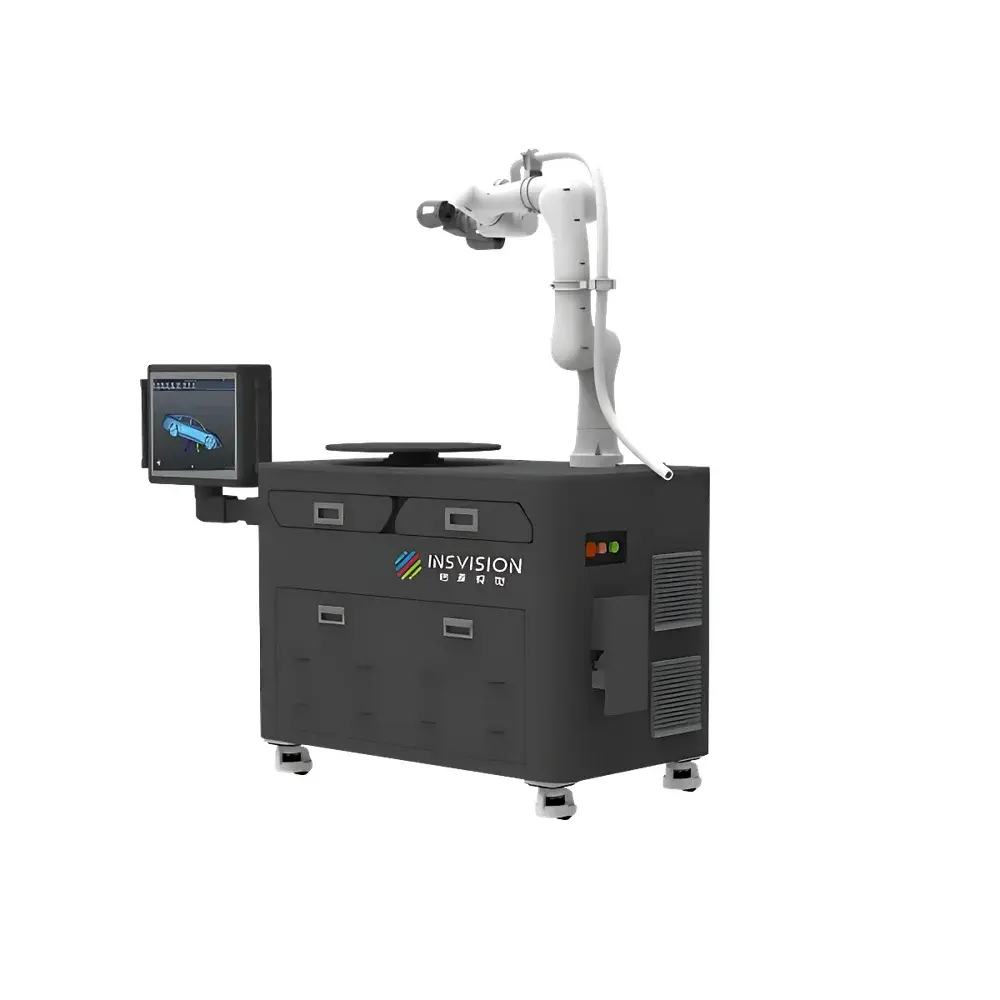
The Form Talysurf PGI Profilometer is a high-precision, contact-based metrology system engineered for traceable measurement of surface topography, form error, and micro-roughness across diverse industrial and research applications. Developed by Taylor Hobson — a UK-based leader in precision surface metrology — the PGI platform integrates a rigid granite base, air-bearing linear stage, and high-resolution inductive transducer to deliver sub-nanometre vertical resolution and exceptional repeatability. Its core measurement principle relies on controlled physical contact between a calibrated diamond or spherical stylus and the workpiece surface, converting mechanical displacement into digital elevation data via closed-loop servo control. This methodology conforms to ISO 25178 (Geometrical Product Specifications — Surface Texture), ISO 4287 (Profile method — Terms, definitions and surface texture parameters), and ASTM E1092 (Standard Test Method for Measuring Surface Roughness). The system is particularly suited for applications demanding metrological integrity under GLP-compliant environments, including optical component certification, bearing raceway qualification, and precision machining process validation.
Key Features
- Modular travel configuration: Selectable 120 mm or 200 mm horizontal traverse length — optimized respectively for compact optical components and large-diameter shafts or turbine blades.
- Dual-stylus capability: Standard 60 mm diamond-tipped stylus (2 µm radius) enables concurrent roughness (Ra, Rz, Rq) and form (PV, RMS, curvature) analysis over ±2 mm vertical range; optional 120 mm spherical stylus (250 µm radius) extends profile capture to ±4 mm for full-asphere characterization.
- Phase-grating interferometric reconstruction engine: Enables reverse engineering of unknown aspheric surfaces by generating high-fidelity sag tables — listing point-by-point sagittal height and local slope values — exported in ASCII format compatible with Zemax, CODE V, and Synopsys OpticStudio.
- Thermally stable granite structure with active vibration isolation: Minimizes environmental drift, supporting measurement uncertainty budgets aligned with ISO/IEC 17025 accredited laboratories.
- Motorized Z-axis with auto-lift and touchdown detection: Ensures consistent stylus loading force (typically 0.5–3 mN) and eliminates operator-induced variability during setup.
Sample Compatibility & Compliance
The Form Talysurf PGI accommodates a broad spectrum of sample geometries — flat plates, cylindrical parts, convex/concave lenses, toroidal mirrors, and freeform optics — provided they fit within the instrument’s 300 × 300 mm stage envelope and ≤15 kg mass limit. Surface materials include hardened steel, silicon carbide, fused silica, BK7 glass, and sapphire. All measurements adhere to ISO 21920-1 (Geometrical product specifications — Surface texture — Profile method — Part 1: Indication of surface texture) and support audit-ready documentation per FDA 21 CFR Part 11 requirements when used with certified software modules. Calibration is traceable to NPL (UK) and NIST (USA) standards via annual verification using certified step-height and roughness artefacts.
Software & Data Management
PGI operates with Talymaster 7 — a modular, Windows-based metrology suite offering dual-mode acquisition (2D line scans or 3D area mapping), automated feature recognition (e.g., groove width, peak count, valley depth), and statistical process control (SPC) charting. The Aspheric Analysis Module provides theoretical surface fitting (conic, polynomial, Q-type), residual error heatmaps, and ISO 10110-5 compliant reporting. Raw data is stored in vendor-neutral .xyz and .csv formats; metadata includes timestamp, operator ID, calibration certificate ID, and environmental logs (temperature/humidity). Audit trails are enabled by default, satisfying GLP/GMP documentation requirements for regulated industries.
Applications
- Optical manufacturing: Verification of aspheric lens molds, off-axis paraboloids, and diffractive optical elements against design intent.
- Bearing industry: Evaluation of raceway waviness, surface fatigue initiation sites, and conformity index per ISO 1328-1.
- Aerospace: Inspection of turbine blade leading-edge profiles and combustion chamber liner roughness post-EBM or laser cladding.
- Medical device machining: Quantification of surface finish on orthopaedic implant substrates (e.g., Ti-6Al-4V) prior to porous coating.
- Academic research: Correlation studies between surface topography parameters and tribological performance under controlled lubrication regimes.
FAQ
What is the vertical measurement range when using the standard diamond stylus?
The standard 60 mm diamond stylus supports a ±2 mm vertical range (4 mm total), enabling simultaneous roughness and form measurement on most precision-engineered components.
Can the PGI generate ISO-compliant roughness reports without third-party software?
Yes — Talymaster 7 includes built-in reporting templates compliant with ISO 4287, ISO 4288, and ISO 25178-2, with configurable parameter sets and signature-capable PDF export.
Is thermal drift compensated during long-duration scans?
The system incorporates real-time temperature monitoring and applies linear thermal expansion correction algorithms based on coefficient-of-expansion inputs defined per material type.
Does the PGI support automated multi-point measurement routines?
Yes — programmable macros allow unattended sequential scanning across up to 99 locations, with coordinate referencing via integrated edge-sensing probe or user-defined datum points.
How is traceability maintained for calibration?
Each instrument ships with a UKAS-accredited calibration certificate; annual recalibration uses NPL-traceable step-height standards (e.g., 100 nm, 1 µm, 10 µm steps) and roughness reference samples (Ra 0.025–5.0 µm).