
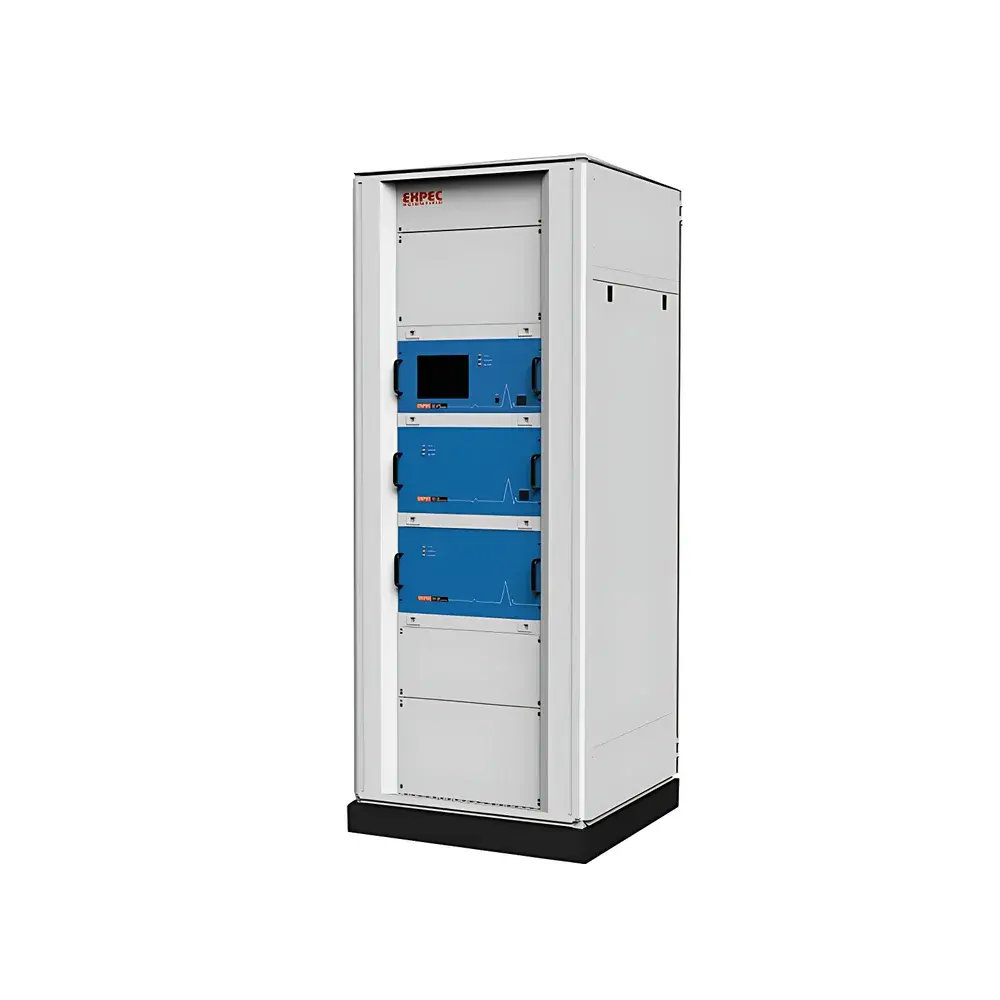
FPI Expec-3000 Cryo-Enriched Online GC-MS System for Atmospheric VOC and Heavy Metal Speciation Analysis
| Brand | FPI |
|---|---|
| Origin | Zhejiang, China |
| Manufacturer Type | OEM Manufacturer |
| Product Category | Atmospheric Heavy Metal & VOC Online Analyzer |
| Model | Expec-3000 |
| Compliance | Designed for ISO 16000-6, ASTM D6196, USP <467>, and EPA TO-15/TO-17 workflows |
| Sample Introduction | Cryogenic pre-concentration coupled with thermal desorption |
| Detection Modes | Dual-channel GC-FID (C₂–C₅ hydrocarbons) and GC-MS (C₆–C₁₂ & oxygenated VOCs) |
| Analyte Coverage | >100 target VOCs including alkanes, alkenes, aromatics, halocarbons, aldehydes, ketones, esters, and organic acids |
| Data Handling | Fully automated peak integration, spectral deconvolution, and NIST library matching |
| System Architecture | 19″ rack-mountable, air-cooled cryogenic module, integrated GLP-compliant audit trail |
Overview
The FPI Expec-3000 is an online, cryogenically enhanced gas chromatography–mass spectrometry (GC-MS) system engineered for continuous, unattended monitoring of volatile organic compounds (VOCs) and speciated atmospheric heavy metals in ambient air. Unlike conventional grab-sampling or single-detector systems, the Expec-3000 integrates a dedicated cryo-preconcentration unit (Pre-3000) with dual detection architecture—hydrogen flame ionization detection (FID) for light hydrocarbons (C₂–C₅) and electron ionization quadrupole mass spectrometry (EI-QMS) for mid-to-high molecular weight and polar VOCs (C₆–C₁₂, oxygenates, halogenated species). The system operates on the principle of cryotrapping at –40 °C to –100 °C (adjustable), followed by rapid thermal desorption (>500 °C/s ramp rate) into a fused-silica capillary column. This enables quantitative recovery of thermally labile and highly polar analytes—including formaldehyde, acetaldehyde, acetone, and chloromethanes—that are routinely lost or degraded in ambient-temperature sorbent-based enrichment.
Key Features
- Cryo-enrichment module with solid-state thermoelectric cooling: eliminates liquid nitrogen dependency while maintaining stable sub-ambient trapping temperatures (–40 °C to –100 °C) for reproducible VOC retention and water suppression.
- Dual-detection workflow: GC-FID channel employs back-flush valve switching to exclude high-boiling interferences (>C₁₂), extending column lifetime and reducing maintenance frequency; GC-MS channel utilizes full-scan and selected ion monitoring (SIM) modes with NIST 2022 spectral library integration.
- Integrated water removal: inline permeation dryer and cryo-condensation trap reduce residual moisture to <1 ppmv, preventing column degradation, detector contamination, and ion suppression in MS mode.
- Rack-mounted 19″ industrial chassis: compliant with IEC 60297-3-100 mechanical standards; designed for deployment in remote monitoring stations, fenceline sites, and mobile laboratories.
- Self-recovery operation: automatic restart sequence after power interruption includes leak check, carrier gas stabilization, oven equilibration, and calibration verification—no manual intervention required.
Sample Compatibility & Compliance
The Expec-3000 is validated for ambient air sampling per ISO 16000-6 (indoor air), ASTM D6196 (ambient VOC measurement), and EPA Method TO-15 (summarized in Compendium Method TO-17). It supports passive and active sampling configurations with standardized inlet filters (Teflon®/quartz fiber, 0.3 µm pore size) and meets particulate matter (PM₂.₅/PM₁₀) co-sampling requirements when interfaced with compatible aerosol collection modules. For heavy metal speciation, the system accepts derivatized vapor-phase samples (e.g., methylmercury, trimethyllead) generated via online chemical vapor generation (CVG) or hydride generation (HG), enabling trace-level detection down to sub-pg/m³ levels under controlled humidity conditions (<80% RH). All data acquisition and processing comply with 21 CFR Part 11 requirements, including electronic signatures, audit trails, and secure user access tiers.
Software & Data Management
The ExpecControl™ software suite provides real-time chromatogram visualization, automated retention time alignment, spectral deconvolution (AMDIS-compatible), and batch report generation in PDF/CSV/XLSX formats. Raw data files (.D, .CDF) are stored with embedded metadata (instrument parameters, environmental logs, calibration history) and support LIMS integration via OPC UA and ASTM E1394 protocols. Audit trails record all user actions—including method edits, calibration injections, and result overrides—with timestamps and operator IDs. Software validation packages (IQ/OQ/PQ documentation) are available upon request for GLP/GMP-regulated environments.
Applications
- Continuous ambient air quality monitoring networks (AQMN) for regulatory compliance reporting (e.g., EU Directive 2008/50/EC, China’s HJ 654-2013).
- Fenceline monitoring at petrochemical, pharmaceutical, and semiconductor manufacturing facilities to detect fugitive emissions and unknown VOC sources.
- Indoor air quality (IAQ) assessment in schools, hospitals, and office buildings targeting formaldehyde, benzene, and other priority pollutants listed in WHO Air Quality Guidelines.
- Atmospheric chemistry research requiring speciated VOC profiles for ozone formation potential (OFP) and secondary organic aerosol (SOA) yield modeling.
- Mobile source emission characterization using vehicle exhaust dilution tunnels coupled with real-time GC-MS analysis.
FAQ
Does the Expec-3000 require liquid nitrogen or external cryogens?
No—the Pre-3000 cryo-module uses multi-stage Peltier elements for reliable, maintenance-free cooling down to –100 °C.
Can the system quantify both VOCs and elemental mercury simultaneously?
Yes—when configured with optional cold-vapor atomic fluorescence (CVAFS) or ICP-MS interface, the platform supports concurrent organic and inorganic speciation.
What is the typical cycle time for one complete analysis?
Standard protocol delivers full VOC profiling every 30–60 minutes, adjustable based on target list and sensitivity requirements.
Is remote diagnostics and firmware update supported?
Yes—via secure TLS-encrypted web interface with role-based access control and over-the-air (OTA) firmware updates.
How is calibration traceability ensured?
Certified gas standards (NIST-traceable, EPA TO-15 certified blends) are used for daily automated calibration checks; calibration curves are stored with uncertainty budgets per ISO/IEC 17025.







