
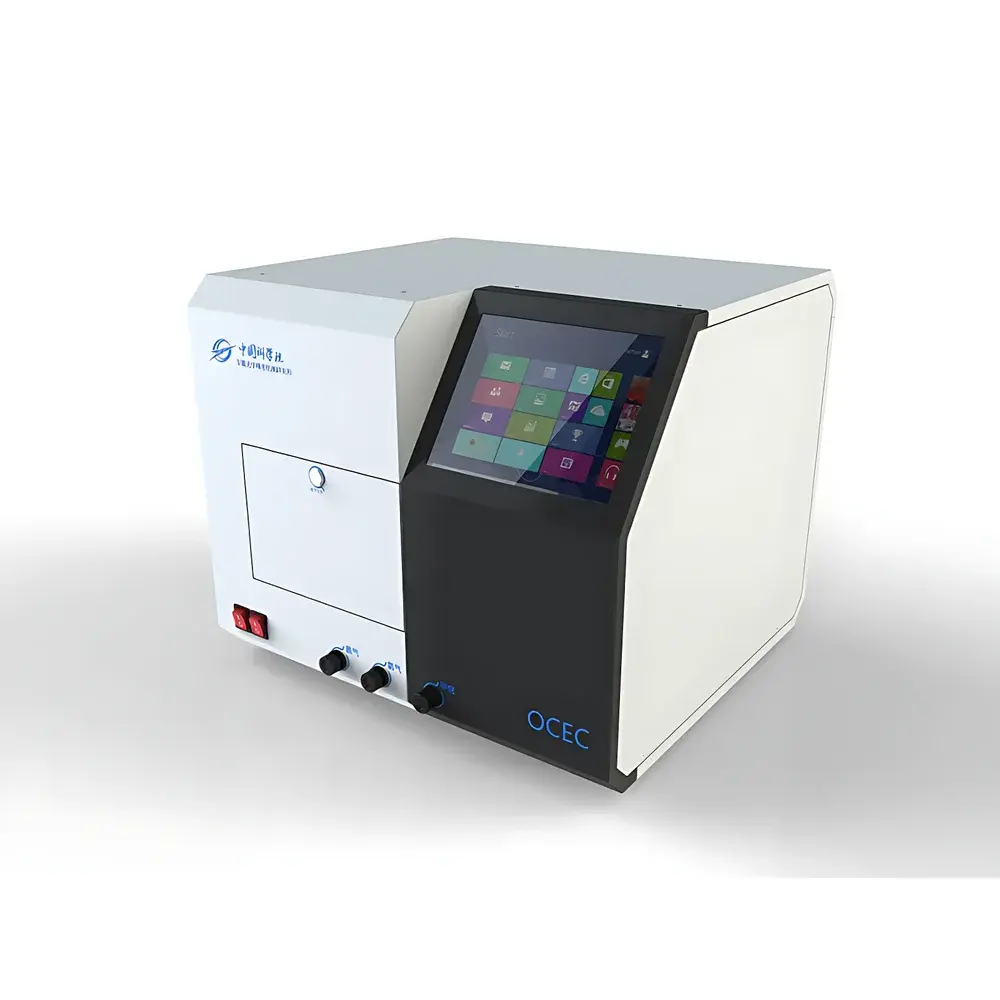
FPI OC/EC Aerosol Carbon Analyzer
| Brand | FPI |
|---|---|
| Origin | Zhejiang, China |
| Manufacturer | FPI (Original Equipment Manufacturer) |
| Instrument Type | Online Aerosol Organic Carbon/Elemental Carbon Analyzer |
| Measurement Principle | Thermal-Optical Transmittance (TOT) or Thermal-Optical Reflectance (TOR) |
| Compliance | Designed for ASTM D7520, IMPROVE_A, NIOSH 5040-compatible protocols |
| Sample Inlet | Standard PM2.5 or PM10 inlet with heated line (optional) |
| Detection Method | Laser transmittance/reflectance monitoring during thermal desorption |
| Flow Control | Proportional solenoid valves + mass flow controllers (MFCs) |
| Furnace Construction | High-purity alumina ceramic furnace bricks with ceramic fiber-insulated heating elements |
| OC/EC Split Point Determination | Automated optical carbon charring correction algorithm |
Overview
The FPI OC/EC Aerosol Carbon Analyzer is a laboratory-grade and field-deployable online instrument engineered for the quantitative speciation of carbonaceous aerosols in ambient air. It operates on the internationally standardized thermal-optical analysis principle—specifically calibrated to comply with ASTM D7520 (Standard Test Method for Determining Organic and Elemental Carbon in Ambient and Workplace Atmospheres), as well as widely adopted environmental monitoring protocols including the IMPROVE_A network methodology and NIOSH Method 5040. The system thermally separates organic carbon (OC) fractions through controlled inert (He) and oxidative (He/O₂) atmospheres across multiple temperature steps, while simultaneously tracking laser transmittance (or reflectance) through a quartz fiber filter substrate. This dual-signal optical feedback enables real-time, algorithm-driven identification of the OC/EC split point—the critical inflection where pyrolytic carbon formation is compensated, ensuring metrologically traceable partitioning between light-absorbing elemental carbon (EC) and volatile organic carbon (OC). The analyzer delivers time-resolved mass concentrations (µg/m³) of OC₁–OC₄, OP, EC₁–EC₃, and total carbon (TC), supporting source apportionment modeling and long-term trend analysis in urban, regional, and background monitoring networks.
Key Features
- Thermal-optical dual-mode operation supporting both transmittance (TOT) and reflectance (TOR) configurations for method flexibility and cross-laboratory comparability
- High-stability laser detection system with <1% signal drift over 72-hour continuous operation, enabling robust baseline correction during multi-step thermal protocols
- Automated charring correction algorithm that dynamically adjusts the OC/EC split point based on real-time optical density evolution—eliminating manual intervention and inter-operator variability
- Furnace assembly constructed from ultra-high-purity alumina ceramic bricks (Al₂O₃ ≥ 99.7%), rated for continuous operation up to 850 °C, with heating elements fully encapsulated in aerospace-grade ceramic fiber sleeves for >20,000-cycle thermal durability
- Precision gas delivery architecture integrating thermal mass flow controllers (0–1.0 L/min, ±0.5% FS accuracy) and proportional solenoid valves, maintaining stoichiometric He/O₂ switching timing within ±100 ms across all thermal steps
- Integrated heated sampling line interface (60–80 °C) compatible with standard PM₂.₅ or PM₁₀ size-selective inlets per ISO 23291 and EPA Method IO-3.2
Sample Compatibility & Compliance
The analyzer accepts standard 37-mm or 47-mm quartz fiber filters (e.g., Pallflex Tissuquartz QAT-UP or Whatman QMA), pre-conditioned per ASTM D7520 requirements. Filter loading is performed upstream using gravimetric or tapered element oscillating microbalance (TEOM)-coupled samplers. All thermal desorption profiles adhere to IMPROVE_A temperature ramp sequences (e.g., 31-step He/He+O₂ protocol) and may be user-configured for alternate schemes such as EUSAAR-2 or NIOSH 5040. Data outputs conform to EPA Air Quality System (AQS) field data format requirements. The instrument’s firmware architecture supports audit-ready logging—including full timestamped thermal ramp logs, optical signal traces, gas flow records, and calibration event history—to satisfy GLP-compliant environmental laboratories and regulatory QA/QC programs.
Software & Data Management
The embedded control software provides real-time visualization of thermal desorption curves, optical compensation trajectories, and OC/EC mass evolution. Raw data (including analog voltage signals from photodetectors and MFCs) are stored in HDF5 format with embedded metadata (filter ID, sampling duration, meteorological tags). Export options include CSV (for receptor modeling tools like PMF or CMB), netCDF (for atmospheric chemistry transport models), and XML (for AQS ingestion). Remote access is enabled via secure TLS 1.2–encrypted Ethernet connection; all user actions—including method edits, calibration runs, and data exports—are logged with ISO/IEC 27001-aligned access controls. Software validation documentation is available upon request for FDA 21 CFR Part 11–aligned environments.
Applications
- Long-term ambient air quality monitoring networks assessing seasonal OC/EC ratios as indicators of biomass burning vs. fossil fuel combustion
- Source apportionment studies integrating OC/EC speciation with isotopic (¹⁴C) or molecular marker data to distinguish primary biogenic, traffic-derived, and secondary organic aerosol contributions
- Health effects research correlating EC exposure metrics with cardiopulmonary morbidity endpoints in cohort studies
- Validation of chemical transport model (CTM) predictions for black carbon (BC) and brown carbon (BrC) loading in regional haze episodes
- Indoor air quality assessments in occupational settings where carbonaceous particulate exposure exceeds OSHA PEL thresholds
FAQ
What thermal-optical protocols does the instrument support by default?
The system ships pre-loaded with ASTM D7520, IMPROVE_A, and NIOSH 5040 protocols. Custom ramp sequences can be imported via ASCII-based method files.
Is the analyzer suitable for unattended operation in remote stations?
Yes—it features industrial-grade power conditioning (90–264 VAC, 47–63 Hz), wide-temperature operating range (−20 °C to +45 °C), and integrated diagnostics for filter clogging, gas supply failure, and furnace thermocouple drift.
How is calibration traceability maintained?
Primary calibration uses certified carbon standards (e.g., sucrose for OC, lampblack for EC) traceable to NIST SRM 1649b (Urban Dust) and SRM 2783 (Air Particulate Matter); field calibrations follow EPA 40 CFR Part 53 Appendix L guidelines.
Can the instrument be integrated into existing air quality data acquisition systems?
Yes—via Modbus TCP/IP or ASCII serial output (RS-232/485), supporting direct ingestion into SCADA platforms such as Campbell Scientific LoggerNet or EPA AQS Data Handling System.







