
FTC TMS-Touch Texture Analyzer
| Brand | FTC |
|---|---|
| Origin | USA |
| Model | TMS-Touch |
| Type | Motorized Single-Column Texture Analyzer with Integrated Touchscreen Controller |
| Force Range | Up to 1000 N (standard), optional up to 5000 N |
| Speed Range | 0.01–2000 mm/min |
| Displacement Resolution | 0.1 µm |
| Force Resolution | 0.001 N |
| Data Acquisition Rate | Up to 1000 Hz |
| Compliance | ASTM F307, ISO 11357-4, USP <721>, AACC 74-09, TA-16 |
Overview
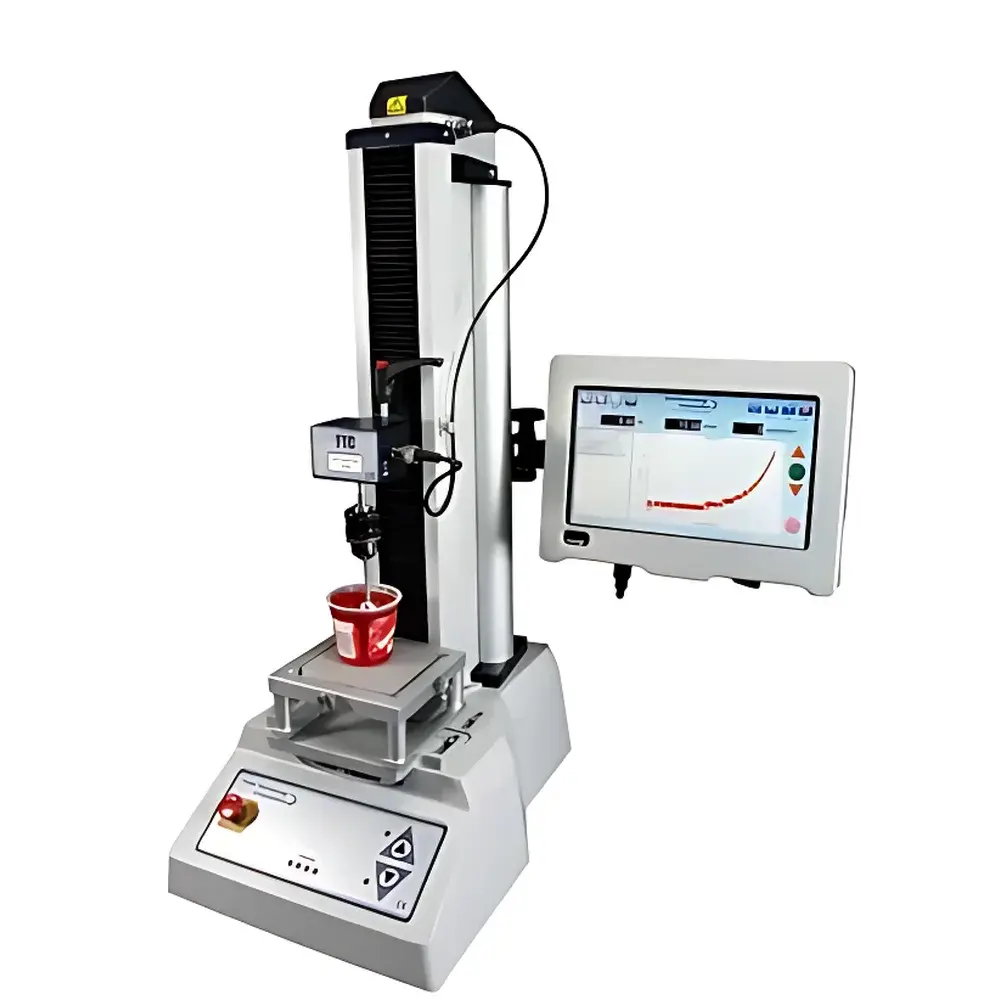
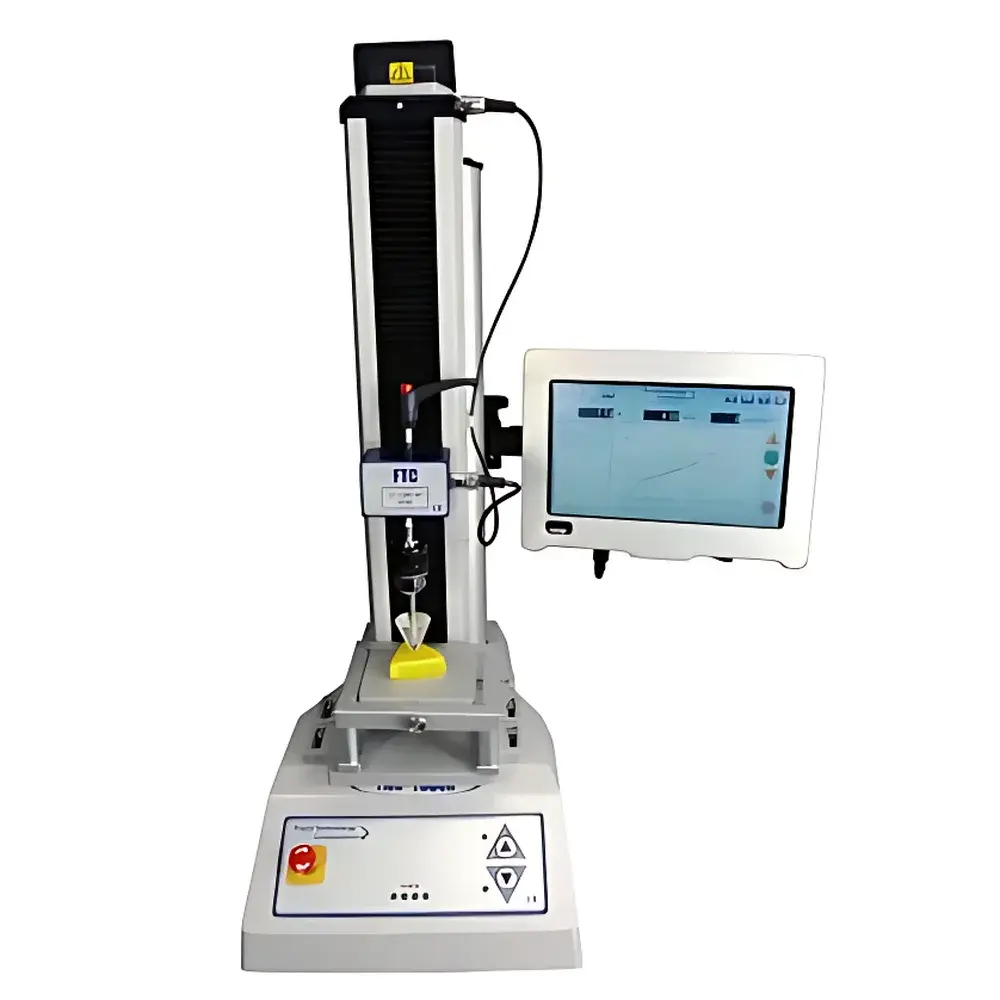
The FTC TMS-Touch Texture Analyzer is a motorized, single-column universal testing system engineered for high-precision mechanical property evaluation of food and soft biological materials. Built upon the validated platform of the TMS-PRO, the TMS-Touch integrates a fully embedded industrial touchscreen controller—eliminating reliance on external PCs—and implements a dual-role user architecture (Operator and Administrator) to support both routine QC workflows and advanced R&D protocols. Its measurement principle is based on controlled uniaxial compression, tension, penetration, extrusion, and shear deformation, with force and displacement transduced via precision load cells and linear encoders calibrated traceably to NIST standards. The instrument operates under closed-loop speed control and supports programmable test sequences compliant with standardized texture profile analysis (TPA) and customized multi-stage protocols. Designed for laboratory and production-floor deployment, it meets structural and operational requirements for GLP-compliant environments and serves as a foundational tool in method validation per FDA Guidance for Industry (2022) on Analytical Procedure Development.
Key Features
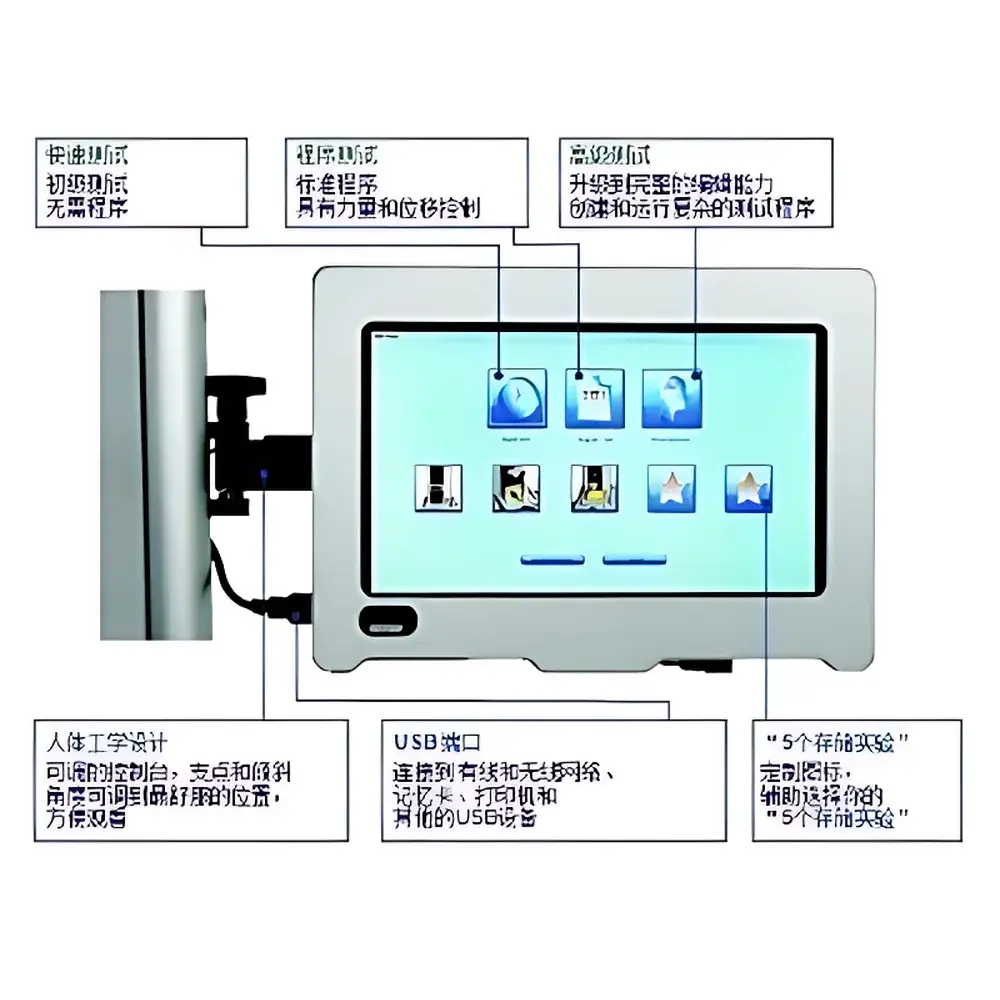
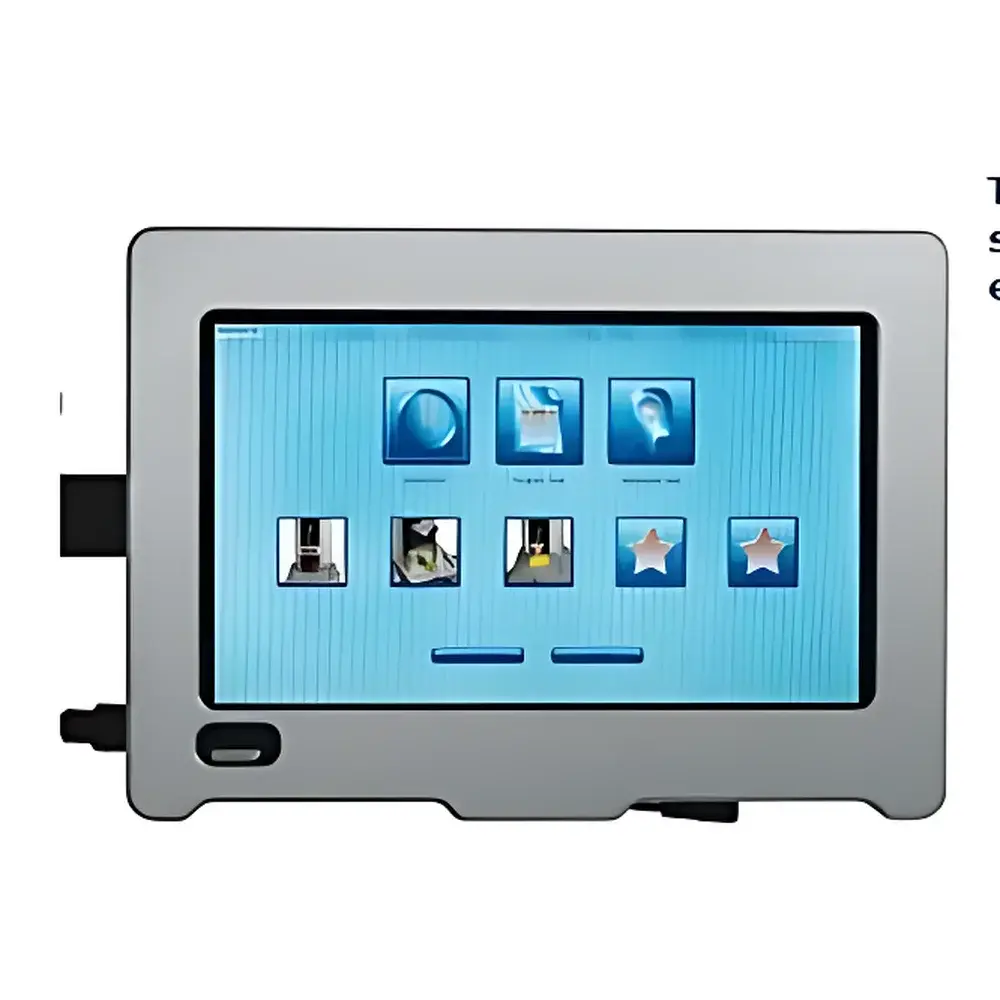
- Integrated 10.1-inch capacitive touchscreen interface with intuitive icon-driven navigation and real-time graphical display of force–displacement curves during acquisition.
- Dual-access software architecture: Operator mode restricts parameter modification to pre-approved methods; Administrator mode enables full protocol editing, calibration management, and audit trail configuration.
- Hot-swappable load cell system: Standard 1000 N capacity with optional 5000 N and low-force (5 N, 50 N) modules—each auto-recognized and zeroed upon insertion.
- Modular probe and fixture library compliant with AACC, ASTM, and ISO standard geometries—including Warner-Bratzler blades, cylindrical probes, Kramer shear cells, and three-point bending jigs.
- Onboard data processing engine supporting real-time calculation of texture parameters: hardness, fracturability, cohesiveness, springiness, chewiness, adhesiveness, resilience, and tensile strength.
- Multiple I/O interfaces: USB 3.0 host port for flash storage export, RS-232 serial for legacy printer integration, and Ethernet (TCP/IP) for networked data transfer and remote monitoring.
Sample Compatibility & Compliance
The TMS-Touch accommodates heterogeneous samples across the food matrix spectrum—from low-viscosity gels and aerated confections to dense meat analogs and hydrated cereal grains—without requiring sample reconfiguration between tests. Fixture adaptability ensures consistent positioning for repeatable inter-laboratory comparison. All default test methods align with internationally recognized standards: ASTM F307 (instrumental texture of semi-solid foods), ISO 11357-4 (thermal-mechanical characterization), USP (mechanical properties of pharmaceutical gels), and AACC 74-09 (dough extensibility). System validation documentation supports IQ/OQ/PQ execution, and firmware includes configurable electronic signatures and 21 CFR Part 11–compliant audit trails when deployed in regulated manufacturing settings.
Software & Data Management
The embedded operating system runs FTC’s proprietary TexturePro CT v4.x firmware, which stores up to 10,000 test records internally with timestamped metadata (operator ID, environmental conditions, calibration status). Users may generate reports using built-in templates (PDF, CSV, XLSX) or define custom report layouts via drag-and-drop field mapping. Raw force–time and force–distance datasets export at full acquisition resolution (1000 Hz) for post-hoc statistical analysis in JMP, Minitab, or Python-based platforms. Audit logs record all critical events—including method edits, calibration actions, and user logins—with immutable timestamps and operator attribution. Optional cloud synchronization enables centralized method repository management across multi-site R&D networks.
Applications
The TMS-Touch delivers quantitative texture metrics essential for formulation optimization, shelf-life assessment, and process validation. In meat science, it quantifies myofibrillar tenderness via Warner-Bratzler shear and measures bind strength in restructured products. For bakery applications, it evaluates crumb resilience after freeze-thaw cycling and crust fracture energy under controlled humidity. In dairy, it characterizes syneresis resistance in set yogurts and melt profile kinetics of cheese analogs. Confectionery developers use its tensile mode to assess gum elasticity and pull-apart strength of nougat layers. Additionally, it supports regulatory submissions by generating reproducible, auditable datasets aligned with Codex Alimentarius guidelines for sensory correlation studies.
FAQ
Is the TMS-Touch compliant with 21 CFR Part 11 for electronic records and signatures?
Yes—when configured in Administrator mode with password-protected user roles and enabled audit logging, the system satisfies predicate rule requirements for electronic records integrity and signature verification.
Can third-party probes or fixtures be used with the TMS-Touch?
Yes—provided they conform to ISO 80601-2-62 mechanical interface specifications and are mounted via the standard M6 threaded base plate; however, FTC does not validate performance claims for non-certified accessories.
What is the recommended calibration frequency for routine QC use?
Load cells require annual NIST-traceable recalibration; daily verification using certified reference weights (±0.1% accuracy) is advised before first test of each shift.
Does the system support automated pass/fail decision logic based on specification limits?
Yes—user-defined upper/lower specification limits can be assigned per parameter; the software flags outliers in real time and generates deviation alerts in exported reports.
How is firmware updated, and is version history retained?
Updates are applied via USB drive; the system maintains a complete revision log including installation date, previous version ID, and checksum-verified integrity confirmation.




