
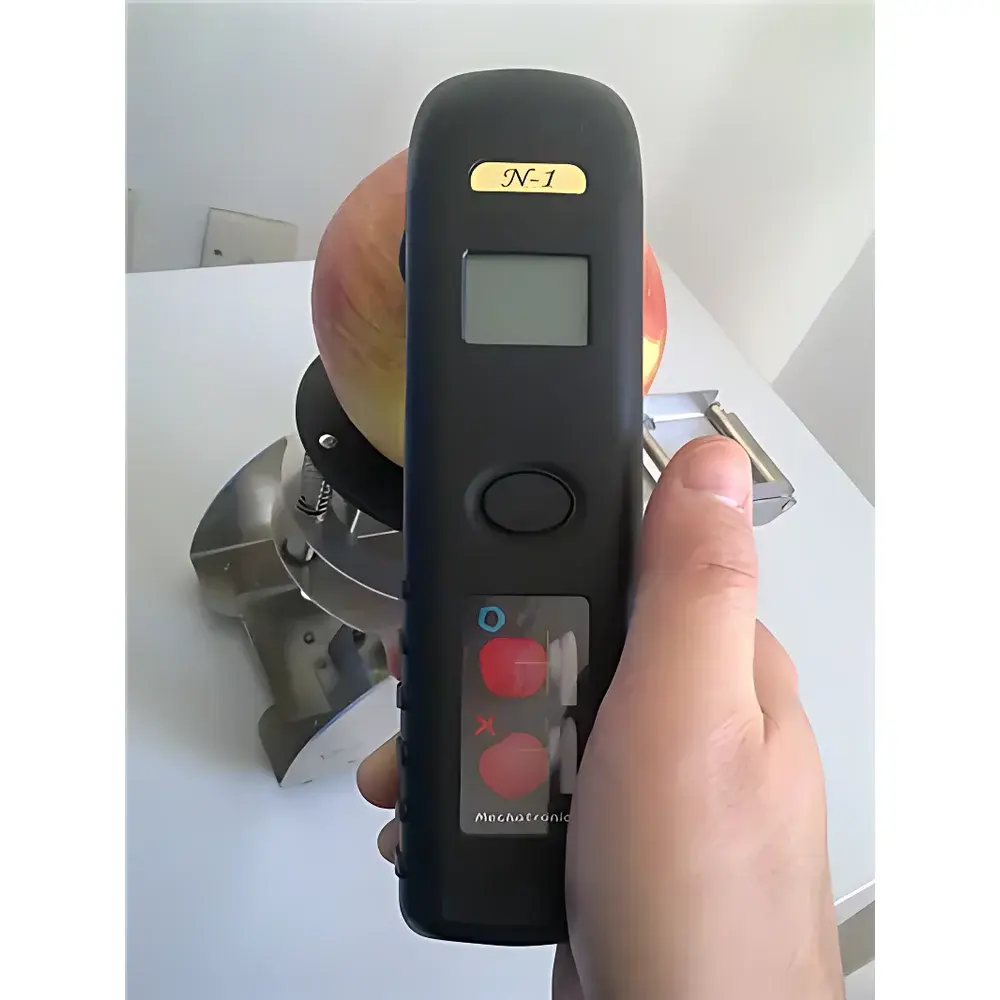
Fujiwara FHK-N1 Non-Destructive Fruit Refractometer
| Brand | Fujiwara Industrial Co., Ltd. / FHK |
|---|---|
| Origin | Japan |
| Manufacturer Type | Authorized Distributor |
| Origin Category | Imported |
| Model | FHK-N1 |
| Instrument Type | Non-Destructive |
| Price Range | USD 6,800 – 13,600 (est.) |
| Weight | 200 g (incl. batteries) |
| Dimensions | 181 × 52 × 42 mm |
| Power Supply | Two AA batteries (rechargeable compatible) |
| Measurement Cycles | Up to 5,000 measurements per charge (5-sec interval) |
| Light Source | LED |
| Temperature Operating Range | 15–30 °C |
| Accuracy | ±0.5 °Brix (calibrated on apples at 20 °C in controlled lab environment) |
| Predefined Fruit Profiles | 12 species (apple, mango, peach, pear, persimmon, fig, plum, citrus, melon, tomato, grape, loquat) |
| Calibration Offset Adjustment | ±5.0 °Brix in 0.5 °Brix increments |
| Display | Backlit LCD |
Overview
The Fujiwara FHK-N1 is a handheld, non-destructive fruit refractometer engineered for rapid, in-situ sugar content (°Brix) assessment of intact fruits without compromising structural integrity or post-measurement marketability. It operates on the principle of near-infrared (NIR) reflectance spectroscopy: an integrated LED light source emits broadband visible–NIR radiation onto the fruit surface; the instrument captures and analyzes the spectral profile of diffusely reflected light, which correlates with soluble solids concentration via pre-calibrated chemometric models. Unlike traditional destructive methods requiring juice extraction and benchtop refractometers, the FHK-N1 enables real-time, field-deployable quantification—critical for precision horticulture, quality assurance in postharvest logistics, and regulatory-compliant monitoring across the agri-food supply chain.
Key Features
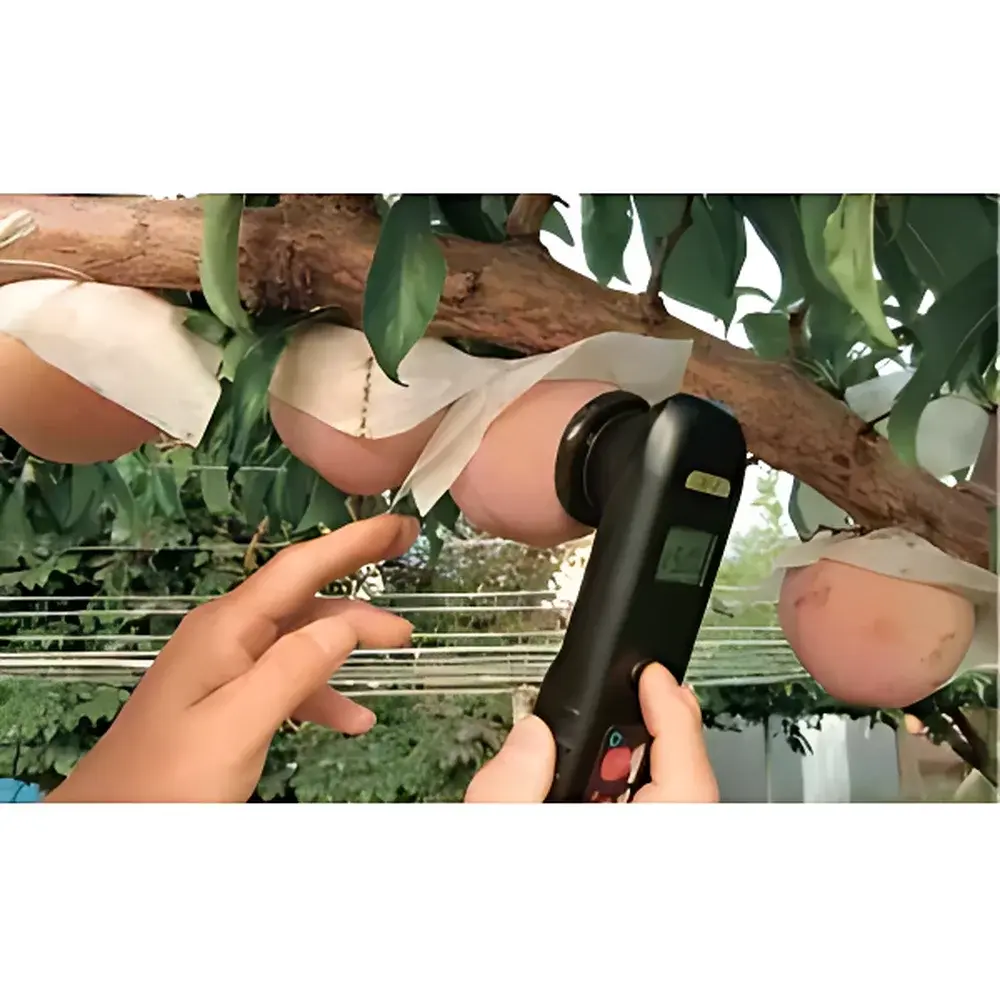
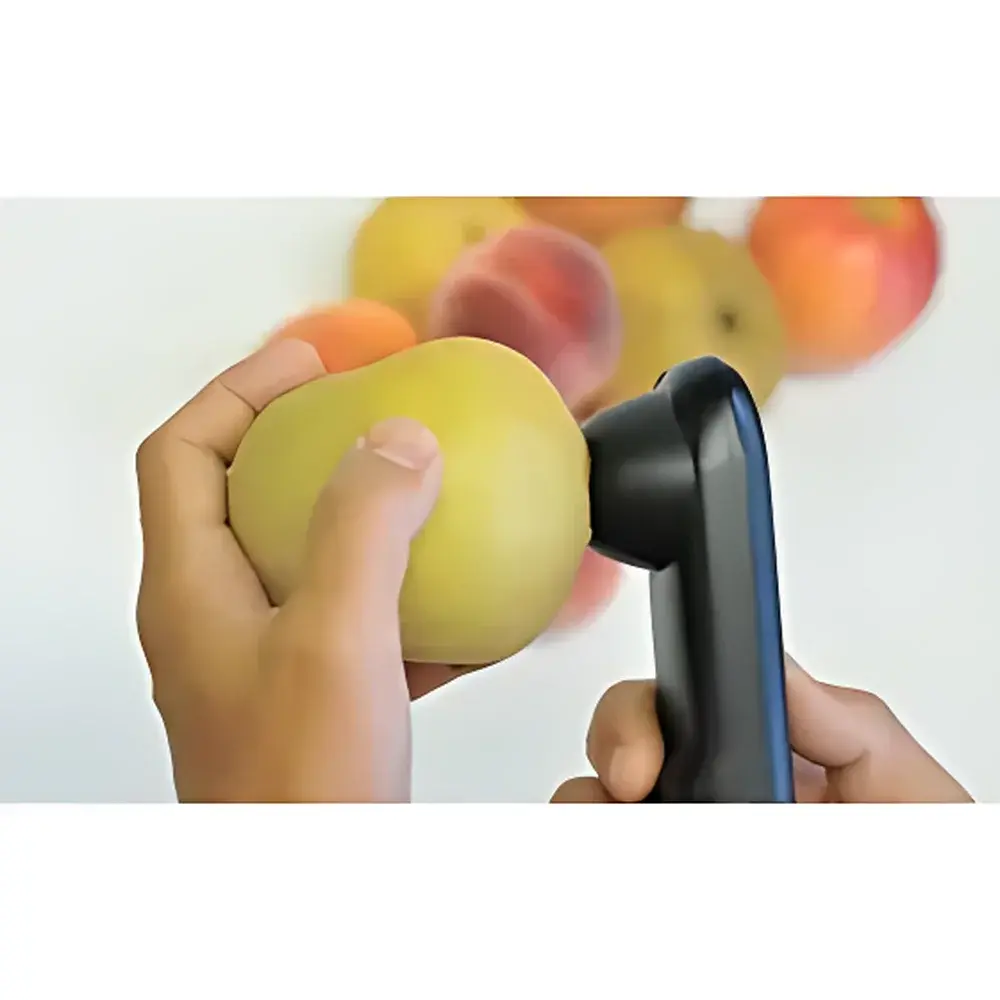
- Non-invasive measurement: No skin puncture, cutting, or juice expression required—fruits remain fully intact, commercially viable, and physiologically functional for continued ripening studies.
- Portable ergonomics: Weighing only 200 g (including batteries), with compact dimensions (181 × 52 × 42 mm), the device supports extended field use; its balanced grip and low fatigue design accommodate multi-hour orchard surveys or warehouse audits.
- Intuitive operation: One-button activation after target alignment on a flat, blemish-free fruit surface; backlit LCD ensures legibility under variable ambient lighting—including shaded orchards or refrigerated storage rooms.
- Multi-species calibration library: Factory-loaded models for 12 fruit types (apple, mango, peach, pear, persimmon, fig, plum, citrus, melon, tomato, grape, loquat), each optimized for typical tissue optical properties and sugar distribution profiles.
- Field-ready power management: Dual AA battery configuration supports up to 5,000 discrete measurements; rechargeable Ni-MH or Li-ion AA cells are fully compatible, enabling sustainable deployment without disposable waste.
- Environmental stability control: Internal temperature compensation algorithms mitigate drift within the specified operating range (15–30 °C); optimal accuracy (±0.5 °Brix) is validated under ISO 2173:2003-compliant conditions (20 °C apple reference standard).
Sample Compatibility & Compliance
The FHK-N1 is validated for use on mature, intact fruits with smooth or moderately textured epidermis and minimal surface moisture or wax residue. It is not intended for highly heterogeneous tissues (e.g., seeded berries, fibrous tropical fruits), immature green stages, or fruits exhibiting significant bruising or decay. While not certified to GLP or GMP standards as a standalone unit, its measurement traceability aligns with ISO 5725 (accuracy and precision) and ASTM D8079-17 (guidance for NIR-based food analysis). Data outputs support compliance with internal QA protocols in fruit packinghouses, USDA Good Agricultural Practices (GAP) verification, and EU Regulation (EC) No 178/2002 traceability frameworks when integrated into documented workflows.
Software & Data Management
The FHK-N1 operates as a stand-alone instrument with no embedded Bluetooth, USB, or cloud connectivity. All measurements are displayed and retained locally on the LCD screen only; no data logging, export, or audit trail functionality is provided. For laboratories or cooperatives requiring documentation, users must manually record readings alongside metadata (fruit variety, lot ID, location, time). To meet FDA 21 CFR Part 11 requirements for electronic records, third-party digital capture solutions (e.g., tablet-based entry with timestamped photo annotation) may be implemented externally. Firmware updates are not supported; calibration parameters are fixed at factory and user-adjustable only via ±5.0 °Brix offset correction.
Applications
- Agricultural research: Longitudinal tracking of °Brix accumulation during fruit development to inform harvest timing models, breeding selection criteria, and rootstock–scion interaction studies.
- Commercial orchard management: On-tree maturity assessment to optimize picking windows, reduce over-/under-harvest losses, and synchronize labor deployment.
- Postharvest quality control: Incoming inspection at packinghouses and wholesale terminals; rapid batch-level grading for premium pricing tiers (e.g., “high-sugar” apple labels).
- Retail and foodservice procurement: In-store verification for diabetic-friendly produce labeling, menu ingredient consistency (e.g., dessert fruit sweetness), and supplier performance benchmarking.
- Viticulture and enology: Grape cluster sampling prior to harvest to estimate potential alcohol yield and guide selective picking strategies for varietal wine production.
- Extension and education: Undergraduate horticulture labs, extension agent training modules, and cooperative grower workshops focused on objective maturity metrics.
FAQ
Does the FHK-N1 require sample preparation?
No. Measurements are performed directly on intact, unwashed fruit surfaces. Avoid areas with heavy wax, dirt, or condensation for optimal signal fidelity.
Can it measure through fruit skin or rind?
Yes—the NIR reflectance method penetrates the epidermis to interrogate subsurface parenchyma tissue where sugars accumulate; it does not require contact with exposed flesh.
Is calibration traceable to NIST or other national standards?
Factory calibration uses apple reference materials traceable to ISO 2173:2003 methodology; however, the instrument itself carries no NIST-traceable certificate. Users may perform secondary verification using certified sucrose standards if required by internal SOPs.
What environmental conditions affect accuracy?
Ambient temperature outside 15–30 °C induces thermal drift in LED output and detector response; relative humidity above 85% may cause surface condensation, scattering incident light. Measurements should be conducted in stable, draft-free environments.
How frequently should the offset correction be applied?
Only when measuring a new fruit variety not in the default library—or when consistent deviation (>±0.7 °Brix) is observed against validated reference methods. The 0.5 °Brix step increment allows fine-tuned empirical adjustment.





