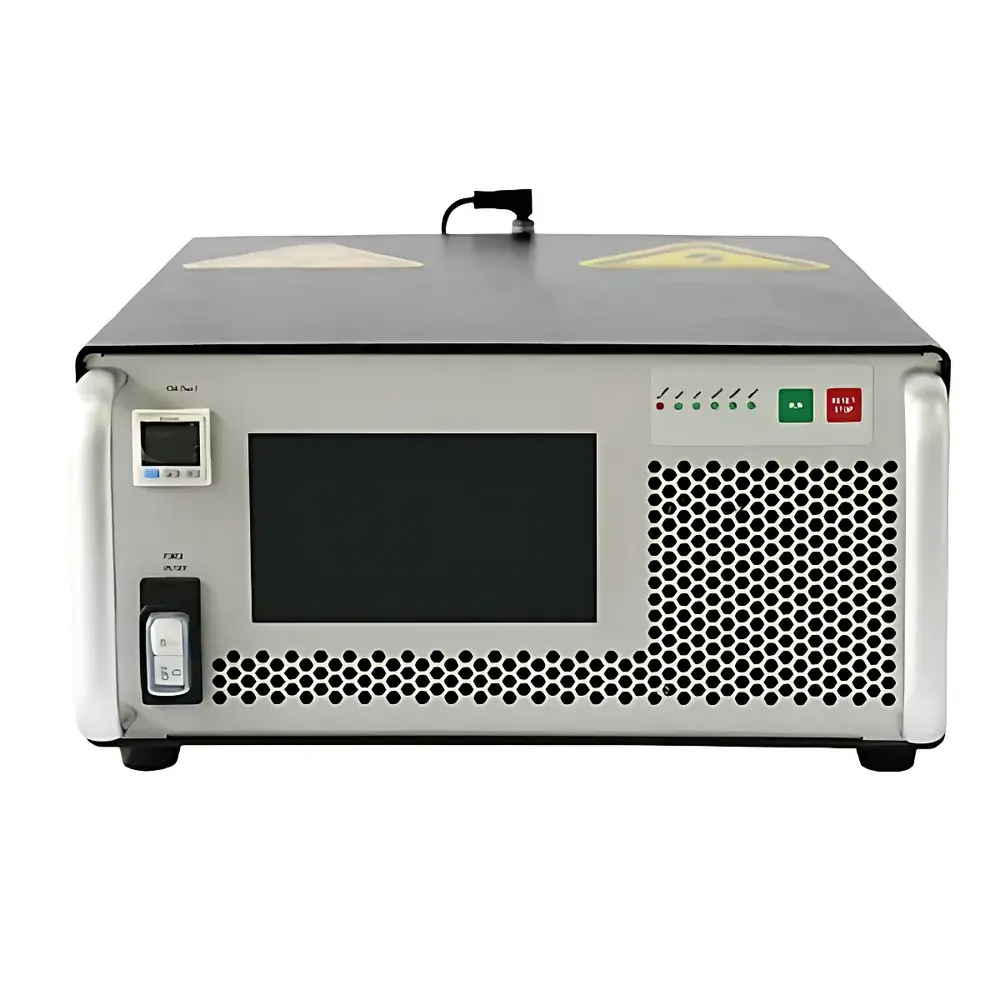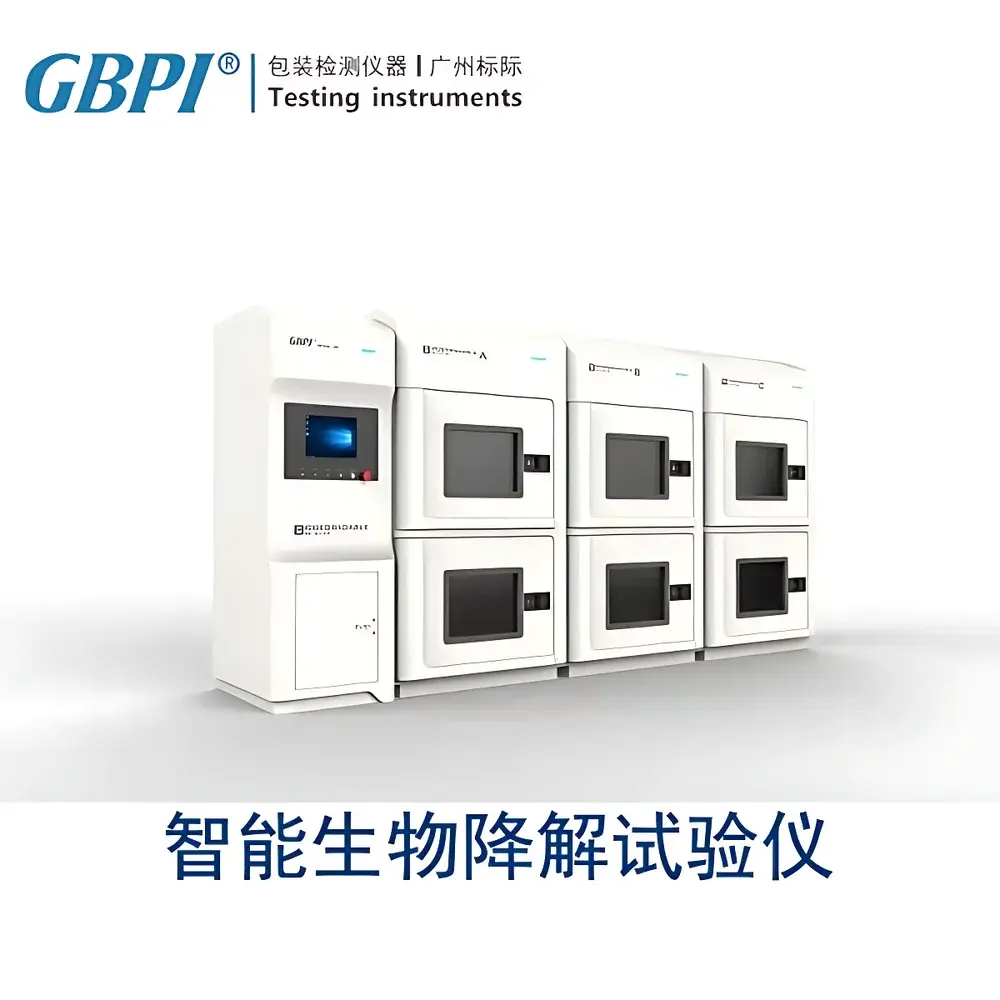

GBPI GBDA-180 Intelligent Biodegradation Analysis System
| Brand | GBPI |
|---|---|
| Origin | Guangdong, China |
| Manufacturer Type | OEM Manufacturer |
| Country of Origin | China |
| Model | GBDA-180 |
| Price Range | USD 70,000–112,000 (FOB Guangzhou) |
| Measurement Resolution | ±1.0% FS |
| Gas Flow Rate | 0.01–10 L/min |
| Reactor Volume | 3 L |
| Maximum Number of Simultaneous Reactors | 18 |
| Temperature Control Range | Ambient to 80 °C |
| Temperature Control Accuracy | ±0.5 °C |
| CO₂ Detection Range | 0–10,000 ppm |
| CO₂ Detection Accuracy | ±1% FS |
| O₂ Detection Range | 0–25% vol |
| O₂ Detection Accuracy | ±1% FS |
| Pressure Range | 0–100 kPa |
| Pressure Accuracy | ±1% FS |
| Power Supply | AC 220 V, 50 Hz |
| Total Power Consumption | 5 kW |
| Dimensions (L×W×H) | 6950 × 1800 × 650 mm |
| Weight | 1500 kg |
Overview
The GBPI GBDA-180 Intelligent Biodegradation Analysis System is an automated, multi-reactor online reaction analysis platform engineered for standardized aerobic biodegradability assessment under controlled composting conditions. It implements the respirometric principle—quantifying cumulative CO₂ evolution as the primary metric of ultimate aerobic biodegradation—per ISO 14855-1:2005 (identical to GB/T 19277.1-2011), ISO 14855-2, ISO 19647, and other internationally recognized protocols. The system maintains precise control over critical environmental parameters—including temperature (ambient to 80 °C, ±0.5 °C stability), relative humidity, oxygen partial pressure, and gas flow dynamics—to replicate accelerated composting environments compliant with OECD 301, ASTM D5338, and EN 13432 requirements. Its architecture supports parallel operation of up to 18 independent 3-L reactors, enabling high-throughput screening of polymeric materials, packaging films, agricultural mulches, and biomedical polymers across varying microbial consortia and substrate formulations.
Key Features
- Eighteen independently controlled 3-L stainless-steel reactors with integrated PID-based temperature regulation and programmable mechanical agitation (customizable frequency/duration)
- High-stability gas delivery subsystem featuring mass flow controllers (0.01–10 L/min, ±1.0% FS accuracy) and real-time feedback loops for O₂, CO₂, and pressure (0–100 kPa, ±1% FS)
- Dual-channel NDIR CO₂ sensors (0–10,000 ppm, ±1% FS) and electrochemical O₂ sensors (0–25% vol, ±1% FS), both factory-calibrated and supported by in-situ chamber-level verification routines
- Modular PLC-based acquisition architecture with millisecond-level timestamping, enabling synchronized multi-parameter logging (temperature, humidity, flow, gas concentration, pressure)
- Three-tier user permission model (Administrator, Operator, Viewer) with role-specific access control, method locking, and full audit trail per FDA 21 CFR Part 11 and GLP-compliant data integrity standards
- Fully automated workflow: parameter configuration → reactor sealing verification → baseline stabilization → dynamic respirometry → endpoint reporting — all initiated via single-button execution
Sample Compatibility & Compliance
The GBDA-180 accommodates solid and semi-solid test specimens up to 50 g per reactor, including PLA, PBAT, PHA, starch-blends, cellulose derivatives, and conventional PE/PP films subjected to pro-degradant additives. It supports testing under multiple regulatory frameworks: GB/T 19277.1–2011 (ISO 14855-1), GB/T 19277.2–2013 (ISO 14855-2), GB/T 19811–2005 (ISO 20200), GB/T 29649–2013 (soil burial), GB/T 33797–2017 (marine biodegradation simulation), and GB/T 22047–2008 (compost quality monitoring). All sensor calibrations are traceable to NIST-certified reference gases; system validation reports include linearity, repeatability (RSD ≤ 2.1% across 18 channels), and inter-channel cross-talk analysis. The platform meets ISO/IEC 17025 preconditions for accredited laboratories and integrates seamlessly into existing LIMS environments via OPC UA or CSV export.
Software & Data Management
The proprietary GBDA-Control Suite (v4.2+) provides real-time visualization of CO₂ evolution curves, O₂ depletion kinetics, and thermal profiles across all 18 reactors. It includes embedded statistical modules for lag-phase identification, maximum mineralization rate calculation (dCO₂/dtmax), and endpoint determination per ISO 14855 criteria (≥90% theoretical CO₂ release within 180 days). Raw data are stored in encrypted SQLite databases with SHA-256 hashing; every modification—parameter change, manual annotation, report generation—is logged with user ID, timestamp, and pre/post values. Export formats include PDF (with digital signature), Excel (.xlsx), and XML (for ELN integration). Software validation documentation (IQ/OQ/PQ protocols) and electronic signature compliance packages are provided upon request.
Applications
- Regulatory submission testing for compostable packaging per EN 13432 and ASTM D6400 certification pathways
- Comparative biodegradation kinetics of novel biopolymers under simulated industrial composting (58 ±2 °C, >50% moisture, C/N ratio 25:1)
- Microbial community impact studies using inocula from municipal compost, anaerobic digesters, or soil microcosms
- Accelerated degradation profiling of mulch films under field-relevant humidity and temperature cycling
- Validation of biostimulant efficacy in enhancing polymer depolymerization rates
- Quality assurance of compost amendments and biochar-based soil conditioners
FAQ
Does the GBDA-180 comply with ISO/IEC 17025 requirements for accredited testing laboratories?
Yes—the system’s measurement uncertainty budget, calibration traceability, and software audit trail capabilities align with ISO/IEC 17025:2017 Clause 7.7 and ILAC-G8:2022 guidance.
Can the system operate with non-standard inoculum sources, such as marine sediment or activated sludge?
Yes—reactor environmental setpoints (temperature, aeration rate, moisture) are fully programmable to emulate diverse biotopes beyond standard compost matrices.
Is remote monitoring and data export compatible with enterprise LIMS platforms?
Yes—via configurable RESTful API endpoints and scheduled CSV/JSON exports; optional OPC UA server module available for Siemens, Rockwell, or LabVantage integration.
What maintenance intervals are recommended for sensor recalibration and system verification?
CO₂ and O₂ sensors require annual NIST-traceable recalibration; full system performance verification (flow accuracy, temperature uniformity, seal integrity) is advised every six months or after 200 test cycles.
Are replacement parts and firmware updates available globally?
Yes—GBPI maintains regional service hubs in Germany, USA, and Singapore; all firmware releases undergo IEC 62304-compliant validation and are distributed via secure customer portal.
Related Products