
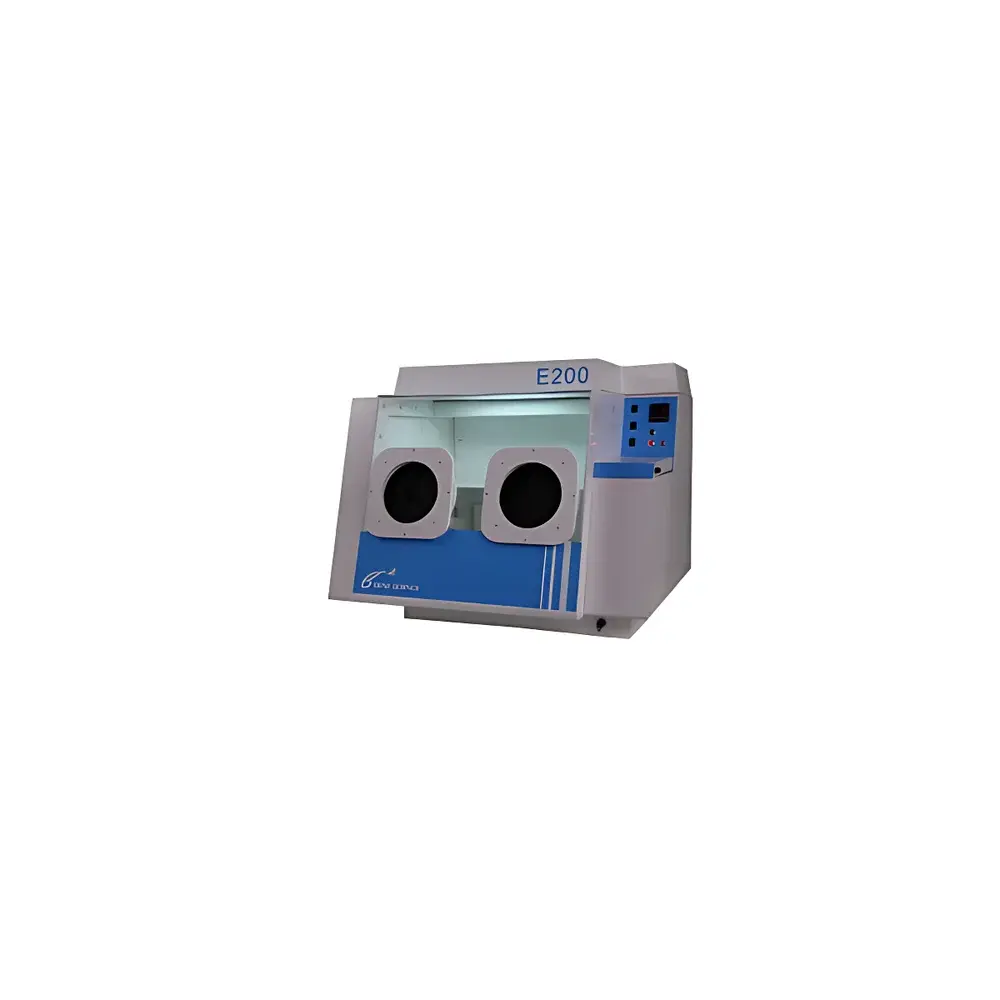
GeneScience E200 Anaerobic / Microaerophilic (CO₂) Workstation
| Brand | GeneScience |
|---|---|
| Origin | USA |
| Manufacturer Type | Authorized Distributor |
| Origin Category | Imported |
| Model | E200 |
| Price Range | USD 6,800 – 13,600 (FOB) |
| Temperature Control Range | Ambient +3°C to 52°C |
| Temperature Uniformity | ±0.3°C |
| Temperature Stability | ±0.1°C |
| Humidity Control Range | Ambient RH to 85% RH |
| Transfer Lock Cycle Time | ≤15 s |
| Internal Working Volume | ≥140 L |
| O₂ Reduction Capability | <5 ppm (via Pd-catalyzed H₂/N₂/CO₂ system) |
| Gas Supply Options | Single-gas (10% H₂ / 10% CO₂ / 80% N₂) or Dual-gas (N₂ + premixed gas) |
| Gas Consumption | ~0.38 m³/week (dual-gas mode) |
| Operating O₂ Range | 0–10% (anaerobic to microaerophilic) |
Overview
The GeneScience E200 Anaerobic / Microaerophilic Workstation is an engineered environmental control platform designed for precise, reproducible cultivation of obligate anaerobes, facultative anaerobes, and microaerophiles—including Clostridium, Bacteroides, Helicobacter pylori, and Campylobacter jejuni. It operates on a catalytic deoxygenation principle: hydrogen gas reacts with residual oxygen over a palladium-coated catalyst at ambient temperature, forming water vapor—eliminating the need for thermal regeneration or frequent catalyst reactivation. The workstation maintains stable, programmable O₂ concentrations from 0% (strictly anaerobic) to 10% (microaerophilic), with real-time verification via integrated ppm-level anaerobic indicator pump. Its sealed acrylic chamber ensures optical clarity, electrical insulation, and chemical resistance to common disinfectants and metabolic byproducts such as H₂S and volatile fatty acids.
Key Features
- Optically transparent, corrosion-resistant acrylic construction with full front visibility and removable side panels for unrestricted instrument integration or deep cleaning.
- Integrated dry-type pressure relief valve maintains consistent internal positive pressure (typically +10–20 Pa), minimizing external air infiltration and preserving anaerobic integrity during operation.
- Direct-access, sleeveless entry system enables bare-hand manipulation without gloves or sleeves—reducing ergonomic fatigue and cross-contamination risk while maintaining sterility through laminar airflow and rapid lock cycling.
- Dual-mode gas supply architecture supports either single-gas (premixed 10% H₂ / 10% CO₂ / 80% N₂) or dual-gas (separate N₂ and premixed cylinder) configurations, with low-consumption design extending 10 m³ gas supply to up to 37 weeks (dual-gas) or 28 weeks (single-gas).
- Automated digital humidity control (ambient RH to 85% RH) prevents condensation on optics and culture surfaces; independent temperature regulation (ambient +3°C to 52°C) with ±0.1°C stability and ±0.3°C uniformity across the 140+ L working volume.
- Onboard H₂S and volatile fatty acid scavenging system—using proprietary sulfur-binding and unsaturated lipid adsorption media—removes growth inhibitors commonly produced by anaerobic metabolism.
- Integrated 254 nm UV-C germicidal lamp and energy-efficient fluorescent illumination support routine sterilization and visual inspection without chamber venting.
Sample Compatibility & Compliance
The E200 accommodates standard microbiological consumables including 90 mm Petri dishes (up to 400 in pure culture mode, 300 during active manipulation), anaerobic jars, blood culture bottles, and small benchtop instruments (e.g., colony pickers, microcentrifuges). Its transfer lock (200 × 100 × 100 mm, ≥2 L volume) achieves <5 ppm O₂ in ≤15 seconds via nitrogen purge and catalytic scrubbing—meeting ISO 11133:2014 requirements for anaerobic culture system validation. The system supports GLP-compliant workflows through auditable parameter logging (temperature, humidity, O₂ status), alarm event timestamps (low/high temperature, pressure loss, humidity deviation), and traceable catalyst and detoxification media replacement records. While not FDA 21 CFR Part 11–certified out-of-the-box, its data export functionality (CSV via USB) enables integration into validated LIMS environments under laboratory-defined SOPs.
Software & Data Management
The E200 employs a microprocessor-based controller with LED interface—no external PC required. All operational parameters (setpoints, alarms, lock cycle logs, lamp usage hours) are stored in non-volatile memory with battery-backed retention. Real-time O₂ status is confirmed visually via the included ppm-sensitive anaerobic indicator pump (A/B reagent system), eliminating reliance on electronic sensors prone to drift. For laboratories requiring digital archiving, optional RS-232 or USB-to-serial adapters enable periodic download of operational history—including timestamped temperature/humidity excursions and alarm triggers—to comply with internal QA protocols or ISO/IEC 17025 documentation standards.
Applications
- Routine isolation and subculture of clinical anaerobes from wound, stool, and abscess specimens per CLSI M11-A8 guidelines.
- Microaerophilic cultivation of H. pylori and C. jejuni for antimicrobial susceptibility testing (AST) and strain banking.
- Long-term maintenance of fastidious anaerobic reference strains without cryopreservation cycles.
- Preparation of anaerobic master plates for MALDI-TOF MS identification workflows.
- Support of anaerobic gut microbiota studies—including fecal microbiota transplantation (FMT) sample processing—under standardized O₂ and CO₂ conditions.
- In-process monitoring of bioreactor inocula where strict redox control is critical prior to scale-up.
FAQ
What gas mixtures are compatible with the E200?
The system accepts either a single premixed gas (10% H₂ / 10% CO₂ / 80% N₂) or dual-gas configuration (one cylinder of pure N₂ + one of the same premix), enabling flexible O₂ reduction and CO₂ supplementation.
Does the E200 require catalyst regeneration?
No—its high-efficiency palladium catalyst operates continuously at ambient temperature and does not require thermal activation, baking, or periodic replacement under normal use (typical service life: 12–18 months depending on usage frequency and gas purity).
Can the workstation be used for microaerophilic cultures?
Yes—the O₂ setpoint is adjustable from 0% to 10%, allowing precise simulation of physiological microaerobic niches such as gastric mucosa or intestinal crypts.
Is the transfer lock validated for sterility assurance?
The lock achieves <5 ppm O₂ in ≤15 s using N₂ purge followed by catalytic H₂/O₂ recombination; users should validate sterility transfer performance per their institutional SOPs using biological indicators (e.g., Clostridium sporogenes spores).
What maintenance is required beyond catalyst and detox media replacement?
Routine tasks include quarterly lubrication of door seals with supplied silicone powder, biannual UV lamp replacement (rated life: 1,000 h), and annual calibration verification of temperature/humidity sensors using NIST-traceable references.




