
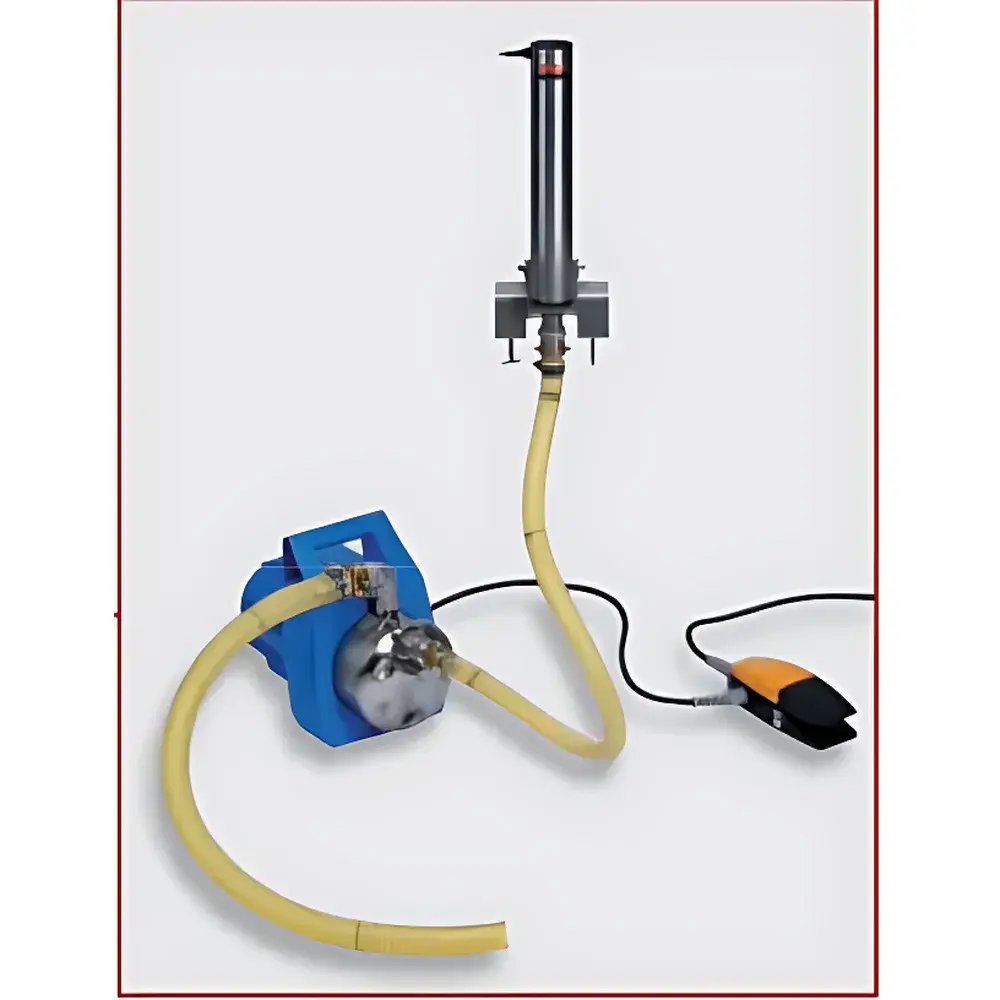
Gerber Sedilab-E Automatic Milk Sediment Analyzer
| Brand | Gerber |
|---|---|
| Origin | Germany |
| Model | SEDILAB-E |
| Application | Milk and Dairy Product Sediment Analysis |
| Automation Level | Fully Automatic |
| Sample Throughput | 800 samples/hour |
| Sample Volume per Test | 500 mL |
| Sediment Disc Diameter | 32 mm |
| Repeatability | Grade-based Classification (per ISO 707 & IDF 50) |
| Compliance | Designed for ISO, IDF, and national dairy quality standards |
Overview
The Gerber SEDILAB-E Automatic Milk Sediment Analyzer is an industrial-grade, fully automated instrument engineered for rapid, standardized quantification of visible particulate contaminants in liquid milk and reconstituted dairy products. It operates on the principle of vacuum-assisted membrane filtration followed by optical assessment of retained sediment on a standardized 32 mm diameter glass-fiber filter disc. The system conforms to the core methodology defined in ISO 707 (Milk — Determination of sediment content) and IDF Standard 50 (Determination of sediment in milk), ensuring regulatory alignment with global dairy quality assurance frameworks. Unlike manual sediment testers, the SEDILAB-E integrates sample aspiration, filtration, disc drying, and operator-assisted visual grading into a single streamlined workflow—eliminating inter-operator variability and enabling high-volume laboratory throughput at up to 800 samples per hour.
Key Features
- Fully automated filtration cycle: integrated vacuum pump, programmable flow control, and timed filtration termination ensure consistent pressure and duration across all samples.
- Dedicated 32 mm sediment disc holder compliant with ISO 707 geometry and material specifications—compatible with standard GF/C or equivalent glass microfiber filters.
- Modular benchtop design with stainless-steel fluid path components and corrosion-resistant housing—optimized for repeated exposure to milk proteins, cleaning agents, and sanitizers.
- Integrated drying stage with low-temperature air purge prevents moisture retention on the disc surface, minimizing false-positive readings due to condensation or residual whey film.
- Real-time status monitoring via LED indicators and intuitive push-button interface; no PC or software required for basic operation.
- Compliance-ready documentation support: instrument logbook templates, calibration verification records, and maintenance schedules aligned with GLP and ISO/IEC 17025 laboratory requirements.
Sample Compatibility & Compliance
The SEDILAB-E is validated for use with raw milk, pasteurized milk, UHT milk, reconstituted skim and whole milk powders, and whey-based liquids. It accommodates viscosity ranges typical of dairy streams (up to 3.5 mPa·s at 20 °C) without clogging or flow deviation. All filtration parameters—including vacuum level (−60 kPa nominal), maximum sample volume (500 mL), and minimum disc wetting time—are preconfigured to meet the procedural constraints of ISO 707 Annex A and IDF 50 Clause 6. The instrument’s mechanical repeatability supports grade-based sediment classification (Class I–IV) as defined in national dairy regulations (e.g., China GB 19301, EU Regulation (EC) No 853/2004, and US FDA Grade A Pasteurized Milk Ordinance). Routine performance verification can be conducted using certified reference sediment discs traceable to NIST SRM 2822 (particulate standard).
Software & Data Management
While the SEDILAB-E operates autonomously without mandatory software, optional Gerber LabLink™ connectivity enables integration into LIMS environments via RS-232 or Ethernet. The interface supports timestamped test logging (sample ID, operator code, date/time, sediment grade, and pass/fail flag), with export capability to CSV or XML formats. Audit trail functionality complies with FDA 21 CFR Part 11 requirements when paired with validated user access controls and electronic signature modules. All firmware updates are delivered via secure USB key with version-controlled release notes and change impact assessments.
Applications
- Quality control laboratories in dairy processing plants performing routine incoming raw milk acceptance testing.
- Regulatory inspection agencies conducting official sediment compliance checks under national food safety mandates.
- R&D facilities evaluating filtration efficiency of new homogenization or separation processes.
- Contract testing labs serving multiple clients under ISO/IEC 17025 accreditation scope for milk purity analysis.
- Academic dairy science programs requiring standardized, reproducible sediment quantification for teaching and method validation studies.
FAQ
What standards does the SEDILAB-E comply with?
ISO 707:2022, IDF 50:2018, and national equivalents including GB 19301–2010 and EU Commission Regulation (EU) No 589/2014.
Can the instrument process non-dairy liquids such as plant-based milks?
It is not validated for almond, soy, or oat beverages due to differing particulate composition, viscosity profiles, and filtration behavior; dedicated method development and verification would be required.
Is operator training required for ISO-compliant use?
Yes—users must complete Gerber-certified training covering filtration protocol adherence, disc handling, grade interpretation per ISO 707 Annex B, and documentation practices for audit readiness.
How often does the vacuum pump require maintenance?
Under continuous operation (8 h/day), oil-free diaphragm pump service intervals are recommended every 6 months or 2,000 operating hours, whichever occurs first.
Does the system include a built-in calibration verification procedure?
Yes—the SEDILAB-E includes a mechanical zero-check routine and optional traceable sediment reference discs for periodic performance verification per ISO/IEC 17025 Clause 6.5.





