
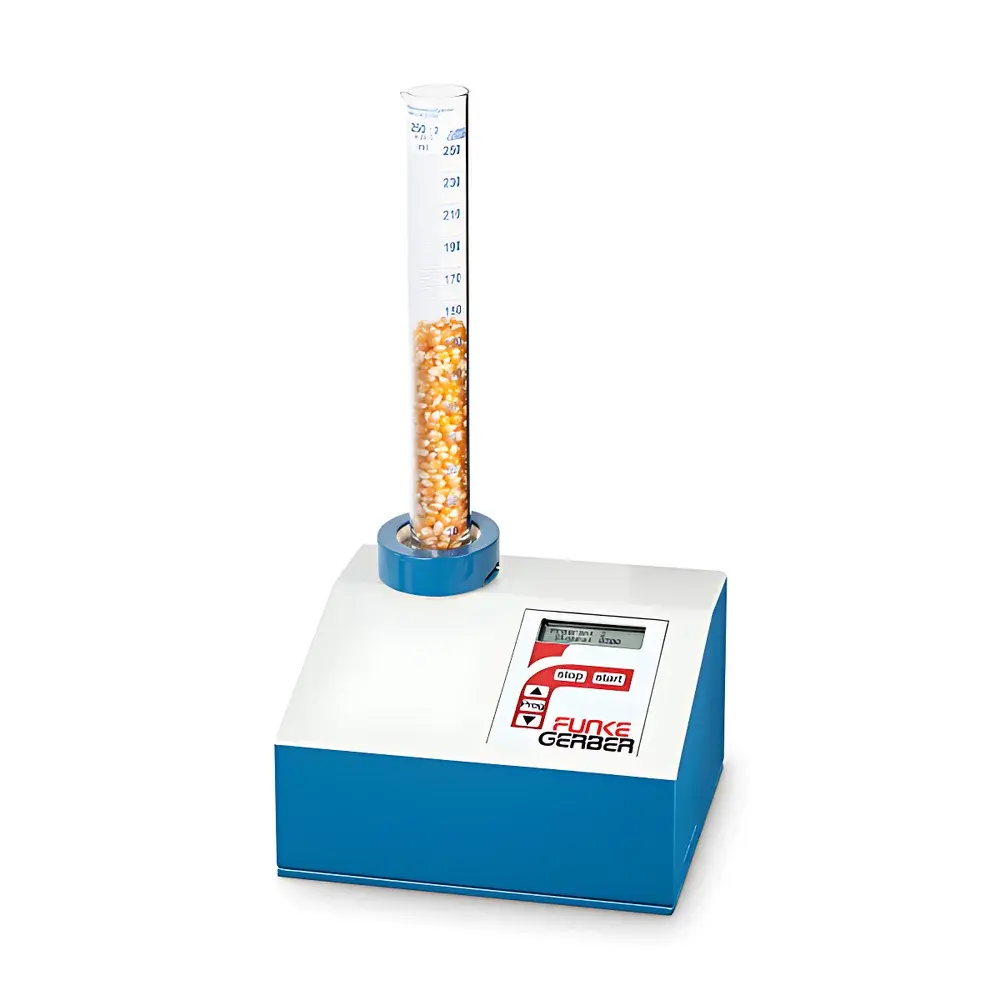
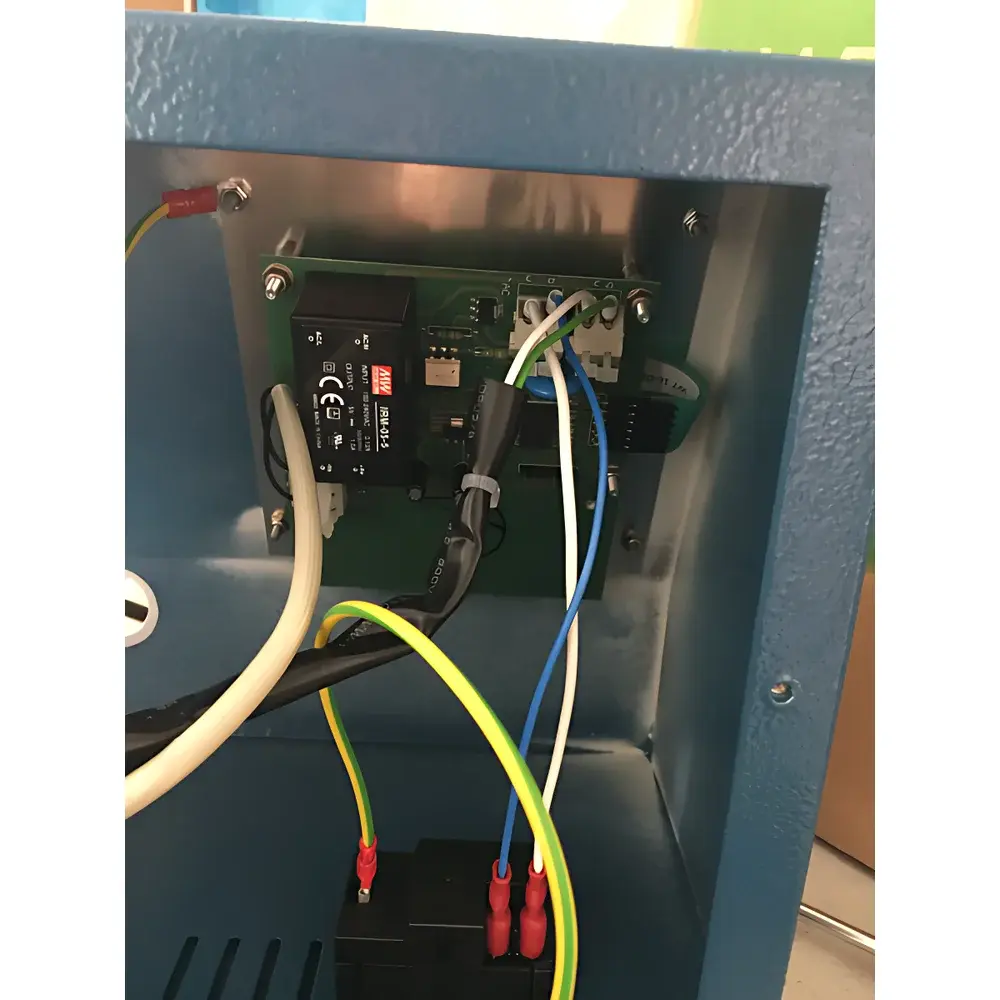
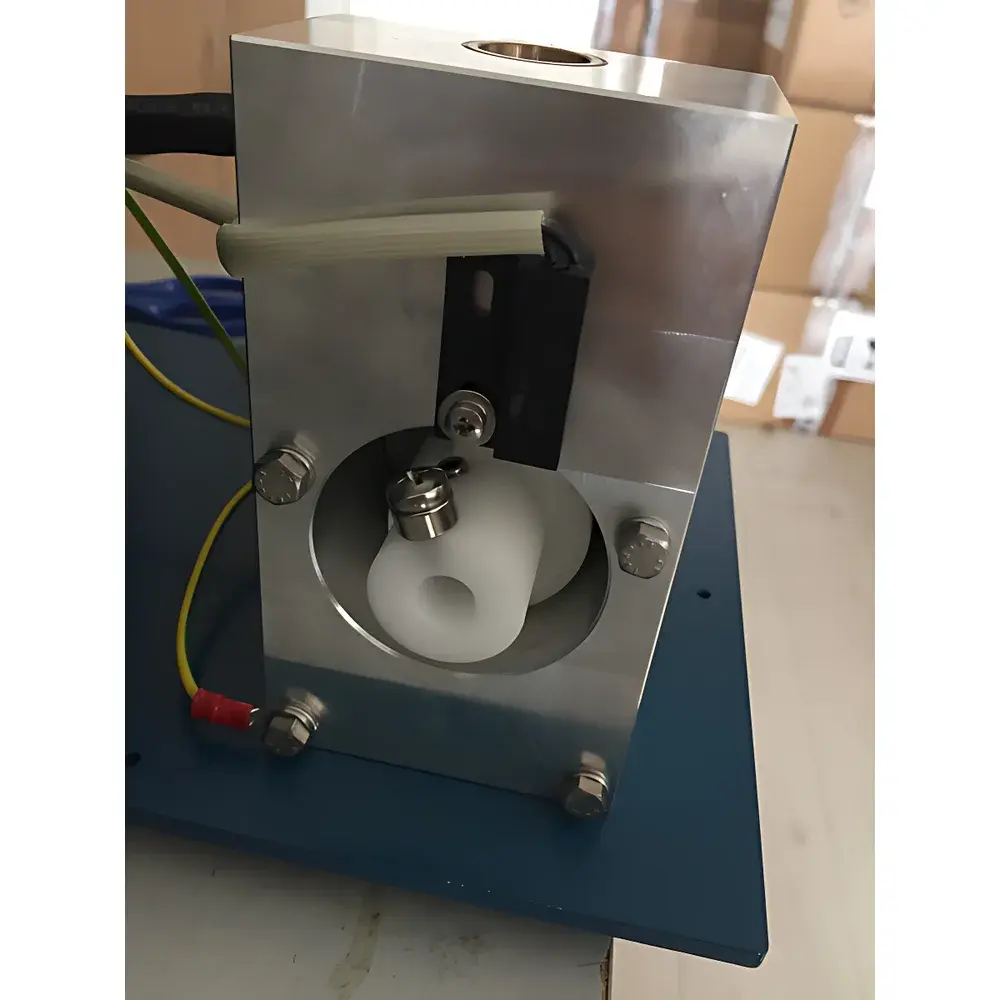
Gerber TDT Tap Density Tester
| Brand | Gerber |
|---|---|
| Origin | Germany |
| Model | TDT |
| Standards Compliance | DIN ISO 8967, ISO 3953, ISO 8460, ISO 9161, ISO 787-11, ASTM D4164, ASTM D4781, ASTM B527, USP <616> Method I, IDF 134 |
| Predefined Programs | 5 |
| Tap Count Range | 5–9995 cycles |
| Tap Rate | 250 taps/min |
| Tap Amplitude | 3 mm |
| Included Accessory | 250 mL calibrated graduated cylinder |
| Category | Food Quality Detector for Powder Bulk Density and Tap Density Measurement |
Overview
The Gerber TDT Tap Density Tester is a precision-engineered instrument designed specifically for the determination of bulk density and tapped density of free-flowing powders—particularly infant formula, milk powder, whey protein isolates, and other fine food-grade particulates. Operating on the standardized mechanical tapping principle defined in ISO 3953 and USP Method I, the TDT applies controlled vertical displacement to a graduated cylinder containing a representative powder sample. Through repetitive, consistent mechanical taps, interstitial air is progressively expelled, enabling quantification of volume reduction and subsequent calculation of tap density (g/mL) and compressibility indices such as Carr Index and Hausner Ratio. Its robust architecture, calibrated mechanical drive system, and traceable metrology support routine QC/QA workflows in food manufacturing, R&D laboratories, and regulatory-compliant production environments.
Key Features
- Five factory-preset test protocols aligned with major international standards—including ISO 3953 (bulk and tap density), ISO 8967 (infant formula specifications), and USP Method I (pharmaceutical-grade powder characterization)—ensuring method reproducibility across global facilities.
- Adjustable tap count range from 5 to 9995 cycles, allowing precise customization for materials with varying cohesivity, particle size distribution, or moisture sensitivity.
- Fixed tap frequency of 250 ± 5 taps per minute and a mechanically constrained amplitude of 3.0 ± 0.1 mm—both independently verified and documented per ISO/IEC 17025 calibration practices.
- Integrated 250 mL Class A borosilicate glass graduated cylinder (ISO 4788 compliant), supplied with certificate of conformity and volume graduation accuracy certified to ±0.5 mL at 25 °C.
- Dedicated mechanical counter with non-volatile memory retains last-used parameters and cycle counts, supporting GLP-aligned audit trails without software dependency.
Sample Compatibility & Compliance
The TDT is validated for use with dry, non-agglomerating, non-fibrous food powders exhibiting particle sizes between 10 µm and 500 µm—encompassing spray-dried dairy powders, maltodextrin blends, fortified nutritional mixes, and soluble coffee granules. It excludes cohesive, hygroscopic, or electrostatically charged materials requiring fluidized bed or gas pycnometry alternatives. Regulatory alignment includes full traceability to DIN ISO 8460 (determination of apparent density of powdered milk), ISO 9161 (methods for skimmed milk powder), and IDF Standard 134 (density testing of dried milk products). The device satisfies prerequisite instrumentation requirements under EU Regulation (EC) No 1881/2006 and FDA 21 CFR Part 11 when used within documented SOPs and maintained per Gerber’s recommended service intervals.
Software & Data Management
The Gerber TDT operates as a standalone electromechanical system with no embedded firmware or digital interface. All measurement data—including initial volume, final tapped volume, tap count, and calculated densities—is recorded manually into laboratory notebooks or LIMS-compatible spreadsheets. This analog-first design eliminates cybersecurity vulnerabilities, reduces validation burden in GMP-regulated food plants, and ensures compatibility with paper-based or hybrid quality management systems. For laboratories requiring electronic records, Gerber provides optional Excel-based calculation templates (validated per Annex 11 principles) that accept raw inputs and auto-generate Carr Index, Hausner Ratio, and % compressibility—fully auditable and revision-controlled.
Applications
- Quality control of infant formula batches against Codex Alimentarius STAN 72–1981 and national specifications (e.g., GB 10765–2021).
- Process optimization of spray drying and fluid bed agglomeration by correlating tap density with particle morphology and surface fat content.
- Stability assessment of fortified milk powders during accelerated shelf-life studies (ASTM F1980).
- Raw material acceptance testing per supplier agreements referencing ISO 8967 or IDF 134.
- Supporting hazard analysis in HACCP plans where powder flow behavior impacts dosing accuracy in blending and packaging lines.
FAQ
Is the TDT suitable for measuring the density of wet or clumped powders?
No. The TDT requires free-flowing, de-aired samples prior to loading. Agglomerated or moisture-affected powders must be pre-sieved (e.g., through 1.0 mm mesh) and conditioned at standard humidity (25 °C / 50% RH) for 24 h before testing.
Does Gerber provide calibration services or certificates for the TDT?
Yes. Gerber-certified calibration includes mechanical verification of tap frequency, amplitude, and cylinder volume—traceable to PTB (Physikalisch-Technische Bundesanstalt) standards. Annual recalibration is recommended for GMP compliance.
Can the TDT be used for non-food applications such as pharmaceutical excipients?
While physically capable, the TDT is configured and validated exclusively for food-grade powders per ISO 8967 and IDF 134. Pharmaceutical use requires separate IQ/OQ/PQ validation against USP and ICH Q5C guidelines—not covered under standard Gerber support.
What maintenance is required to ensure long-term accuracy?
Daily visual inspection of cylinder integrity and tap rod alignment; biannual lubrication of cam mechanism using ISO VG 10 synthetic oil; replacement of rubber impact pads every 12 months or after 50,000 taps—whichever occurs first.






