
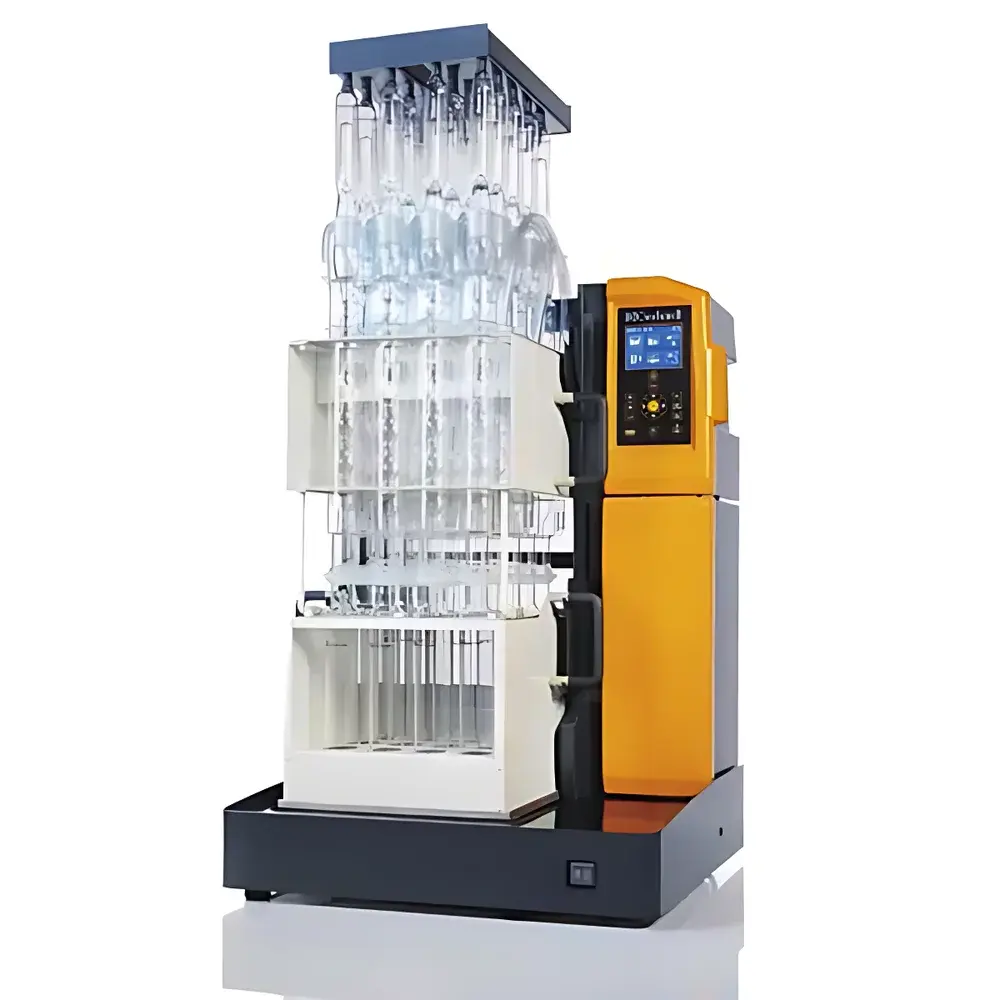
Gerhardt Trace Metal Digestion System SMA-L 20S
| Brand | Gerhardt |
|---|---|
| Origin | Germany |
| Manufacturer | C. Gerhardt GmbH & Co. KG |
| Type | Electric Heating Digestion Instrument |
| Automation Level | Fully Automatic |
| Digestion Positions | 20 |
| Max Heating Temperature | 240 °C |
| Temperature Control Accuracy | ±0.1 °C |
| Heating Principle | Resistive Electric Heating |
| Reagent Channels | 20 |
| Programmable Methods | 99 |
| Max Heating Stages per Method | 40 |
| Predefined Methods | 30 |
| Heating Rate Control | Variable |
| Footprint | 51.5 × 48.3 cm |
| Digestion Vessel Capacity | Up to 250 mL (8 samples simultaneously in standard configuration) |
| Safety Features | Integrated fume extraction interface, motorized lift stage, preheating function, automated TURBOSOG® and cooling water valve actuation |
Overview
The Gerhardt Trace Metal Digestion System SMA-L 20S is a fully automated, electrically heated block digestion instrument engineered for trace-level elemental analysis in environmental, food, pharmaceutical, and clinical laboratories. It operates on the principle of controlled conductive heating within a precisely calibrated aluminum or graphite digestion block, enabling reproducible thermal decomposition of organic matrices using strong mineral acids (e.g., HNO₃, HCl, HF, H₂O₂) under closed-vessel or open-vessel configurations. Designed to meet stringent requirements for low-background metal analysis, the SMA-L 20S minimizes contamination risk through inert material construction, segregated reagent delivery, and integrated acid fume management—critical for ICP-MS, ICP-OES, and AAS sample preparation workflows where detection limits in the sub-ppt range are required.
Key Features
- Fully automatic operation with 20 independent digestion positions and 20 dedicated reagent channels—enabling parallel, method-specific acid addition per sample.
- High-precision temperature control (±0.1 °C) across a 30–240 °C operating range, with programmable ramp rates and up to 40 discrete heating stages per method.
- 99 user-definable digestion protocols, including 30 pre-validated methods aligned with EPA 3050B, ISO 11047, DIN EN 13656, and ASTM D5511 for trace metals in soils, sludges, biological tissues, and polymers.
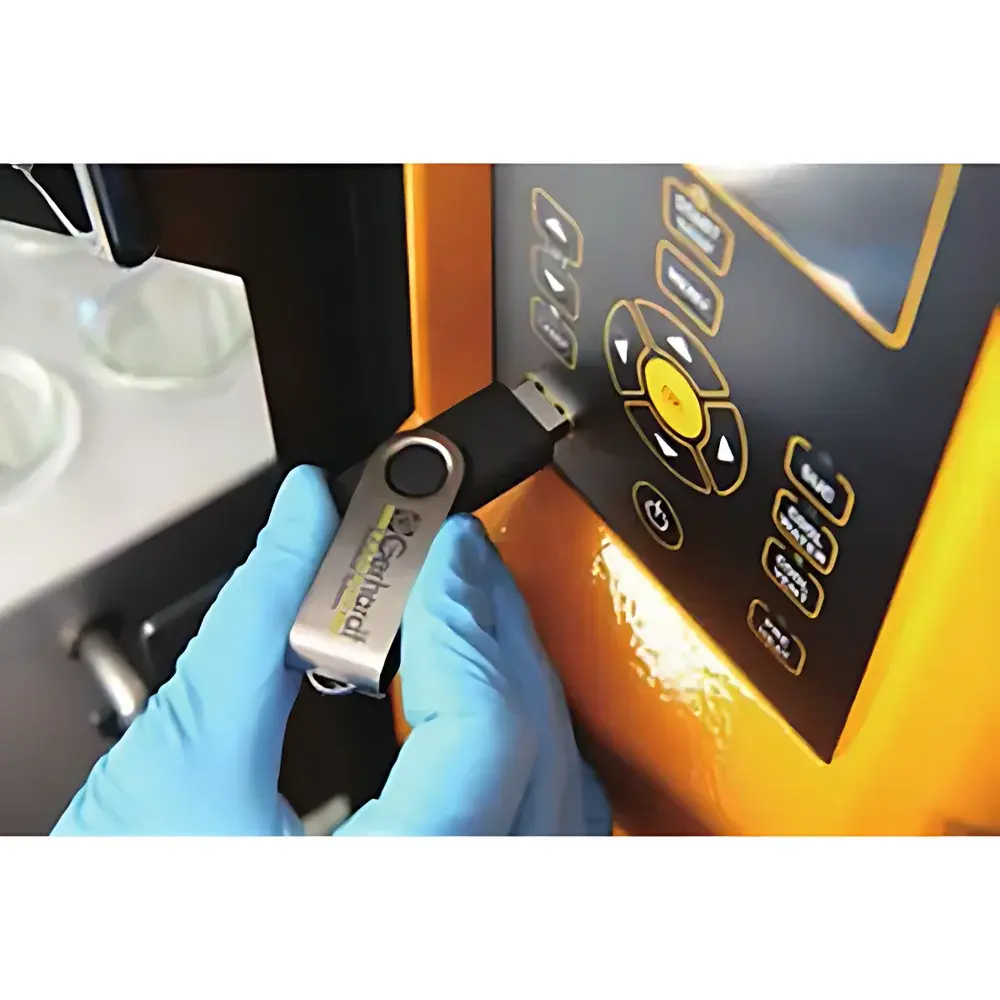
- Modular controller unit with Ethernet/USB connectivity, audit-trail-enabled software, and full data logging compliant with ISO/IEC 17025:2017 and GLP requirements—including user authentication, electronic signatures, and change history.
- Motorized, height-adjustable sample rack lift mechanism ensures ergonomic loading/unloading and eliminates manual handling of hot digestion vessels.
- Integrated fume extraction interface compatible with Gerhardt’s TURBOSOG® acid gas scrubbing system (optional), featuring automated activation of scrubber and cooling water valves synchronized with digestion cycle phases.
- Compact footprint (51.5 × 48.3 cm) optimized for space-constrained analytical labs; supports simultaneous digestion of up to 8 samples in 250 mL vessels without compromising thermal uniformity or safety.
Sample Compatibility & Compliance
The SMA-L 20S accommodates standard borosilicate glass or PTFE-lined digestion tubes (20–250 mL capacity), supporting both open-vessel reflux and semi-closed digestion modes. It is validated for use with certified reference materials (CRMs) such as NIST SRM 1573a (Tomato Leaves), BCR-681 (Lichen), and ERM-CC141 (Soil), ensuring method accuracy and inter-laboratory comparability. The system complies with ISO/IEC 17025:2017 clause 7.2.2 (method validation), EU Regulation (EC) No 882/2004 (official controls), and supports FDA 21 CFR Part 11 readiness when paired with Gerhardt’s LIMS-integrated software suite. All wet chemistry steps—including reagent dosing, temperature profiling, and fume abatement—are fully documented and traceable for regulatory audits.
Software & Data Management
Gerhardt’s proprietary SMA Control Software provides intuitive method creation, real-time monitoring of temperature profiles, reagent consumption tracking, and event-based alarm logging. Each digestion run generates a timestamped digital record containing operator ID, method version, vessel IDs, thermal history, and error flags—exportable in CSV or PDF format. Audit trails retain all modifications to methods or system parameters, satisfying GLP/GMP documentation requirements. Optional integration with laboratory information management systems (LIMS) via ASTM E1384 or HL7 standards enables seamless sample-to-report data flow.
Applications
- Determination of Cd, Pb, As, Hg, Cr, Ni, Cu, Zn, and other regulated metals in wastewater, sediments, and drinking water per EPA Method 200.2 and ISO 17294-2.
- Preparation of food and feed samples for total metal content analysis in compliance with EC Regulation No 1881/2006 and EN 13805.
- Decomposition of pharmaceutical excipients and active ingredients prior to USP / elemental impurities testing.
- Acid digestion of geological and metallurgical samples for geochemical mapping and ore grade assessment.
- Support of ISO 14001 environmental management systems through standardized, auditable sample preparation procedures.
FAQ
What types of digestion vessels are compatible with the SMA-L 20S?
Standard 20–250 mL borosilicate glass tubes or PTFE-coated vessels are supported; quartz and high-purity PFA tubes may be used with optional adapter kits.
Does the system support method validation according to ISO/IEC 17025?
Yes—the controller logs all critical parameters with time stamps and user attribution, and software includes calibration certificate templates and uncertainty calculation tools per ISO/IEC 17025 Annex A.
Can reagent addition be customized per sample position?
Yes—each of the 20 reagent channels operates independently, allowing position-specific acid type, volume, and timing sequences.
Is the TURBOSOG® system mandatory or optional?
Optional; however, its integration is strongly recommended for HF-based digestions or high-throughput labs requiring continuous acid fume neutralization without manual intervention.
How is temperature uniformity verified across the 20 positions?
Gerhardt supplies a certified temperature mapping report (per ASTM E2251) with each instrument, performed using NIST-traceable PT100 sensors at all positions under load conditions.
Related Products



