
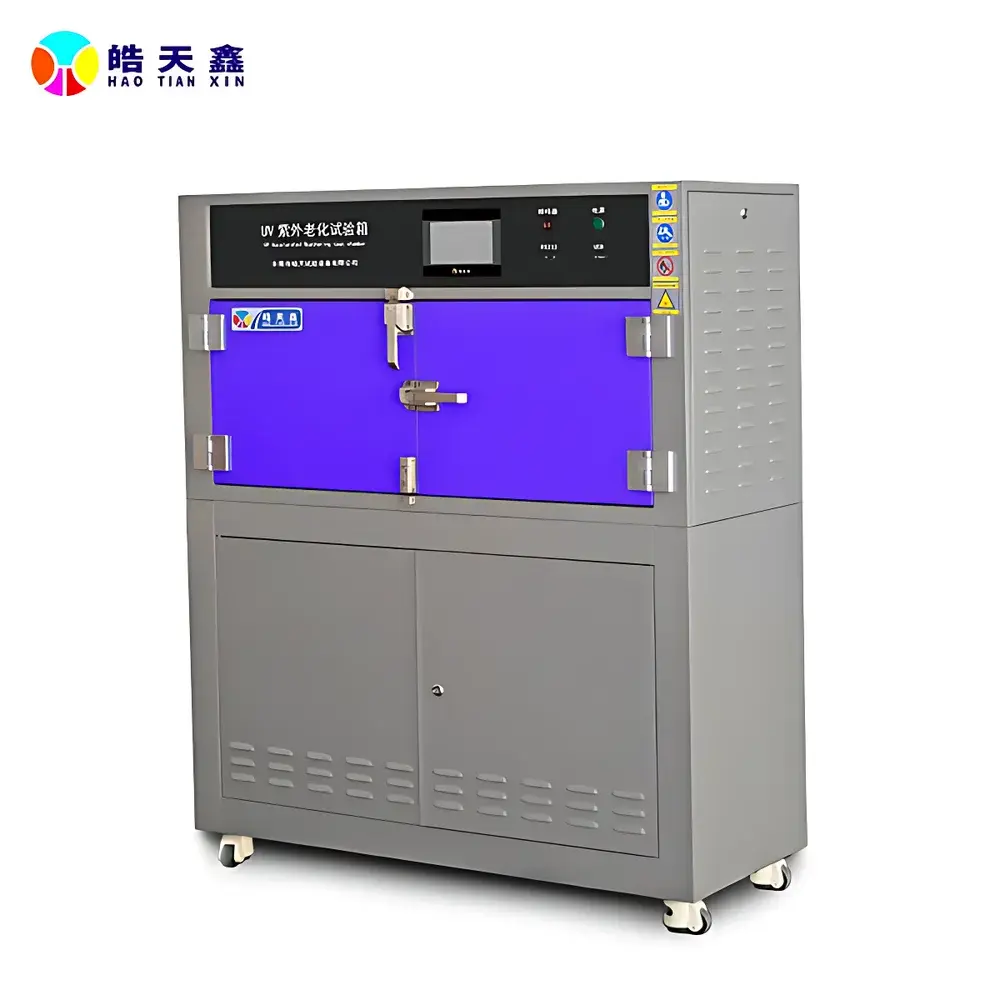
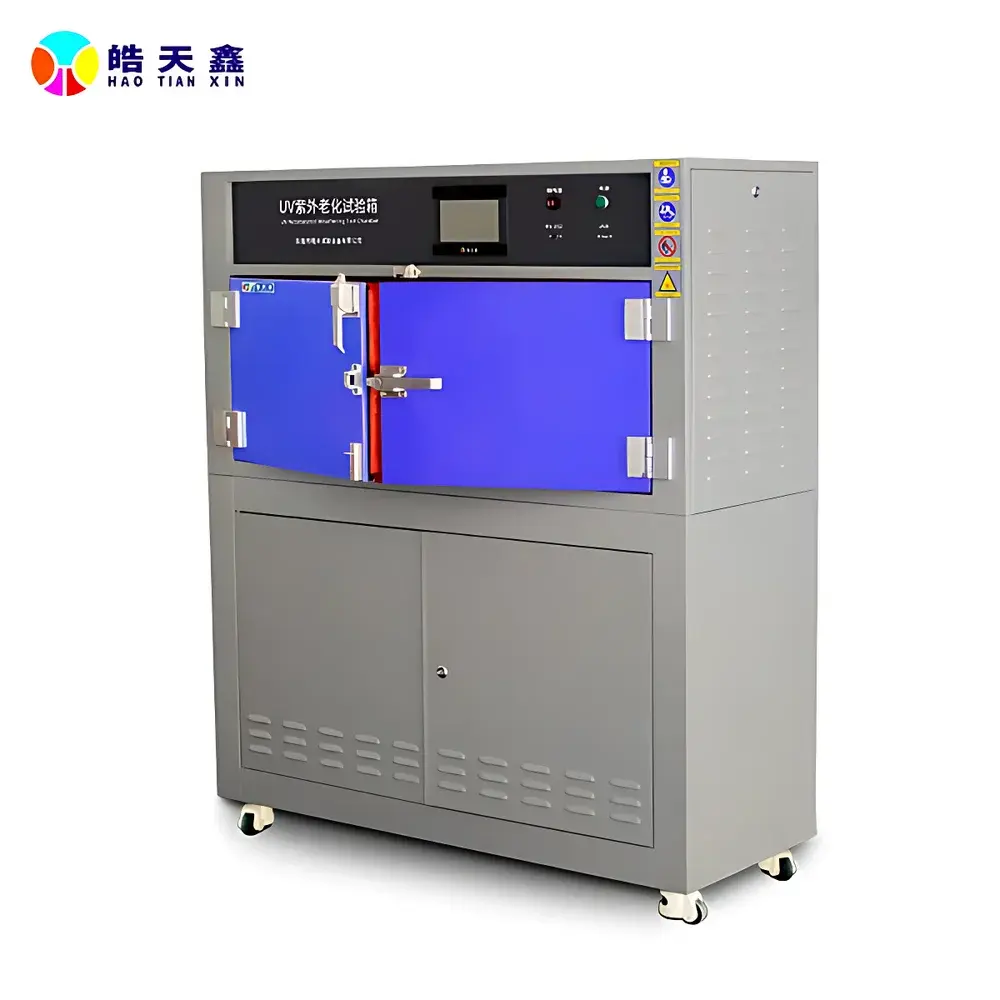
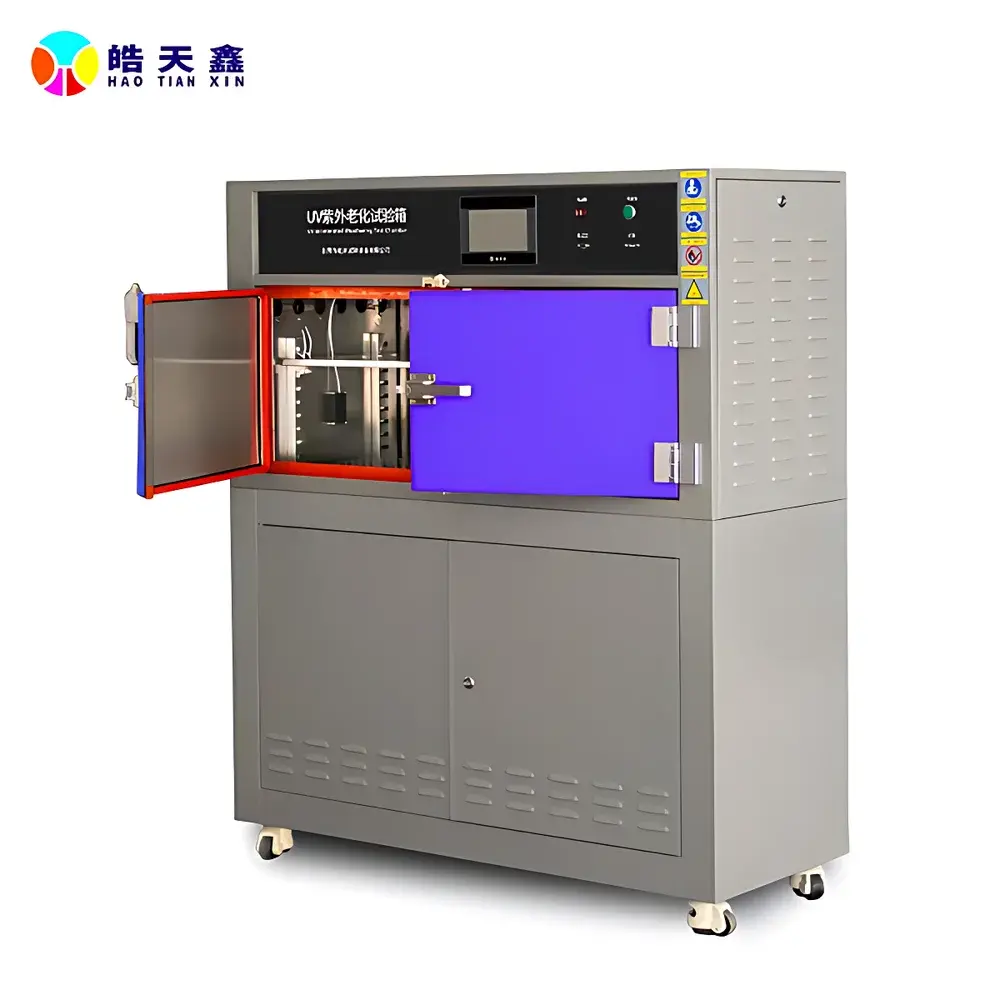
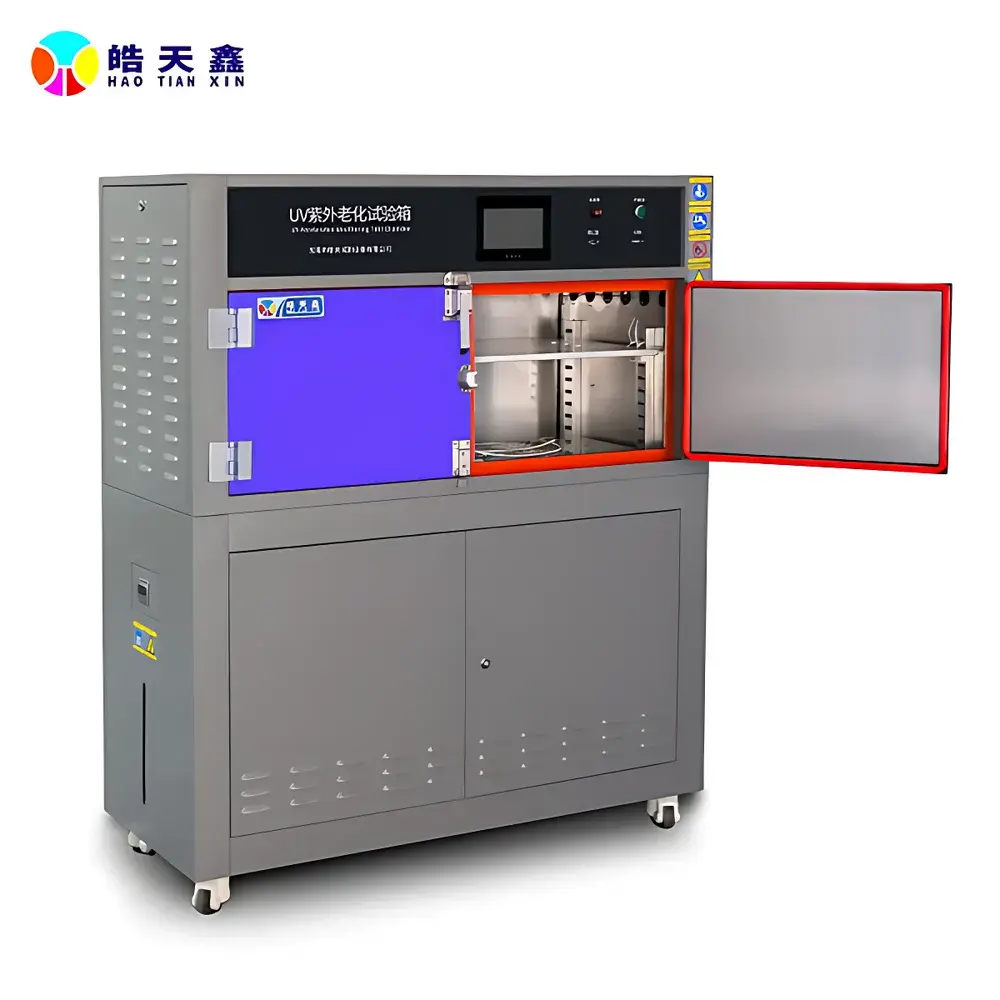
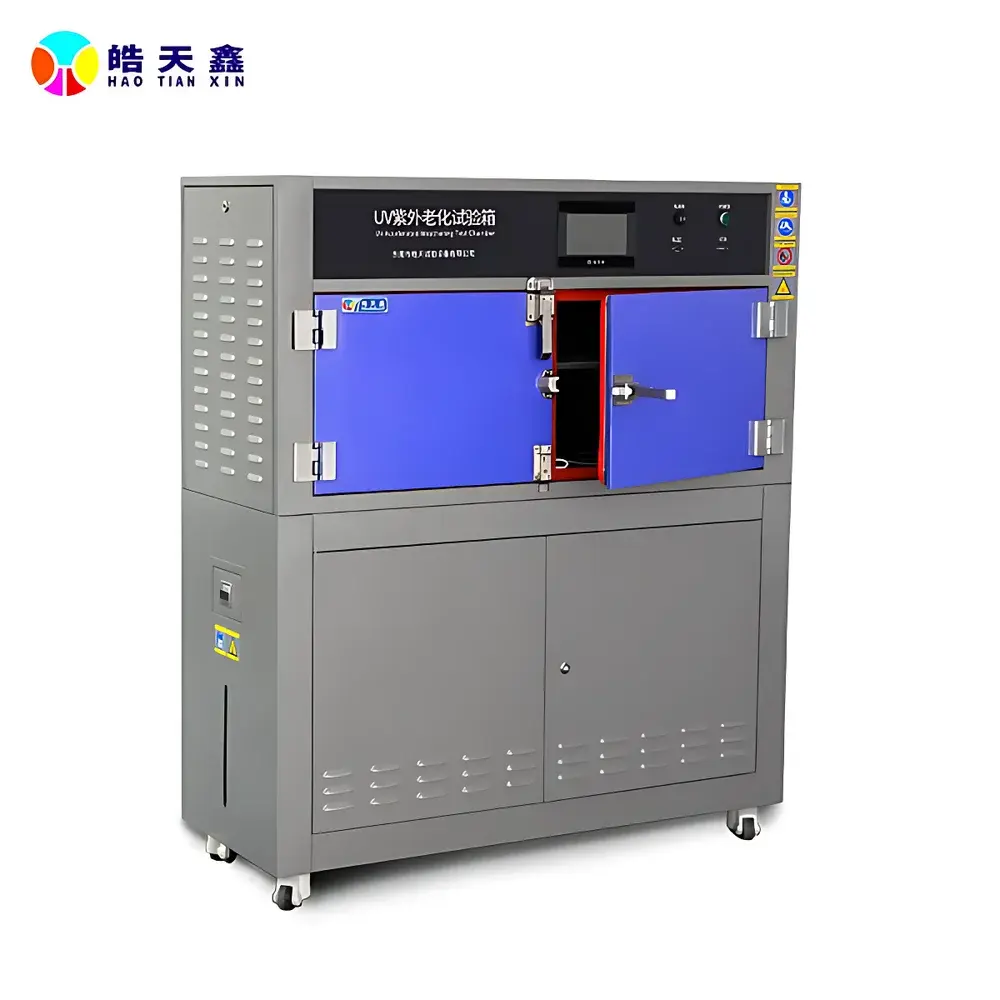
GHT GHT-UV3 Advanced UV Weathering Chamber
| Brand | GHT |
|---|---|
| Origin | Guangdong, China |
| Manufacturer Type | Direct Manufacturer |
| Country of Origin | China |
| Model | GHT-UV3/2 |
| Humidity Range | ≥95% RH (in-chamber actual value) |
| UV Lamp Power | 40 W per lamp |
| Irradiance Range | 1.2 W/m² (typically at 340 nm) |
| Test Duration | 1–9999 h adjustable |
| Illumination Temperature Range | 50–80 °C |
| Black Panel Temperature Range | 30–80 °C |
| UV Wavelength Range | 290–400 nm |
| Chamber Internal Dimensions (L×W×H) | 1100 × 450 × 250 mm |
| Condensation Temperature Control Range | RT+10–70 °C |
| Illumination Temperature Control Range | RT+10–70 °C |
| Temperature Uniformity | ±3 °C |
| Condensation Method | Steam-based condensation |
| Light/Condensation Cycle | 0–9999 h programmable (e.g., 4 h light / 4 h condensation) |
| Lamp Center-to-Center Spacing | 70 mm |
| Sample-to-Lamp Distance | 55 mm |
| UV Lamp Type | UVA-340 fluorescent lamps (standard), optional UVB-313 or UVC-351 |
| Spectral Range Options | UVA: 315–400 nm |
| UVB | 280–340 nm |
| Adjustable Irradiance | 0.1–1.0 W/m² @ 340 nm |
| Lamp Lifetime | 1600–1800 h |
| Spray Cycle Duration | 0–9999 min programmable |
| Standard Specimen Size | 50 × 120 mm (up to 48 specimens per cycle) |
| Control System | Programmable touchscreen HMI (Weinview, Taiwan), Chinese interface |
| Power Supply | AC 220 V, 50 Hz, 4.7 kW |
Overview
The GHT GHT-UV3 Advanced UV Weathering Chamber is an engineered solution for accelerated ultraviolet (UV) exposure testing of non-metallic and organic materials under controlled climatic stress conditions. It operates on the principle of fluorescent UV irradiation combined with cyclic condensation and optional water spray—mimicking key degradation drivers found in natural outdoor environments: solar UV radiation (primarily UVA and UVB bands), thermal cycling, moisture condensation, and intermittent wetting. Unlike broad-spectrum xenon arc or carbon arc systems, the GHT-UV3 leverages calibrated UVA-340 lamps, which closely replicate the terrestrial solar UV spectrum below 360 nm—the most photochemically active region responsible for polymer chain scission, pigment fading, and surface embrittlement. The chamber’s dual-zone temperature control enables independent regulation of illumination and condensation phases, ensuring precise simulation of diurnal thermal gradients. Its design complies with foundational test standards including ASTM G154 (Standard Practice for Operating Fluorescent Ultraviolet (UV) Lamp Apparatus for Exposure of Nonmetallic Materials), ISO 4892-3 (Plastics — Methods of exposure to laboratory light sources — Part 3: Fluorescent UV lamps), and GB/T 14522 (Chinese national standard for UV aging of non-metallic materials).
Key Features
- Eight high-stability UVA-340 fluorescent UV lamps (40 W each), with four spare lamps included—ensuring continuous operation and minimizing downtime during lamp replacement cycles.
- Programmable dual-mode cycling: independent control of UV irradiation duration (1–9999 h), condensation phase (RT+10°C to 70°C), and optional water spray (0–9999 min), supporting standardized cycles such as 4 h UV / 4 h condensation or 8 h UV / 4 h condensation.
- Precision black panel thermometer (BPT) monitoring across a 30–80°C range, providing direct measurement of specimen surface temperature under irradiation—critical for correlating thermal load with photodegradation kinetics.
- Steam-based condensation system generating uniform, reproducible dew formation on specimen surfaces—simulating nocturnal humidity accumulation without mechanical misting inconsistencies.
- Touchscreen human-machine interface (HMI) powered by Weinview (Taiwan) controller, featuring intuitive Chinese-language navigation, real-time parameter logging, and multi-segment program storage for repeatable test protocols.
- Robust stainless-steel interior construction with UV-resistant insulation and optimized lamp geometry: 70 mm lamp center spacing and fixed 55 mm sample-to-lamp distance ensure spatial irradiance uniformity within ±15% across the full test plane.
Sample Compatibility & Compliance
The GHT-UV3 accommodates up to 48 standard specimens measuring 50 mm × 120 mm, mounted vertically on corrosion-resistant aluminum racks. Custom fixture options support alternative geometries—including curved or three-dimensional components—for automotive trim, LED housings, and architectural sealants. All internal surfaces are electropolished 304 stainless steel, eliminating outgassing and reflective interference. The system supports full traceability in regulated environments: test logs include timestamped irradiance values (recorded at 340 nm), BPT readings, chamber humidity (%RH), and cycle stage transitions. While not inherently 21 CFR Part 11 compliant, the controller architecture permits integration with external audit-trail-capable data acquisition software for GLP/GMP-aligned laboratories conducting material qualification per IEC 61215 (photovoltaic modules) or UL 746C (polymeric materials in electrical equipment).
Software & Data Management
The embedded Weintek HMI provides local data visualization and event-triggered alarms (e.g., lamp failure, temperature deviation >±5°C, low water level). All operational parameters—including irradiance setpoint, BPT target, humidity threshold, and cycle progression—are stored in non-volatile memory with battery-backed retention. Optional RS-485 Modbus RTU output enables connection to SCADA systems or centralized LIMS platforms. For enhanced documentation, users may integrate third-party radiation meters (e.g., calibrated UV radiometers traceable to NIST) and export CSV-formatted reports containing time-series irradiance, temperature, and humidity data—facilitating statistical process control (SPC) analysis and compliance with ISO/IEC 17025 documentation requirements.
Applications
The GHT-UV3 serves quality assurance and R&D labs evaluating long-term durability of coatings (automotive clearcoats, marine antifouling paints), polymeric enclosures (LED lighting housings, consumer electronics casings), elastomeric seals (HVAC gaskets, automotive weatherstripping), and packaging films (pharmaceutical blister packs, food-grade laminates). Its UVA-340 spectral profile makes it especially suitable for predicting gloss loss, chalking, cracking, and color shift (ΔE*ab per CIE 1976) in materials exposed to subtropical or desert climates. Industrial users routinely deploy it for comparative ranking of UV stabilizers (e.g., HALS, benzotriazoles), validation of accelerated vs. outdoor correlation factors (AOCFs), and failure mode analysis preceding field trials.
FAQ
What UV lamp types are supported, and how do they differ?
Standard configuration uses UVA-340 lamps, replicating solar UV from 290–360 nm. UVB-313 lamps (280–315 nm) are available for aggressive, high-acceleration testing—common in automotive OEM specifications—but require stricter safety protocols due to higher erythemal risk.
Is calibration of irradiance traceable to international standards?
While the base unit does not include built-in NIST-traceable calibration, the system is designed for seamless integration with externally calibrated broadband or narrowband UV radiometers. Recommended recalibration intervals: every 500 operational hours or per ASTM G154 Annex A2.
Can the chamber operate continuously for extended durations (e.g., >30 days)?
Yes—its industrial-grade cooling system, redundant water-level sensors, and automatic lamp rotation logic support unattended operation up to 9999 hours. Preventive maintenance (lamp replacement, condensate drain cleaning, gasket inspection) is advised every 1600–1800 lamp-hours.
Does the controller support multi-user access levels and electronic signatures?
The standard HMI offers password-protected operator/admin modes but lacks electronic signature functionality. Integration with external validated software (e.g., LabArchives, DeltaV) is required for full 21 CFR Part 11 compliance in pharmaceutical or medical device applications.



