
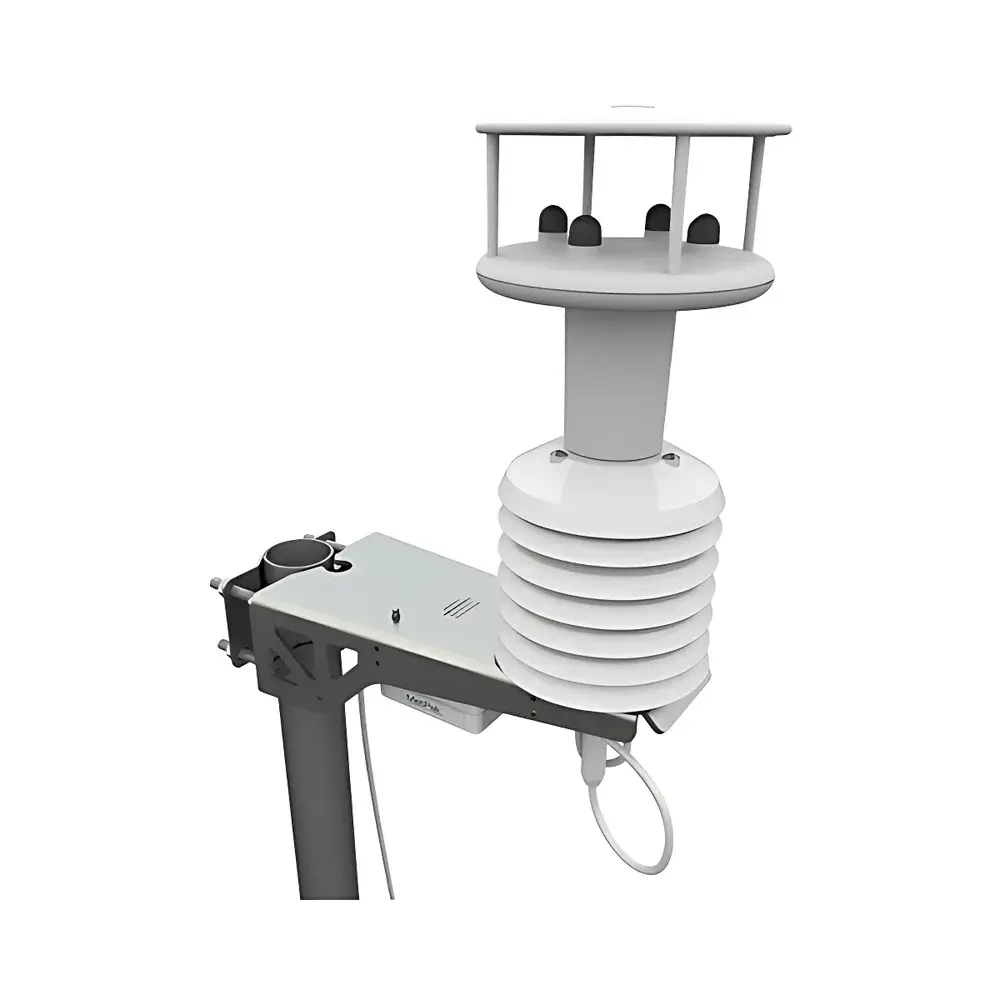
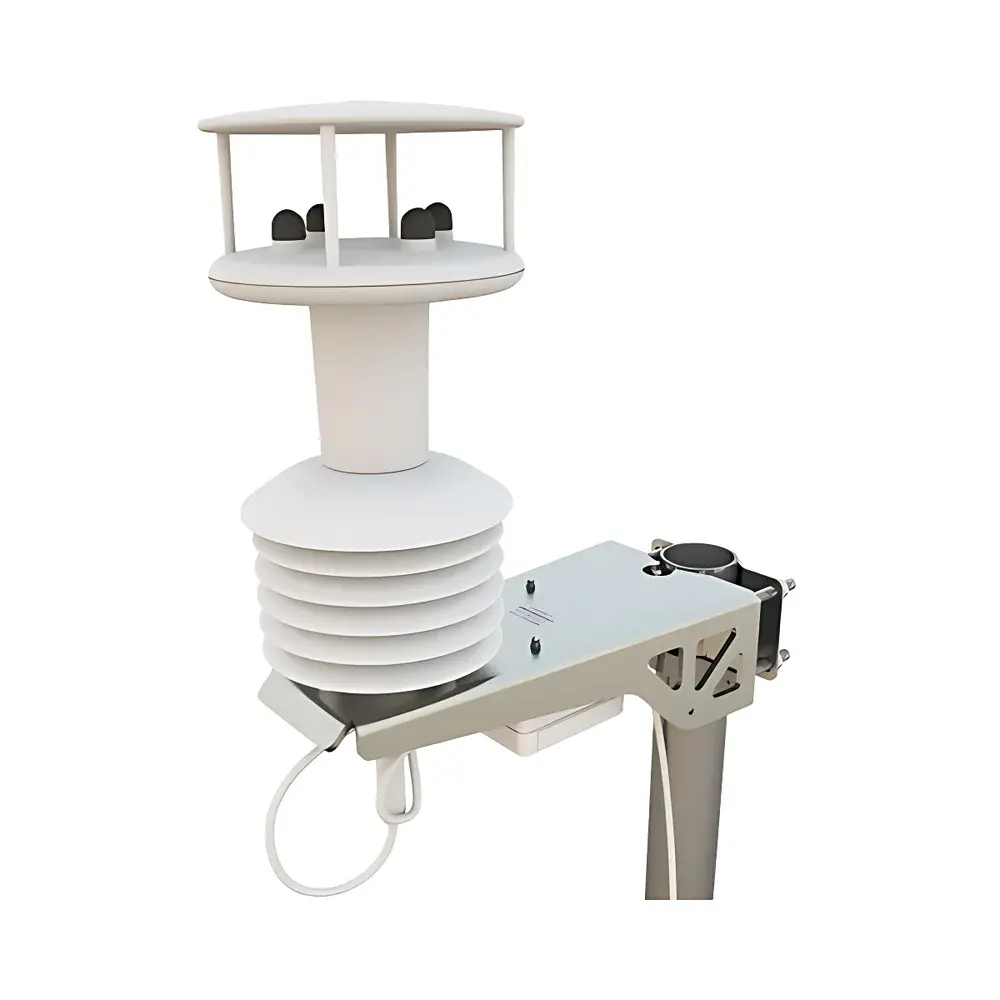
Gill Metpak Professional Portable Weather Station
| Brand | Gill |
|---|---|
| Origin | United Kingdom |
| Model | Metpak |
| Instrument Type | Portable Weather Station |
| Enclosure Rating | IP65 |
| Operating Temperature | −35 °C to +70 °C |
| Power Supply | 5–30 V DC (<16 mA @ 12 V, 1 Hz output) |
| Wind Measurement | Ultrasonic (no moving parts) |
| Wind Speed Range | 0–60 m/s |
| Wind Direction Range | 0–359° |
| Wind Accuracy | ±2% @ 12 m/s (speed), ±3° @ 12 m/s (direction) |
| Air Temperature Sensor | Pt100 1/3 Class B |
| Temp Range | −35 °C to +70 °C |
| Temp Accuracy | ±0.1 °C |
| Relative Humidity Sensor | Rotronic HygroClip HC2-53 |
| RH Range | 0–100% RH |
| RH Accuracy | ±0.8% RH @ 23 °C |
| Barometric Pressure Sensor | High-precision capacitive |
| Pressure Range | 600–1100 hPa |
| Pressure Accuracy | ±0.5 hPa |
| Dew Point Accuracy | ±0.15 °C (at 23 °C ambient, 20 °C dew point) |
| Output Protocols | ASCII, NMEA 0183, SDI-12 v1.3, Modbus RTU/ASCII |
| Communication Interfaces | RS232, RS422, RS485 (2-wire), SDI-12 |
| Baud Rates | 4800–57600 (ASCII), 1200 (SDI-12) |
| Data Update Intervals | 1 s, 2 s, 4 s, or polled |
| Mounting | Anodized aluminum U-bracket for vertical masts Ø30–58 mm |
| Weight | 2.1 kg (including bracket) |
| Materials | UV-stabilized white engineering plastic housing, anodized aluminum mounting hardware |
Overview
The Gill Metpak Professional Portable Weather Station is a fully integrated, maintenance-free environmental monitoring system engineered for high-reliability deployment in remote, harsh, and marine environments. Designed and manufactured in the United Kingdom by Gill Instruments Ltd., the Metpak employs solid-state ultrasonic wind sensing—eliminating mechanical wear and ensuring long-term stability without routine calibration or moving parts. Its multi-parameter architecture simultaneously measures wind speed and direction (including vector U/V components), air temperature, relative humidity, barometric pressure, and derived dew point temperature—all within a single compact, weatherproof enclosure rated IP65. The system’s low power consumption (<16 mA at 12 VDC with 1 Hz output) enables operation from solar-charged batteries or low-voltage DC sources, making it ideal for off-grid installations where power availability is constrained. All sensors are selected for metrological integrity: a Pt100 1/3 Class B resistance thermometer for temperature, a Rotronic HygroClip HC2-53 capacitive hygrometer for humidity, and a high-stability capacitive barometer. These components are co-located and thermally managed to minimize cross-sensitivity and ensure traceable, repeatable measurements compliant with international meteorological best practices.
Key Features
- Ultrasonic wind measurement with no moving parts—zero mechanical drift, no bearing wear, and immunity to icing or salt corrosion
- Integrated sensor suite delivering simultaneous, time-synchronized measurements of wind (speed/direction/U-V vectors), temperature, humidity, pressure, and dew point
- Ruggedized mechanical design: UV-stabilized white engineering plastic housing with anodized aluminum mounting bracket compatible with mast diameters from 30 mm to 58 mm
- Low-power electronics supporting continuous operation from 5–30 VDC input; optimized for battery- or solar-powered remote stations
- Configurable digital output protocols including ASCII, NMEA 0183, SDI-12 v1.3, and Modbus (RTU and ASCII) over RS232, RS422, RS485 (2-wire), or SDI-12 physical layers
- Factory-calibrated sensors with documented accuracy specifications traceable to national standards; no field recalibration required under normal operating conditions
- Built-in EMC compliance per EN 61326 for industrial electromagnetic environments
Sample Compatibility & Compliance
The Metpak is designed for atmospheric sampling in open-air, unsheltered conditions typical of meteorological observation networks, coastal monitoring, offshore platforms, and environmental research sites. It meets the physical and operational requirements of WMO Guide to Meteorological Instruments and Methods of Observation (CIMO Guide) for portable automatic weather stations. While not certified to specific ISO/IEC 17025 calibration laboratory standards, its sensor-level accuracies align with WMO Class II performance thresholds for temperature (±0.1 °C), humidity (±0.8% RH at 23 °C), and pressure (±0.5 hPa). The system supports GLP/GMP-aligned data integrity through timestamped, protocol-compliant ASCII and SDI-12 outputs—enabling integration into validated environmental data acquisition systems that require audit trails and electronic records per FDA 21 CFR Part 11 when deployed in regulated applications such as environmental impact assessments or site characterization studies.
Software & Data Management
Gill provides two free, Windows-based software tools essential for operational deployment: MetSet and MetView. MetSet is a configuration utility enabling users to set communication parameters (baud rate, protocol, update interval), define measurement units (e.g., m/s vs. knots), and configure derived outputs such as dew point or heat index. MetView serves as a real-time data acquisition, visualization, and logging application—supporting live telemetry display, CSV export, and configurable alarm thresholds. Both applications generate human-readable log files with embedded timestamps and metadata, facilitating traceability. For integration into SCADA or enterprise environmental monitoring platforms, the Metpak’s native ASCII and Modbus outputs support direct ingestion without middleware. Optional heating interface kits allow connection to external heated wind sensors for ice-prone deployments, extending operational continuity in sub-zero conditions without compromising core sensor integrity.
Applications
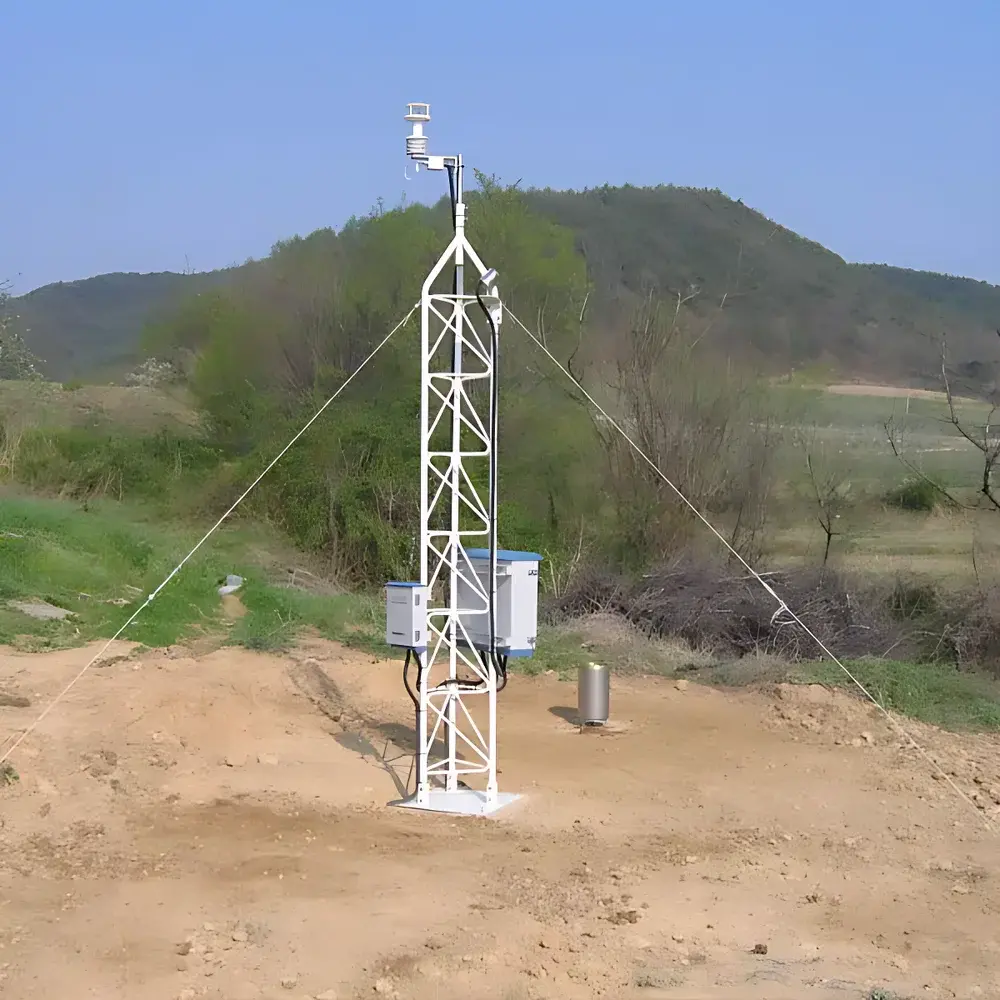
- Remote environmental monitoring networks requiring autonomous, low-maintenance operation across arctic, alpine, desert, or maritime zones
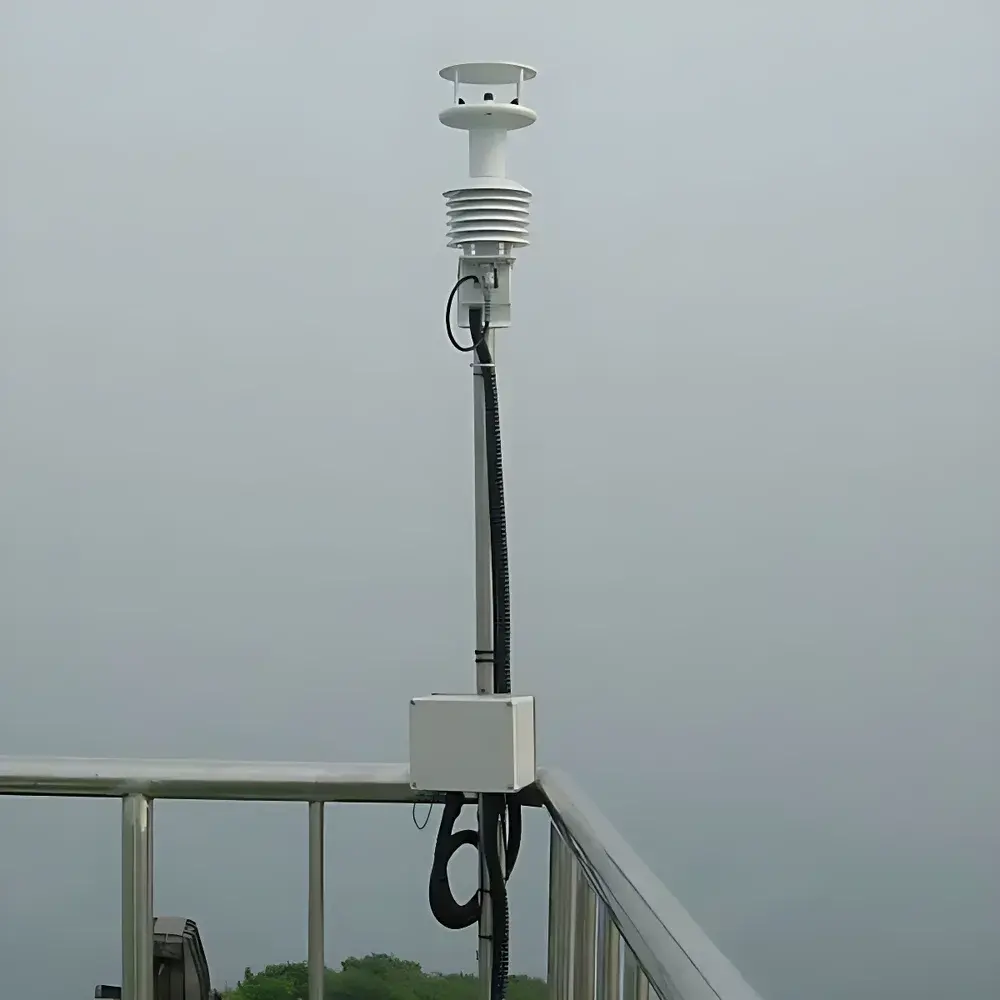
- Coastal and offshore infrastructure monitoring—including lighthouses, buoys, oil & gas platforms, and port authority weather reporting
- Construction site meteorology for dust control, crane safety, and concrete curing validation
- Ecological and hydrological research involving microclimate profiling, evapotranspiration modeling, and phenology studies
- Emergency response and disaster management—rapid-deployment weather situational awareness during wildfires, floods, or storm events
- Educational and training applications in atmospheric science programs where robust, field-ready instrumentation is required
FAQ
Is the Metpak still in production?
No—the Gill Metpak has been officially discontinued. However, Gill continues to support existing units with firmware updates, technical documentation, and spare parts availability for legacy system maintenance.
Can the Metpak be used in freezing or icy conditions?
Yes—the ultrasonic wind sensor is inherently immune to ice accumulation. For extended operation below −10 °C or in high-humidity freezing conditions, the optional heating interface kit allows integration with externally heated wind sensors to prevent rime formation on ancillary probes.
What mounting options are supported?
The standard anodized aluminum U-bracket accommodates vertical masts with diameters between 30 mm and 58 mm. Custom mounting solutions (e.g., flat-panel or pole-clamp variants) can be engineered upon request.
Does the Metpak support wireless telemetry?
The Metpak itself does not include built-in radio or cellular modems. However, its RS485 and ASCII outputs are fully compatible with third-party wireless data loggers and IoT gateways supporting LoRaWAN, NB-IoT, or LTE-M protocols.
How is calibration maintained over time?
All sensors are factory calibrated with documented uncertainty budgets. Due to the absence of moving parts and use of stable reference technologies (Pt100, capacitive RH/pressure), long-term drift is minimal. Gill recommends verification against traceable references every 24 months in critical applications, though many users report stable performance beyond 5 years in benign environments.







