
Gitterwerk High-Efficiency Transmission Gratings for High-Power and Ultra-Short Pulse Lasers
| Brand | Gitterwerk |
|---|---|
| Origin | Germany |
| Model | Multi-Wavelength |
| Grating Type | Transmission |
| Polarization | TE (s-polarized), TM (p-polarized), or Unpolarized |
| Wavelength Range | 450–2090 nm |
| Line Density | 600.2–2500.0 l/mm |
| Substrate Material | Fused Silica |
| Thickness | 3–6.35 mm |
| Aperture Size | Up to 137 × 32 mm |
| Peak Diffraction Efficiency | ≥99.0% (TE, specified λ) |
| Laser Damage Threshold | >5 J/cm² (1030 nm, 10 ps, 10 Hz) |
| Angular Tolerance | ±0.05° for optimal efficiency |
Overview
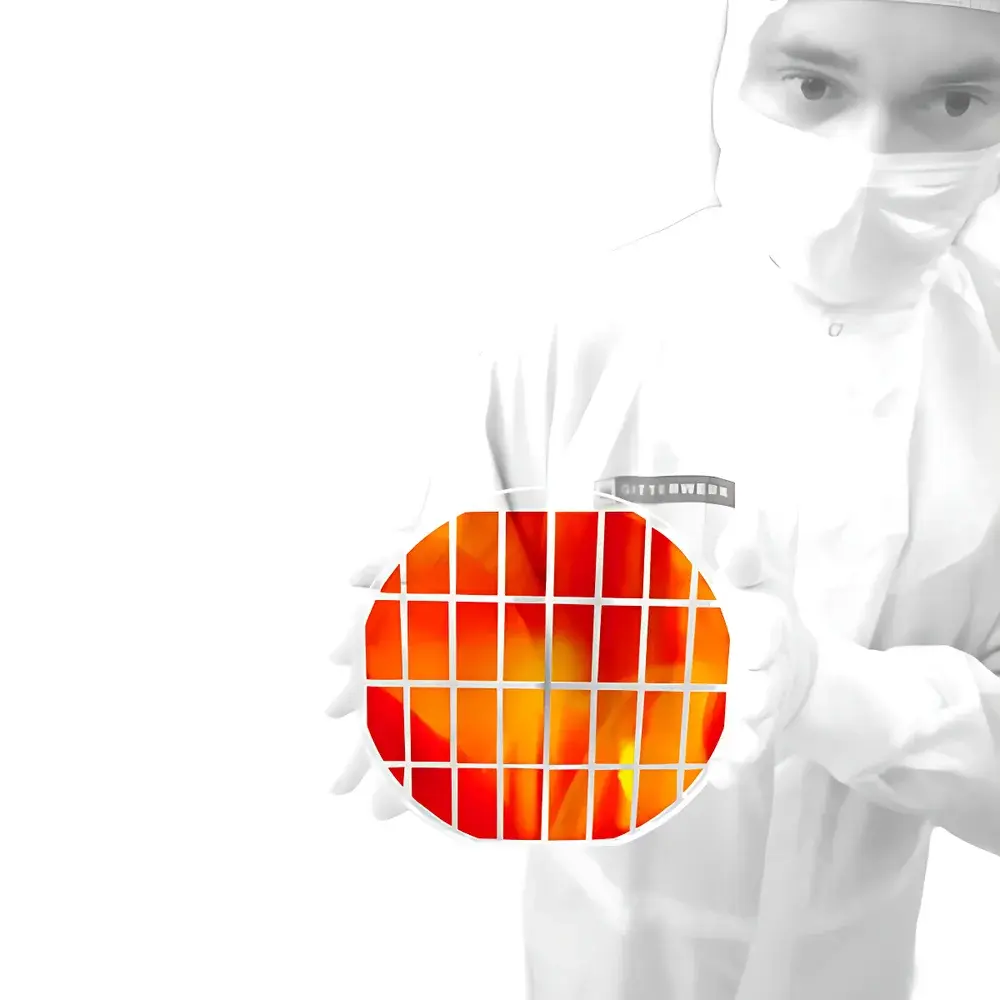
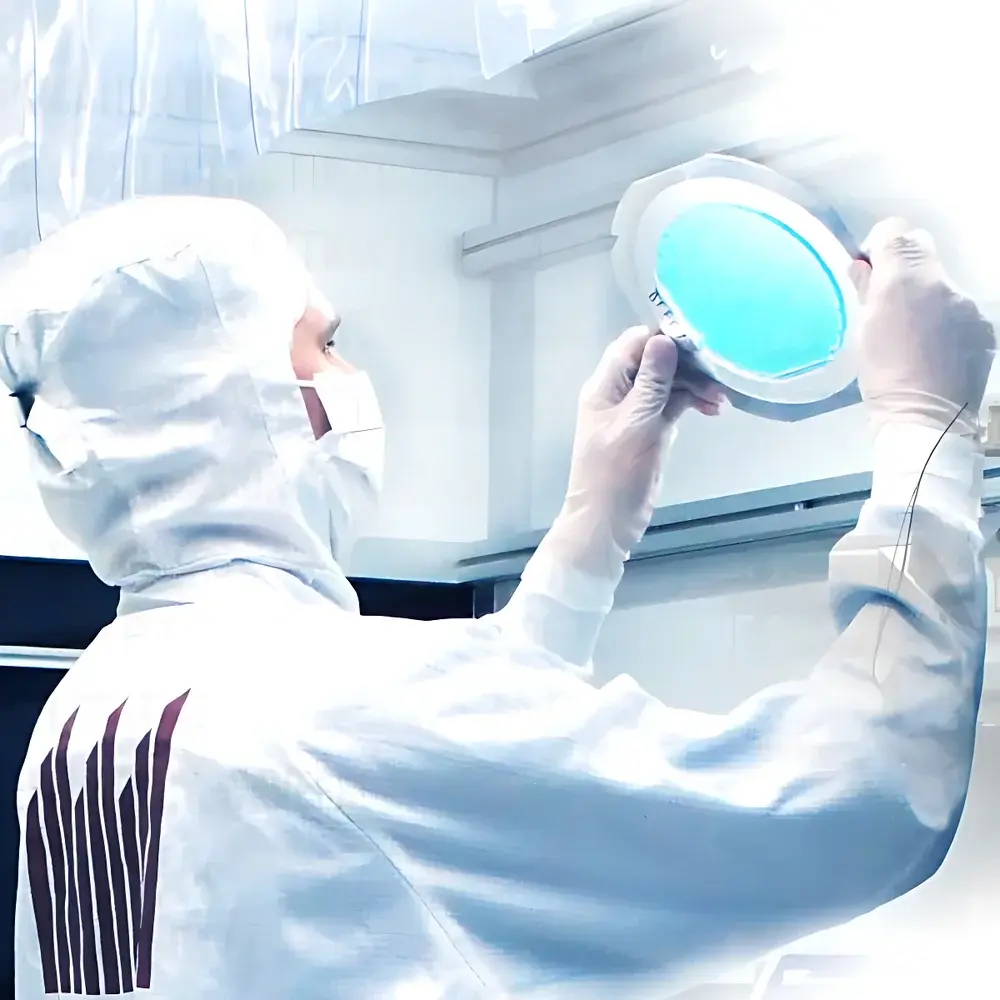
Gitterwerk High-Efficiency Transmission Gratings are precision-engineered optical components designed for demanding ultrafast and high-power laser applications. Manufactured in Jena, Germany — a global hub for advanced optics — these gratings leverage rigorous lithographic fabrication and ion-beam etching on high-purity fused silica substrates to achieve exceptional diffraction performance. Unlike conventional metallic or reflective gratings, Gitterwerk’s transmission gratings operate on the principle of volume-phase modulation within a sub-wavelength periodic structure, enabling broadband operation with minimal absorption, negligible thermal lensing, and superior pulse fidelity. They are optimized for Ti:sapphire, Yb:fiber, Er:fiber, and thin-disk laser systems delivering pulses as short as <10 fs and average powers exceeding several hundred watts. Their design conforms to stringent requirements for dispersion control in chirped pulse amplification (CPA), pulse compression, spectral beam combining, and wavelength-tunable oscillator cavities.
Key Features
- Ultra-High Diffraction Efficiency: Achieves ≥99.0% peak efficiency at design wavelengths (e.g., 800 nm, 1030 nm, 1550 nm) under TE polarization, validated per ISO 10110-7 and calibrated using NIST-traceable spectroradiometric methods.
- High Laser Damage Resistance: Engineered for long-term stability under high fluence conditions; qualified to >5 J/cm² (1030 nm, 10 ps, 10 Hz, 20 µm spot) and >1 MW/cm² peak intensity, meeting ISO 21254-1 Level 3 specifications.
- Broad Spectral Coverage: Available across UV-VIS-NIR-MIR ranges (450–2090 nm), with dedicated configurations for OCT (810–930 nm), telecom (1550 nm), and industrial processing (1064/1030 nm).
- Polarization Flexibility: Supports TE (s-pol), TM (p-pol), and unpolarized operation depending on groove geometry and coating strategy — critical for polarization-maintaining CPA stages and interferometric setups.
- Mechanical & Thermal Stability: Fused silica substrate ensures CTE < 0.5 × 10⁻⁶/K and wavefront distortion < λ/10 over ΔT = ±10 °C, enabling integration into vacuum-compatible, actively stabilized optical benches.
- Customizable Geometry: Standard apertures from 12 × 10 mm to 137 × 32 mm; thickness options (3 mm, 6.35 mm) accommodate mechanical mounting constraints and minimize group delay dispersion (GDD) contributions.
Sample Compatibility & Compliance
Gitterwerk transmission gratings are compatible with standard kinematic mounts (e.g., Thorlabs KM100, Newport UVPB series) and support direct integration into OEM laser heads, ultrafast oscillators, and industrial material processing workstations. Each grating undergoes full metrological characterization including diffraction efficiency mapping (±0.3% uniformity), surface flatness (λ/20 PV), and residual stress analysis (photoelastic imaging). All units comply with RoHS 2011/65/EU and REACH Annex XIV restrictions. For regulated environments (e.g., medical laser systems per IEC 60601-2-22 or semiconductor fab tools), documentation packages include full traceability to manufacturing batch, interferometric surface data, and laser-induced damage threshold (LIDT) test reports aligned with ISO 21254-2 protocols.
Software & Data Management
While transmission gratings are passive optical elements, Gitterwerk provides comprehensive technical datasheets in PDF and XML formats containing full spectral response curves (efficiency vs. λ, ±0.5 nm resolution), angular dispersion profiles (dθ/dλ), and GDD simulations (up to 4th order) derived from rigorous RCWA modeling. These datasets integrate seamlessly with industry-standard optical design platforms including Zemax OpticStudio (ZOS), CODE V, and MATLAB-based pulse propagation toolkits (e.g., PULSE, UltrashortPulse). Upon request, customers receive calibration certificates compliant with ISO/IEC 17025:2017 (accredited by DAkkS) and digital twin metadata for digital thread implementation in Industry 4.0 manufacturing execution systems (MES).
Applications
- Chirped Pulse Amplification (CPA): Used in stretcher-compressor pairs for sub-10-fs pulse generation in Ti:Sa and Yb-based amplifiers, minimizing higher-order dispersion and spatial chirp.
- Spectral Beam Combining: Enables coherent and incoherent power scaling in fiber laser arrays, supporting kW-class output with near-diffraction-limited beam quality.
- Optical Coherence Tomography (OCT): High-efficiency, low-GDD gratings improve axial resolution and signal-to-noise ratio in swept-source and Fourier-domain OCT systems (800–1320 nm).
- Wavelength Selection & Tuning: Integrated into Littrow- or Paschen-Back configured cavities for broadly tunable ultrafast oscillators in spectroscopy and quantum optics.
- Industrial Laser Processing: Applied in multi-beam splitting and pulse shaping for precision micromachining, glass cutting, and selective laser melting where thermal load management is critical.
- Scientific Instrumentation: Deployed in high-resolution monochromators, Raman spectrometers, and attosecond beamlines requiring high throughput and polarization fidelity.
FAQ
What distinguishes Gitterwerk transmission gratings from ruled or holographic reflective gratings?
Transmission gratings eliminate back-reflections, reduce alignment sensitivity, and avoid thermal deformation associated with metallic coatings — essential for high-repetition-rate ultrafast lasers.
Can these gratings be used in vacuum or cleanroom environments?
Yes. All fused silica substrates are cleaned to ISO Class 5 (Class 100) standards and outgassing tested per ASTM E595; no adhesives or organic coatings are used.
Do you provide custom line densities or non-standard apertures?
Yes. Gitterwerk offers bespoke designs including asymmetric groove profiles, dual-band efficiency optimization, and metrology-grade edge finishing (beveling, anti-reflection coating on substrate faces).
How is diffraction efficiency measured and certified?
Efficiency is measured using a double-monochromator setup with calibrated photodiodes traceable to PTB (Physikalisch-Technische Bundesanstalt); uncertainty budget includes polarization extinction ratio, incident angle control (±0.01°), and spectral bandwidth correction.
Are these gratings suitable for femtosecond OPA/OPCPA pump sources?
Yes — specifically optimized for broadband mid-IR generation (e.g., 1.5–16 µm) using difference-frequency mixing, with low group delay ripple (< 5 fs²) verified via spectral interferometry.




